Here's the link to my new article with Neil Siegel, “Court-Stripping, Court-Packing, and Court-Defying: Revisiting the Supreme Court’s Essential Functions.”
https://t.co/Txca2aRQdv
Humanity, created by God in all its grandeur, is today facing a pivotal choice: either to construct a new Tower of Babel or to build the city in which God and humanity dwell together. In Jesus Christ, this humanity in its grandeur becomes the Way, the Truth and the Life, opening the path for each of us to grow toward fullness. #MagnificaHumanitas
https://t.co/6i9MWs6LJl
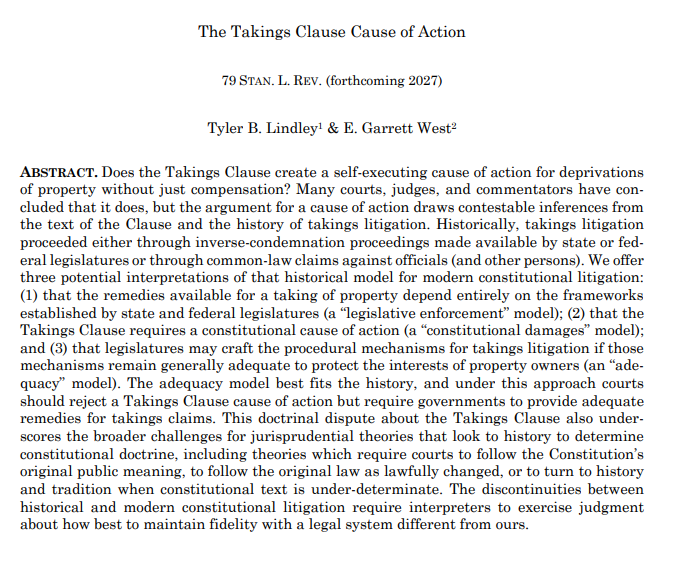
New paper on @SSRN with @e_garrett_west, "The Takings Clause Cause of Action," forthcoming in the @StanLRev. Does the Takings Clause have an implied cause of action? If not, does the Constitution speak to the Clause's enforcement? Abstract here and link below!
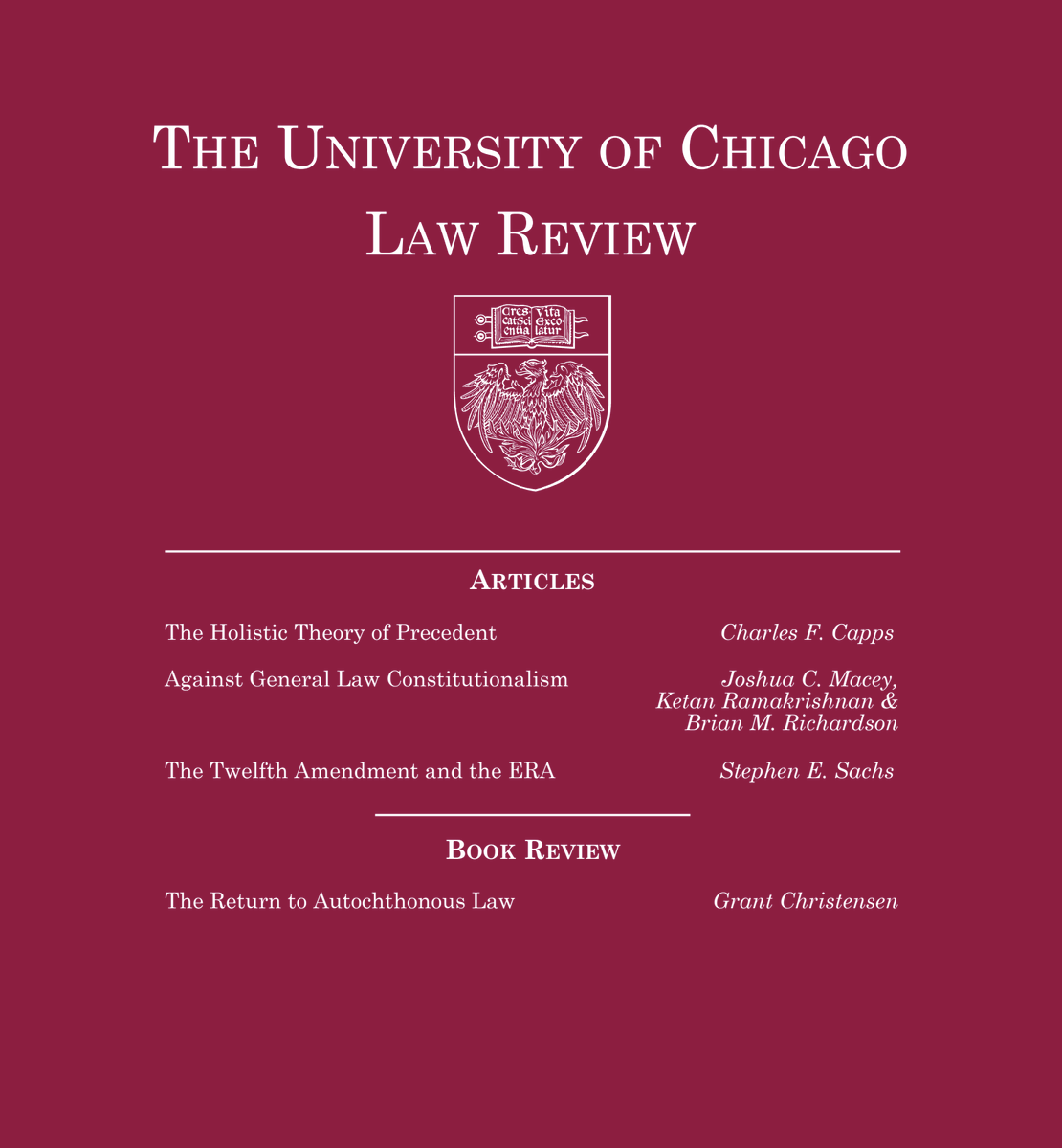
Volume 93.3 is now live, featuring pieces by @charlesfcapps; @Maceyjoshua, @ketanrama & Brian Richardson; @StephenESachs; and Grant Christensen. You can find them all here: https://t.co/MAheJUSSFm.
We are now accepting applications for the Georgetown Center for the Constitution’s Research Fellowship. This is a two-year non-residential fellowship for early-career and aspiring scholars in constitutional law and theory, featuring monthly workshops, senior-scholar feedback, and an in-person gathering at Georgetown Law on Nov. 19–20.
The deadline to apply is Friday, May 29 at 11:59 p.m. EST. For more information, click here: https://t.co/M0Sd9Zy2L2
@shbarclay@GeorgetownLaw
A class action lawsuit in DC seeks refund of church donations. Does this raise First Amendment issues? Should those issues be addressed before allowing the rest of the case to proceed? A new cert petition seeks SCOTUS review. @BrantonNestor & I explain the state of play in @NRO
I’m so excited to finally see Consent & Causation out in print in the @VirginiaLawRev !
I really like this piece, which asks whether sexual consent should be understood in terms of causation. Thank you to the many generous commenters!
https://t.co/XP9uYCcFMa
My article "The Nature of a Precedent's Error" is now out in Jurisprudence. In it I set out a theory of "egregiously erroneous" precedents, suggesting that they involve a special sort of moral error. Here it is: https://t.co/0OIiU6Fu1j
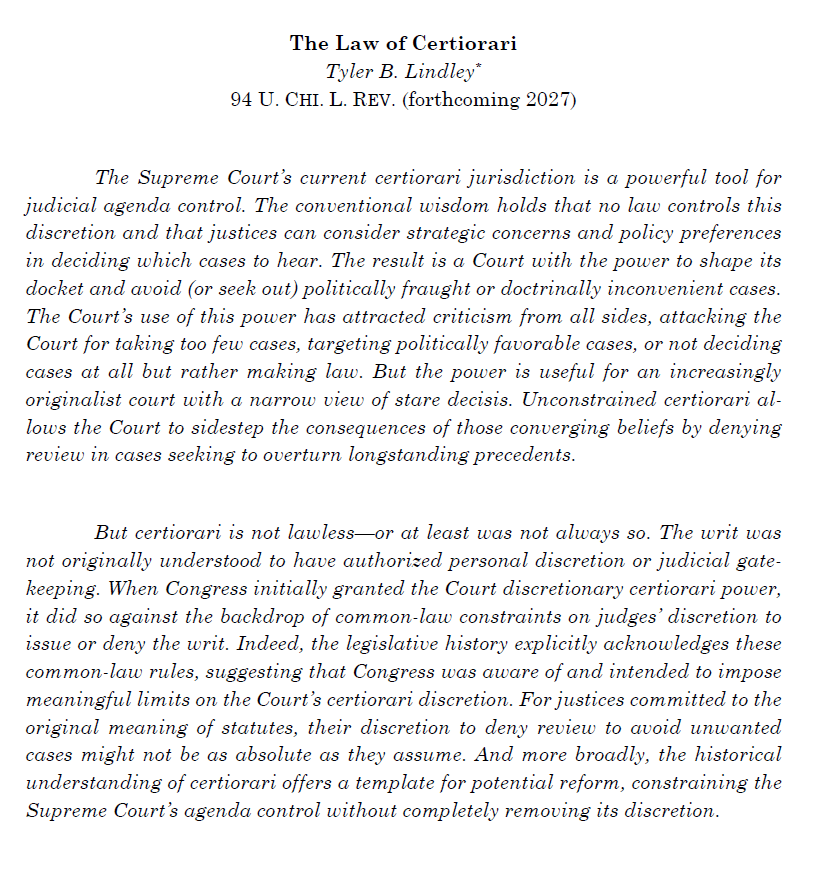
My latest-The Law of Certiorari-forthcoming in @UChiLRev. It's assumed that by creating certiorari jurisdiction, Congress gave SCOTUS nearly complete discretion to choose its cases. But the 1891/1925 Acts giving cert jux likely incorporated common-law certiorari standards. Link👇