@DeepStarts Serious answer: Be come enterpreneur by building many microsaas to generate income without any employee (just me). I suggest reading the book “Company of one”
127.0.0.1 and localhost often point to the same machine, but they're not the same thing.
127.0.0.1 is the IPv4 loopback IP address. It's a fixed address reserved for your own computer and bypasses DNS resolution.
localhost is a hostname. Your operating system resolves it through the hosts file or DNS, and it can map to 127.0.0.1 (IPv4) or ::1 (IPv6) depending on your system configuration.
This distinction matters because some applications bind only to IPv4 or only to IPv6. In those cases, localhost may behave differently from 127.0.0.1, which is why developers sometimes see connection issues even though both seem to refer to "the same computer."
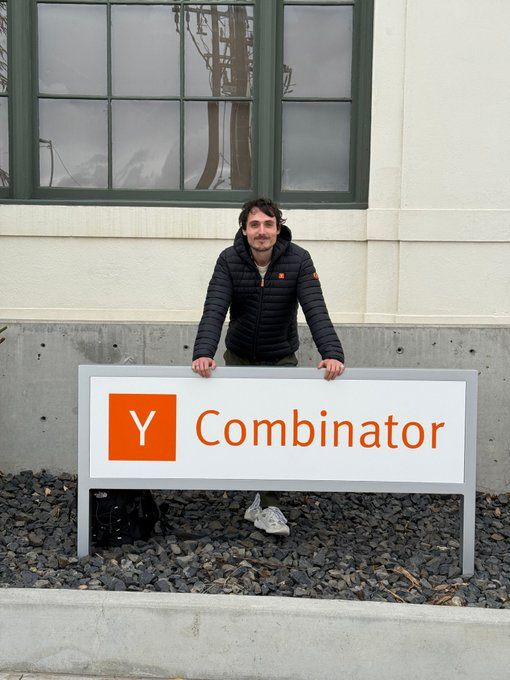
We went from 0 to 2,200 paying customers in under a year by following @ycombinator's 15 rules:
1/ Do things that don't scale. Get your first 10 customers by hand.
2/ Launch now, not when it's "ready". A mediocre product in front of real users teaches you more in a week than 6 months of polishing in the dark.
3/ Charge from day one. If nobody will pay, you don't have a startup, you have a hobby.
4/ Talk to users every single day. The roadmap you need is sitting in your customers' heads, and they'll hand it to you for free
5/ Always hunt the 90/10 solution. For almost any feature there's a way to capture 90% of the value with 10% of the effort.
6/ There are only two real jobs: write code and talk to users. Everything else (conferences, press, VC coffees, corp dev calls) is fake work.
7/ You pick your customers as much as they pick you. 10 users who love you beat 1,000 who kind of like you.
8/ Growth is an output, not a strategy. Grow before product market fit and all you're buying is churn.
9/ Do less, really well. Pick one or two metrics and judge every task against them.
10/ Know if you're default alive. Paul Graham's question: on current growth and current burn, do you reach profitability before the money runs out?
11/ Don't hire until it hurts. Headcount is not progress, it's burn. Every great startup was embarrassingly small for embarrassingly long.
12/ Momentum is the only real moat in year one. Ship something every week, even something tiny.
13/ Every great startup is badly broken at some point. The game isn't avoiding fires, it's how fast you put them out. Again. And again
14/ Ignore your competitors. Startups die of suicide, not murder. In year one, the only company that can kill yours is your own
15/ Startups rarely die from running out of money. They die because the founders fall out. Brutal honesty with your cofounder is the cheapest insurance you'll ever buy
Good luck !
This thing flying itself is a miracle considering how giant and monstrous it is
But SpaceX went ahead and caught it mid-air with two mechanical chopstick arms, and have already done it successfully three times