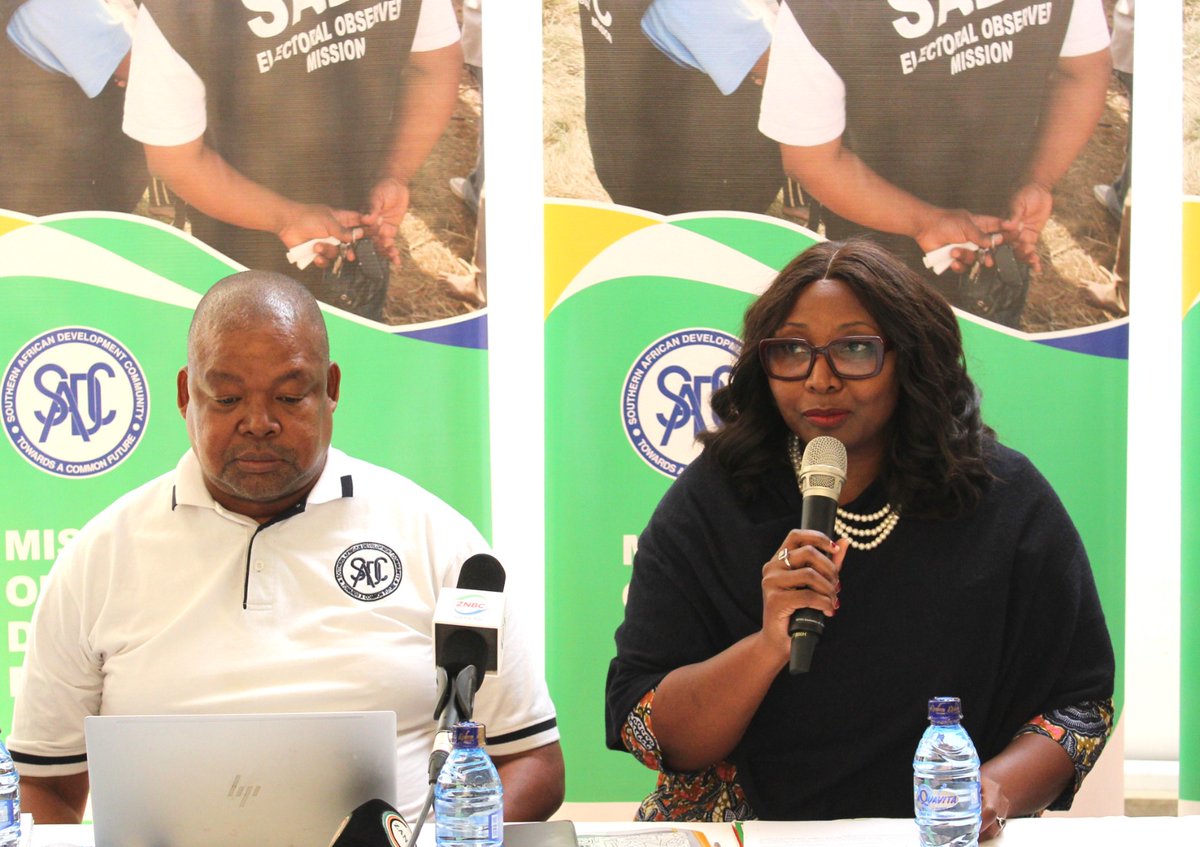
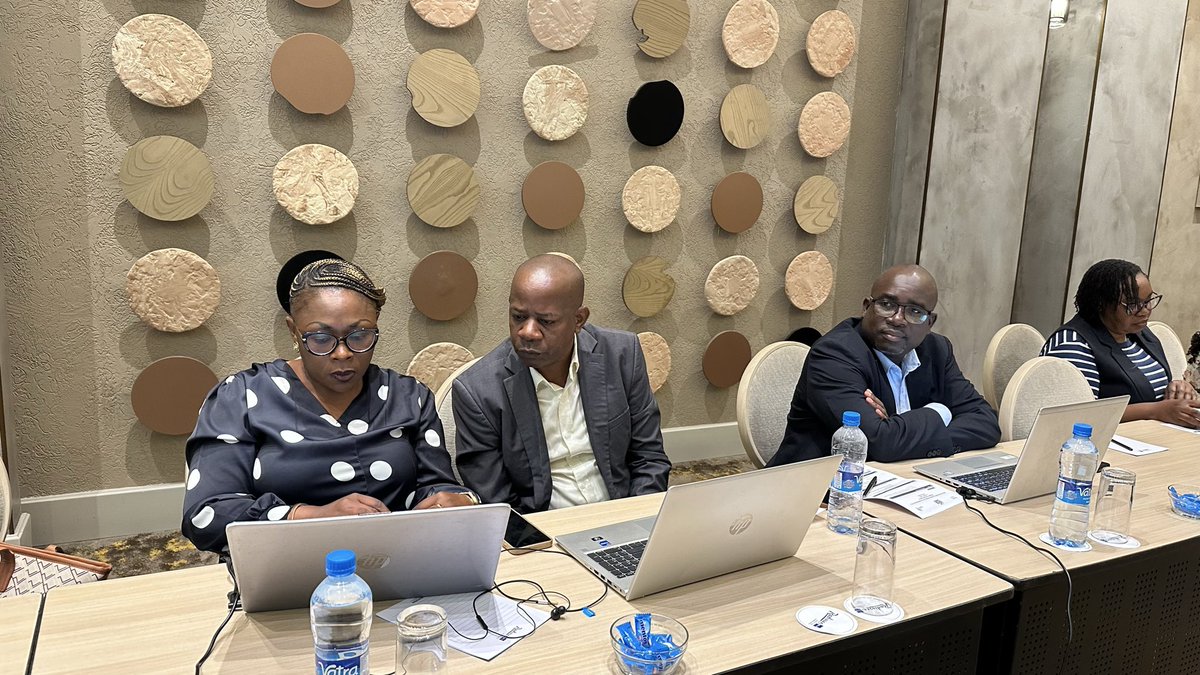
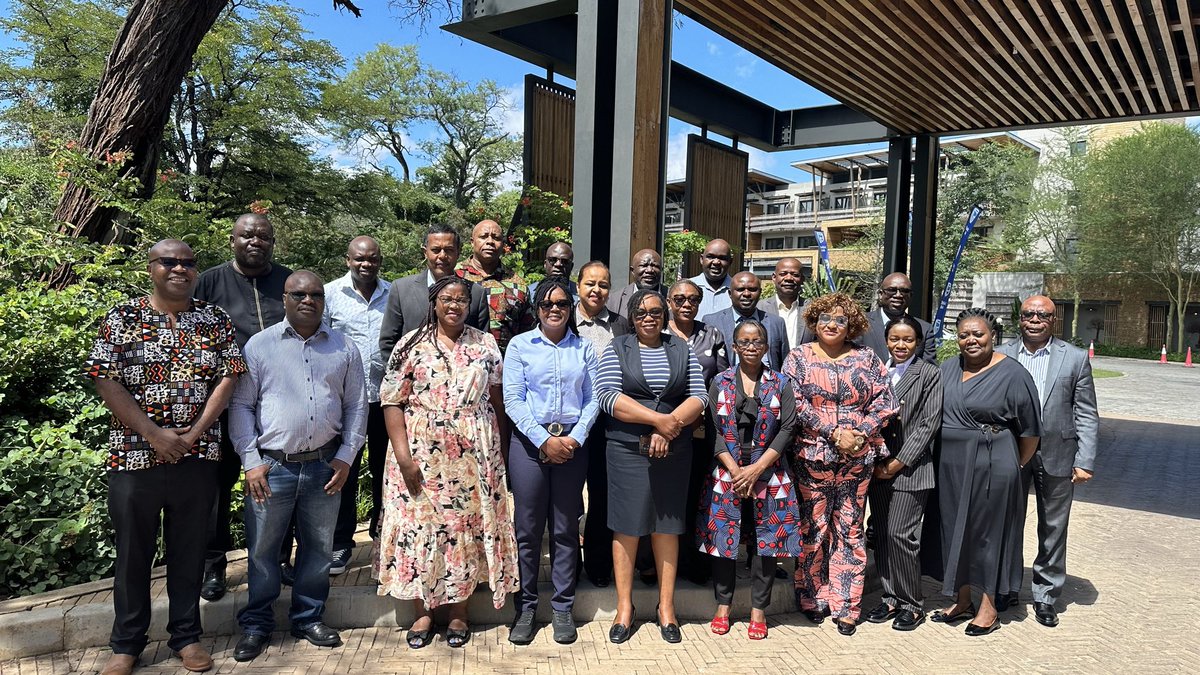
The Southern Africa Development Community (SADC) Electoral Advisory Council (SEAC) has officially opened a five (5) days Training worshop for Electoral Observers in Lusaka.
Read more here https://t.co/UwVTbgaZ5T
Applications are now open for membership into the 5️⃣th ECOSOCC Permanent General Assembly (PGA)!
The PGA is the highest decision-making body of ECOSOCC, bringing together #civilsociety organizations from across #Africa and the African #Diaspora to contribute to dialogue and #policy processes within the @_AfricanUnion.
The Assembly is composed of 209 CSOs representing national, regional, continental, and Diaspora constituencies.
The application process is fully digital and takes just two simple steps on the ECOSOCC Connect platform: https://t.co/9bMAe4vhOC
1️⃣ Create your representative profile and register your organization.
2️⃣ Complete and submit your official application for the PGA.
Apply here: https://t.co/9bMAe4vhOC
ℹ️ https://t.co/VwO0Gpq4wF
Application deadline: July 15, 2026
#ECOSOCCPGA5 #ECOSOCCPGA5 #TheVoiceOfTheAfricanCitizenry #AUConnect #ECOSOCCConnect
The @_AfricanUnion now has one official, standardized gateway for civil society to formally engage it!
For decades, civil society organizations across #Africa and the #diaspora had no single, clear way to formally engage the AU. Different AU organs had different rules. Different standards. No unified door. We changed that with the AU Harmonized Accreditation Mechanism (HAM).
The HAM is now the official, continent-wide system through which civil society organizations (CSOs) can obtain formal status to engage all AU organs and institutions.
Accredited CSOs can strengthen their institutional visibility, build direct engagement pathways with AU organs, participate more formally in continental policy spaces, and position their work within broader African #development and #governance conversations.
Whether your organization works in #health, #peacebuilding, #gender, #trade, #education, #agriculture, #migration, #infrastructure, #youth, #climate, #humanrights, #energy, or community development, this mechanism creates a clearer and more structured relationship between #civilsociety and the African Union.
Next week we'll launch a dedicated platform to guide organizations through the accreditation process step by step.
Follow this page so you do not miss it.
What would your organization like to know about AU accreditation? Drop your questions in the comments, and share this post so every CSO in Africa and the diaspora sees it!
#FactDropFriday #TheVoiceOfTheAfricanCitizenry #HAM #ECOSOCCHAM #AUConnect #ECOSOCCConnect
At today’s Ministerial Meeting on the Reform of the UN Security Council, held on the margins of the Africa–France Summit in Nairobi, H.E. Mahmoud Ali Youssouf, Chairperson of the African Union (AU) Commission, reaffirmed Africa’s united & principled position on @UN Security Council reform.
The Chairperson @ymahmoudali underscored that “Africa is not asking for a favour; Africa is demanding the correction of a historical injustice,” stressing that the continent can no longer remain excluded from permanent representation in the Council despite its demographic, political, & economic weight.
Guided by the Ezulwini Consensus & the Sirte Declaration,he said Africa continues to call for no fewer than two permanent seats with full prerogatives, including the veto while it exists, & five non-permanent seats in an expanded Council.
Chairperson Youssouf welcomed the support of France, Kenya, & Sierra Leone in advancing the African Model, & called for stronger political coordination, strategic alliances, & concrete action to transform growing international consensus into meaningful reform. “The credibility & legitimacy of the Security Council depend on its ability to reflect the realities of today’s world, not the geopolitical order of 1945,” he stated.
He further noted that the AU’s permanent membership in the G20 has already demonstrated that global governance institutions can evolve to become more representative, inclusive, & responsive to contemporary realities.
Read @ https://t.co/8VKeuHNCWd
Today we honour Mr. Simon Mwansa Kapwepwe, Zambia’s visionary leader, for his profound contributions to cultural identity, unity, and the preservation of Africa’s heritage.
His words show that culture is not a possession of a few, but the shared inheritance of all humanity, expressed through carvings, sculpture, music, paintings, and the arts that connect people across generations.
Mr. Kapwepwe’s conviction that “no man can really say he is alone: we are all joined through our identity,” continues to inspire Africans to embrace their history, celebrate their creativity, and strengthen the bonds that unite them in the mainstream of life.
What words from an African leader, thinker, or change-maker inspire you to celebrate culture, uphold unity, and strengthen our shared identity? Share your favourite quote and we may feature it in an upcoming edition of #WednesdayQuotes
#PanAfricanVoices #AfricanUnity #AfricanHeritage #CulturalIdentity #SimonMwansaKapwepwe
Today, on #KennethKaundaDay, we celebrate #Zambia’s founding father and #PanAfrican icon!
To keep his vision alive, ECOSOCC launched the Kenneth Kaunda Graduate Immersion Programme (KKGIP), a flagship initiative created in his honor to empower young Zambians 🇿🇲 with the skills, mentorship, and opportunities to lead #Africa into the future.
As such, the #KKGIP is more than a fellowship as it is a living tribute to #KennethKaunda’s legacy of unity, service, and leadership. Meet the first cohort of the KKGIP, a testament to ECOSOCC’S commitment to honoring remarkable leaders while inspiring and creating tomorrow’s leaders.
#YouthEmpowerment #Youth #Agenda2063
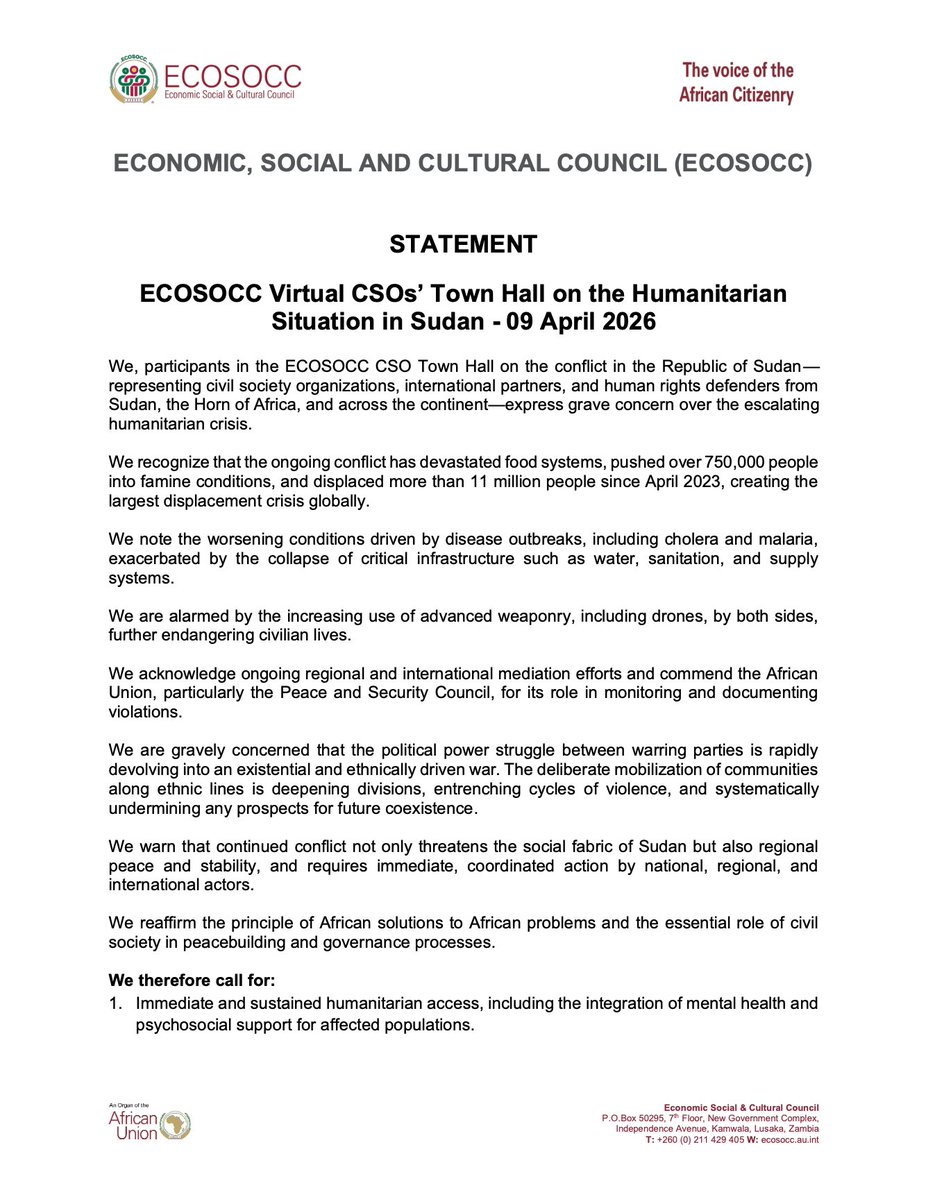
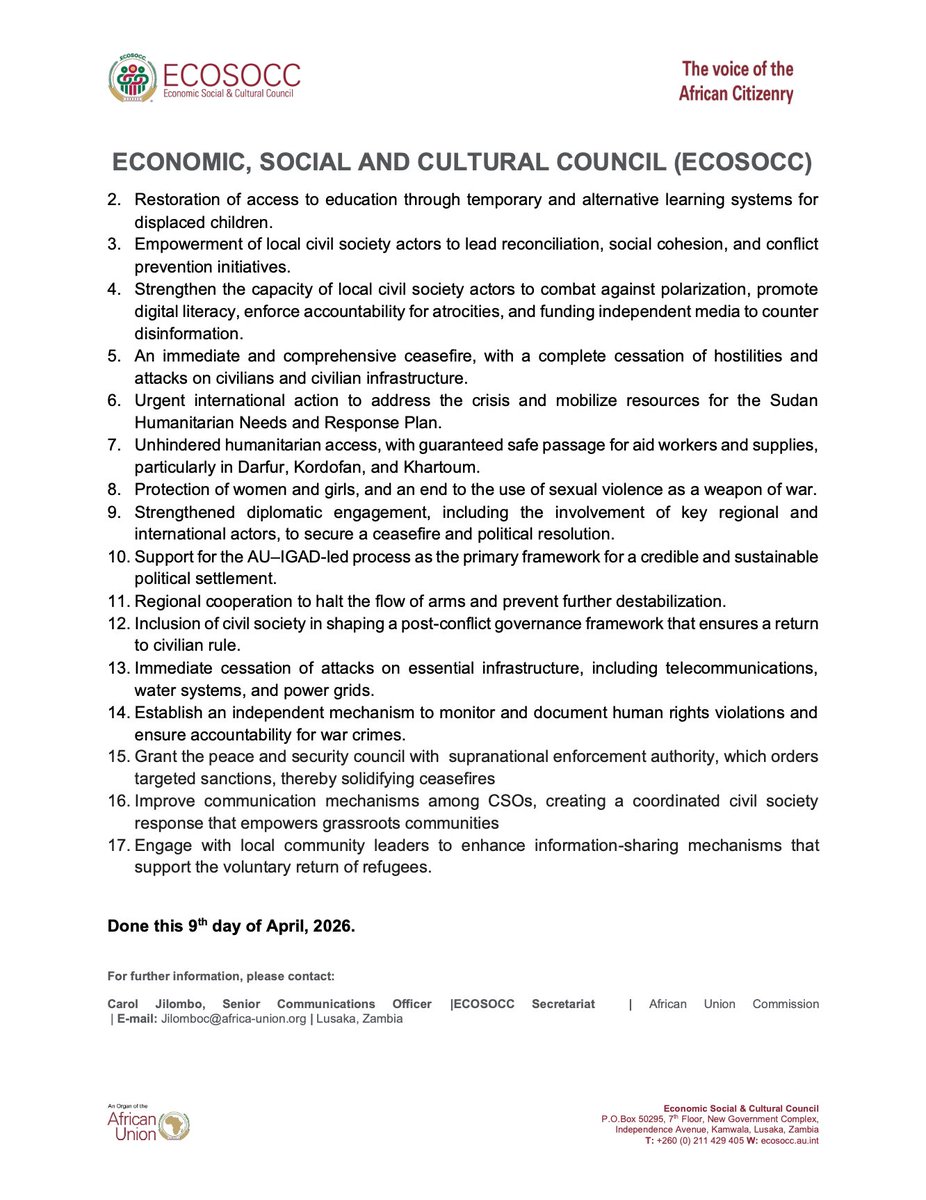
The statement from our Virtual CSOs' Town Hall on the Humanitarian Situation in #Sudan is now out.
Civil society organizations, partners, and #humanrights defenders from across the continent are raising urgent concern over the scale of the crisis.
Over 11 million people displaced.
More than 750,000 facing famine.
Violence, disease, and collapsing systems continue to worsen conditions.
It's not only a humanitarian crisis. It's a political and social breakdown with regional consequences.
CSOs are calling for immediate action, including a ceasefire, humanitarian access, protection of civilians, and an inclusive, civilian-led political process.
#Peace #Security #Agenda2063 #AllEyesOnSudan 🇸🇩
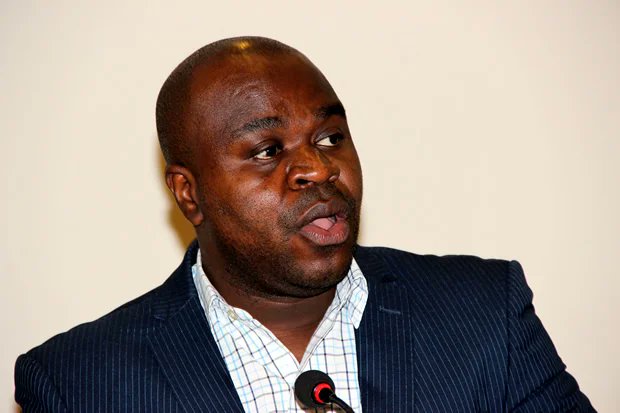
Mr. @Cheembe, Chair of ECOSOCC’s Peace and Security Cluster, emphasized that the Town Hall provided an important platform for #civilsociety and stakeholders to share experiences and better understand the realities facing Sudanese families and host communities. He stressed that the crisis extends beyond #Sudan’s borders and requires a coordinated and inclusive response, including stronger support for host countries under pressure.
Looking ahead, he called for translating discussions into action, including advocating for the protection of civilians, ensuring humanitarian access, restoring supply routes, increasing support to affected populations and host communities, and strengthening coordination among key actors.
He concluded by reaffirming the need for a unified civil society voice to inform responses at all levels and urged continued commitment to advancing peace, dignity, and humanitarian support for the people of Sudan.
#Peace #Security #Agenda2063 #AllEyesOnSudan 🇸🇩
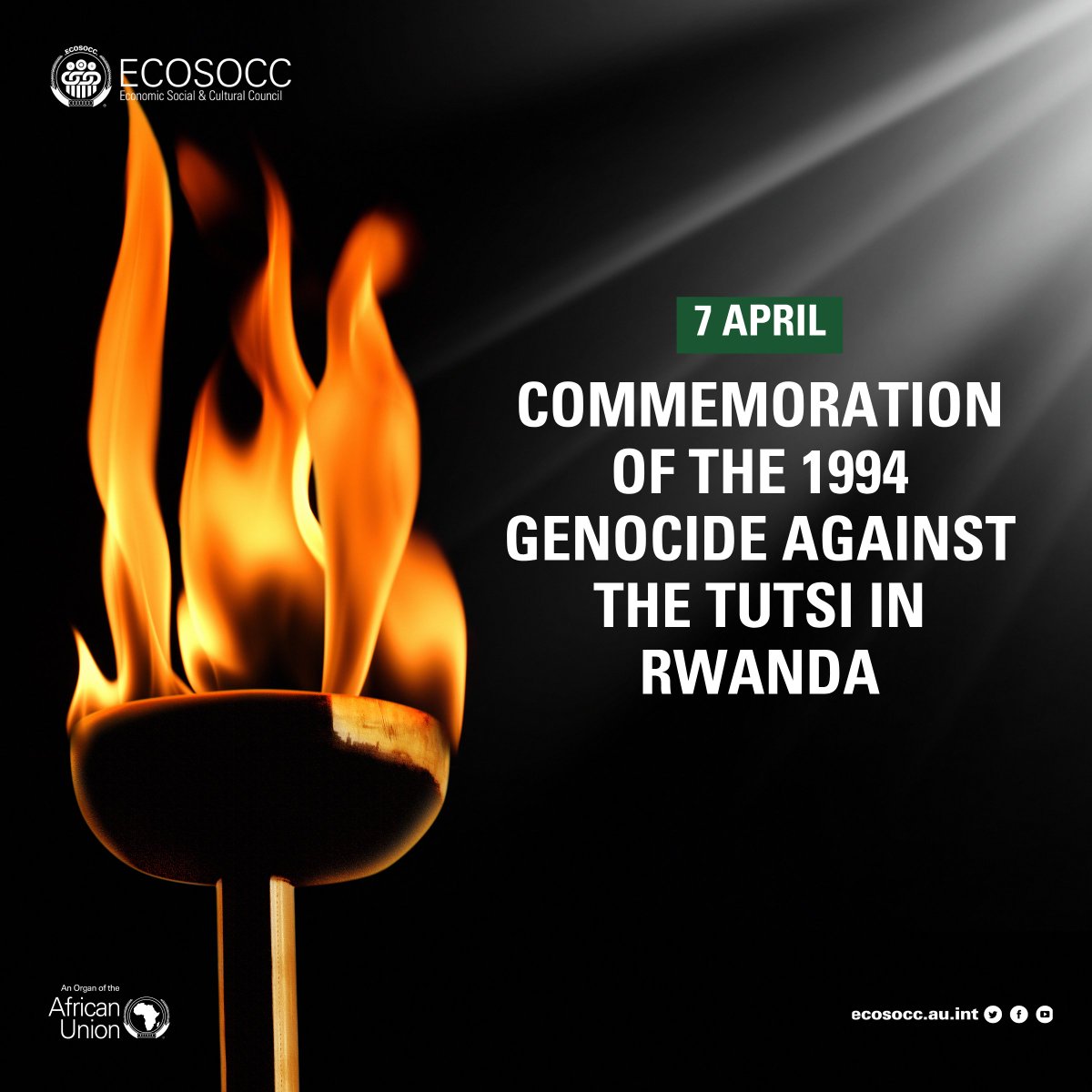
Today marks the commemoration of the 1994 Genocide against the Tutsi in Rwanda.
Under the theme “Remember–Unite–Renew,” #Kwibuka32 is a moment to reflect on the lives lost and the impact that continues to be felt in #Rwanda and across the continent.
It is also a reminder of why this history must remain visible. Remembering supports awareness. Unity strengthens collective responsibility to reject genocide ideology, hate speech, and crimes against humanity. Renewal calls for continued commitment to protect life and uphold fundamental #humanrights.
For us, this work includes keeping #civilsociety engaged, informed, and active in prevention efforts.
If your organization is trying to respond to what is happening in Sudan, you're likely working with gaps. Gaps in information. Gaps in access. Gaps in coordination across borders.
Our upcoming Town Hall on 9 April 2026 aims to close some of those gaps: https://t.co/U3OtARudBA
#Sudan’s crisis is not only inside Sudan. Displacement is moving across borders. The closure of the #Chad 🇹🇩–Sudan 🇸🇩 border is already affecting how people move and how aid reaches communities. Host countries are under pressure. Local responses are carrying more weight.
For CSOs, this changes how work gets done.
The Town Hall will ensure that:
⦿CSOs are working from a more complete and current picture of the crisis
⦿Experiences from affected communities and host countries are brought into one space
⦿#CivilSociety concerns are clearly articulated to national, regional, and international actors
⦿Advocacy and response efforts are better aligned, informed, and coordinated
We need to ground action in shared insight and collective direction for more effective engagement. If your work is connected to humanitarian response, policy, or community support, this conversation will help strengthen how you engage.
Join the discussion: https://t.co/U3OtARudBA
#Peace #Security #Agenda2063 #AllEyesOnSudan
African heads of state approved our new statutes! That means the rules governing how #civilsociety formally engages the African Union have been updated at the highest level.
It happened quietly inside a 40-decision document from the 39th AU Assembly (February 2026). But the same document also:
-Launched a full decade (2026–2035) dedicated to #reparations for Africans and people of African descent.
-Formally declared slavery and colonization crimes against humanity.
-Raised the alarm on collapsing health aid and demanded African governments fund their own #health systems.
-Approved an #AI roadmap with a specific mandate for citizen safeguards.
-Called on the @_AfricanUnion to talk to its citizens — #journalists, #youth, #diaspora — not just governments.
Civil society didn't get a seat in that room but the decisions made there will affect the work you do for years.
Read the decisions and know what was agreed on!
🔗 https://t.co/UhgwQn9cfj
#AUSummit39 #Agenda2063
History has been made at the @UN!
The UN General Assembly has adopted #Ghana’s resolution declaring slavery as the gravest crime committed against humanity.
This places history in legal language and opens the door to something that has long been avoided: a structured global process on #reparations. It creates a pathway, through dialogue, negotiation, and potential legal mechanisms, for how reparations can be addressed at a global level.
This did not happen in isolation.
It reflects years of work across the @_AfricanUnion, @CARICOMorg, and a broader coalition of states from the Global South pushing the same question forward: If a harm was global, structured, and lasted centuries, can repair also be global and structured?
With this resolution, that question is no longer rhetorical. The infographic breaks down the resolution step by step and explains why it is a historic moment for reparatory justice.
@JDMahama@GhanaMFA@AfricanUnionUN
#Justice #HumanRights #ReparationsNow #DecadeOfReparations
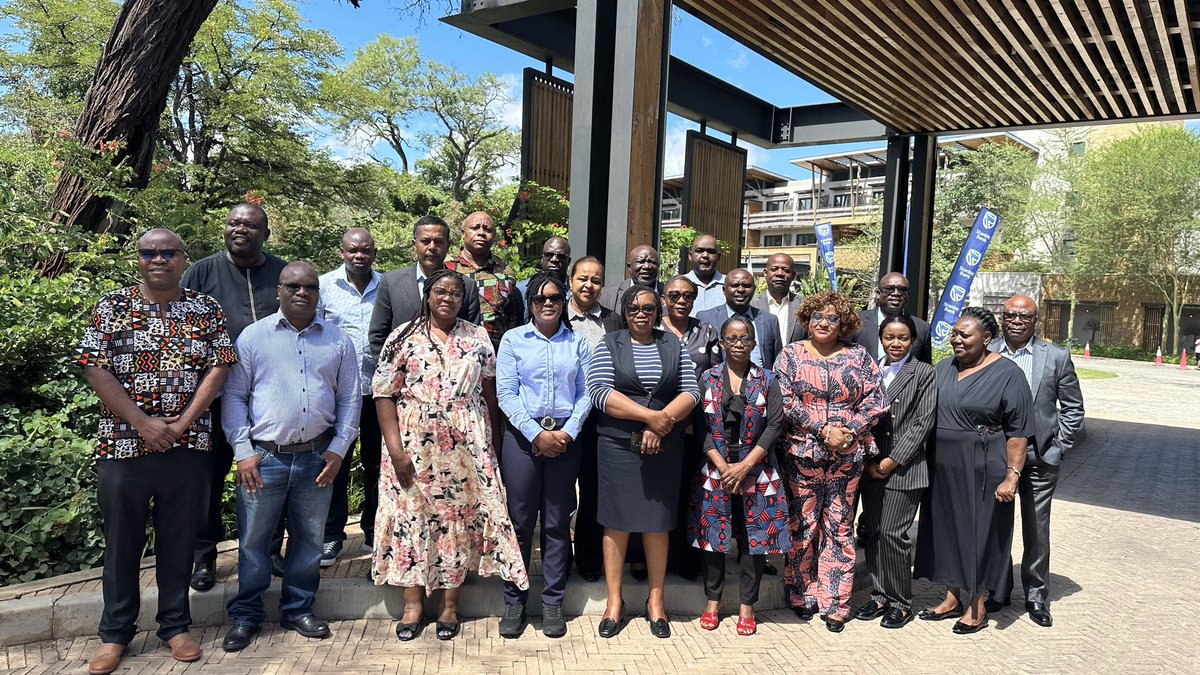
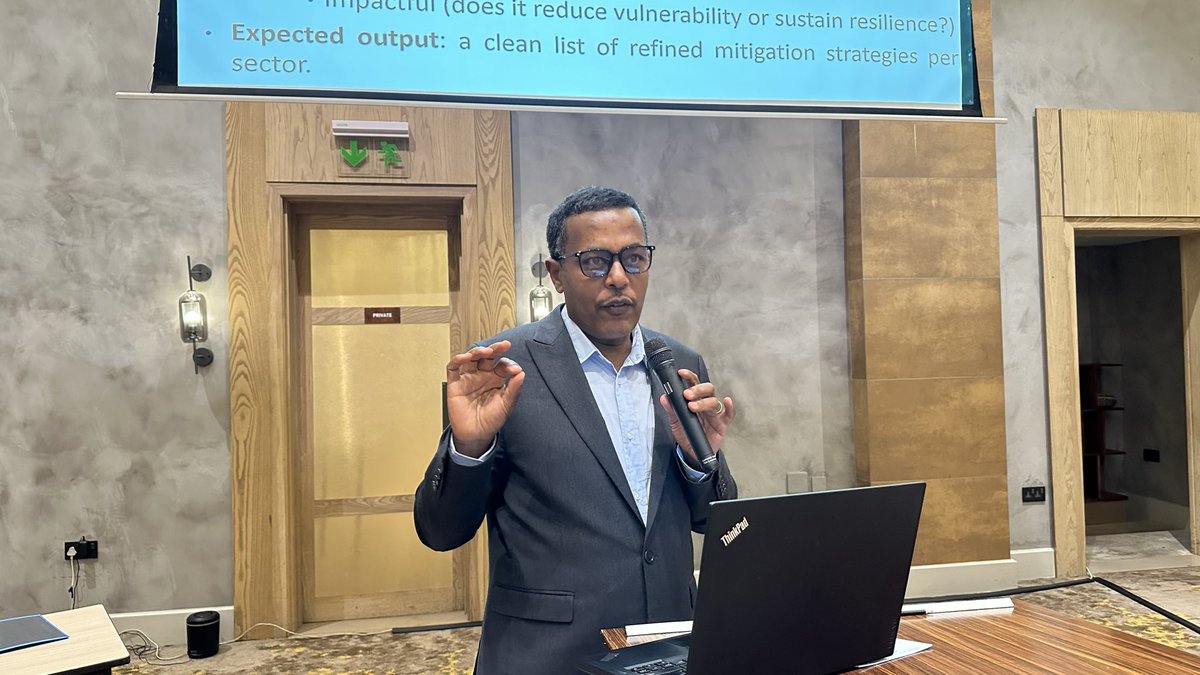
COMESA_GPS, the @AUC_PAPS and @APRMorg have convened a consultative meeting on the implementation of the mitigation strategy roadmap of the Zambia CSVRA process from 23 - 26 March 2026 in Livingstone, Zambia.
The meeting essentially seeks to develop a comprehensive, prioritized, and costed implementation matrix to support Zambia in addressing outlined vulnerabilities in the CSVRA report and to implement mitigation strategies outlined in the CSVMS.
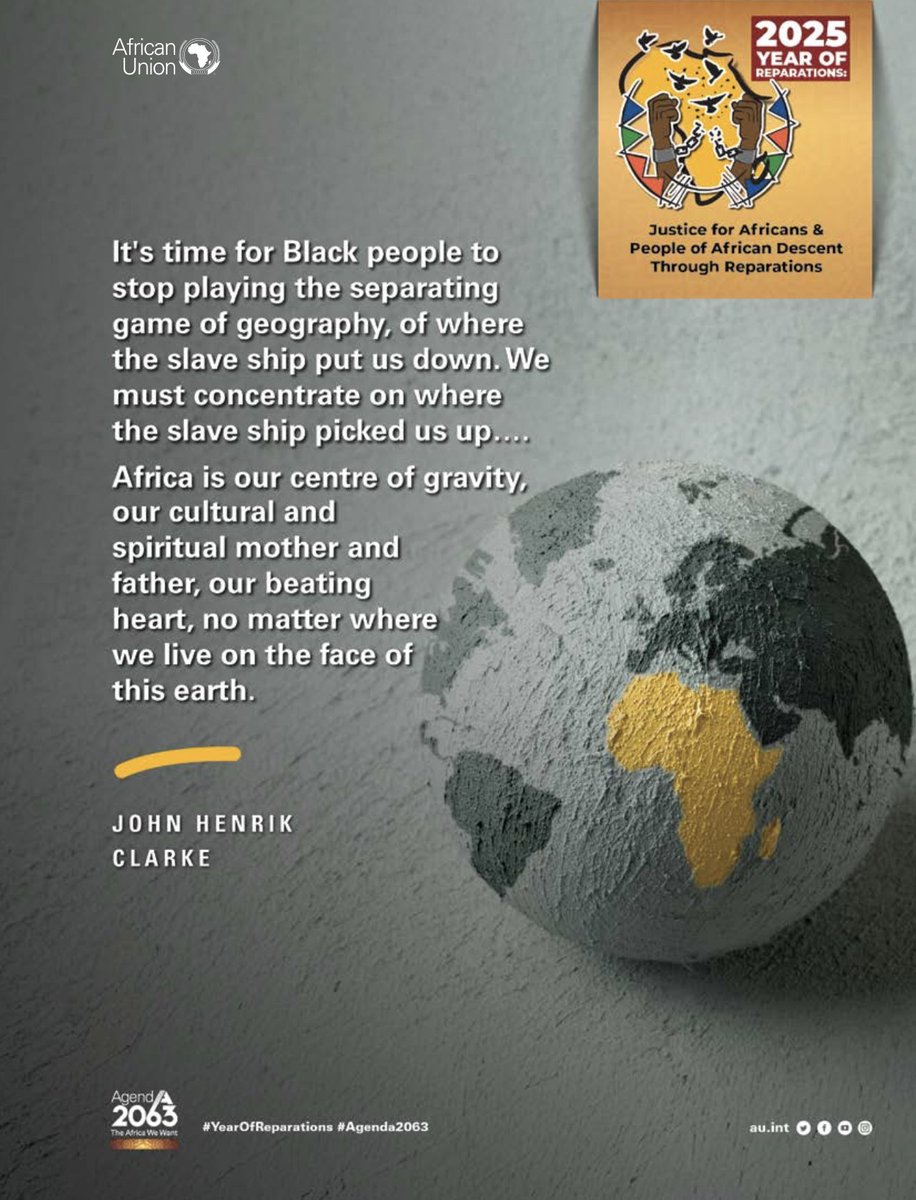
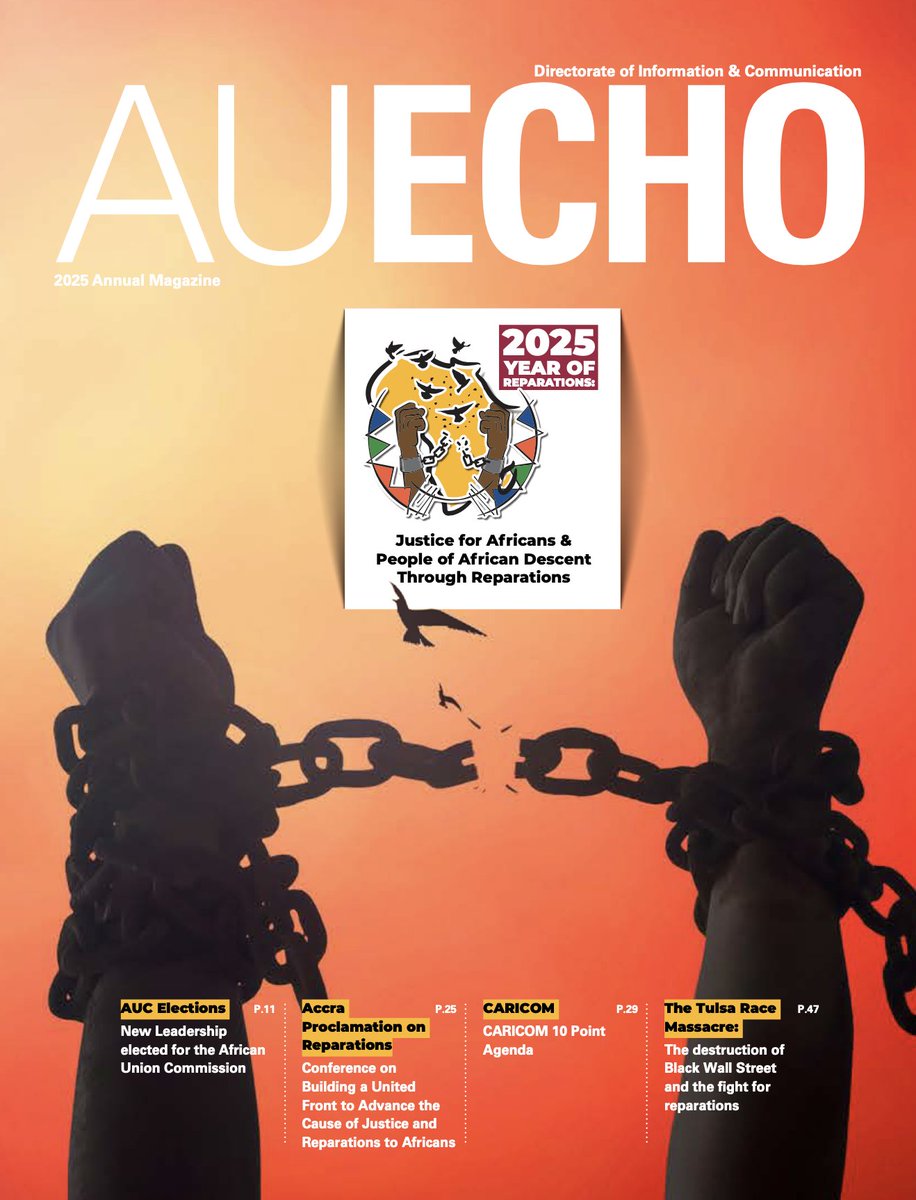
Reparations is often reduced to one question. The 2025 edition of AU Echo Magazine shows it is many!
This edition moves across history, law, economics, culture, diplomacy, and public policy. It brings together state perspectives, expert analysis, and institutional positions under the @_AfricanUnion’s Year of Justice for Africans and People of African Descent Through Reparations.
Inside, you will find historical context, legal arguments, reflections on cultural restitution, discussions on economic redress, and examinations of how the #reparations agenda is being framed at continental level by the AU: https://t.co/GvOLIwds22
#ReparationsNow #DecadeOfReparations #AUTOTY2025
The 2️⃣0️⃣2️⃣5️⃣ edition of the AU ECHO Magazine is out!
The 2025 edition focuses on Justice for Africans and People of African Descent Through Reparations, examining the historical basis for #reparations, current policy discussions, and continental efforts led under the @_AfricanUnion framework.
This publication is a must-read for advocates, scholars, civil society, and anyone passionate about #justice, reparations, and #Africa’s #development.
Read the full publication here:
https://t.co/GvOLIwds22
#AUTOTY2025 #YearOfReparations #ReparationsNow
Migration in Africa is often talked about, but not always understood. The "Migration in Africa: Myths and Realities" manual is here to change that!
It is made for media practitioners and communication officers at CSOs and NGOs, giving them the facts and tools to report accurately on #migration.
The manual walks you through six important areas:
1️⃣ Migration in Africa – Facts and Figures: What the numbers really tell us.
2️⃣ International Migration Law: Understanding the rules that guide movement across borders.
3️⃣ Navigating the Migration Ecosystem: Who is involved, and how migration works in practice.
4️⃣ Is Migration Beneficial for #Africa?: Looking at both challenges and opportunities.
5️⃣ Legacy Media Reporting: How traditional #media covers migration.
6️⃣ Social Media and #AI: How new tools are changing the way migration is reported.
The content draws on @_AfricanUnion migration frameworks, international conventions, and research. The goal is to help communicators share clear, accurate, and fair stories about migration.
If you report on migration or communicate about it, this manual is a practical guide to understanding the real story behind the headlines.
Download, read it, practice it, and share it: https://t.co/Z8KZ9PF0Ze
#MigrationInAfrica #MediaTraining #AccurateReporting #Agenda2063 #CivilSociety @ICMPD
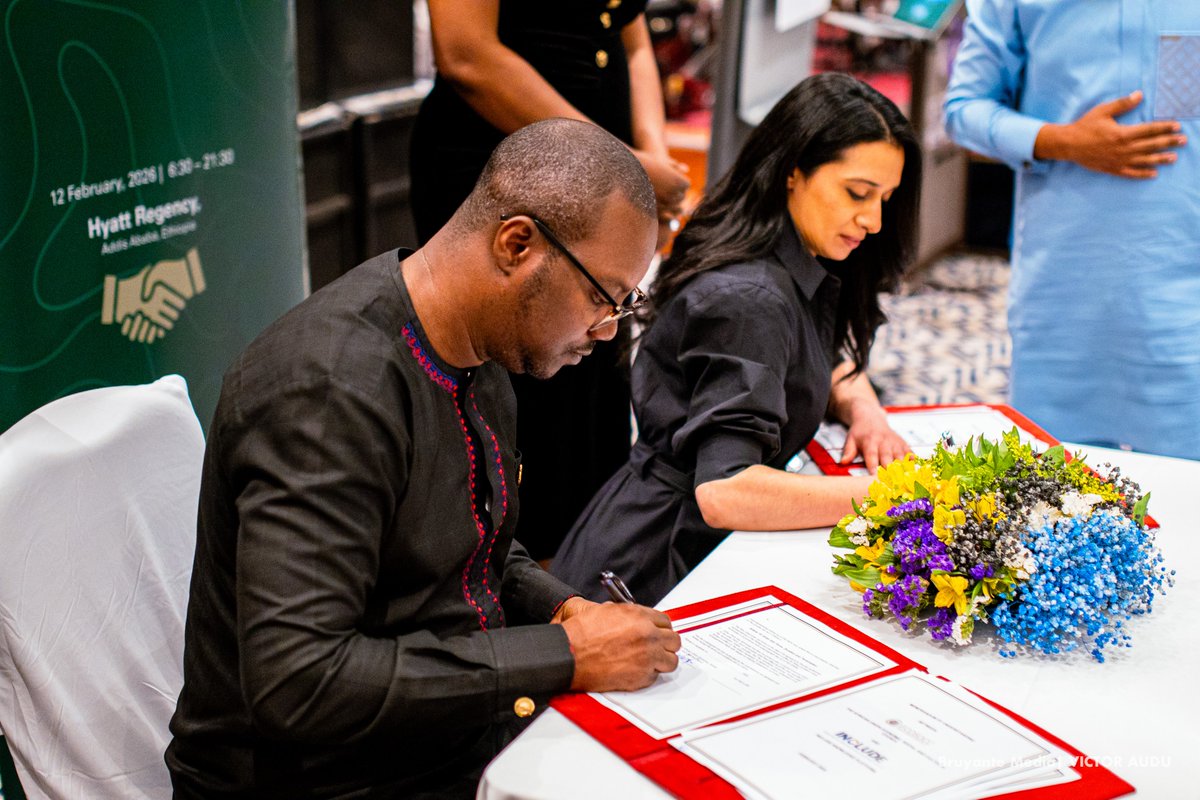
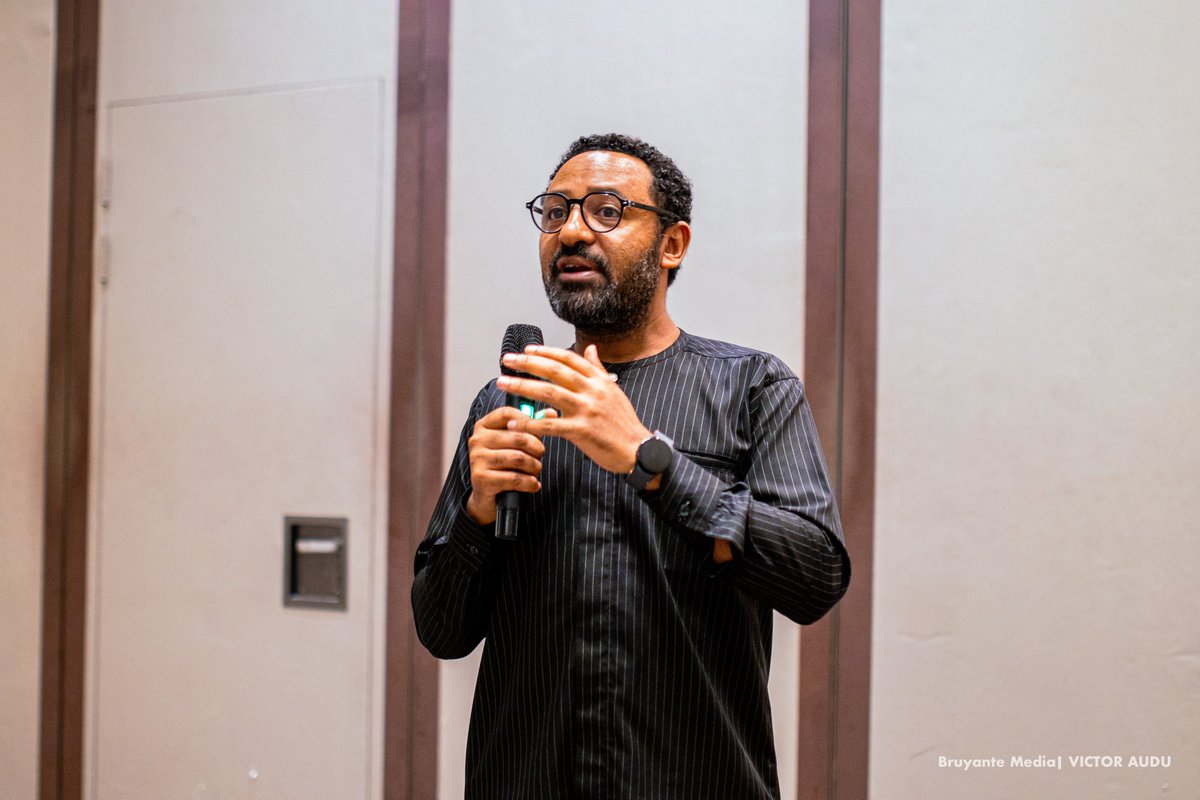
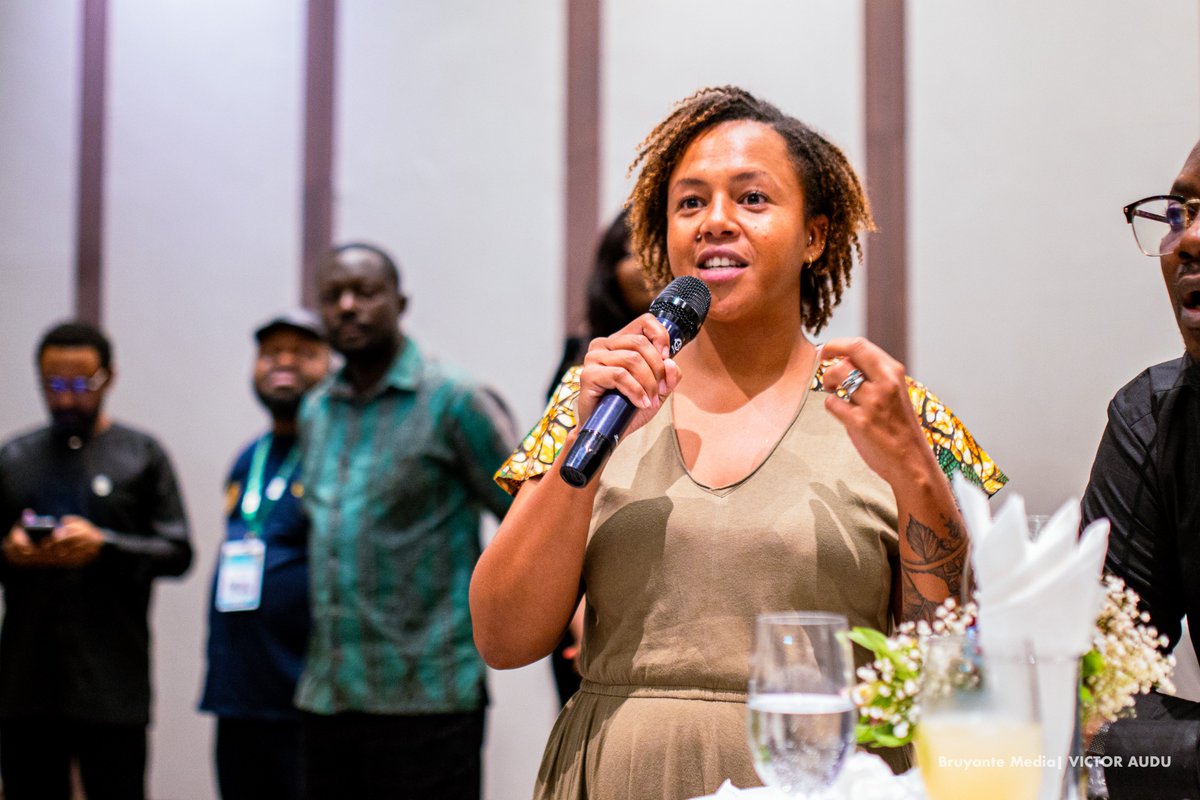
On 12 February 2026, ECOSOCC, in partnership with INCLUDE Knowledge Platform convened a closed roundtable during AU Summit week in Addis Ababa, #Ethiopia 🇪🇹!
The discussion brought together civil society representatives, AU stakeholders, and partners to examine current shifts in global development financing and changing partnership models. Participants noted that the current moment reflects more than a gradual move away from traditional #aid, but a significant change in how #development cooperation is structured and funded.
A Memorandum of Understanding was formally signed between ECOSOCC and @INCLUDEplatform.
The areas of cooperation outlined in the MoU include:
• Joint research and knowledge exchange to inform @_AfricanUnion #policy processes.
• Communication efforts to ensure #civilsociety and research inputs reach relevant AU policy spaces.
• Institutional capacity support aligned with long-term sustainability.
• Development of digital knowledge platforms to improve coordination and civic participation.
• Promotion of inclusive and participatory approaches in #governance programming.
#Agenda2063 #AUSummit
Today, we celebrate the Fugu (Bakatari) of Ghana, a fabric of strength and identity.
For Ghanaians, the Fugu, also known as Batakari, is more than a traditional Ghanaian smock attire. It carries centuries of tradition in its handwoven threads and bold stripes.
It is worn by traditional leaders in northern Ghana, as well as ordinary citizens, and is a symbol of royalty and authority but also shared identity rather than status alone.
When Ghana became the first country, south of the Sahara to break free from colonial rule in 1957, its founding father, the pan-Africanist Kwame Nkrumah and five others wore Fugus at the celebrations that marked the country's independence.
Recently popularized on the continental stage by H.E. President, John Dramani Mahama, the Fugu has become a visible emblem of national pride, cultural resilience, leadership, authority, and belonging.
Why it matters today:
Fugu is a national symbol of heritage, especially in Northern Ghana, where weaving is a communal craft passed down through generations.
It embodies resilience and leadership, often worn during ceremonies, festivals, and moments of cultural pride.
Each smock tells a story of craftsmanship, identity, and continuity; linking past and present.
Cultural Expression:
From leadership to everyday wear, the Fugu reflects Ghana’s spirit of unity and endurance, representing respect, tradition, and cultural pride.
💬 Join the conversation:
What fabric holds cultural meaning for you like Fugu does in Ghana?
Whether it’s Chitenge, Kente, Shweshwe, or Barkcloth, share your stories and styles. Let’s celebrate the textiles that carry our heritage.
#AfricanHeritageMondays #Fugu #UnityInDiversity