Chinese has more than one way to say “friend” 💁🏻♀️
And the jump from 朋友 to 闺蜜 isn’t just vocabulary.
Some words feel casual. Some imply years of shared history. Some quietly say, “I trust this person with everything.”
Then there’s 塑料姐妹花… which is definitely not the compliment it sounds like 😅
The friend ladder in Chinese reveals a lot about how relationships are framed✨
[Useful Words]
• 朋友 (péngyǒu) — friend
• 好朋友 (hǎo péngyǒu) — good friend
• 密友 (mìyǒu) — close confidant
• 知己 (zhījǐ) — soul-level friend
• 哥们 (gēmen) — bro
• 哥们儿 (gēmenr) — bro (with the 儿-ending common in northern Mandarin)
• 兄弟 (xiōngdì) — brother-like friend
• 发小 (fàxiǎo) — childhood friend
• 闺蜜 (guīmì) — bestie / very close female friend
• 姐妹 (jiěmèi) — sisters / close female friends
• 塑料姐妹花 (sùliào jiěmèi huā) — “plastic sisterhood” (fake or fragile friendship)
Useful vocab with 找 (zhǎo) 🔍
🔍 找到 (zhǎodào) to find / to locate
💼 找工作 (zhǎo gōngzuò) to look for a job
💰 找钱 (zhǎoqián) to give change
🤝 找人 (zhǎo rén) to look for someone
📂 寻找 (xúnzhǎo) to search / to seek
❓ 找麻烦 (zhǎo máfan) to cause trouble / to look for trouble
🗺️ 找路 (zhǎo lù) to find one's way
Are there any other characters you'd like a vocab list for a future post? 👇
Romance has levels in Chinese 💘
You can be 单身, trying to 脱单, stuck in 暧昧, finally 在一起…
And somehow 分手 still might not be the final chapter.
Chinese has a word for every tiny plot twist in the dating timeline ✨
[Useful Words]
• 单身 (dānshēn) — single
• 单身狗 (dānshēn gǒu) — “single dog” / self-deprecating slang for being single
• 脱单 (tuōdān) — to get a partner / escape singlehood
• 暧昧 (àimèi) — ambiguous romance / situationship
• 表白 (biǎobái) — to confess your feelings
• 在一起 (zài yīqǐ) — to get together
• 谈恋爱 (tán liàn'ài) — to be dating
• 对象 (duìxiàng) — partner / significant other
• 订婚 (dìnghūn) — engagement / to get engaged
• 结婚 (jiéhūn) — marriage / to get married
• 分手 (fēnshǒu) — to break up
• 复合 (fùhé) — to get back together
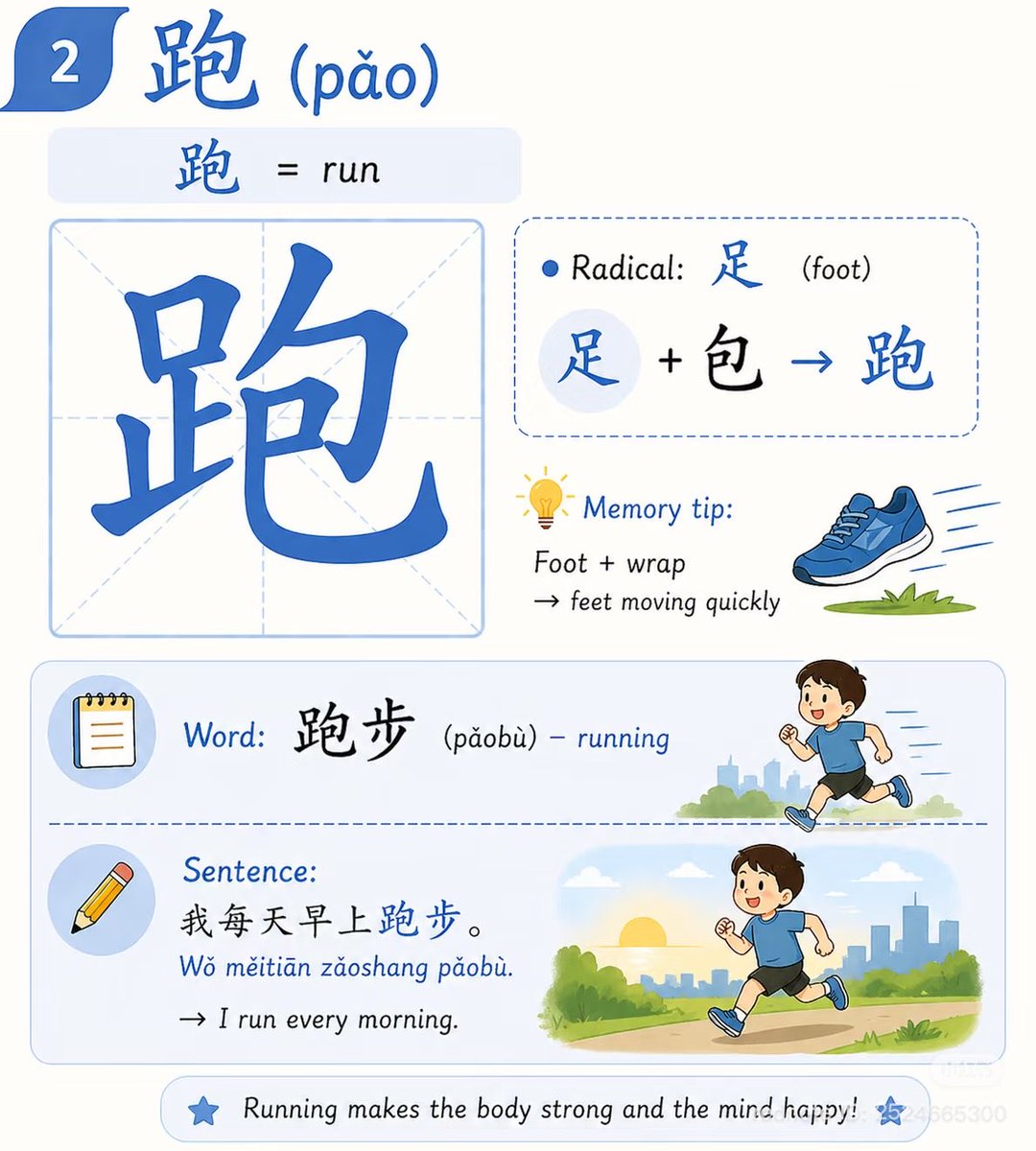
✨ Hanzi of the Day: 建
🔸 Pinyin: jiàn
🔸 Meaning: to build, to establish, to construct
🔸 HSK 3.0 Level: 5
🔸 Radical: 廴 | Strokes: 8
🧩 Words with 建:
• 建议 (jiàn yì) — to propose; suggest; recommend
• 建立 (jiàn lì) — build; set up; establish
• 建设 (jiàn shè) — to build; to construct; develop
📝 Example:
他们计划在这里建一座新学校。
They plan to build a new school here.
📖 More details 👇
https://t.co/lSpZmjme4j
#LearnChinese #HSK4 #Hanzi
The evolution of Chinese characters is like a masterclass in minimalism ✂️
Seeing how complex traditional forms got trimmed down to a few sleek strokes makes the language much easier to learn. It is like the language went through a massive design upgrade.
Which style do you find visually more appealing?
[Useful Words]
• 简体字 / 繁体字 (jiǎntǐzì / fántǐzì) — Simplified characters / Traditional characters
• 听 / 聽 (tīng) — To listen / to hear
• 体 / 體 (tǐ) — Body / form / system
• 让 / 讓 (ràng) — To let / to allow
• 变 / 變 (biàn) — To change
• 吁 / 籲 (yù) — To appeal / to implore
• 郁 / 鬱 (yù) — Dense / gloomy / depressed
• 厅 / 廳 (tīng) — Hall
• 艺 / 藝 (yì) — Art / skill
• 语 / 語 (yǔ) — Language / speech
• 问 / 問 (wèn) — To ask
Spotting the tiny hand icon hidden in every character ✋✨
Once you see the 扌 radical on the left, you realize almost every action verb is just a secret illustration of a hand in motion 🖐️📦
Look closely at the patterns below.
Which one do you use most often?
[Useful Words]
• 拿 (ná) — To hold / pick up
• 我拿着包。 (wǒ ná zhe bāo) — I'm holding the bag.
• 抓 (zhuā) — To grab / catch
• 快抓住! (kuài zhuā zhù) — Grab it quick!
• 扔 (rēng) — To throw
• 把垃圾扔掉。 (bǎ lājī rēng diào) — Throw the trash away.
• 推 (tuī) — To push
• 推开门。 (tuī kāi mén) — Push the door open.
• 拉 (lā) — To pull
• 拉我一把! (lā wǒ yì bǎ) — Give me a hand! / Pull me up!
• 抱 (bào) — To carry / hug
• 她抱着孩子。 (tā bào zhe háizi) — She's holding the child.
• 举 (jǔ) — To raise / lift up
• 举手! (jǔ shǒu) — Raise your hand!
Feeling verbs in Chinese ❤️🧠🇨🇳
To like: 喜欢 (xǐhuan)
To love: 爱 (ài)
To miss: 想念 (xiǎngniàn)
To hate: 讨厌 (tǎoyàn)
To feel: 感觉 (gǎnjué)
To worry: 担心 (dānxīn)
To be afraid: 害怕 (hàipà)
To hope: 希望 (xīwàng)
To want: 想 (xiǎng)
To need: 需要 (xūyào)
To prefer: 更喜欢 (gèng xǐhuan)
To be interested in: 对…感兴趣 (duì… gǎn xìngqù)
To trust: 信任 (xìnrèn)
To admire: 佩服 (pèifú)
To regret: 后悔 (hòuhuǐ)
To relax: 放松 (fàngsōng)
To enjoy: 享受 (xiǎngshòu)
To care about: 在乎 (zàihu)
To be moved / touched: 感动 (gǎndòng)
Are there any other useful vocab lists you’d like to see in a future post? 👇
Chinese question words have a second life 👀
谁, 什么, 哪里, 怎么…
They don’t always ask.
Sometimes they quietly mean:
anyone, everything, anywhere, any way
The tiny clue is 都.
Notice it once, and you’ll start seeing it everywhere. Got it?
[Useful Phrases]
• 谁 (shéi) — Who / Anyone
• 什么 (shénme) — What / Anything / Everything
• 哪里 (nǎlǐ) — Where / Anywhere
• 怎么 (zěnme) — How / Any way
• 都 (dōu) — All / Both / Ever
• 也 (yě) — Also / Too / Even
• 谁都知道 (shéi dōu zhīdào) — Everyone knows
• 我什么都要 (wǒ shénme dōu yào) — I want everything
• 哪里都可以 (nǎlǐ dōu kěyǐ) — Anywhere is fine
• 怎么都行 (zěnme dōu xíng) — Any way is fine
• 你是谁?(nǐ shì shéi?) — Who are you?
• 你要什么?(nǐ yào shénme?) — What do you want?
• 你去哪里?(nǐ qù nǎlǐ?) — Where are you going?
• 怎么了?(zěnme le?) — What happened?
The secret to shopping at a Chinese fruit market is all in the classifiers 🍎
You treat a banana like a long thin stick but grapes like a string of pearls. It makes everything sound so much more organized.
And remember, prices are almost always per 500g, not per kilo ⚖️🍉
Which fruit are you grabbing first?
[Useful Phrases]
• 西瓜 (xīguā) — Watermelon
• 苹果 (píngguǒ) — Apple
• 香蕉 (xiāngjiāo) — Banana
• 葡萄 (pútáo) — Grapes
• 草莓 (cǎoméi) — Strawberry
• 芒果 (mángguǒ) — Mango
• 个 (gè) — General / Round classifier
• 一个苹果 (yí gè píngguǒ) — One apple
• 根 (gēn) — Long / Thin classifier
• 一根香蕉 (yì gēn xiāngjiāo) — One banana
• 串 (chuàn) — Bunch / String classifier
• 一串葡萄 (yí chuàn pútáo) — A bunch of grapes
• 斤 (jīn) — 500g market unit
• 一斤西瓜 (yì jīn xīguā) — 500g of watermelon
• 这个多少钱一斤? (zhège duōshǎo qián yì jīn?) — How much is this per 500 grams?






![chinese_s_d's tweet photo. Chinese has more than one way to say “friend” 💁🏻♀️
And the jump from 朋友 to 闺蜜 isn’t just vocabulary.
Some words feel casual. Some imply years of shared history. Some quietly say, “I trust this person with everything.”
Then there’s 塑料姐妹花… which is definitely not the compliment it sounds like 😅
The friend ladder in Chinese reveals a lot about how relationships are framed✨
[Useful Words]
• 朋友 (péngyǒu) — friend
• 好朋友 (hǎo péngyǒu) — good friend
• 密友 (mìyǒu) — close confidant
• 知己 (zhījǐ) — soul-level friend
• 哥们 (gēmen) — bro
• 哥们儿 (gēmenr) — bro (with the 儿-ending common in northern Mandarin)
• 兄弟 (xiōngdì) — brother-like friend
• 发小 (fàxiǎo) — childhood friend
• 闺蜜 (guīmì) — bestie / very close female friend
• 姐妹 (jiěmèi) — sisters / close female friends
• 塑料姐妹花 (sùliào jiěmèi huā) — “plastic sisterhood” (fake or fragile friendship)](https://pbs.twimg.com/media/HKiF2ANa8AAv9TO.jpg)

![chinese_s_d's tweet photo. Romance has levels in Chinese 💘
You can be 单身, trying to 脱单, stuck in 暧昧, finally 在一起…
And somehow 分手 still might not be the final chapter.
Chinese has a word for every tiny plot twist in the dating timeline ✨
[Useful Words]
• 单身 (dānshēn) — single
• 单身狗 (dānshēn gǒu) — “single dog” / self-deprecating slang for being single
• 脱单 (tuōdān) — to get a partner / escape singlehood
• 暧昧 (àimèi) — ambiguous romance / situationship
• 表白 (biǎobái) — to confess your feelings
• 在一起 (zài yīqǐ) — to get together
• 谈恋爱 (tán liàn'ài) — to be dating
• 对象 (duìxiàng) — partner / significant other
• 订婚 (dìnghūn) — engagement / to get engaged
• 结婚 (jiéhūn) — marriage / to get married
• 分手 (fēnshǒu) — to break up
• 复合 (fùhé) — to get back together](https://pbs.twimg.com/media/HKNGYPAa4AABbj2.jpg)

![chinese_s_d's tweet photo. The evolution of Chinese characters is like a masterclass in minimalism ✂️
Seeing how complex traditional forms got trimmed down to a few sleek strokes makes the language much easier to learn. It is like the language went through a massive design upgrade.
Which style do you find visually more appealing?
[Useful Words]
• 简体字 / 繁体字 (jiǎntǐzì / fántǐzì) — Simplified characters / Traditional characters
• 听 / 聽 (tīng) — To listen / to hear
• 体 / 體 (tǐ) — Body / form / system
• 让 / 讓 (ràng) — To let / to allow
• 变 / 變 (biàn) — To change
• 吁 / 籲 (yù) — To appeal / to implore
• 郁 / 鬱 (yù) — Dense / gloomy / depressed
• 厅 / 廳 (tīng) — Hall
• 艺 / 藝 (yì) — Art / skill
• 语 / 語 (yǔ) — Language / speech
• 问 / 問 (wèn) — To ask](https://pbs.twimg.com/media/HIaZBkVaoAALTS3.jpg)
![chinese_s_d's tweet photo. Spotting the tiny hand icon hidden in every character ✋✨
Once you see the 扌 radical on the left, you realize almost every action verb is just a secret illustration of a hand in motion 🖐️📦
Look closely at the patterns below.
Which one do you use most often?
[Useful Words]
• 拿 (ná) — To hold / pick up
• 我拿着包。 (wǒ ná zhe bāo) — I'm holding the bag.
• 抓 (zhuā) — To grab / catch
• 快抓住! (kuài zhuā zhù) — Grab it quick!
• 扔 (rēng) — To throw
• 把垃圾扔掉。 (bǎ lājī rēng diào) — Throw the trash away.
• 推 (tuī) — To push
• 推开门。 (tuī kāi mén) — Push the door open.
• 拉 (lā) — To pull
• 拉我一把! (lā wǒ yì bǎ) — Give me a hand! / Pull me up!
• 抱 (bào) — To carry / hug
• 她抱着孩子。 (tā bào zhe háizi) — She's holding the child.
• 举 (jǔ) — To raise / lift up
• 举手! (jǔ shǒu) — Raise your hand!](https://pbs.twimg.com/media/HIU-5AIa4AAW8Ff.jpg)
![chinese_s_d's tweet photo. Chinese question words have a second life 👀
谁, 什么, 哪里, 怎么…
They don’t always ask.
Sometimes they quietly mean:
anyone, everything, anywhere, any way
The tiny clue is 都.
Notice it once, and you’ll start seeing it everywhere. Got it?
[Useful Phrases]
• 谁 (shéi) — Who / Anyone
• 什么 (shénme) — What / Anything / Everything
• 哪里 (nǎlǐ) — Where / Anywhere
• 怎么 (zěnme) — How / Any way
• 都 (dōu) — All / Both / Ever
• 也 (yě) — Also / Too / Even
• 谁都知道 (shéi dōu zhīdào) — Everyone knows
• 我什么都要 (wǒ shénme dōu yào) — I want everything
• 哪里都可以 (nǎlǐ dōu kěyǐ) — Anywhere is fine
• 怎么都行 (zěnme dōu xíng) — Any way is fine
• 你是谁?(nǐ shì shéi?) — Who are you?
• 你要什么?(nǐ yào shénme?) — What do you want?
• 你去哪里?(nǐ qù nǎlǐ?) — Where are you going?
• 怎么了?(zěnme le?) — What happened?](https://pbs.twimg.com/media/HIFqVASbkAEF_nX.jpg)
![chinese_s_d's tweet photo. The secret to shopping at a Chinese fruit market is all in the classifiers 🍎
You treat a banana like a long thin stick but grapes like a string of pearls. It makes everything sound so much more organized.
And remember, prices are almost always per 500g, not per kilo ⚖️🍉
Which fruit are you grabbing first?
[Useful Phrases]
• 西瓜 (xīguā) — Watermelon
• 苹果 (píngguǒ) — Apple
• 香蕉 (xiāngjiāo) — Banana
• 葡萄 (pútáo) — Grapes
• 草莓 (cǎoméi) — Strawberry
• 芒果 (mángguǒ) — Mango
• 个 (gè) — General / Round classifier
• 一个苹果 (yí gè píngguǒ) — One apple
• 根 (gēn) — Long / Thin classifier
• 一根香蕉 (yì gēn xiāngjiāo) — One banana
• 串 (chuàn) — Bunch / String classifier
• 一串葡萄 (yí chuàn pútáo) — A bunch of grapes
• 斤 (jīn) — 500g market unit
• 一斤西瓜 (yì jīn xīguā) — 500g of watermelon
• 这个多少钱一斤? (zhège duōshǎo qián yì jīn?) — How much is this per 500 grams?](https://pbs.twimg.com/media/HHclejWa8AAW_AW.jpg)

![chinese_s_d's tweet photo. Just remember 入 means in and 出 means out 🚪
It’s the quickest cheat code for navigating any Chinese airport without getting lost between arrivals and departures ✈️✨
Once you see the pattern, you can't unsee it.
Spot these on your next flight? 🛂
[Useful Words]
• 登机牌 (dēngjīpái) — Boarding pass
• 护照 (hùzhào) — Passport
• 托运行李 (tuōyùn xíngli) — Checked baggage
• 随身行李 (suíshēn xíngli) — Carry-on bag
• 靠窗 (kào chuāng) — Window seat
• 靠走道 (kào zǒudào) — Aisle seat
• 安检 (ānjiǎn) — Security check
• 海关 (hǎiguān) — Customs
• 入境 (rùjìng) — Arrival / Entry
• 出境 (chūjìng) — Departure / Exit
• 登机口 (dēngjī kǒu) — Gate
• 延误 (yánwù) — Delay
• 登机 (dēngjī) — Board the plane
• 起飞 (qǐfēi) — Take off
• 降落 (jiàngluò) — Land
• 行李提取 (xíngli tíqǔ) — Baggage claim
• 行李超重 (xíngli chāozhòng) — Overweight bag](https://pbs.twimg.com/media/HHM6mQ8b0AAzAGA.jpg)


