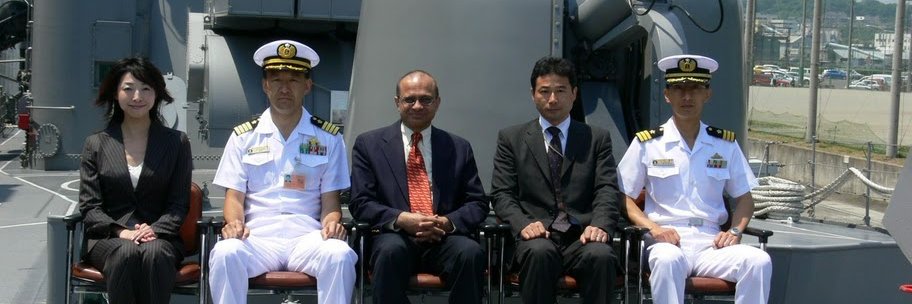
In its centennial anniversary issue released today, @ForeignAffairs has a special review section, "Books for the Century." My book, Water: Asia's New Battleground, has been named as one of the six essential Asia-Pacific books published over the century. https://t.co/kgk2WoIlHH
China’s Two-Pronged Strategy to Constrain India’s Rise: Territorial Pressure and Economic Coercion
After quietly altering the Line of Actual Control in eastern Ladakh, China is now seeking to alter facts on the ground in another sector of the Indo-Tibetan frontier, in Arunachal Pradesh. The leadership of the Indo-Tibetan Border Police (ITBP) has confirmed that active face-offs with Chinese troops continue at multiple Himalayan locations along the Arunachal Pradesh frontier. The standoffs began in July when Chinese forces blocked Indian troops from returning to patrol the Taksing area, triggering additional face-offs elsewhere.
In recent months, China has also imposed India-specific export restrictions widely viewed as an effort to slow India’s emergence as an alternative global manufacturing hub. Leveraging its dominance of global supply chains, Beijing has restricted exports to India of manufacturing equipment, industrial components, battery technologies, lithium-ion-related inputs, and critical minerals.
Washington and Jerusalem Have Learned the Wrong Lessons from Their Wars with Iran
I regret to say that neither the United States nor Israel appears to have learned the most important lessons from their previous military campaigns against Iran.
Five realities must be understood before launching another war:
1. Iran will not surrender. Even a far more intense and destructive military campaign, including strikes against critical energy infrastructure, is unlikely to force Tehran into capitulation. The Iranian leadership will not simply abandon its nuclear ambitions or ballistic missile program under military pressure. If anything, another war could further strengthen its determination to preserve these capabilities.
2. Washington and Jerusalem cannot dictate the duration of the war. Anyone who believes another military campaign can be limited to a few days is making a dangerous assumption. Iran's response is likely to be extensive and violent, potentially forcing the United States and Israel to launch additional strikes. Once this cycle begins, controlling the pace, scope, and duration of the conflict will become extraordinarily difficult.
3. There is no military silver bullet. Striking Iranian infrastructure, including energy facilities, will not magically resolve the Iranian challenge. On the contrary, such attacks could trigger massive Iranian retaliation against energy infrastructure across the Middle East, with devastating regional and global consequences.
4. Iran will have surprises of its own. American and Israeli planners should not assume that Tehran will respond only with missiles and drones. Iran could attempt to disrupt undersea communications cables, conduct unconventional operations, or even launch limited ground operations against vulnerable targets in Kuwait or Bahrain. These are potential scenarios, not certainties, but they cannot be dismissed.
Moreover, another confrontation could rapidly become a regional war, with Hezbollah, Iraqi Shiite militias, and the Houthis likely to join the fighting in one form or another. The assumption that a war against Iran can remain geographically contained is deeply questionable.
5. The global economic consequences could be severe. Another major conflict would almost certainly put substantial upward pressure on global energy prices, particularly if Iranian energy facilities were targeted and Tehran retaliated against Gulf energy infrastructure. The consequences would extend far beyond the Middle East, affecting global markets, inflation, and economic stability.
The bottom line is simple: Without a return to a diplomatic agreement, another military escalation in the Gulf increasingly appears difficult to avoid. But that does not mean another war would achieve its strategic objectives.
Even a highly destructive campaign targeting Iran's most critical infrastructure may fail to produce meaningful strategic gains. Instead, the United States and Israel could find themselves trapped in another prolonged war of attrition, with no decisive outcome, mounting economic costs, and an increasingly unstable Middle East.
The fundamental lesson of the previous campaigns should be clear: Military superiority does not automatically translate into strategic success.
Before launching another war, Washington and Jerusalem must answer a basic question: What exactly can another military campaign achieve that the previous ones failed to accomplish, and what is the exit strategy if Iran refuses to back down?
There is no kinetic solution to the Iranian challenge. Ignoring that reality risks repeating the same strategic mistakes, only at a much higher cost.
#Iran
#iran
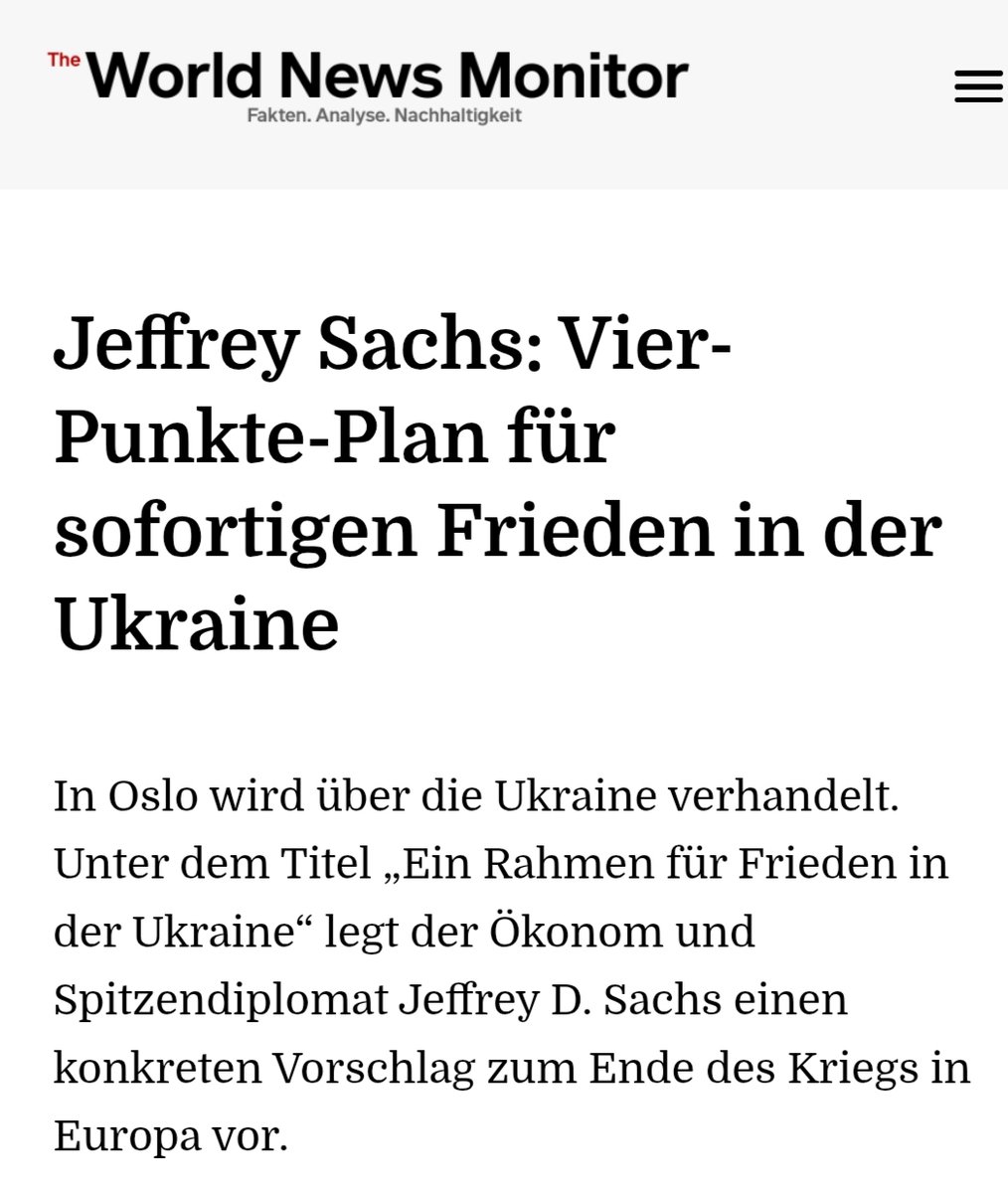
Jeffrey Sachs, the American economist, published an article in the German outlet @WNewsMonitor outlining a possible framework for peace in Ukraine. He proposes a single package that would:
* Establish permanent Ukrainian neutrality (constitutional, Austrian-style) — no NATO membership and no foreign military bases
* Allow Ukraine to pursue EU membership, but only as a permanently neutral state
* Freeze the current line of contact as a ceasefire line, with neither side recognizing the other’s territorial claims
* End further NATO eastward expansion
Additional terms include:
* Ukrainian forces withdraw from the part of Donetsk they control, which becomes a demilitarized zone that Russian troops do not enter
* Russia withdraws from areas it holds in Dnipropetrovsk region and the Kinburn Spit
* A demilitarized “Northern security zone” on both sides of the border, with Russia leaving Kharkiv and Sumy
* The Zaporizhzhia nuclear plant stays under Russian control with IAEA oversight while selling power to Ukraine at cost
Here are the main points. Tell me in the comments what you think.
Refining high-sulfur, extra-heavy Venezuelan crude is significantly more energy-intensive, carbon-intensive, and time-consuming than refining light, sweet crude. While light, sweet crude yields relatively high proportions of gasoline and diesel through atmospheric distillation, heavy crude requires more extensive, multi-stage conversion to produce marketable products.
Yet India’s Jamnagar refining complex has emerged as a leading buyer and processor of U.S.-controlled Venezuelan heavy crude, trading higher energy and emissions inputs for cost and margin advantages.
The long voyage from Venezuela to India also entails substantially higher freight, marine insurance and chartering costs than crude sourced from closer suppliers. For Venezuelan oil to remain competitive on a landed-cost basis (the final cost once the crude reaches an Indian port), its baseline market price must carry a steep enough discount to offset these substantial transportation and associated costs.
Even if Republicans lose control of both the House and the Senate in the midterms, a Democratic-controlled Congress may not be able to rein in Trump. Political weakness at home can lead Trump to lean even harder into foreign policy, with domestic gridlock producing greater international volatility.
U.S. presidents facing a hostile Congress tend to shift more of their time and energy toward foreign and defense policy, where the executive branch enjoys considerably greater latitude than in domestic policy.
A politically weakened Trump, in other words, may become more constrained at home but even less constrained abroad.
It would be a huge miscalculation to assume that Iran will just stand idle and watch the United States and Israel target its infrastructure and attempt to topple its political establishment. Both Washington and Tel Aviv are driven by electoral and political motives, not genuine strategic calculation: Israelis vote in six days, Americans in thirteen.
Iran will deploy all its means to make any attack prohibitively costly. A third wave of war would not stay contained. Power grids, desalination plants, refineries and ports across the region would burn. Tens of millions would be left without water or electricity, and a massive wave of refugees would move from Arab countries towards Europe. Hormuz would close completely, oil would spike, and the global economy would tip into recession. Israel's economy, already bled by mobilisation and missile fire, would not survive a prolonged war of attrition. And Trump would be trapped in a crisis that consumes the rest of his presidency and leaves a wreck for his successors.
A state facing an existential threat knows no boundaries. Even the ICJ's 1996 Nuclear Weapons Advisory Opinion affirmed "the fundamental right of every State to survival." The Court also could not declare even the most extreme means unlawful where "the very survival of a State would be at stake."
I have pointed out many similarities between now and February, when the US was engaged in diplomacy, but Trump had already decided to attack.
But there is one significant difference as well.
Back then, Trump was driven by hubris and criminally erroneous Israeli advice. Israel had convinced him that he could bring down the regime in a few days
Today, he appears to be driven by another emotion: Revenge.
There is a vindictive element to his calculations now because of his anger over how Iran has ruined his presidency, as he is likely about to suffer a humiliation in the midterms.
So the push toward a new war is no longer necessarily driven by a (flawed) geopolitical calculation, but rather by one man's need for revenge against a country Trump himself CHOSE to attack...
The domestic foundation of American global power is crumbling. Trump is less the cause than a symptom and an accelerant. Since the Cold War ended, the United States has pursued global primacy under an implicit bargain with the public: dominance would come cheap. Today Americans are no more willing to bear serious costs for foreign policy than they were in the 1990s. But a far more competitive world is driving up the price of upholding U.S. commitments.
No matter who wins the White House in 2028, this gap will constrain American power around the world.
In a new @CarnegieEndow paper, I trace the U.S. foreign-policy consensus from the Cold War to the present and outline three scenarios for the future:
During his Indian tour, Rubio sought to get India to buy more U.S. energy as well as more oil from Venezuela, whose export revenues are directly deposited into an account controlled by the U.S. Treasury, with Washington determining when, how much and for what purposes the funds are released. Rubio wants the world’s largest oil-refining complex in Jamnagar to process more Venezuelan crude.
Washington appears not to be content with India’s rapid emergence since May as a top global buyer of U.S.-sourced and U.S.-controlled energy supplies. The U.S. has already become India’s largest supplier of both liquefied natural gas (LNG) and liquefied petroleum gas (LPG). At Washington’s urging, India has also become the largest destination for Venezuelan oil exports.
A key U.S. goal is to weaken the Indo-Russian relationship by steering India farther away from Russian crude. While Rubio framed India’s efforts to diversify its energy portfolio as a “smart thing to do,” Washington’s underlying diplomatic objective is to get India to substitute Russian oil with U.S. crude and U.S.-controlled Venezuelan oil.
This is an unfortunate comparison. Equating US relationship with Pakistan with that of India with Iran does not stand scrutiny.
Iran is not our “ Major non- NATO Ally”.
We have not armed Iran for regional balance.
The US has supplied F16s and AMRAAMS to Pakistan.
We have not had any role in Iran developing nuclear weapons. Pakistan has.
The US has countenanced Pakistan going nuclear.
US knows the long history of Pakistan using terrorism against India as state policy. It sheltered Osama bin Laden for years. It was the godfather of the Taliban etc. The US has declared Iran a state sponsor of terrorism and comprehensively sanctioned it. No such action against Pakistan.
The US has now sanctioned India’s participation in the Chabahar project but does not oppose the CPEC and Gwadar.
With U.S.-India political ties under pressure, Rubio’s visit seeks to shift the focus to energy security, corporate partnerships and resolving trade standoffs. By limiting his itinerary to India’s commercial capital, Mumbai, and the world’s largest oil-refining complex in Jamnagar (where he will be hosted by the Ambani family), Rubio is emphasizing pragmatic cooperation over diplomatic friction. The approach could help sustain momentum in energy, private-sector investment and economic ties, thus keeping the broader bilateral partnership productive.
If Taiwan is to become less exposed to the vagaries of any one president, whether in Beijing or Washington, it should make itself harder to coerce, harder to isolate and harder to bargain away. https://t.co/R1bynpTQmE
Muhammad Yunus presided over rampant rights abuses and extrajudicial killings as head of Bangladesh’s Islamist-leaning interim regime. Yet his deep ties to the Clintons have served him well throughout his career.
In the latest example, Yunus was presented with the Hillary Rodham Clinton (HRC) Award by Hillary Clinton herself at Georgetown University.
Yunus pioneered microcredit for which he and the Grameen Bank he headed jointly received the 2006 Nobel Peace Prize, after Bill Clinton lobbied for him. In presenting the prize, the chairman of the Norwegian Nobel Committee recalled Clinton’s 2002 statement: “Dr. Yunus is a man who long ago should have won the Nobel Prize and I’ll keep saying that until they finally give it to him.” The chairman then added, “Now Clinton will no longer need to remind us.”
The award also carried an unmistakable geopolitical message. The committee chairman expressed the hope that “this peace prize will represent a possible approach to the Muslim part of the world” amid the post-9/11 tendency to “demonize Islam.” He added, “It is an important task for the Nobel Committee to try to narrow the gap between the West and Islam.”
The Nobel Peace Prize has, to this day, remained largely a geopolitical instrument, with the Norwegian Nobel Committee often using it to advance a particular political worldview under the mantle of peace. Yunus’s prize, and the committee chairman’s own explanation of its purpose, offered a revealing example.
Pat Buchanan, 1999:
“By moving NATO onto Russia’s front porch, we have scheduled a twenty-first century confrontation. … America will face a hellish dilemma: risk confrontation with a nuclear-armed Russia determined to recreate its old sphere of influence, or renege on solemn commitments and see NATO collapse.”
Therefore, he said, “Offering NATO memberships to Estonia, Latvia, Lithuania, and, as some urge, Ukraine is rashness bordering on madness.” Referring to maps the Clinton team must have ignored, Buchanan warned, “This would put the Russian base at Kaliningrad behind NATO lines and bring into a U.S.-led alliance three nations with huge Russian minorities.” Foreseeing future conflict, he observed that “Latvia is almost half Russian; eastern Ukraine, almost entirely Russian. America could neither defend nor liberate these nations without the risk of nuclear war.”
Pat Buchanan, A Republic, Not an Empire: Reclaiming America’s Destiny (New York: Regnery, 1999), 17–18, 22.
The withdrawal of China’s CMPort from the $392-million SACLH project at Colombo Port is a rare retreat for China’s BRI, highlighting heightened risk assessment and strategic recalibration. CMPort is China’s flagship state-owned port operator, holding a 99-year lease on Sri Lanka’s Hambantota Port and operating the CICT terminal at Colombo Port.
While the cancellation comes at an immediate financial cost to Sri Lanka’s port authority, it frees up valuable port real estate and ends a major exclusivity arrangement. This gives Sri Lanka an opportunity to re-tender the logistics hub under terms that may better reflect its evolving economic and foreign-policy priorities.
The development also creates an opportunity for India and Japan, which are jointly developing the West Container Terminal (WCT) at Colombo Port, to expand their logistics footprint without having to compete with a dominant Chinese position in port warehousing and logistics.
Giant pandas may appear docile, but they are formidable bears with sharp claws and a powerful bite force, points out @Chellaney. In this sense, perhaps they can serve as a symbol of China—just not the one China has sought to cultivate. https://t.co/Nd4NWHWfIg
“The war is not meant to be won, it is meant to be continuous.” — George Orwell, 1984
Defense contractors & their powerful lobby will never be satisfied with simply aiding the U.S. in building a strong military that is prepared for war.
The nature of the industry’s existence is not patriotism, but endless conflict. War is their business model—a perpetual state of war ensures a perpetual demand for their products.
Until we address this issue, we will continue to be subjected to forever wars that only serve the defense contractors—and the warmongering interests wealthy enough to rent the defense contractors.
Stop spilling American blood for profit.
Just before punitive measures under the new Graham Act were scheduled to take effect, Trump’s executive order has paused their application, averting a major diplomatic crisis with India. But this is only a temporary reprieve, not a resolution of the underlying trade and strategic tensions.
The Sword of Damocles remains. Because Trump invoked a statutory presidential waiver rather than repealing the legislation, the legal authority to impose punitive sanctions and tariffs remains intact. The administration can reinstate or modify the measures at any time without further congressional action.
So does U.S. transactional leverage. While the executive order avoids an imminent crisis, it leaves Washington with the option of using the threat of reinstating the measures as bargaining leverage in ongoing trade negotiations or broader geopolitical disputes.
Political analysts and lawmakers increasingly view China's "panda diplomacy" as more of a charming distraction than a meaningful barometer of bilateral relations, observes @Chellaney. https://t.co/Nd4NWHWfIg