Adv Chem 1 & Chem 1 teacher for State College HS. If ur not part of soln, ur part of ppt. Be curious, not judgmental. Always think I’m funnier than I am #AACT
When I was a high school principal, I interviewed a teacher named Jake Huggins. He seemed like a good candidate—friendly, experienced, and thoughtful. I believed he could be a solid addition to our faculty. But any lingering doubt disappeared when he answered one particular question. It has always been my favorite.
I asked him, “Jake, in every school in America, you can place teachers on a continuum. On one end are those who don’t seem to want to be there. They’re always complaining. Their colleagues wonder why they haven’t retired yet. They drain the energy of the building. But on the other end are teachers who are excited to come to work. They love their students. They value their colleagues. They lift the spirits of everyone around them. When graduates come back, these are the teachers they want to see.
So Jake… what’s the difference between these two teachers? What is the X factor? Because that’s what we’re looking for.”
Most teachers answer that question by talking about passion. Or purpose. Or the desire to make a difference rather than just earn a paycheck. Those are good answers. But Jake said something different—something I’ve never forgotten.
He said, “I think almost every teacher starts out idealistic. They love kids. They want to change the world. But after a few years, you hit a wall. You realize how hard this job really is. There are endless papers to grade. Some students make it incredibly challenging to teach. And parents aren’t always supportive.
Some teachers never move past that reality check. They burn out. But others do. They keep their sense of purpose in spite of the challenges. The work is hard, but they remain convinced it matters. Some students are difficult, but they know those students need someone who refuses to give up on them. They face adversity, but they don’t let it steal their passion. Those are the teachers who make a difference year after year.”
We hired Jake.
A few years later he was named the school’s Teacher of the Year.
So today, I salute Jake—and every educator who has faced that “reality check” and chosen to keep going. The ones who remember their whyon the hard days. The ones who refuse to let frustration turn into cynicism. The ones who continue to believe, even when the work is exhausting.
Because those are the teachers who change lives.
And they do it… year after year.
Cheers,
Danny
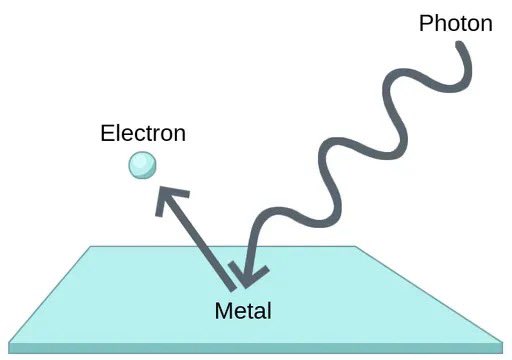
The photoelectric effect occurs when light strikes a material and ejects electrons from its surface. It revealed that light behaves as particles (photons) with energy ( E = h f ), where ( h ) is Planck's constant and ( f ) is the frequency. This discovery, explained by Einstein, revolutionized physics and confirmed quantum theory.
Henry Moseley, the inventor of the modern periodic table, was killed at the age of 27 by a sniper in the Gallipoli battle in 1915.
Moseley was a brilliant physicist who worked at the University of Manchester under Ernest Rutherford, the father of nuclear physics. He was interested in the properties of X-rays and how they could be used to study the structure of atoms. He used a device called a spectrometer to measure the wavelengths of X-rays emitted by different elements when they were bombarded by electrons. He found that there was a regular pattern in the X-ray spectra, and that each element had a characteristic set of lines that could be used to identify it. He also found that the frequency of the most intense line in each spectrum was proportional to the square of a number that he assigned to each element. This number, which he called the atomic number, was later found to be equal to the number of protons in the nucleus of an atom.
Moseley’s discovery was very important for chemistry and physics, as it provided a clear and logical way to organize the elements in the periodic table. It also explained why some elements had similar chemical properties, as they had the same number of electrons in their outer shells. Moseley’s work also supported Niels Bohr’s theory of the atom, which proposed that electrons orbit around the nucleus in discrete energy levels. Moseley’s law also predicted the existence of some missing elements that had not been discovered yet, such as technetium, promethium, and rhenium.
Unfortunately, Moseley’s life and career were cut short by World War I. He volunteered for the British Army as a telecommunications officer, and was sent to Gallipoli, Turkey, where he participated in a campaign against the Ottoman Empire. He was killed by a sniper on August 10, 1915, at the age of 27. His death was mourned by many scientists and scholars, who regarded him as one of the most promising physicists of his generation. Some even speculated that he would have won the Nobel Prize in Physics if he had survived.
Niels Bohr once said that,
Rutherford's work "was not taken seriously at all" and that the "great change came from Moseley."
His death also prompted the British government to ban other prominent scientists from serving in front-line roles, as they realized the value and importance of scientific research for society
[Photograph: Balliol-Trinity College Laboratory, 1910]
@PhysInHistory JJ Thomson theorized the "electron" as a continuous ring of electrification in the atom (1903).
Schrodinger theorized the "electron" as a continue charge medium in the atom (1926).
JJ Thomson's son, George, showed that "electrons" are wave via DIFFRACTION experimental results.
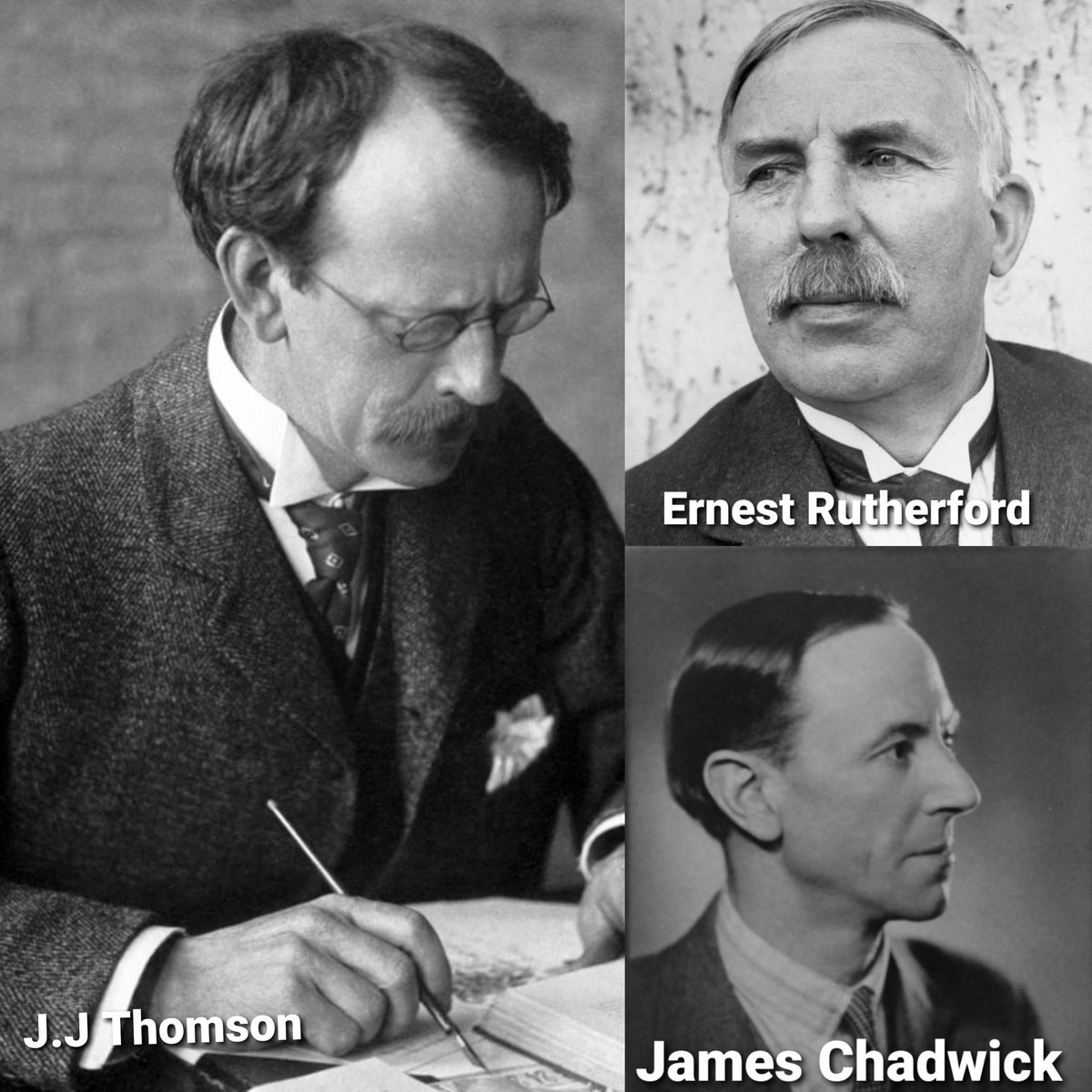
James Chadwick discovered the neutron under the leadership of Ernest Rutherford in 1932. Rutherford, who in 1911 discovered the proton, was the student of Joseph John Thomson. Thomson discovered the electron in 1897. ✍️
@scasdathletics Boys Golf advanced to the PIAA state team tournament on 10/22 by winning regionals yesterday. Team total score 299 (+11).
Luke McGraw: 71 (-1)
Brady Wager: 74 (+2)
Charlie Ladrido: 77 (+5)
Luke Ladrido: 77 (+5)
Jacky Sun: 80 (+8)
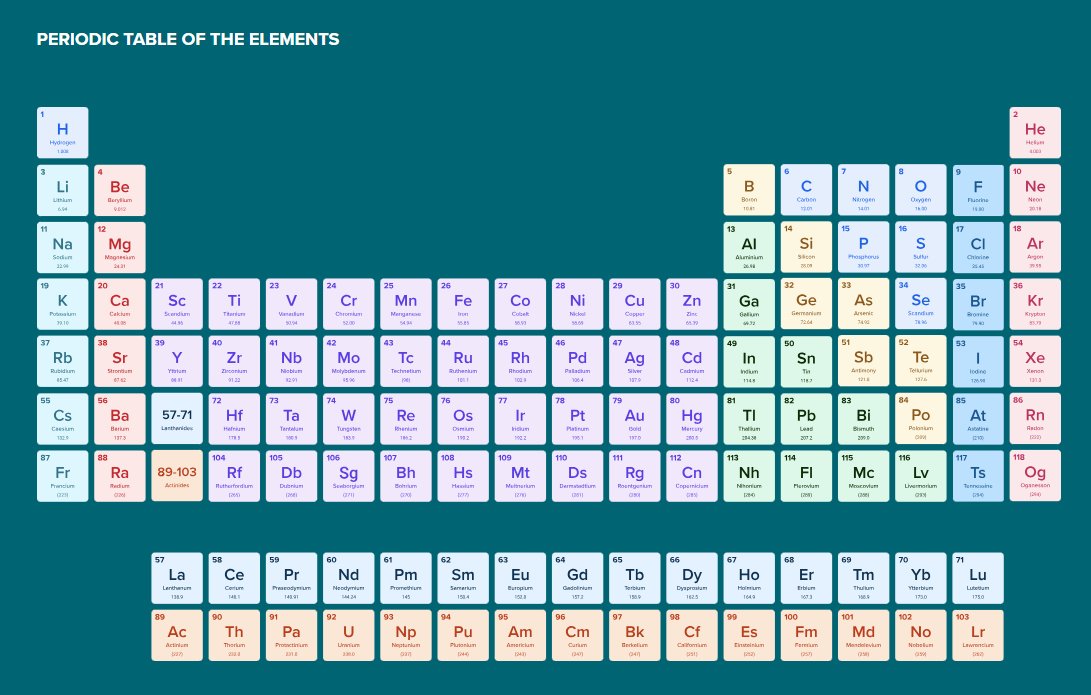
Did you know today is National Periodic Table Day? 💡 Find out which type of element you are by taking this nine question personality quiz to determine which of four types of elements best matches your personality!
🔗 https://t.co/LMWzafSuN9
If you broke your first year, no advanced chemistry course into “macro” and “micro” topics, what would they be? Here are mine:
Macro:
Periodic Table
Nomenclature
Chem Rxns
The Mole
Stoichiometry
Basic Soln Chem
Micro:
Atomic Struct / Nuclear
Electron and Atom
EM spect
Bonding





![PhysInHistory's tweet photo. Henry Moseley, the inventor of the modern periodic table, was killed at the age of 27 by a sniper in the Gallipoli battle in 1915.
Moseley was a brilliant physicist who worked at the University of Manchester under Ernest Rutherford, the father of nuclear physics. He was interested in the properties of X-rays and how they could be used to study the structure of atoms. He used a device called a spectrometer to measure the wavelengths of X-rays emitted by different elements when they were bombarded by electrons. He found that there was a regular pattern in the X-ray spectra, and that each element had a characteristic set of lines that could be used to identify it. He also found that the frequency of the most intense line in each spectrum was proportional to the square of a number that he assigned to each element. This number, which he called the atomic number, was later found to be equal to the number of protons in the nucleus of an atom.
Moseley’s discovery was very important for chemistry and physics, as it provided a clear and logical way to organize the elements in the periodic table. It also explained why some elements had similar chemical properties, as they had the same number of electrons in their outer shells. Moseley’s work also supported Niels Bohr’s theory of the atom, which proposed that electrons orbit around the nucleus in discrete energy levels. Moseley’s law also predicted the existence of some missing elements that had not been discovered yet, such as technetium, promethium, and rhenium.
Unfortunately, Moseley’s life and career were cut short by World War I. He volunteered for the British Army as a telecommunications officer, and was sent to Gallipoli, Turkey, where he participated in a campaign against the Ottoman Empire. He was killed by a sniper on August 10, 1915, at the age of 27. His death was mourned by many scientists and scholars, who regarded him as one of the most promising physicists of his generation. Some even speculated that he would have won the Nobel Prize in Physics if he had survived.
Niels Bohr once said that,
Rutherford's work "was not taken seriously at all" and that the "great change came from Moseley."
His death also prompted the British government to ban other prominent scientists from serving in front-line roles, as they realized the value and importance of scientific research for society
[Photograph: Balliol-Trinity College Laboratory, 1910]](https://pbs.twimg.com/media/G6g7h6LaEAADM_y.jpg)