What makes people willing to pay for news? Turns out, one of the top reasons is because it "helps maintain and promote their social status among peers," according to a recent survey. https://t.co/R8llxYYPCb
"#Qualitative Data Analysis: Essential Thinking to Theme Development" - Maintaining the integrity of each case embraces what is said (text) & not said (nonverbal communication) as well as other components of the research engagement such as images. https://t.co/8jO3ze8t3C
Being proactive at work can leave you mentally drained later. New #research from @edhec_BSchool, @essec & @unipotsdam professors explores the cognitive cost of the extra effort in improving your work & what #educators can do to protect their energy: https://t.co/AHTWXrpg2d
This open access article was published in December but I hadn't pushed it out yet. If you're using Hierarchy of Influences, I encourage you to have a look at how we revisit the model. (Kudos to Zayeef) Full article: https://t.co/DxttSv0woU
Some older nonprofit outlets are struggling to keep up. Newsrooms launched before 2009 were much more likely to report revenue declines than younger outlets. https://t.co/SfV4EGaXNt
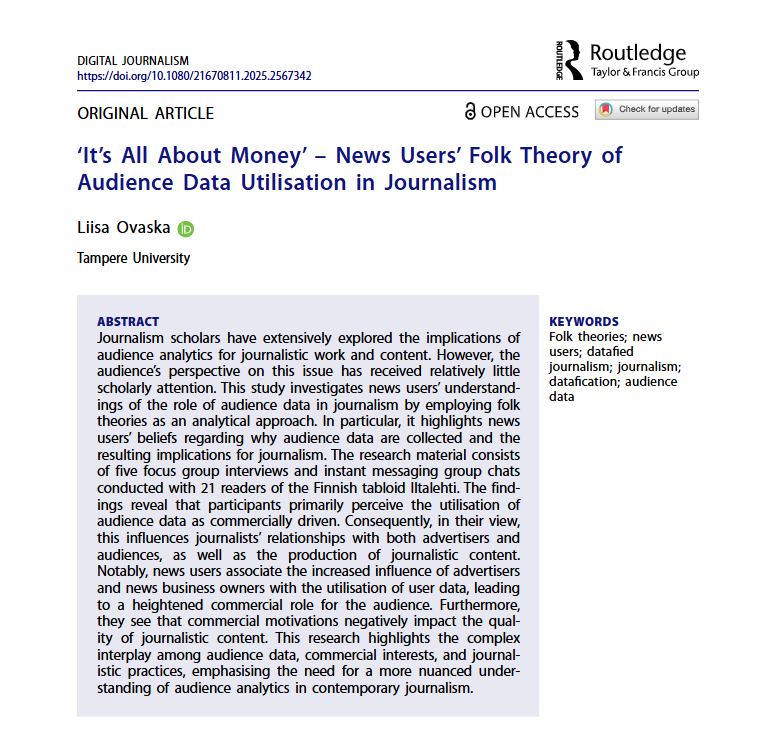
ONLINE FIRST & OPEN ACCESS! Finnish news users often see the use of audience data as commercially driven. But is it only about money? @OvaskaLiisa highlights the need for a more nuanced understanding of how audience data is used in journalism.
➡️https://t.co/FHDnB1s9WY
"People who believe the news is not made for them are reaping far fewer benefits from news, despite consuming more of it than their counterparts". New work from Tabor et al on audience alienation (more common among young+less privileged) and consequences https://t.co/JN5fuNHh4J
📢 New Publication Alert 📢 In this monograph, Esther Thorson and I employed three studies to answer one question: What makes people pay for news subscriptions (even when free alternatives are available)? https://t.co/7pwdrJh5Rt
A project I reported almost a year ago is finally out! In my last semester at @NUjournalism I wrote a piece about what journalism schools should be doing to better prepare their students for the harassment they might face. It's in @NiemanReports today: https://t.co/DKHvkP8kWD
Special thanks to Drs. @dr_serena , Stephen Lacy, and Johannes M. Bauer, whose comments were instrumental in shaping this work. We also thank JCM editor @DrLindaSteiner for her tremendous support throughout all stages of publication.
Plus, make sure to check out the commentary by @dkiesow who contextualized our theory and proposed integrating more applied business frameworks such as JTBD. https://t.co/K1fcjPbH2s
We identified six fundamental motivations for American news subscribers: supporting journalism, journalism quality, triggering by the paywall, community attachment, affordability, and content utility. More in the article (or invite us for a shorter presentation 😉).
How to write a grant?
1. Write it for the reviewer, not you, the applicant.
2. Communicate in stories.
3. Make your story cohesive—leave no puzzling gaps.
4. Make your story resonate to keep the reviewer reading.
5. Accept chance and noise in peer-review.
https://t.co/wHZ065DNlm
"Understanding LLMs from Scratch Using Middle School Math"
Neural networks learn to predict text by converting words to numbers and finding patterns through attention mechanisms.
So the network turns words into numbers, then use attention to decide what's important for predicting next words
Nice long blog (40 minuted reading time), check the link in comment.
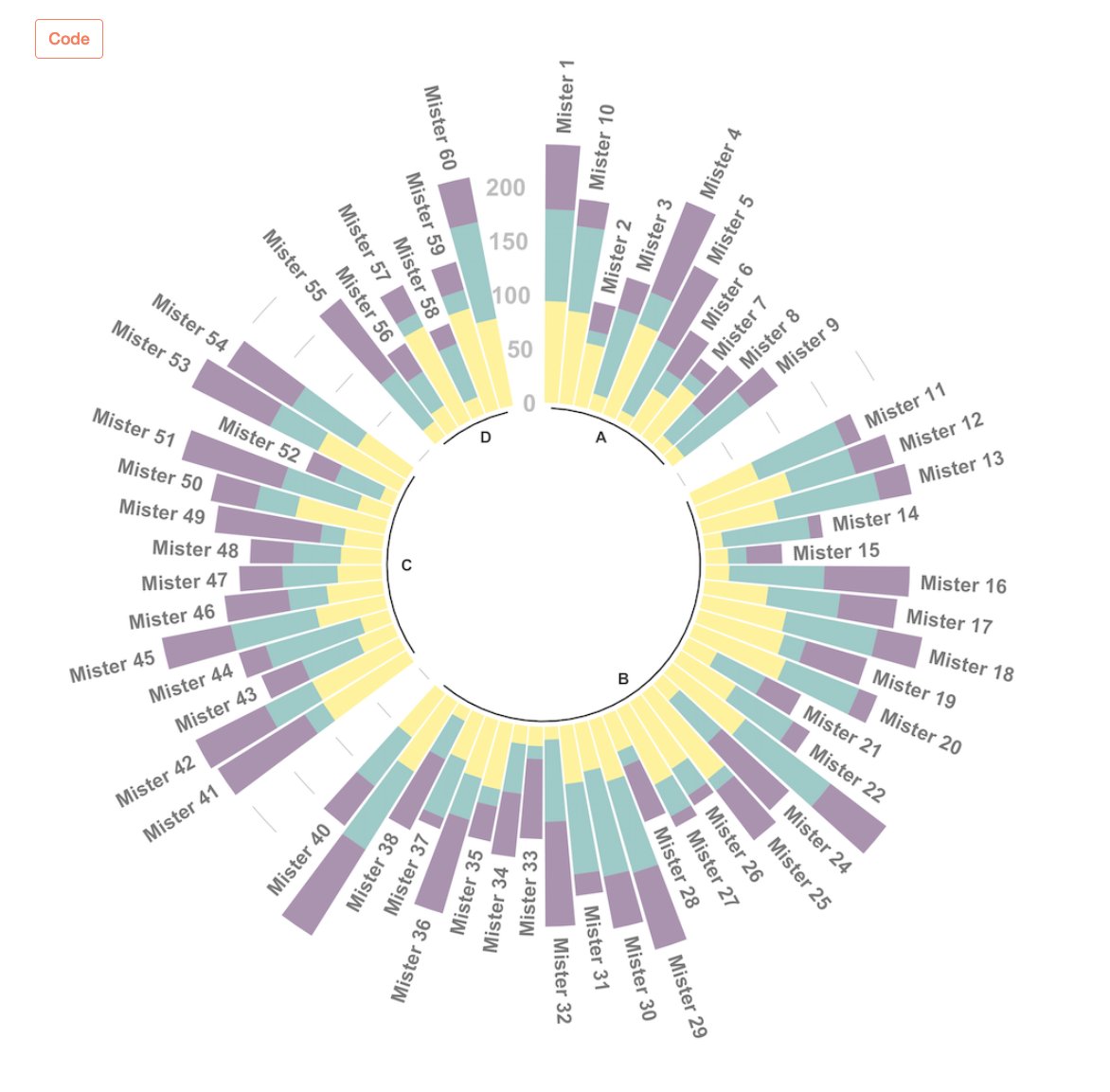
Circular barplot? 🌀
➡️ There are now plenty of tutorials in the R and Python graph galleries!
- Python with @matplotlib :
https://t.co/8BKqLYsRH8
- R with ggplot2:
https://t.co/ot3B7FJK9g
I honestly cannot remember the last time I was as shocked by a news-industry number as I was by this one:
***TWO HUNDRED THOUSAND*** @washingtonpost subscribers have canceled over Jeff Bezos' decision to block an endorsement of Kamala Harris.
https://t.co/wvup7c23Wm