The rule:
Memory is safe for things the next task makes Claude re-touch.
Memory is a footgun for ambient state — configs, versions, conventions.
Audit your MEMORY.md. Pull anything a task could finish without verifying.
Claude Code edits its own memory when it catches you lying.
I planted 10 false claims in its MEMORY.md to see what it would believe.
In 5 cases, it didn't just refuse the lie — it deleted the entry, unprompted.Claude Code edits its own memory when it catches you lying.
I planted 10 false claims in its MEMORY.md to see what it would believe.
In 5 cases, it didn't just refuse the lie — it deleted the entry, unprompted.
3 of 10 — it believed.
The caught ones were facts the task forced Claude to open — read https://t.co/EbABjFUz4W to parse, read https://t.co/qG5iDwl0GB to use the function.
The missed ones were ambient: test framework, lint config, library version. Things Claude wrote past without opening.
Personal update: I've joined Anthropic. I think the next few years at the frontier of LLMs will be especially formative. I am very excited to join the team here and get back to R&D. I remain deeply passionate about education and plan to resume my work on it in time.
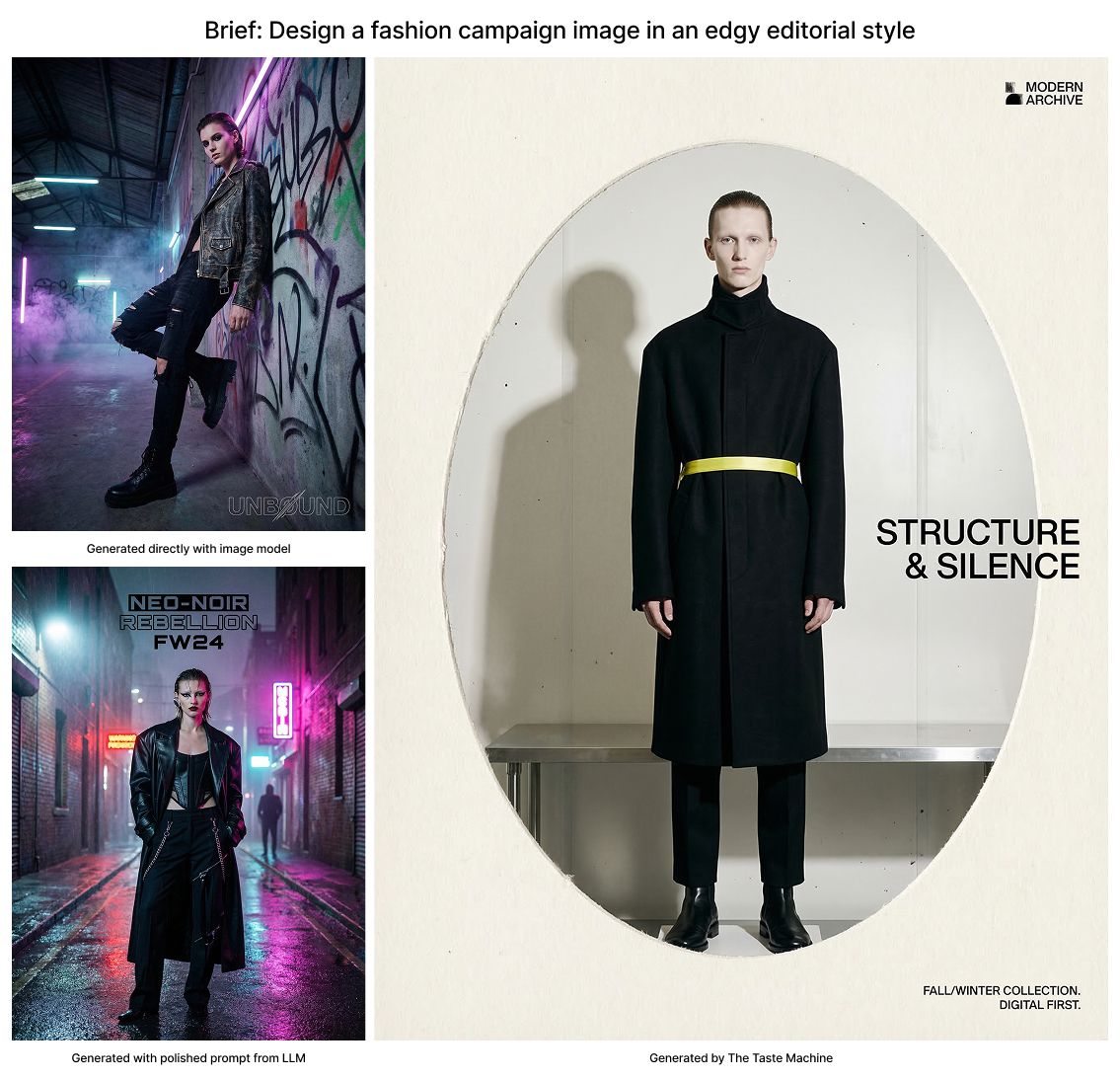
Ohhhhh, This article gives me a better language for what I’ve been exploring with Taste Machine.
and I can confirm the effects on creative works too. I built an external "taste layer" around image generation models, to "teach" models about good design, and uses agents to feedback into the system which lead to better results, more context on https://t.co/AbxkHUDWfQ
Codex grew programmatic policies with no neural nets: max score on Breakout, and SOTA-level scores on MuJoCo.
Maybe heuristics were not too weak. Maybe they were just too expensive to maintain. Maybe it's the next paradigm.
https://t.co/1ZaIneleuW
Can AI design tools learn taste, not just style?
AI image tools are getting much better, but many outputs still seem to converge toward the same “default good taste.”
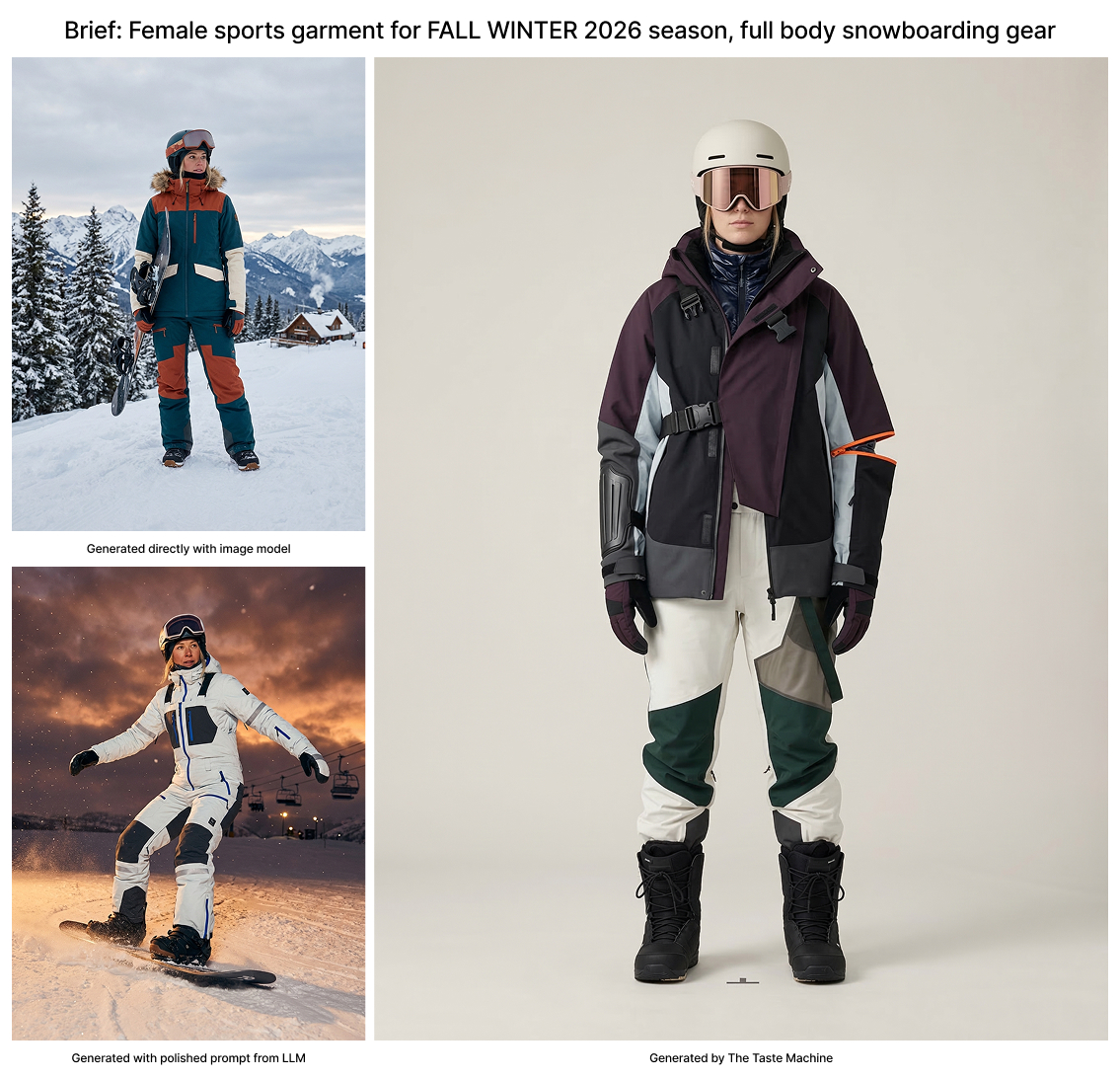
I’m experimenting with The Taste Machine: a taste layer that treats visual judgment as a reusable profile, not just a prompt.
I attached a few comparisons using the same task across raw Nano Banana Pro, Lovart Agent, and The Taste Machine.
Curious how designers here think about this:
Should personal taste in AI design be handled through prompts, references, trained profiles, agents, or something else?
Try it here:https://t.co/AbxkHUDoqi
Not a real benchmark as taste/aesthetics is so subjective, but I gathered some feedbacks from some designers/creatives, and roughly mapped their thoughts on the different methods(models/tools), this is how they compare, and should give you a ball park on how these methods perform, especially how the Taste machine do in the current state of models.
GPT Image 2 changed the problem.
AI image models now have better taste by default.
But default taste is still the most probable taste — not necessarily your taste if you want differentiation.
That’s why I’m making The Taste Machine public: an experimental “taste layer” for image generation that anyone can join and test.
The goal is not just prettier images.
The goal is controllable, personalized visual judgment.
It’s live now: https://t.co/AbxkHUDWfQ
Come test it with me.
GPT Image 2 changed the problem.
AI image models now have better taste by default.
But default taste is still the most probable taste — not necessarily your taste if you want differentiation.
That’s why I’m making The Taste Machine public: an experimental “taste layer” for image generation that anyone can join and test.
The goal is not just prettier images.
The goal is controllable, personalized visual judgment.
It’s live now: https://t.co/AbxkHUDWfQ
Come test it with me.
The secrets behind LLM? If you work in AI, you might want to be able to build a mental model of how an LLM work, visually. Like how @karpathy mentioned the tweat he saw recently"You can outsource your thinking, but you can’t outsource your understanding".
I upgraded my toy project Spreadsheet is all you need from about 2 years ago, this time, I put GPT2 inside a browser, converted each compute pass to a fragment shader, so that as the heatmap gets rendered, the inference is done at the same time. Then you can play with this interactive LLM anatomy in realtime. I open sourced it on https://t.co/ZxOfx1GJAE you can ask Claude to load another model into this to see how it works inside.
For Chat users, you can rely on the ratio only, you might get a 80% accuracy, but for API users, at least from my experience, 90% the chance it falls back to 1:1 if you only specify ratio like 3:5 or 2:3, the resolution will help a lot with locking down the output.
I've reverse engineered GPT-Image-2's "weird" ratio system. Here is what is actually supported.
To use the exact ratio in the API or in Chat, append this phrase: Output in exactly 1774px x 887px (2:1 ratio) resolution landscape format. Swap number and format as you need.
I've reverse engineered GPT-Image-2's "weird" ratio system. Here is what is actually supported.
To use the exact ratio in the API or in Chat, append this phrase: Output in exactly 1774px x 887px (2:1 ratio) resolution landscape format. Swap number and format as you need.
I've reverse engineered GPT-Image-2's "weird" ratio system. Here is what is actually supported.
To use the exact ratio in the API or in Chat, append this phrase: Output in exactly 1774px x 887px (2:1 ratio) resolution landscape format. Swap number and format as you need.
Stop treating Nano Banana Pro as a designer.
It can generate.
It can reason a bit.
But actual design still needs a layer before generation — a layer for taste, judgment, and selection.
A carefully designed memory system adjusts how the model interprets the design brief as if there is a personal choice that guides the decision, and worked surprisingly well. You can see from the comparisons, how model just decides to fall on the most probable directions.
As taste gets more expensive, it also forces us to ask what taste actually is, instead of treating it as a magical human trait.
I’ve been experimenting with that, and the results suggest it may be more reproducible than we think.
Hint: it's the memory that made it work.
I made the one on the left with Figma with the prompt "design a magazine cover for a fashion magazine showing the latest women's 2026 trends", and the one on the right is through the Taste Machine with the same prompt. It's not style transfer or maxing prompt engineering.