Bobby Fischer’s obsession with chess
Bobby once told a BBC journalist about being a chess player
”You're kind of out of touch with real life being a chess player- not having to go to work and deal with people on that level. I've thought of giving it up, off and on, but I always considered: What else could I do?”
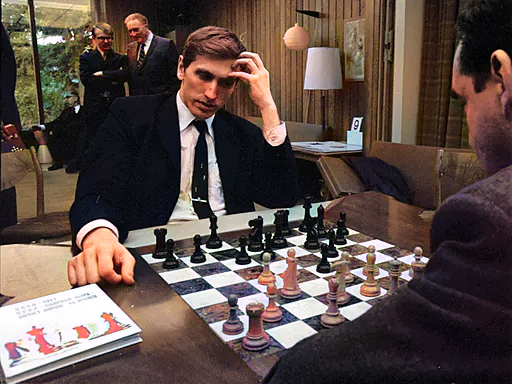
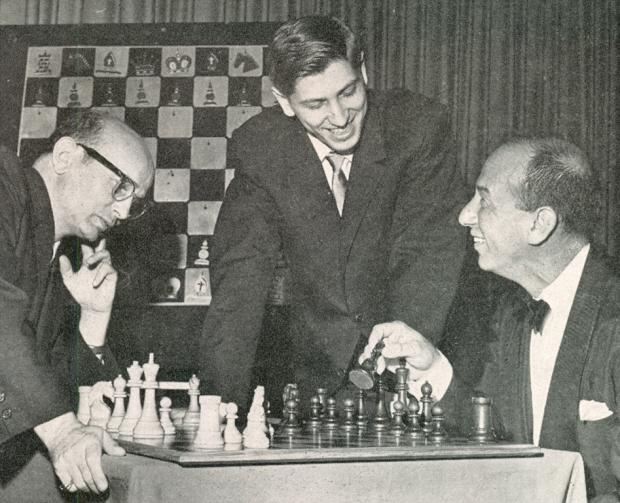
Even to other GMs, his absorption was crazy. The Soviet grandmaster Yuri Averbakh describes meeting him for 1st time in 1958:
“He gazed without interest at the beautiful scenery of the Adriatic Côte d'Azur, never once went to the beach, never took a swim.”
Former president of the U.S. Chess Federation Don Schultz remembers sharing meals with Fischer and other chess players. If the conversation strayed from chess, "You would look over to him and he'd be lunched over the side of the table, running through moves on a socket set.”
Frank Brady even once said Fischer empathizes with the position so much, that it can cause him physical or psychical pain. If he has a backward pawn or ill-placed knight, he would get tense as if he were that pawn. At these moments, Fischer is chess.
A mention of Capablanca in Hollywood film
The US detective writer Raymond Chandler – whose books inspired Hollywood films such as The Big Sleep and The Long Goodbye, was a huge fan of Capablanca’s chess.
His private detective protagonist Philip Marlowe is fond of replaying Capablanca’s most famous games, as in this famous scene from The High Window, in which Marlowe narrates:
“It was night. I went home and put my old house clothes on and set the chessmen out and mixed a drink and played over another Capablanca. It went 59 moves. Beautiful cold remorseless chess, almost creepy in its silent implacability… Then I carried my glass out to the kitchen and rinsed it and filled it with ice water and stood at the sink sipping it and looking at my face in the mirror. ‘You and Capablanca,’ I said.”
📷 Humphrey Bogart and Lauren Bacall from the film version of The Big Sleep
Bobby Fischer’s Cuban story
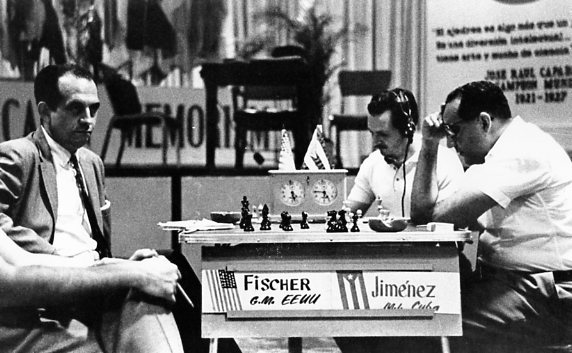
The tournament that brought him back was the Capablanca Memorial in Havana, which opened in August 1965. Fischer's first international event since what he regarded as the catastrophe of Curaçao.
For an American, participation was a diplomatic challenge. This was a few years after Cuban missile crisis. When Fischer applied to the U.S. State Department for a permit to visit Cuba, they flatly turned him down.
Rather than fight the bureaucracy, Fischer's solution was to offer to play by telex. He would make his moves in New York while his opponents made theirs in Cuba. The solution would cost the organizer $10,000.
In the meantime, his lust for control was undiminished. Before the tournament began, Fischer read that Castro was proclaiming his, Fischer's, involvement a propaganda victory. Fischer reacted with a cable to the Cuban leader withdrawing from the tournament unless
"You immediately send me a telegram declaring that neither you, nor your government, will attempt to make political capital out of my participation.”
The media on Bobby Fischer’s infamous blunder Bxh2
Fischer was the chess machine who did not commit errors. That was part of his aura, part of the "Bobby Fischer" legend, a key to his success. Newspapers reported a gasp of surprise spreading through the auditorium.
Spassky, who had trained himself not to betray emotion, looked momentarily startled.
Those who later analyzed the match were equally dumbfounded. "When I saw Bobby play this move," wrote Golombek, "I could hardly believe my eyes. He had played so sensibly and competently up to now that I first of all thought there was something deep I had overlooked; but no matter how I stared at the board I could find no way out."
Nor could Robert Byrne and Ivo Nei, who analyze the game in their book on the match: "This move must be stamped as an outright blunder."
The British chess player and writer C. H. O'D. Alexander's verdict is similar: "Unbelievable. By accurate play Fischer had established an obviously drawn position ... now he makes a beginner's blunder."
A television pundit on the U.S. Channel 13 reckoned it would go down as one of the great gaffes of all time. The Los Angeles Times thought it could be explained only as a "rare miscalculation by the American genius." In Moscow, the correspondent for the Soviet state newspaper Izvestia, Yuri Ponomarenko, located the move's source in sheer greed.
Bondarevskii commented that the move was "a vivid example to smash the myth of [Fischer] as a computer."
Anatoly Karpov, the 21-year-old Soviet star in the making, had a psychological theory involving both players: Spassky was afraid of the American and had sought to prove to himself that he could always draw with the white pieces. Fischer, annoyed, attempted to disprove this. "So he sacrificed a piece without rhyme or reason."
Kasparov vs the World: The greatest online challenge
This was a game of chess played over the internet in 1999. More than 50,000 people from 75 countries participated.
In 1990s, Kasproav was intrigued with the presence of the Internet. After his 2nd match with Deep Blue in 1997, he wanted to test the potential audience and find a partner to coordinate an online chess event. Microsoft was happy to help him and the event was run on MSN Gaming Zone website.
The pace of the game was 1 move a day. 12 hours for Kasparov to move and 12 hours for for analysts (several teen chess stars) to see the move and write recommendation. In the next 18 hours, the World Team would discuss in forums and vote.
The World Team also benefited from the computer chess analysis at the time. Kasparov himself also conducted with Yury Dokhoian and Boris Alterman.
During the match, people were eagerly engaged in MSN forum. Kasparov also admitted reading the discussions within the forum regularly. After 62 moves played over 4 months, Kasparov won the game. In 2000, he published a book just about the match Kasparov Against the World: The Story of the Greatest Online Challenge.
Kasparov later said
“It is the greatest game in the history of chess. The sheer number of ideas, the complexity, and the contribution it has made to chess make it the most important game ever played.”
Soviet Union vs The Rest of The World 1970
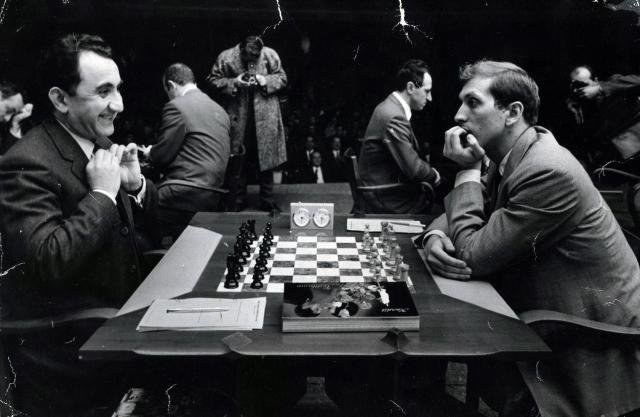
In 1970, Fischer had not played competitive chess for 18 months. Many thought he would never return. To general surprise and delight, he agreed to participate in the Soviet Union vs. the Rest of the World in Belgrade.
The 🇩🇰 Danish grandmaster Bent Larsen demanded that he play on Board One for the Rest against the leading Soviet, pointing out quite reasonably that he had achieved the best tournament results over the previous 2 years.
To even greater amazement, Fischer agreed to step down to Board Two. It meant that he played Petrosian rather than Spassky.
Despite his voluntary concession, Fischer was fuming. Knowing how he could take his anger out on tournament organizers, the press monitored his every movement. Soviet grandmaster Mark Taimanov says reports on Belgrade Radio were akin to battlefield dispatches: "Fischer has left the room," "Fischer has ordered dinner in the restaurant."
However, the American's humor soon improved; though handicapped by a lack of practice, he beat Petrosian in the first 2 rounds and drew with him in the last 2. Meanwhile, Spassky and Larsen shared the honors with a win apiece. (Spassky's win became famous-achieved in 17 moves. It was one of the quickest in grandmaster history).
The Soviet Union edged to victory overall by a single point.
Sultan Khan
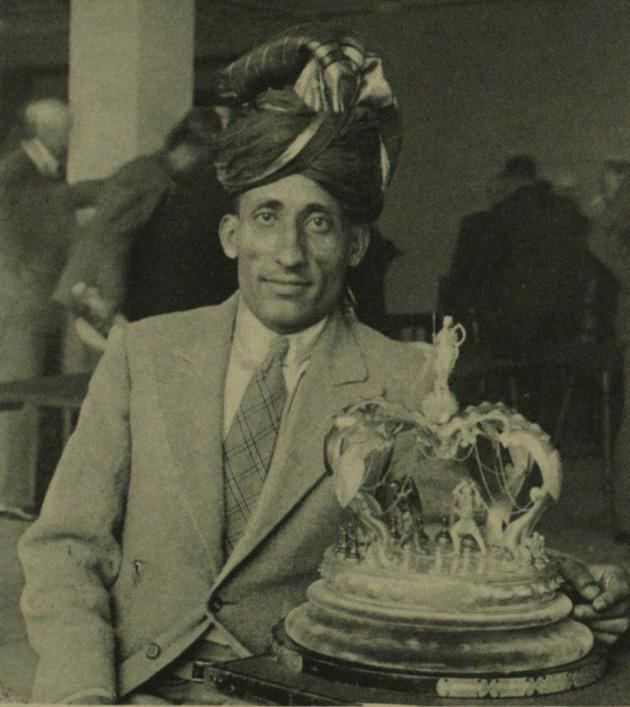
Mr Sultan Khan was an Indian servant who won the British Chess Championship in 1929, 1932, 1933. Within a year of learning Western Chess, he beat many grandmasters at the time including former World Champion Jose Capablanca. He definitely belonged to top 10 chess players of the world at the time.
Hooper and Whyld write of him:
“When Sultan Khan first travelled to Europe his English was so rudimentary that he needed an interpreter. Unable to read or write, he never studied any books on the game, and he was put into the hands of trainers who were also his rivals in play.
He never mastered openings which, by nature empirical, cannot be learned by the application of common sense alone.
Under these adverse circumstances, and having known international chess for a mere 7 years, only half of which was spent in Europe, Sultan Khan nevertheless had few peers in the middlegame, was among the world's best two or three endgame players, and one of the world's best ten players.
This achievement brought admiration from Capablanca who called him a genius, an accolade he rarely bestowed.”
December 1933, he came back to India and the chess world never heard from him again. He gave up chess to cultivate his ancestral farmlands, where he lived the rest of his life.
Sultan was considered the strongest chess master of his time from Asia.
A photograph of Olivia de Havilland, from page 4 of Errol & Olivia by Robert Matzen (Pittsburgh, 2010). The caption is
“To escape an unhappy home life, Olivia de Havilland finds a creative outlet with the Saratoga Community Theatre. Here, at age 16, she plays Alice in Alice in Wonderland, her first acting role.”
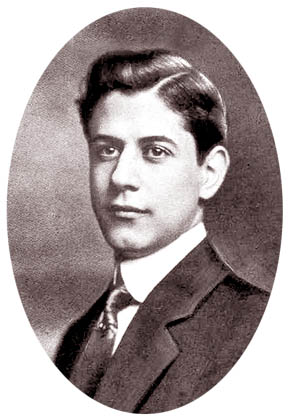
The first time Capablanca played chess at 4, he won!
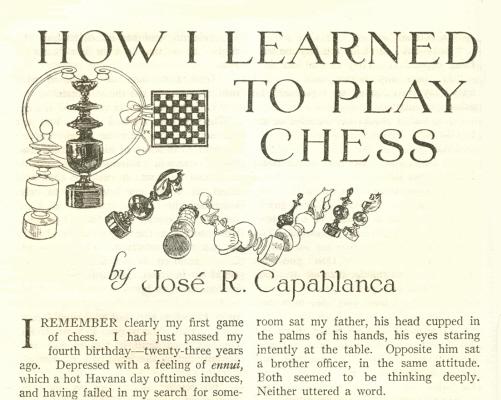
This is the story of how Capa learned chess.
Capa’s father was a poor chess player, but a good soldier. He served in a division of Spanish army, stationed in Havana, Morro Castle. Hence, his companions were all soldiers. Capa grew up hearing stories about wars, strategic battles and military heroes. He well understood the importance to the soldier of a well-planned attack or defense.
One day, at the age of 4, he approached the his father’s quarter and observe the deep focus of him and his fellow brother officer. They were both staring silently to a board and thinking deeply. This was the 1st time Capa saw the chessboard.
He observed how his father moved figures from squares to squares. He was immediately hooked into the game.
As the 2nd game got played, he already understood how each pieces move and found out the principles of the game. Chess to him was comparable to a military battle.
In that 2nd game, his father made a blunder that Capa noticed. His opponent also overlooked the move. At the end of the match, he called out his father’s mistake. At first, the father dismissed his statement. He knew Capa didn’t see the game of chess before. To reply, Capa challenged his father to a game of chess.
As the game started, the father got concerned to see his kid being able to handle pieces very well. Capa was amazed and felt pleasure. He won the match.
After that incident, the father’s friends called the boy a prodigy. That was how his whole chess career started.
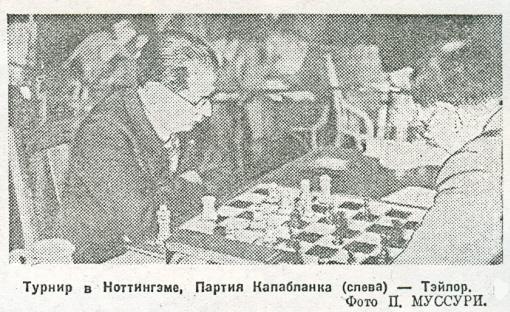
Photographs of Capablanca in 1920s, 1930s
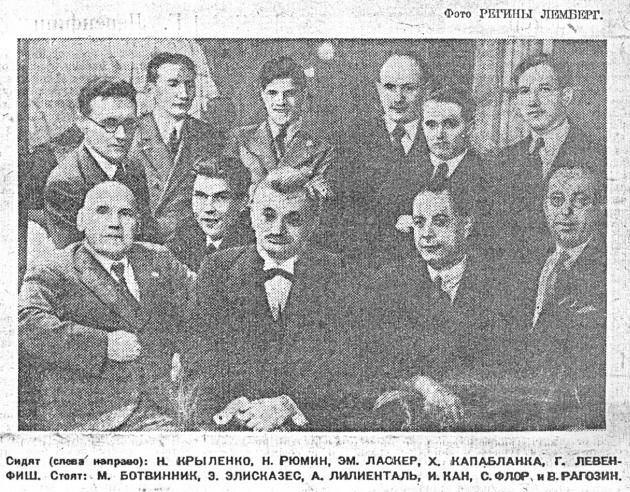
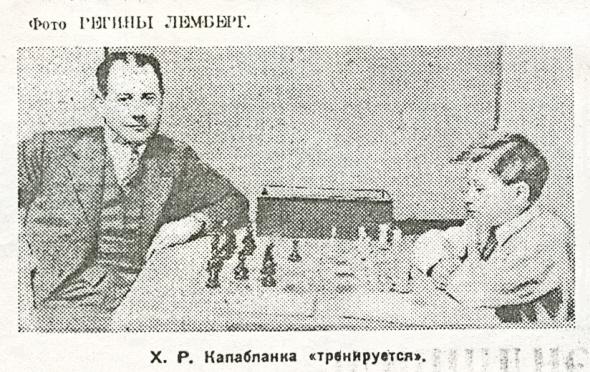
Many of these were published in Soviet chess magazines of the 20s and 30s. The images were from Moscow tournament bullettin
Hollywood and Chess - Pan-American Congress
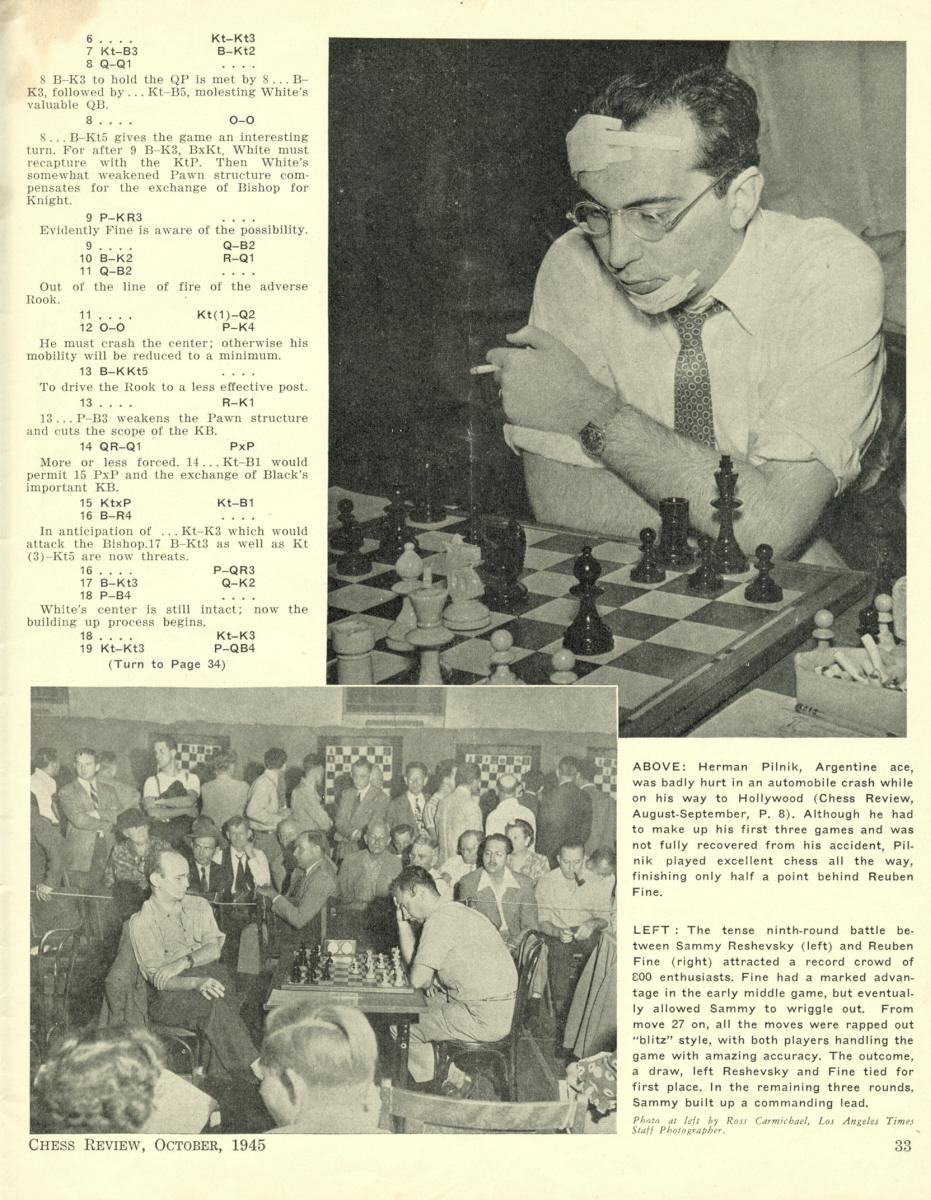
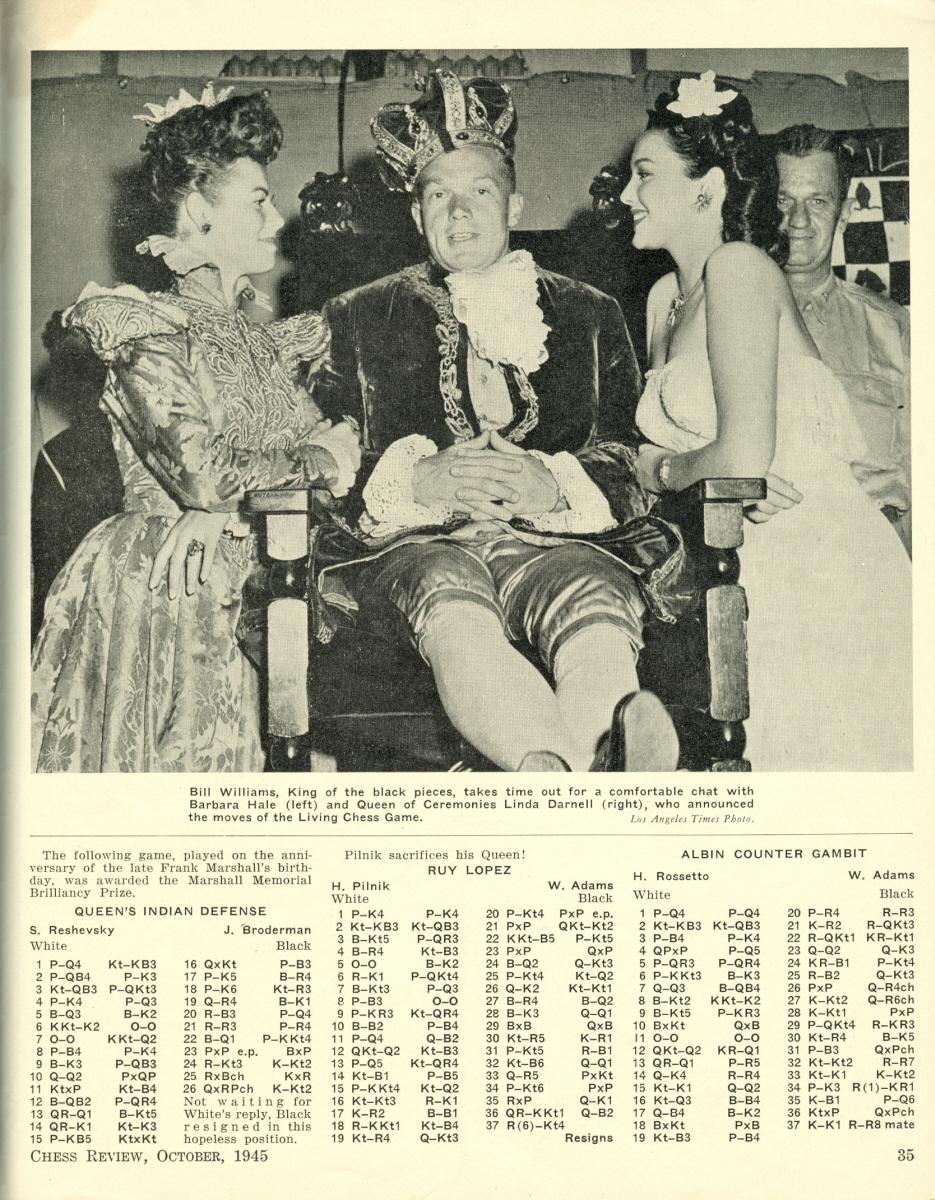
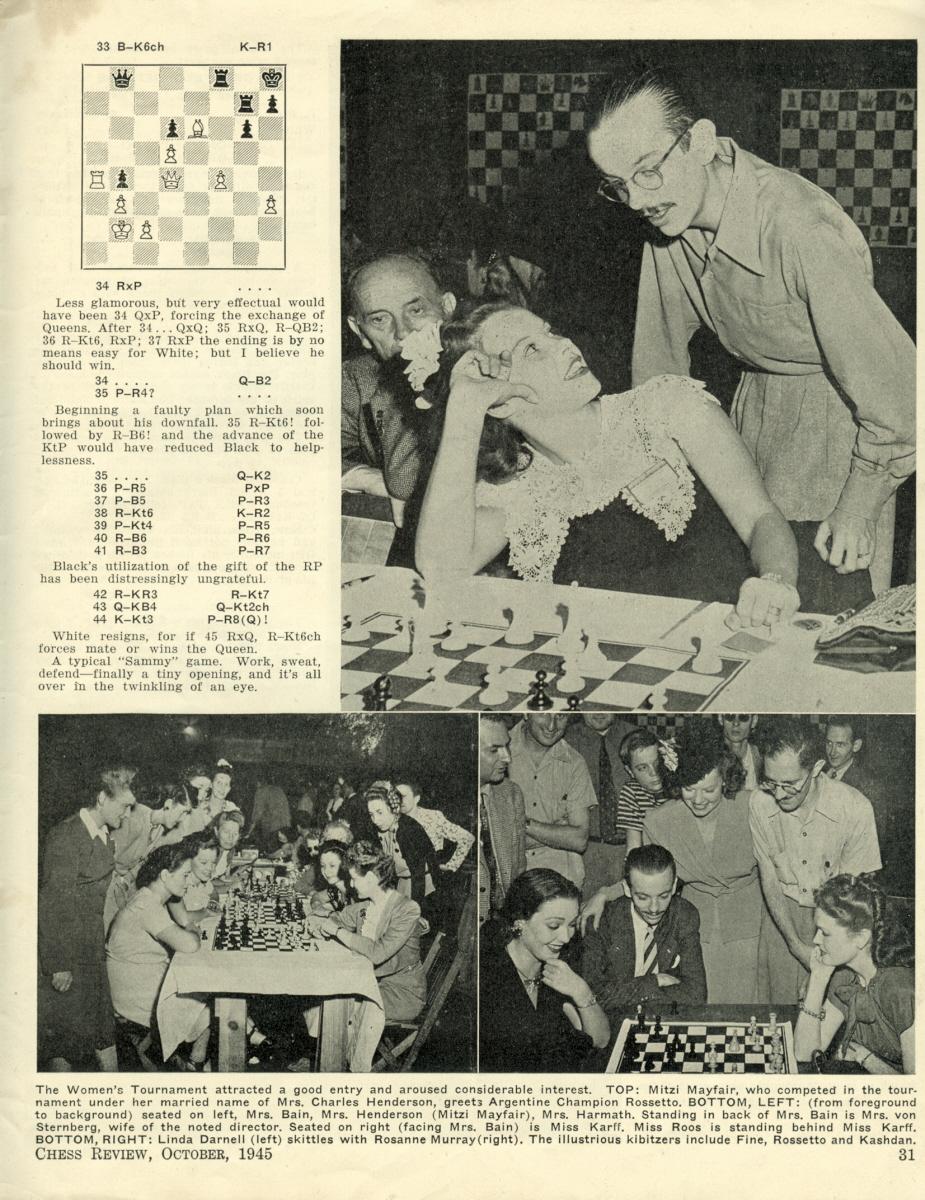
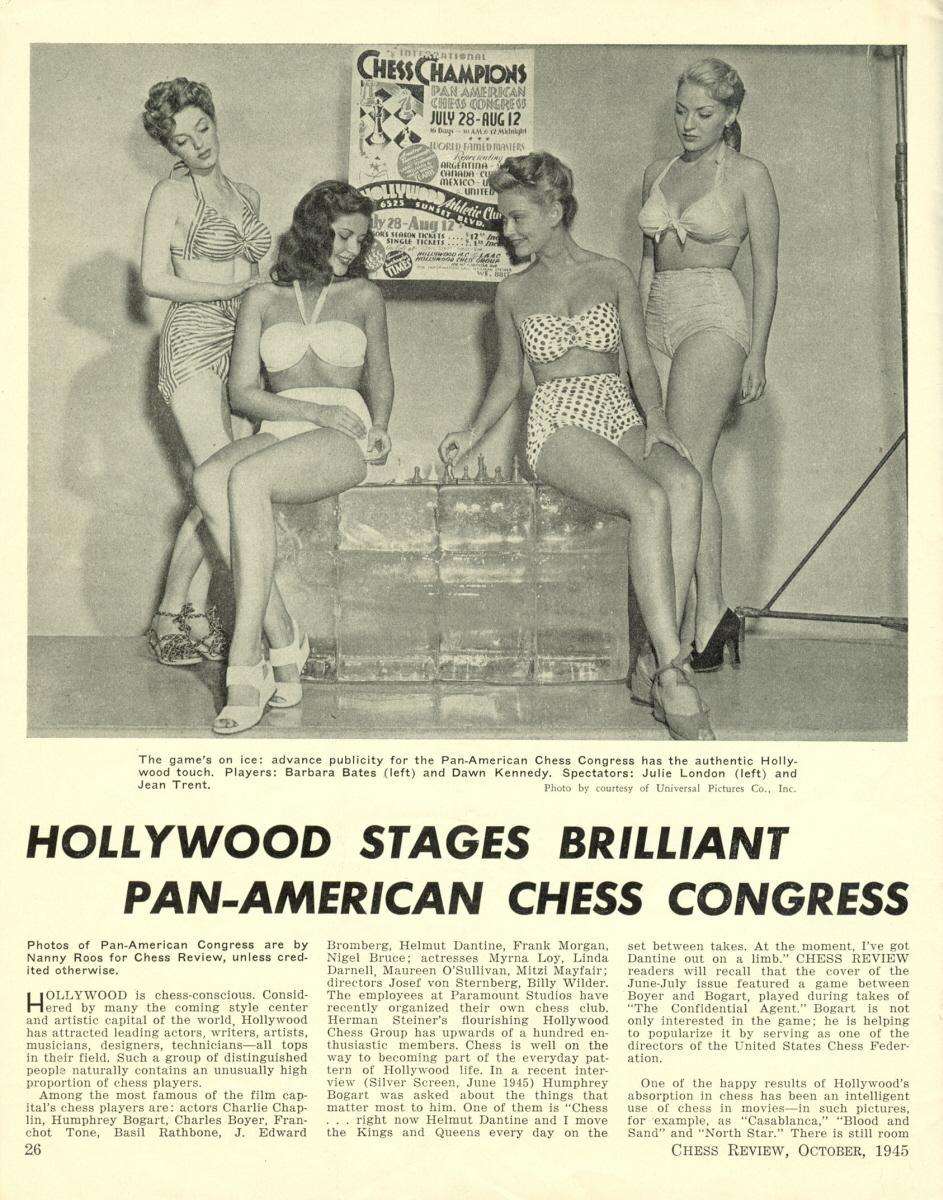
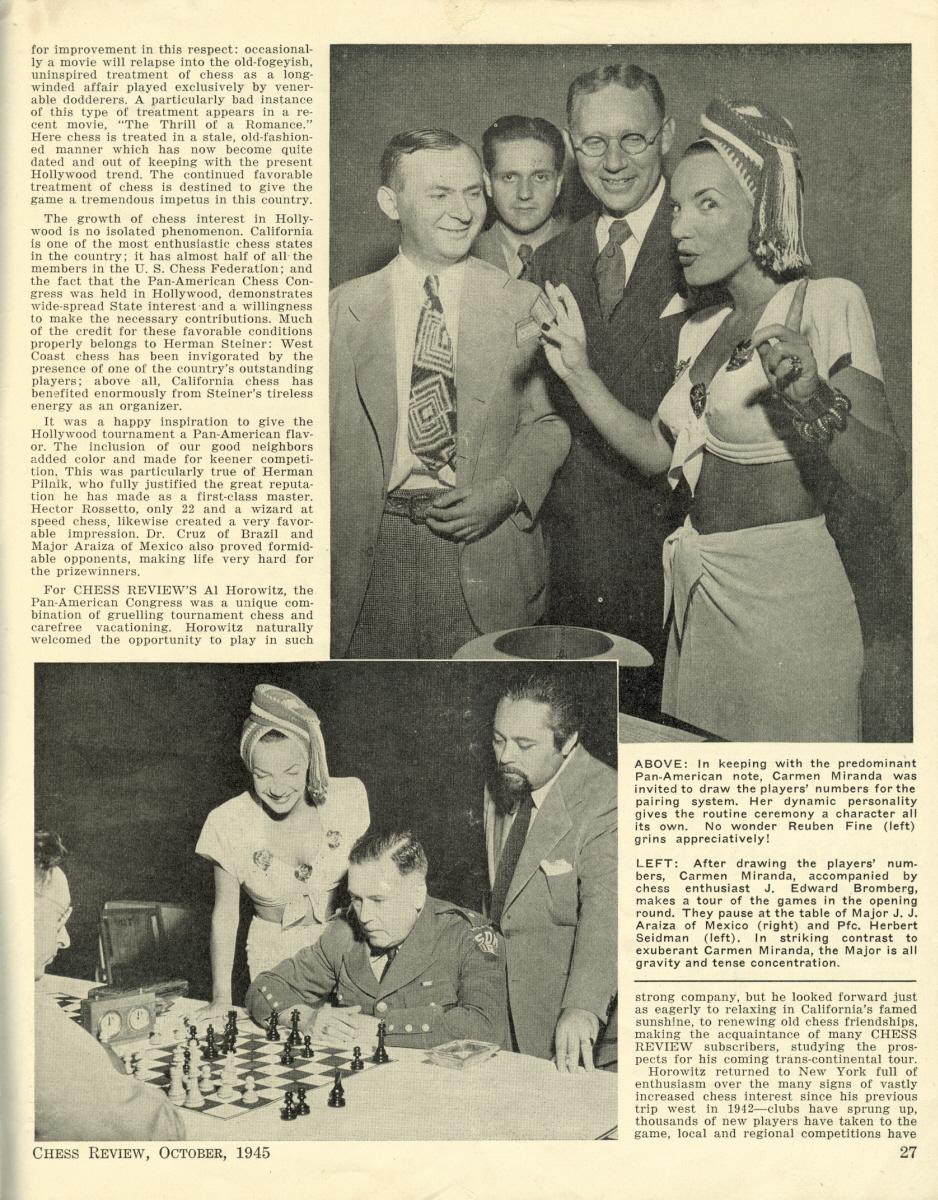
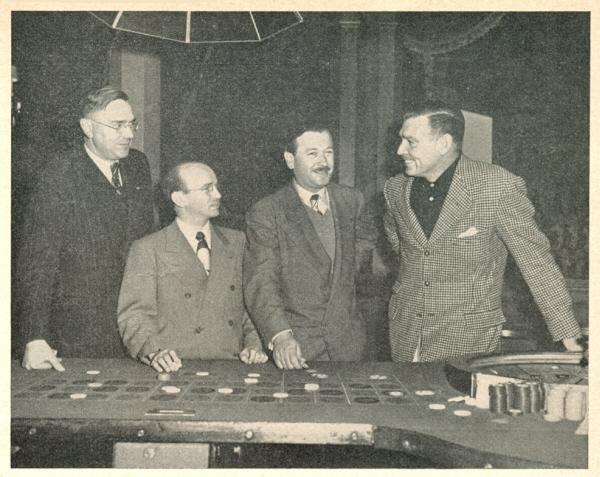
The largest pictorial feature on Hollywood and chess that we have seen is on pages 26-35 of the October 1945 Chess Review, in connection with the Pan-American Congress (won by Reshevsky ahead of Fine).
Many film stars, Hollywood celebrities, singers,... were included in the event like Marlene Dietrich, Barbara Bates, Dawn Kennedy, Julie London, Jean Trent, Reuben Fine, Carmen Miranda, J. Edward Bromberg, José Joaquín Araiza, Herbert Seidman.
🎥 More images below
Smallest handmade chess set
It is measured at 8mm x 8mm (0.32in x 0.32in). This was achieved by Ara Davidi Ghazaryan (USA) in Los Angeles, California, USA, on 22 August 2020.
Ara is an Armenian American Artist who uses jewelry to express his art. It was made from 18k yellow and white gold with Armenian apricot wood.
The pawn’s height is 1 mm to 2.4mm for the kings.
Fischer didn’t care much about money, but status
Fischer always maintained the ambition to get rich. He would say so repeatedly and unabashedly, in a way that made even Americans blanch. "I am only interested in chess and money," he told a journalist from the Italian newspaper Corriere della Sera.
His financial demands was worse in Europe, where emphasis on money was considered embarrassing, even vulgar. In weighing up the bids for the Taimanov, Larsen, and Petrosian Candidates matches, Fischer declared that one consideration should outweigh all others: which city paid the most.
In a letter to chess prodigy Walter Browne in January 1971, inviting Browne to become his full-time manager and chess second, Fischer says he believes chess is merely a means of making money.
Without any evident irony, he remarks that chess players did not become rich because their egocentric nature led them to work alone. But the moneymaking possibilities were limitless. In what he calls the chess business, he could make $100,000 in the 1st year and double that next year.
But apart from his expensive taste in suits, what did Fischer want money for? He had no dependants, he did not yearn for luxuries, such as going to the opera or collecting art. He did not own a car, he never traveled for the sake of travel, and as far as food was concerned, his preference was for quantity over quality. One has the impression with Fischer that money was not about material possession. He was always reluctant to allow any marketing of himself, whatever the financial windfall.
He was appalled by the notion that anyone else might make money out of his name. When his mother wanted to market purses with his signature, he furiously jumped on the idea. Cash itself was about status and again about control and domination: if he was offered 5, he wanted 10; if he was offered 20, he wanted 50.
Perhaps his unwillingness even to put his signature on a contract stemmed from the same need, an agreement took his control away. Somehow, the actual amounts were immaterial.
A Capablanca Story
The late world champion Jose Raul Capablanca mentioned a story in Germany:
I was playing in a tournament in Germany one year when a man approached me. Thinking he just wanted an autograph, I reached for my pen, when the man made a startling announcement. 'I've solved chess!' I sensibly started to back away, in case the man was dangerous as well as insane, but the man continued: 'I'll bet you 50 marks that if you come back to my hotel room I can prove it to you.' Well, 50 marks was 50 marks, so I humored the fellow and accompanied him to his room...
Back in the room, we sat down at his chess board. 'I've worked it all out, white mates in 12 no matter what.' I played black perhaps a bit incautiously, but I found to my horror that white's pieces coordinated very strangely and that I was going to be mated on the 12th move!
I tried again, and I played a completely different opening that couldn't possibly result in such a position, but after a series of very queer-looking moves, once again, I found my king surrounded, with mate to fall on the 12th move. I asked the man to wait while I ran downstairs and fetched Emmanuel Lasker, who was world champion before me. He was extremely skeptical, but agreed to at least come and play. Along the way we snagged Alekhine, who was then world champion, and the three of us ran back up to the room...
Lasker took no chances, but played as cautiously as could be, yet after a bizarre, pointless-looking series of maneuvers, found himself hemmed in a mating net from which there was no escape. Alekhine also tried his hand, too, but also to no avail.
It was awful! Here we were, the finest players in the world, men who had devoted our very lives to the game, and it was all over! The tournaments, the matches, everything - chess had been solved, white win in a dozen or so moves!
About this time Capa's friends would break in, saying "Wait a minute, I never heard anything about all this! What happened?"
"Why... we killed him, of course..."
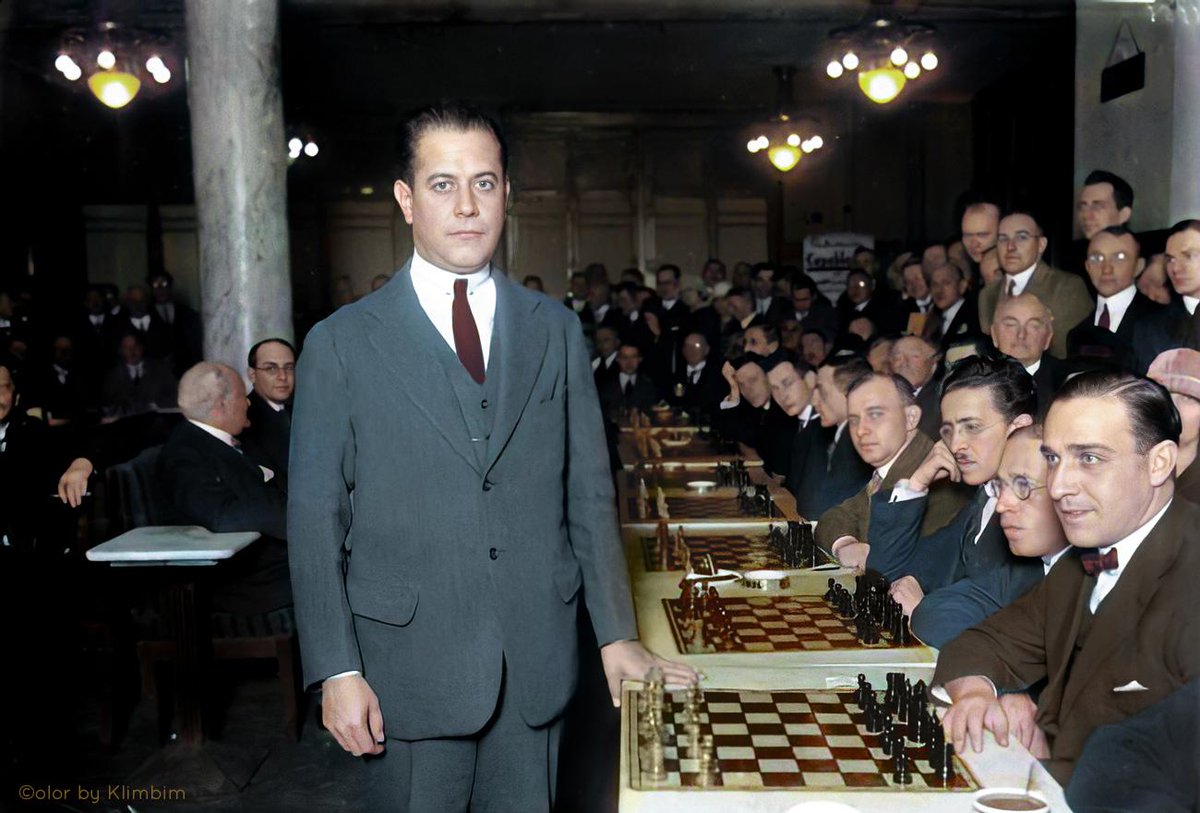
📷 Capa giving a 30 boards simul in Berlin, June 1929.
The Fischer Fear
The most interesting phenomenon about Fischer is what his chess had on his opponents. It destroys their morale, makes them feel that they are in the grip of an alien hostile force to whose powers there was no earthly answer. "He's a chess computer"
What does this mean? Well, computers do not suffer nerves. They lack a psychological attachment to particular rules or styles of play, and they calculate with both speed and precision.
In all these regards, Fischer appeared to his opponents to function like a microchip-driven automaton. He analyzed positions with amazing rapidity; his opponent always lagged behind on the clock.
Referring to the future chess computer, Jim Sherwin, an American player who knew Fischer well, described him as "a prototype Deep Blue." The Soviet analysis showed that even when faced with an unexpected position, Fischer took not longer than 15-20 minutes to make a move. Other GM would take twice as long. He also not appear to be governed by any psychologically predetermined system or technique.
Take just one example, the 22nd move of game 7 against Tigran Petrosian in the 1971 Candidates match. Who would have exchanged his active knight for the weak bishop? This violates a basic axiom of the game, to defy all experience. Yet, as Fischer proved, it was absolutely the right decision, transforming an edge into another ultimately winning advantage.
Faced with Fischer's extraordinary coolness, his opponents' assurance would begin to disintegrate. A Fischer move, which at first glance looked weak, would be reassessed. It must have a deep master plan behind it, undetectable by mere mortals (more often than not they were right, it did).
The U.S. grandmaster Robert Byrne labeled the phenomenon "Fischer Fear." Grandmasters would wilt, their suits would crumple, sweat would glisten on their brows, and panic would overwhelm their nervous systems. Errors would creep in. Calculations would go awry.
There was talk among grandmasters that Fischer hypnotized his opponents, that he undermined their intellectual powers with a dark, mystic, insidious force. Time after time, in long matches especially, Fischer's opponents would suffer a psychosomatic collapse.
Fischer managed to induce migraines, the common cold, flu, high blood pressure, and exhaustion, to which he himself was mostly resistant. He liked to joke that he had never beaten a healthy opponent.
📷 1970, Bobby played a 2 simuls in Germany.
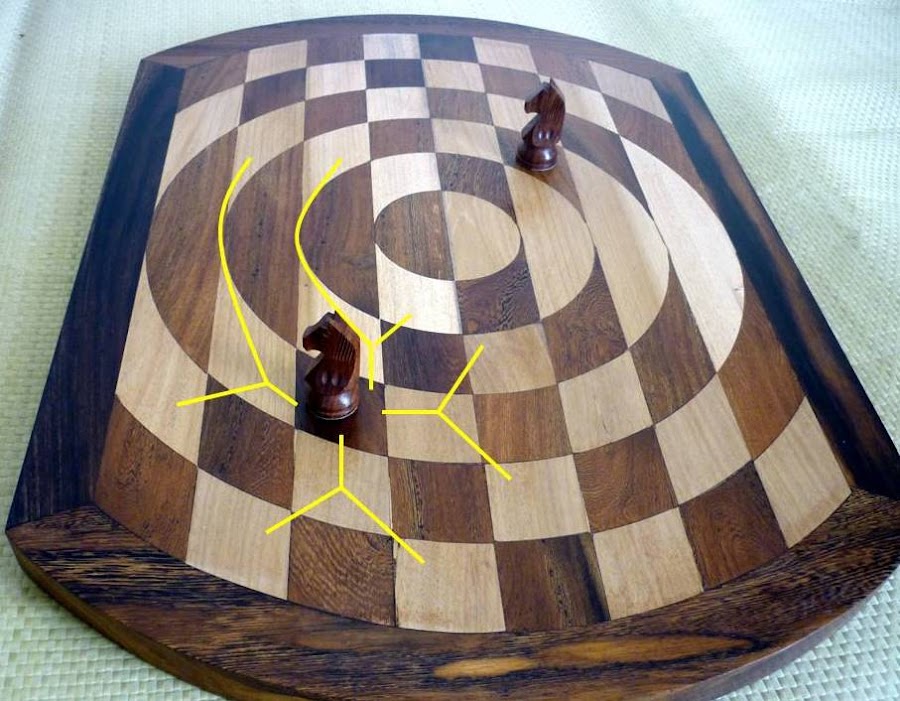
A variant of chess called "Singularity Chess" is played on a board distorted in the center. Due to the distortion, some pieces can make U-turns, attack the same square multiple ways, and bishops can change square colors.