Wenn Medien-besitzende Milliardäre per se Demokratie-gefährdend sind, warum redet @TiloJung dann nicht auch von Zeit, Welt, Bild, RTL, Stern, Focus, Handelsblatt, Le Monde, NYT, TF1, Canal+, Times, Spectator, Intercept, Atlantic, LA Times uvm. #jungianbs
People don't grasp the sheer speed and scale of Europe's decline.
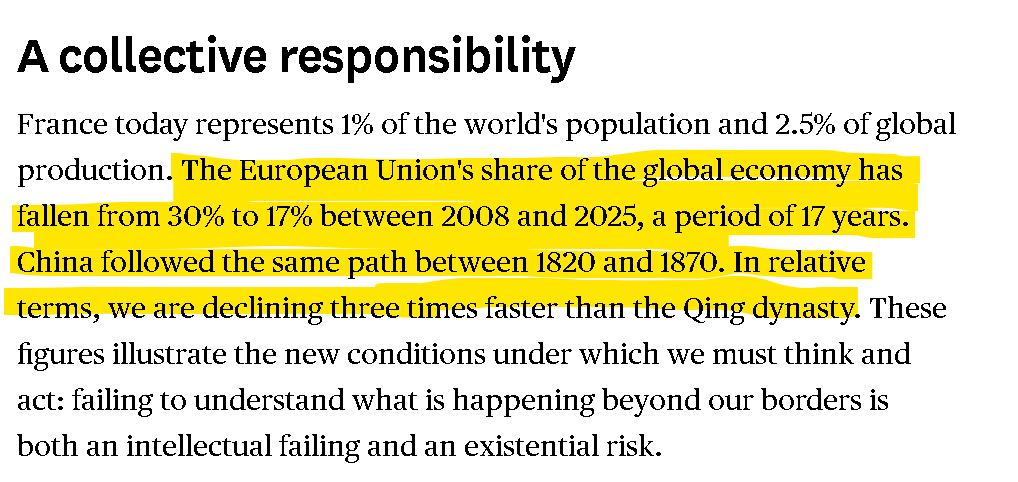
This 👇 is an extraordinary number shared by Luis Vassy, director of Sciences Po (one of France's most famous schools) in this article: https://t.co/BQbkXb2kPl
He calculated that the EU is declining 3 times faster than the Qing dynasty at the height of China's century of humiliation.
Back then, it took China 50 years to drop from 30% of world GDP to 17%, whereas it took the EU just 17 years (from 2008 to 2025).
Insane 😢 And, sadly, given the current direction and the EU's systematically suicidal policy choices (latest example: https://t.co/6EYJgdXVVo), it's just the beginning...
Nothing new here, @nytimes, just like in any other decade since 1800. Declaring a crisis of masculinity is just a rehash of the very definition of modern masculinity: It has to be in perpetual crisis in order to stand in for the perpetual crisis of modern society
„Global competition in the 21st century is not what it used to be 50 years ago, and the padding built to protect us, may have grown into the handbrake that constrains the growth of the small and flexible firms we need to compete in new frontier sectors.“
„We once hired someone in France … who… received about 5,000 euros net per month... But the total cost to the company was closer to 13,000 per month.
That makes hiring feel less like a relationship between a company and a worker, and more like renting someone from the state.“
Europe is one of the best places in the world to live, but one of the hardest places to build and scale a company.
After 5+ years in France, following 16+ in the US, I have a conflicted admiration for Europe.
On the one hand, Europe has great potential. When I lived in the US, I was skeptical of the European quality-of-life argument. But after getting used to Sunday morning markets, walkable cities, and 4.5 meter ceilings, I get it. There are things that you simply cannot import or experience as a tourist.
These things can make Europe very attractive for creative and intellectual work. I honestly believe some parts of Europe are the “best neighborhood” in the planet. But that’s not the full story.
I am not only a husband and a dad. I am also an entrepreneur. I founded a company in the US 12+ years ago that has offices in the US and Chile and clients throughout the world. I live in France, yet I have not opened a subsidiary here. That is telling.
We once hired someone in France through one of those remote employment platforms. The person received about 5,000 euros net per month, which is considered a very good salary here. But the total cost to the company was closer to 13,000 per month.
That makes hiring feel less like a relationship between a company and a worker, and more like renting someone from the state. At the same time, you take an enormous amount of legal and administrative responsibility. The presumption is that all companies should operate like a 1960s car manufacturer. The response is simple. Don’t set up operations in Europe.
But this is not a remote-work story. I know many small entrepreneurs in France who do not want to cross the threshold from being a one-person activity to becoming an employer. They sometimes refuse a new customer to stay small and avoid the obligations that come with hiring one person. That should worry us.
Many social protections here are described as being provided by the state, but in practice, a lot of the cost and complexity of the implementation falls on the administrative shoulders of entrepreneurs. That is reasonable for a large energy company or bank. But for a small business, it is the difference between an entrepreneur waking up on a Monday to think about product or paperwork.
Growth is not the enemy of the European social model. It is what enabled it. Much of the quality of life we enjoy here today dates back to growth incubated in the past. Growth that is increasingly hard to find. France once led frontier industries, like bicycles in the 1860s, cinema in the 1890s, and aviation and automobiles soon after. Since then, Europe built a more humane social model. But that model was built on the assumption that Europe and the US were the only two rich and industrialized places in the world.
That is no longer true. Global competition in the 21st century is not what it used to be 50 years ago, and the padding built to protect us, may have grown into the handbrake that constrains the growth of the small and flexible firms we need to compete in new frontier sectors.
We should be able to be critical about Europe in our own terms, without comparing ourselves to the US or China. Innovative parts of Europe, like Sweden or Switzerland, operate differently and provide clues. Sweden has embraced a dynamic of capitalization in its pension system for a long time in a continent where fewer people buy stocks. Switzerland, a place that shares an enormous amount of geography and culture with its neighbors, is built in part on strong internal competition among its cantons.
But neither can light a candle to a French open-air market on a Sunday morning. A market where cash is king, and for a reason.
Europe may be the best place in the world to live. But it is also one of the most challenging places to build and scale an innovative activity. The goal is not to weaken the European model. But to get to a place where we can lead again by example. The world will follow us, but only if we are ahead.
Was sich in Großbritannien gerade abzeichnet, ist eine demokratische Revolution.
Labour und Tories, die das Land hundert Jahre lang dominiert haben, werden regelrecht gestürzt.
Reform UK gewinnt auch und gerade in einstmals sicheren Arbeiterwahlkreisen im Norden schlagartig dazu.
Ich wär so gerne Ausland.
Dann würde ich mir heute von 🇩🇪 Strom schenken lassen und pro kw/h 50c dazu.
Und am Abend dann 🇩🇪 Strom teuer verkaufen.
Energiewende kann so schön sein.
Ich berichte seit 13 Jahren über Finanzpolitik und @BMF_Bund: So eine schlechte Haushaltsaufstellung wie diesen habe ich nicht erlebt. Union und SPD sparen bislang nirgends, sondern operieren mit lauter Luftbuchungen. Es ist einfach nur erschütternd. Ein Thread.
Nein, lieber @RonenSteinke, das LG Berlin II hat nicht "Schludrigkeiten" an der Potsdam-Story von @correctiv_org "moniert", sondern festgestellt, ihr Kern sei "nicht nur im Wesentlichen unwahr, sondern gleichzeitig unklar, ungenau und unvollständig". Ich verstehe nicht, wieso
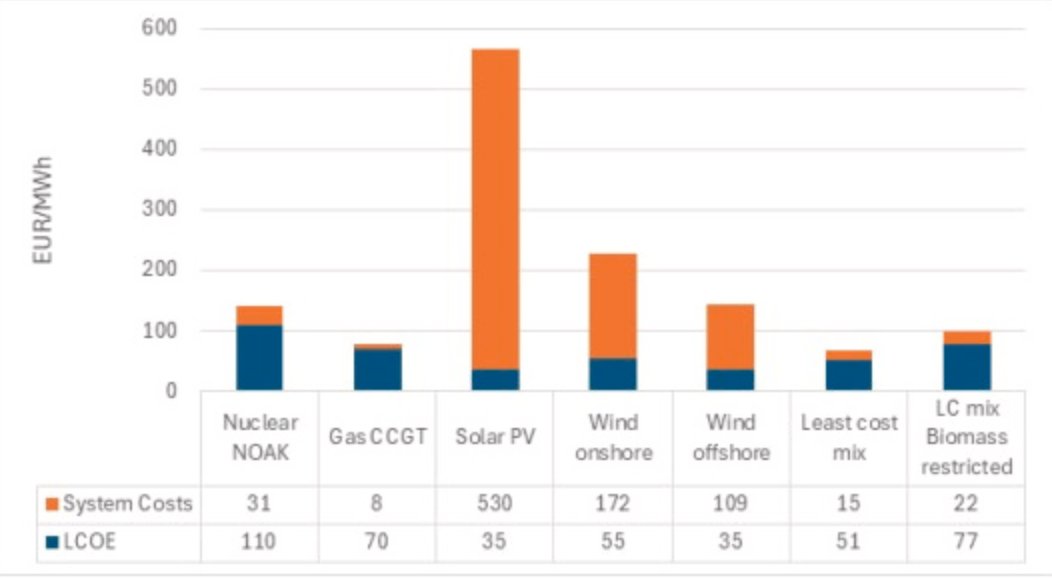
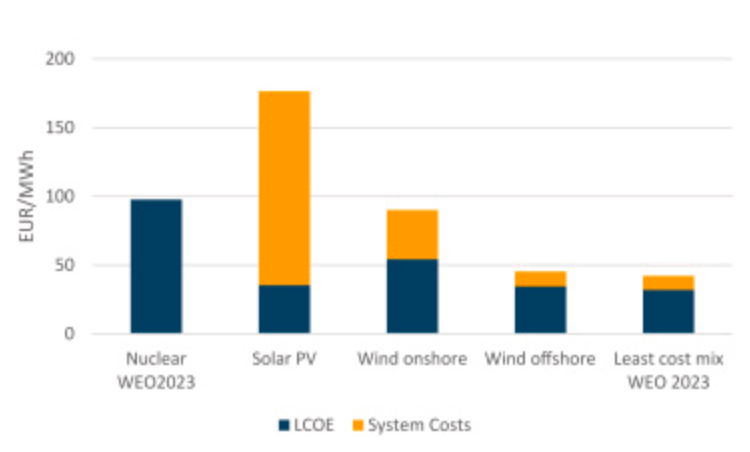
Was ich bei dieser Studie ehrlich nicht verstehe: SLCOE für PV und Wind konstant höher als für AKW, aber wenn verrechnet (least-cost), plötzlich billiger. 3x teuer = 1x billig? Wie das geht, wird nicht gesagt. Kann es jemand erklären?
Atomkraft-Fans argumentieren gern mit Systemkosten. Die Uni Aalborg hat jetzt nachgerechnet – mit allen Kosten.
Speicher? Drin.
Netzausbau? Drin.
Stabilisierung? Drin.
Flexibilisierung? Drin.
Erneuerbare: 4 Cent/kWh
Atom: 10 Cent/kWh
Und die Entsorgung des Atommüll fehlt in der Rechnung sogar noch.
https://t.co/G0UnUc2tIA
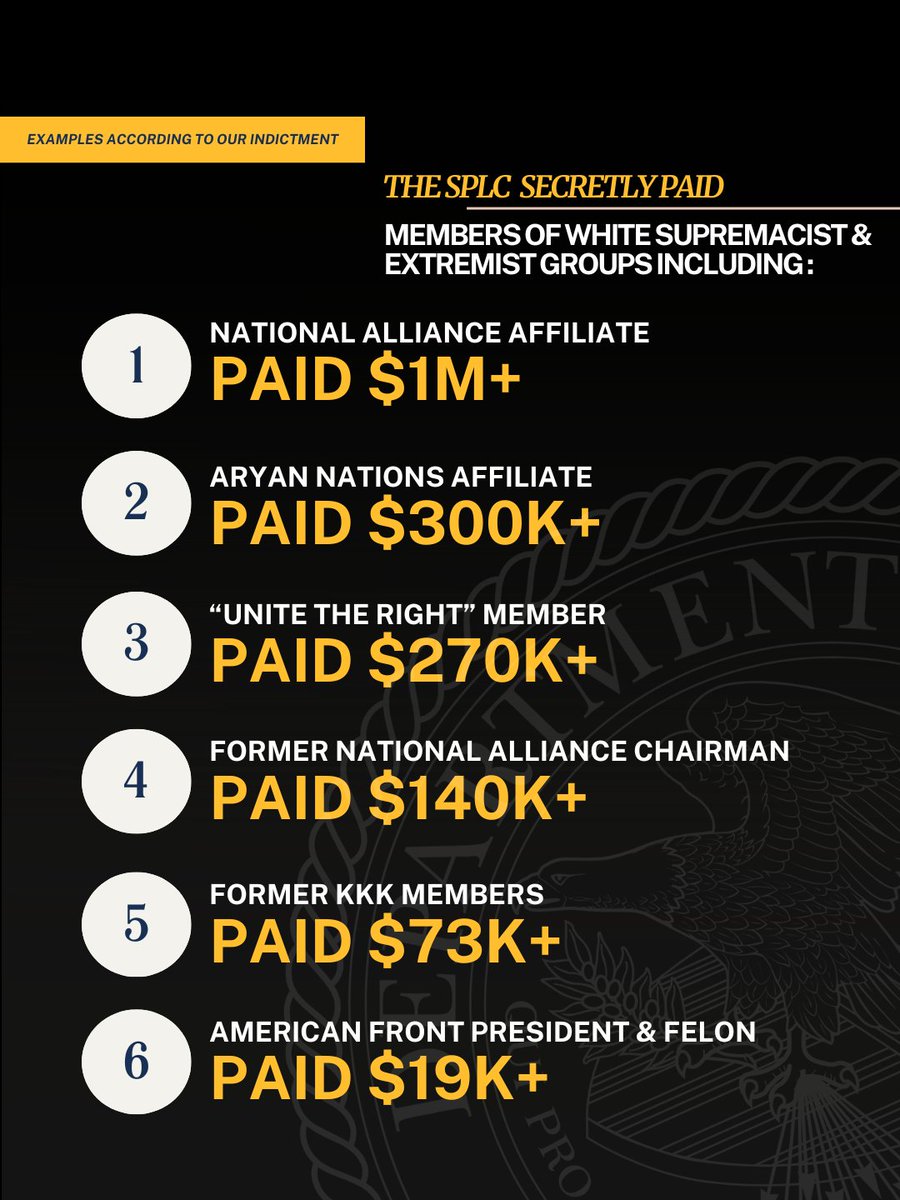
Wenn diese Geschichte stimmt, ist sie wirklich lustig: Das SPLC, eine Art US-amerikanisches @HateAid, soll über Jahre den Ku Klux Klan und andere rechtsextreme Orgs mitfinanziert haben.
Tolles Geschäftsmodell: mit Spenden die finanzieren, für deren Bekämpfung man Spenden bekommt
🚨HAPPENING NOW: Justice Department announces indictment against Southern Poverty Law Center ("SPLC"). Our indictment alleges SPLC secretly funneled MORE THAN $3 MILLION in funds to members of white supremacist and extremist groups.
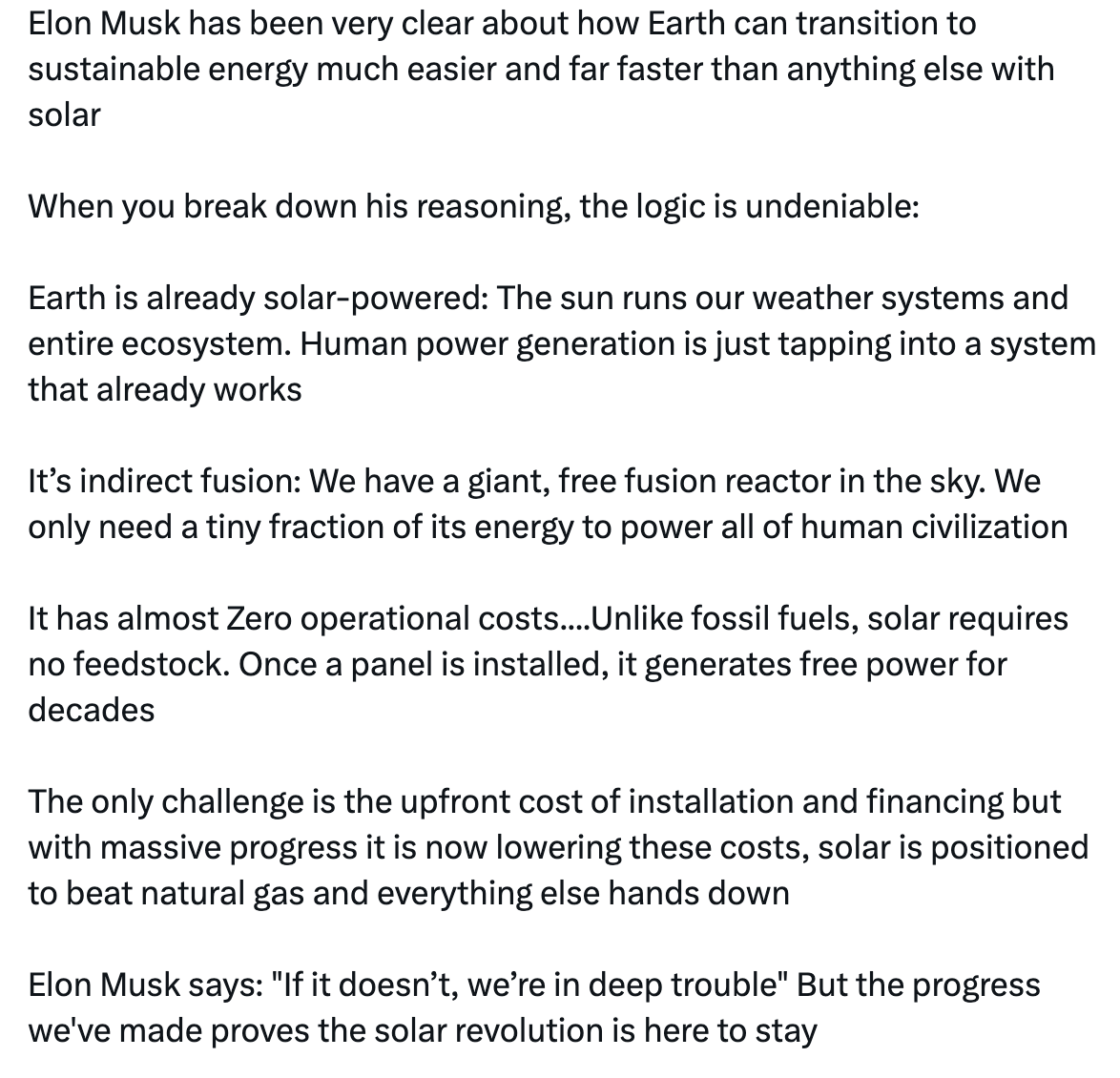
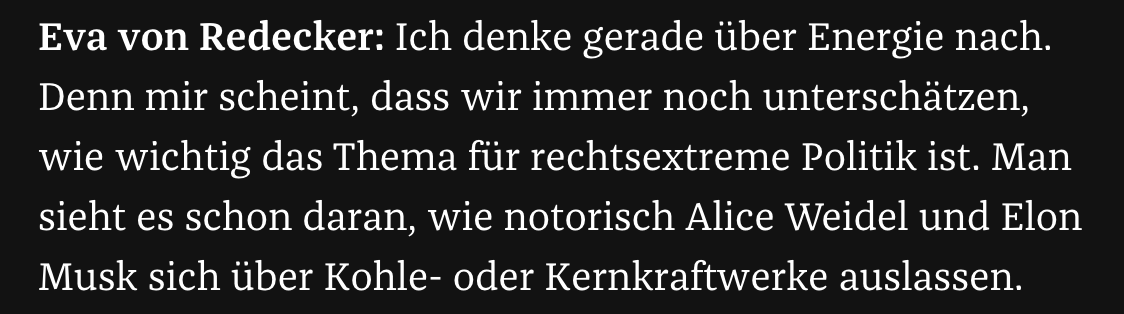
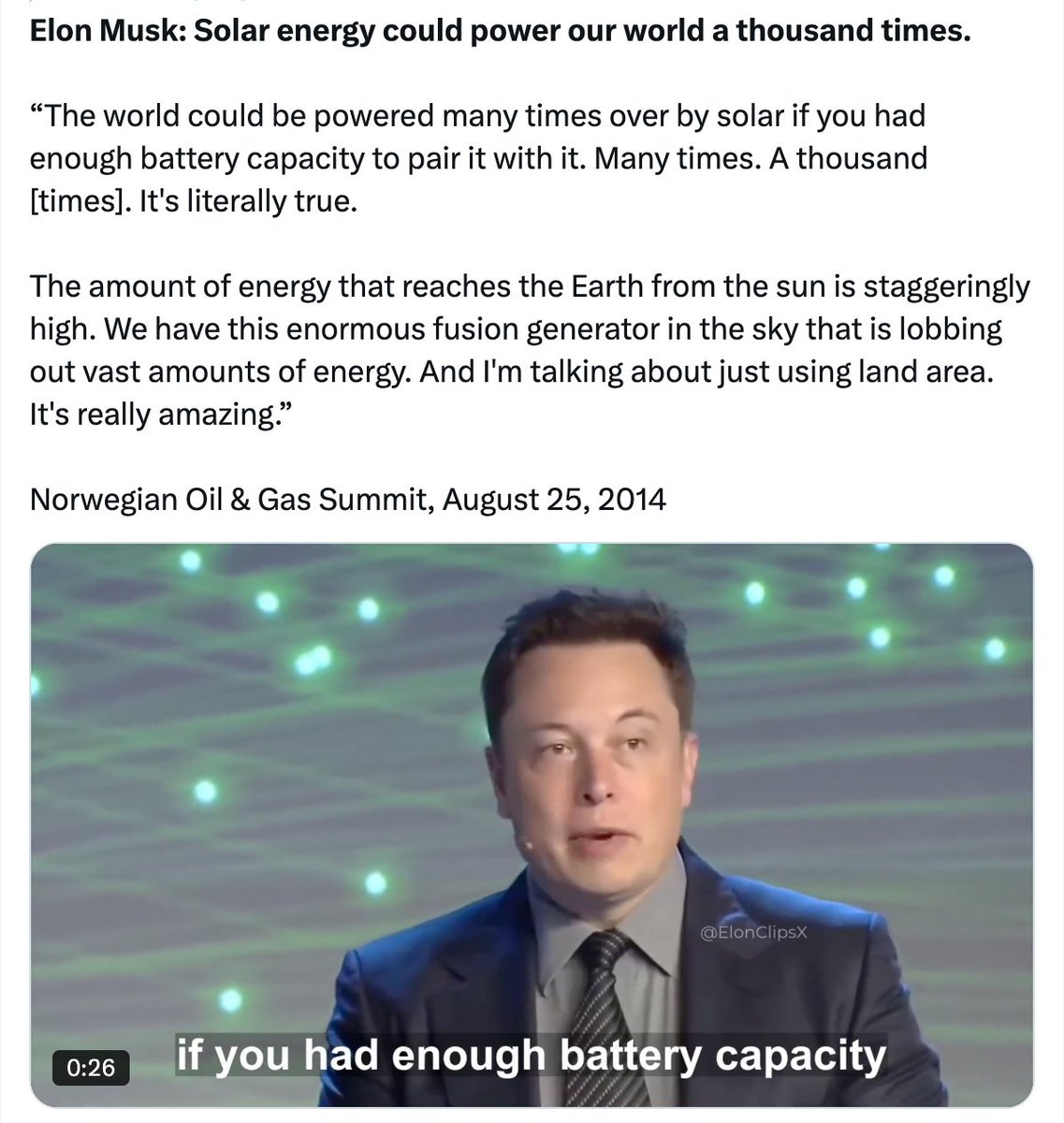
Was eine deutsche Philosophin in @zeitonline über Musk sagt – und was Musk selbst seit mehr als einem Jahrzehnt sagt. Warum dürfen sich eigentlich so oft die Ahnungslosesten äußern?