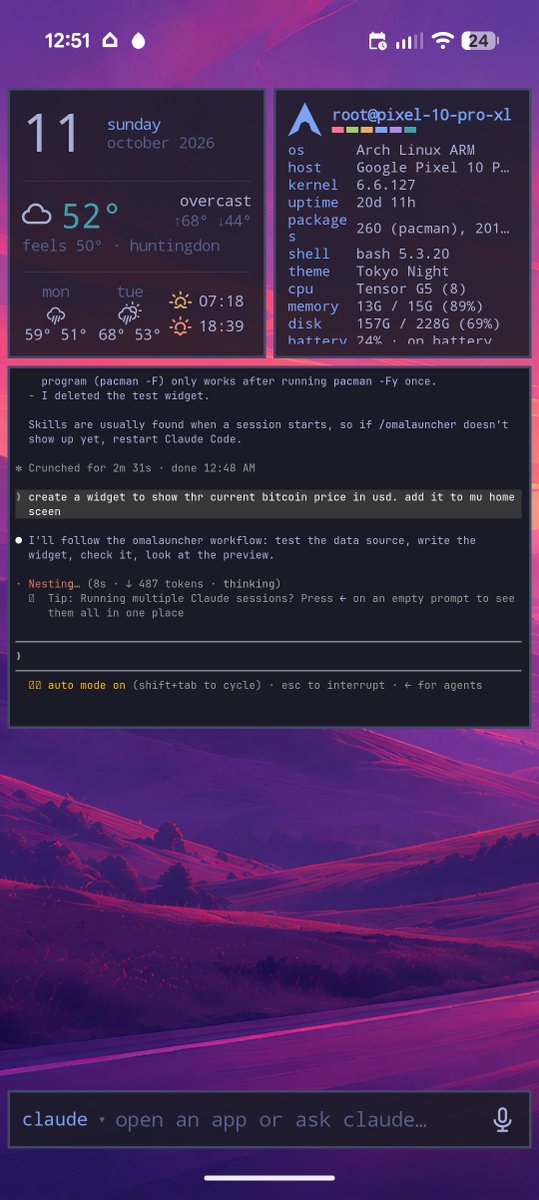
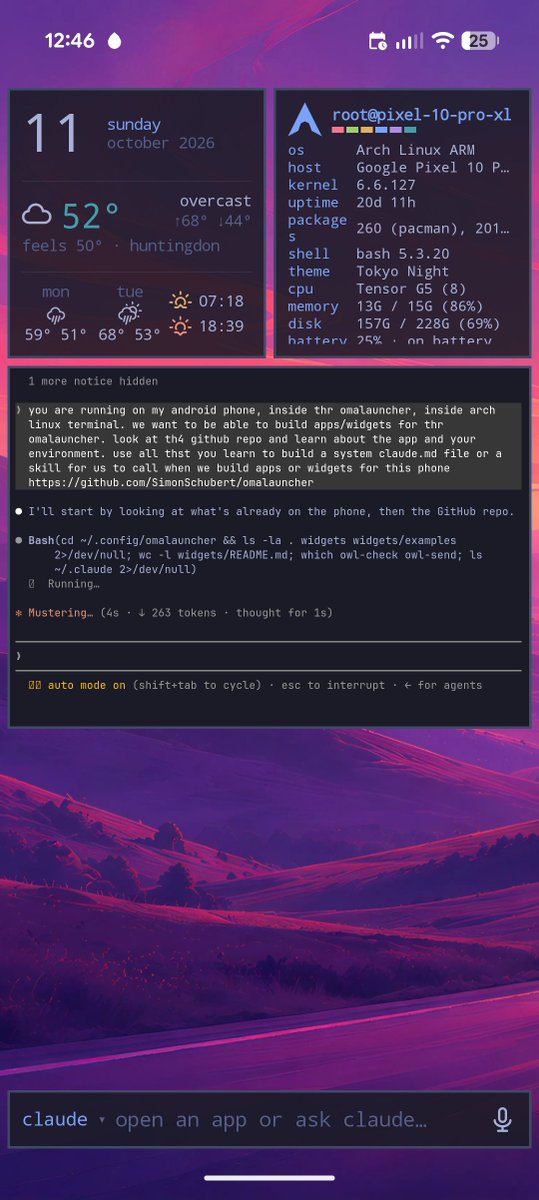
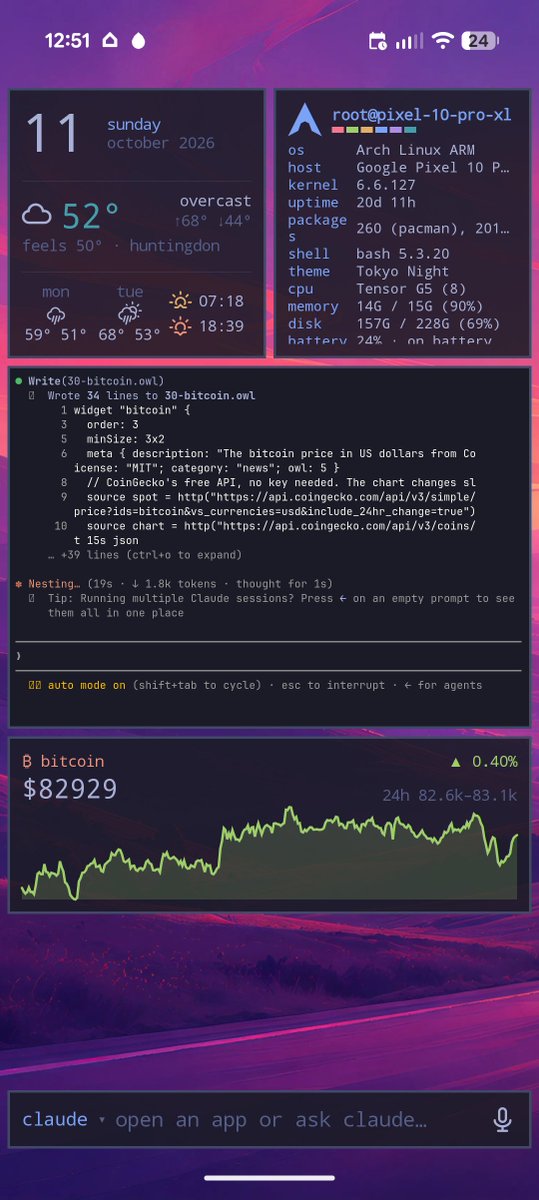
Omarchy Core welcomes @maralcbr as the M team delegate and @BirkSkyum as the Dragon team delegate. We are going to perfect and complete the Omarchy rollout to all M-chip Macs and all @Snapdragon PCs. We can fix everything! https://t.co/o1CPNHc6AS
When I first told @MParakhin that we were planning to move to a monorepo he said wisely:
Moving to a Monorepo is an idea that every engineer absolutely hates, and that once its there, no engineer would ever want to work at a company that doesn't use one. We will definitely do it.
Neuralink’s first product is called Telepathy.
It enables high-speed communication with computers or humans simply by thinking. Output bandwidth will vastly exceed the fastest human speech or typing in a few years. Read that sentence again.
DeepSeek V4.1 Flash 1017 runs at 1,521+ tok/s on Fireworks Ultrafast.
Fast enough to ship Tetris in 11 seconds, 7x faster than Claude Opus 5.5.
Join the Ultrafast waitlist: https://t.co/vE0jM7Lyou
Advice from Rick Rubin that rewired my entire mindset:
"Don't listen to anyone. Do things you love. Make your favorite things for you. You be the audience."
We just launched Xirp, a vendor-neutral agentic development environment. One place to manage agent sessions across @ClaudeDevs, @GeminiApp CLI, and @OpenAI Codex. 1,300+ @Spotify engineers already use it. Now it's available for you to try. Learn more at https://t.co/Hwo8Qqx4OI.
Hello people of Sol! I've reset usage limits for all ChatGPT Work and Codex users. Together with that, a quick update on GPT-5.6 Sol usage limits.
Over the past few weeks, many of you have told us that Sol was using your Codex limits faster than expected. To be clear, we have not reduced usage on any subscription plans.
We’ve been digging into what was happening and have landed several improvements. As a result, we expect your usage to last around 18% longer during typical use of Sol. Some of you should already see significantly larger improvements from today. Tomorrow, we’ll also restore the five-hour limit that we temporarily paused while investigating.
Here’s what we found:
- GPT-5.6 Sol is much more willing to work for longer, make additional tool calls, and coordinate complex workflows across tools and subagents. That makes it better at solving hard problems, but some tasks were using far more than we intended.
- Sol also works harder at the same reasoning effort than previous models. High on Sol can use more tokens than High did on GPT-5.5.
- Programmatic tool calling, also referred to as code mode, gives Sol much more flexibility to run tool calls in parallel or continue working while waiting. But it also led to more responses per turn, more cached input tokens, and higher usage than expected.
- This was particularly noticeable when Sol was waiting for tool calls to finish or running many web searches. We’ve improved how we handle both cases and are continuing to make code mode more efficient.
- The impact was also very uneven. The median user actually found Sol quite token efficient, while some power users working on harder tasks saw their usage drain much faster. We were very focused on average and median usage before launch and missed some cases where the long tail could use significantly more usage.
Sol is a significant step forward in what Codex can do, but capability and efficiency do not always improve at the same pace, and some issues only become clear once people are using the model at real-world scale. We should have recognized this sooner and been more upfront about it.
You keep pushing the frontier and we’ll keep improving efficiency and sharing updates as we go.
We have reset usage limits for all Codex and ChatGPT Work users.
Last night around 2am to 4am we suffered an almost global outage. All well and recovered, but you know what comes next.
We learn. We reset. Enjoy.
Introducing Sakana Fugu: A full multi-agent orchestration system accessible via a single model API.
Our ‘Fugu Ultra’ model matches the performance of Fable and Mythos, delivering frontier capability without the risk of export controls.
Try it: https://t.co/hhO6qTawgb 🐡
Jak dnes vypadá můj pracovní setup? Základem je
Git worktree, ale to samo o sobě nestačí, protože to jen checkout kódu.
Pro člověka i agenta je potřeba celé lokální prostředí a jak to mám udělané jsem sepsal v článku https://t.co/NKeD7Em4NC
Jedna praktická věc z Harryho:
největší páku malému týmu nedává samotná AI, ale systém práce kolem ní.
Rychlé sdílení kontextu, menší změny a průběžně použitelný produkt mají větší dopad než další vrstva tooling hype.
Největší změna ve software není „AI píše kód“.
Největší změna je, že rozbíjí starou logiku:
co je ještě moc drahé, moc malé nebo moc složité na to, aby se to vyplatilo stavět.
Tohle je podle mě větší změna než celý coding hype.
Co je nejlepší příklad?
Starý model vývoje bude dál fungovat hlavně tam, kde si ještě neuvědomili, že se svět software už změnil.
Právě tyhle organizace ale začnou postupně ztrácet tempo.
https://t.co/SREG7lQMlP
„Manažer počítače“ nevznikl jako slogan.
Přišel z obyčejného rozhovoru doma.
A čím déle nad tím přemýšlím, tím přesnější mi připadá pro roli člověka, který dnes řídí digitální specialisty uvnitř počítače.
https://t.co/El9BD1pjTe
We talk to @Rich_Harris about how other popular frameworks are becoming more Svelte-like, how SvelteKit works, and more!
Apple: https://t.co/m4aW2PxEmO
Spotify: https://t.co/4QwOB6AVIq
Google: https://t.co/ktUPdaWKvZ
Website: https://t.co/waw6TYdTFI
#podcast#tech#svelte