@davidpilling@FT Really great interview David, it's a really astounding story. There's also been rumors that I've been following that he wants to invest in new potash mines in the region, so indeed he is just getting started.
🌙 🛌 🚋🚋 European night trains - a great way to travel, but notoriously tricky to find & plan.
https://t.co/2duNahGrNg has just updated its website with a great map of all sleeper routes in Europe 2026-7.
🗺️ High res pdf: https://t.co/IWwSVECtja
I’m sure it’s a just a bike thing and not at all thanks to Rotterdam and marginaly ijmuiden/amsterdam being the petrochemical heart of the continent massively net exporter with one/the only of the largest and state of the art petrochemical and refining complex…
Unlike the 1970s oil crises, there are now better alternatives:
🔌 EVs + renewables + heat pumps could cut fossil fuel imports by 70%
🚗 EVs alone: $600bn/year in savings
Every country has the potential to be energy independent with electrotech.
🔗https://t.co/oarHwiCSv9
If you feel overwhelmed this week, just take a moment to commemorate the one-year anniversary of Liberation Day, an easy and relaxed global economic shock by comparison
@AlldrittOwen It's hilarious, he's found a new grift working in tech for an AI dating advisor start up which I suppose is the whole point of this excersize.
@amenka 2/3 of the major ferts (N and P (and S)), but potash remains unaffected by this so far. If Israeli and Jordanian production facilities are hit however, that could be 10% of global supply gone.
From the 15th to the 19th century Denmark levied tolls on ships passing the Sound to enter and leave the Baltic. This was at times quite a large source of revenue for the Danish monarchy.
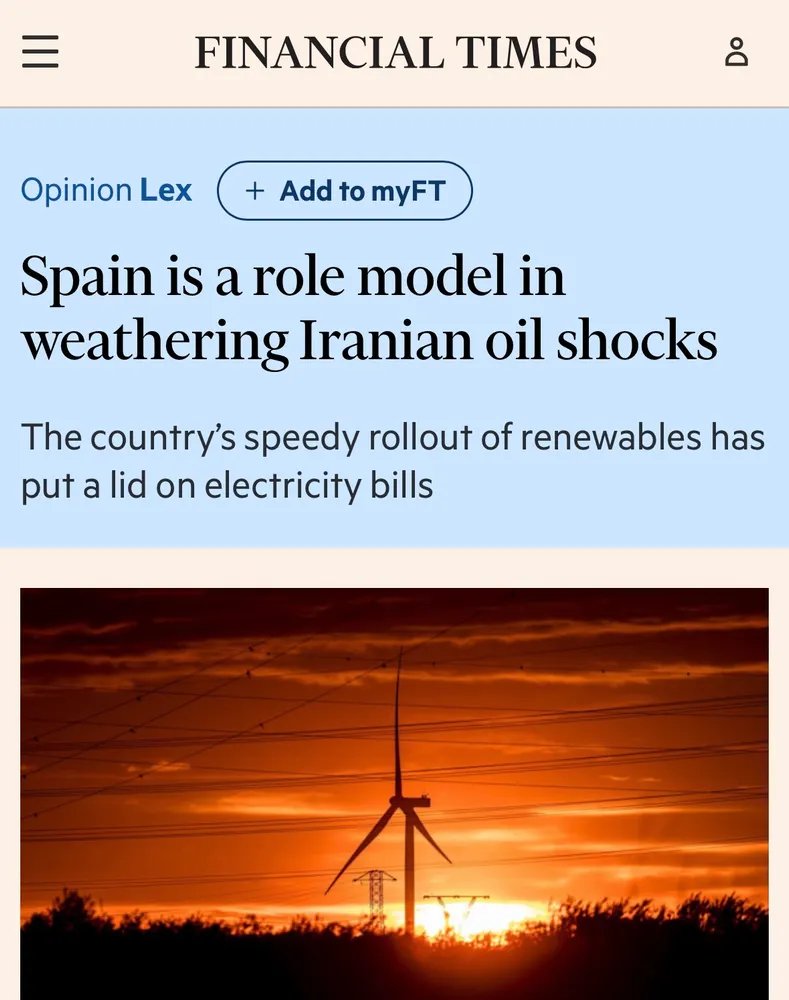
Spain's renewables build-out has structurally decoupled its electricity prices from gas markets.
Gas now sets the price in only 15% of hours, compared to 90% in Italy.
Countries that invested early in clean power are far less exposed to fossil fuel price shocks.
yes and actually a big story here is china has been putting a lot of energy and money into diversifying its economic ties by building them in the gulf, so stands to lose quite a bit from the destruction there as well
1/2 Simplistically, the US “exorbitant privilege”—its capacity for earning excess returns through the recycling of low-cost foreign investment—has faded in recent years, with net income flipping into negative territory even as its net international investment position worsens:
@cszabla I know this is overused, but the reformists who will 'save the day' being former members of the intelligence service is extremely late soviet.
disturbing how we’re always talking about federal forces “pulling out” of northern states now like they’re involved in some evil reverse reconstruction