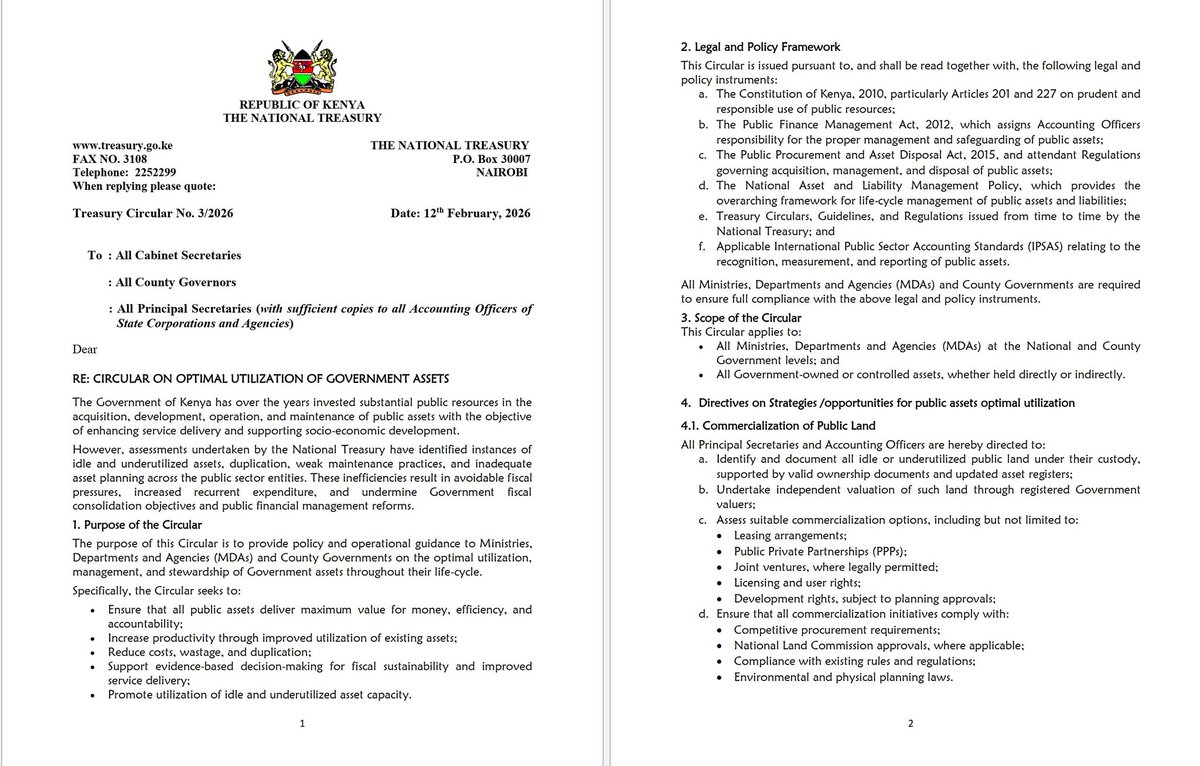
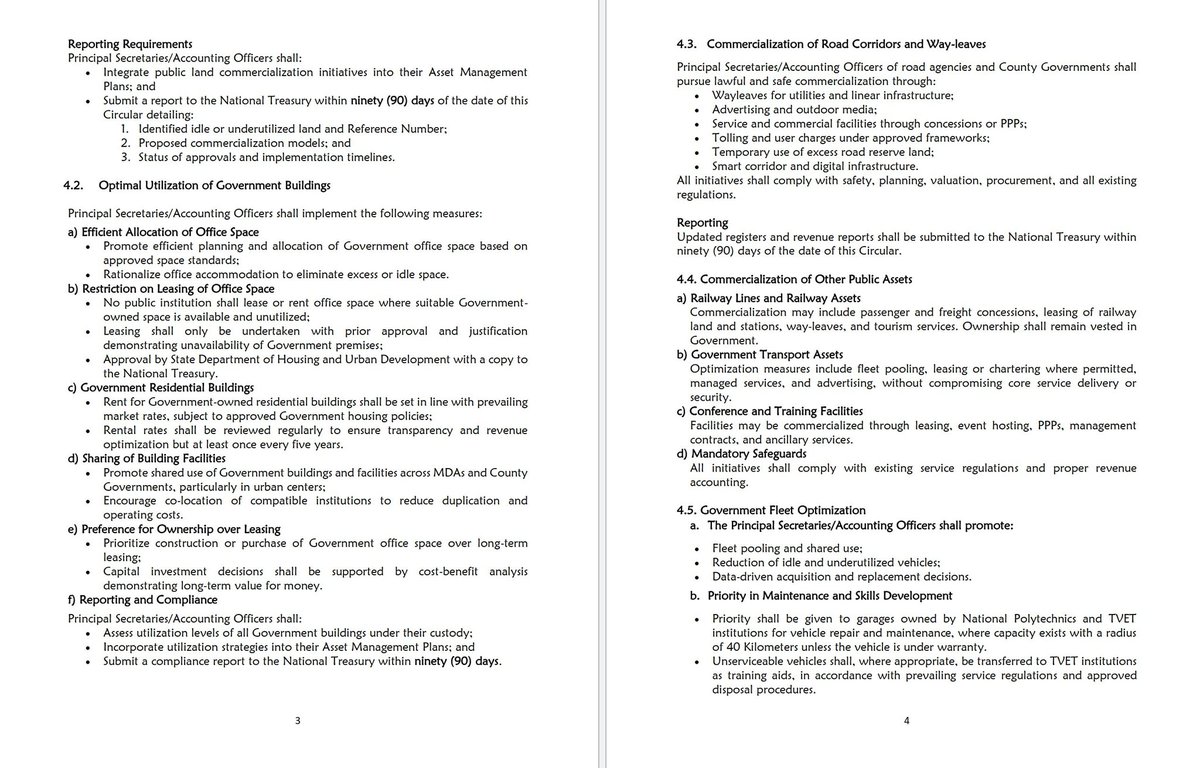
The @KeTreasury has flagged widespread idle and underutilized public assets across Ministries, Departments and Agencies (MDAs), citing duplication, weak maintenance, and poor planning as sources of fiscal pressure.
It has directed that:
1. Leasing of office space be restricted where government-owned facilities exist
2. MDAs identify, document, value, and commercialize idle land via PPPs, leasing, joint ventures, and development rights
3. Commercialization extend to rail and transport assets through concessions, station leasing, way-leaves, and tourism use
4. Shared infrastructure, co-location, and fleet pooling be adopted to reduce duplication
5. MDAs must submit compliance reports within 90 days
Public Participation Alert!
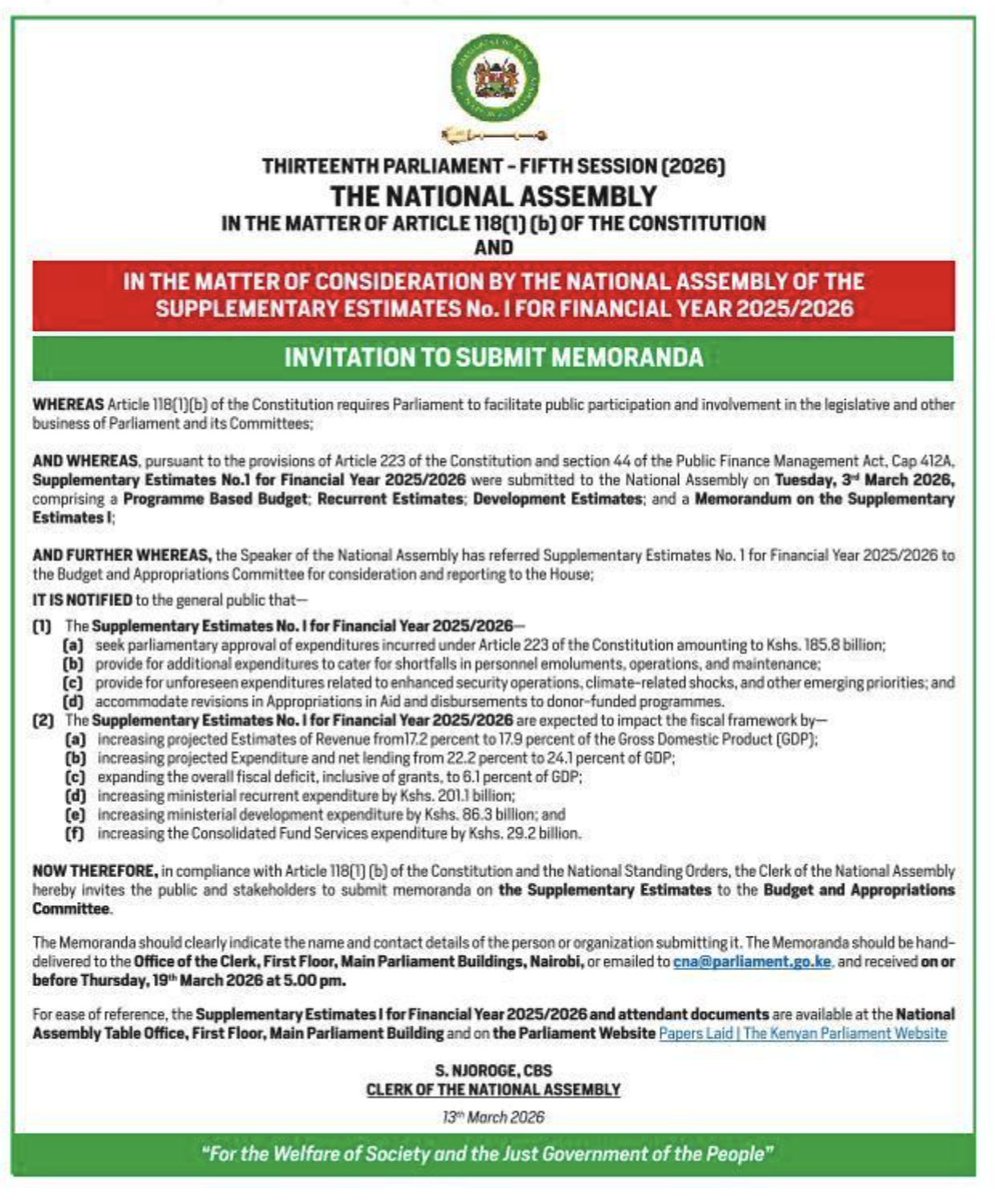
The deadline to submit memoranda on Kenya’s Supplementary Estimates No. I for FY 2025/26.
The Parliament is inviting public participation on proposed additional spending and reallocations.
#PublicParticipationKE
RESPECT AND GIVE HONOUR TO THE OFFICE OF THE PRESIDENCY @WilliamsRuto
The conduct that continues to degrade the Presidency is appalling, an institution and symbol of national unity that belongs to all Kenyans, as espoused in Article 131 of the 2010 constitution.
Article 73 of the Constitution is unambiguous; authority assigned to a State officer is a public trust. It must bring honour to the nation and dignity to the office. It vests in the office the responsibility to serve the people, not the power to rule them.
We demand that the President and all political leaders exercise language, conduct, and leadership worthy of the offices they hold. Chapter 6 is not merely an ornamental chapter of the constitution but a guiding light for our leaders on their conduct in their political offices.
The Presidency is not a personal platform. It is a constitutional trust. Kenyans require political hygiene from the top, and across all political actors
Msisahau go register as voters form ni #TukoKadi
@kawive@SheiMasinde@UraiaTrust@CRECOKenya@Pawa254@njerikan@BoazWaruku@CMDKenya@Maskani254@InformAction_KE@youthagenda254@MartinOmwange
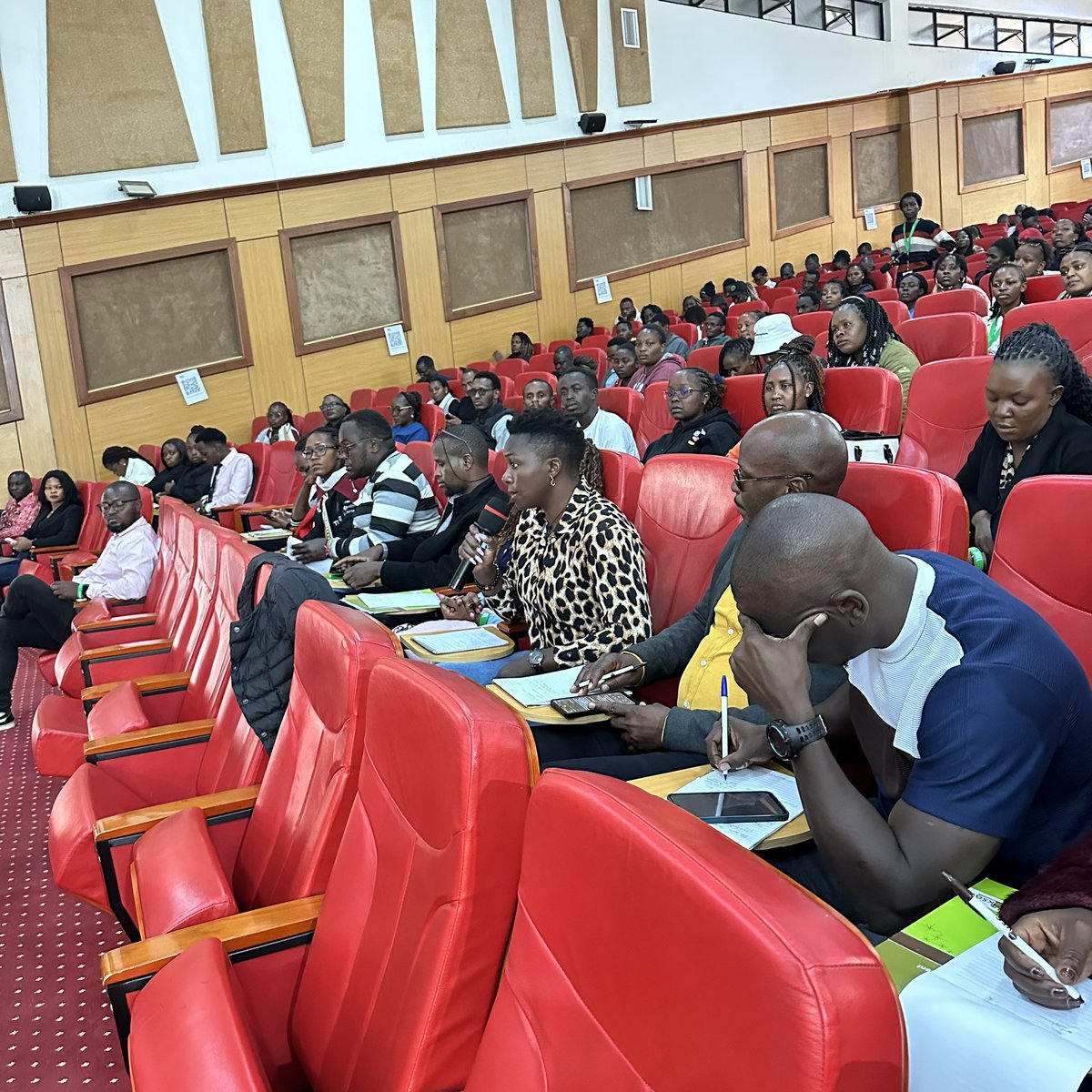
Inuka Kenya Ni Sisi! is proud to be part of today’s convening on Constitutionalism, Term Limits & Public Debt Accountability in Africa, alongside key partners including Katiba Institute, NDI Kenya, Daystar University, and the African Network of Constitutional Lawyers in Nairobi.
These conversations matter now more than ever, centering constitutional integrity, defending term limits, and advancing public debt accountability across the continent.
Join the conversation live via Katiba Institute YouTube: https://t.co/SvFst7OwOV…
#AccountableGovernance
Symposium on Constitutionalism, Term Limits & Public Debt Accountability in Africa:
Katiba Institute, in partnership with @TISAKenya, the National Democratic Institute (NDI) Kenya, Daystar University, and the African Network of Constitutional Lawyers (ANCL), will convene a Symposium on Constitutionalism, Term Limits, and Public Debt Accountability in Africa in Nairobi from 18–19 March 2026.
The two-day convening will bring together scholars, legal practitioners, policymakers, civil society actors, Journalists and regional experts to examine emerging governance challenges across the continent and explore pathways to strengthen constitutional democracy and accountability.
Across Africa, constitutionalism is under increasing pressure. Expanding executive power, the erosion of constitutional term limits, weakening rule of law, and rising public debt burdens are raising serious concerns about democratic governance. In several countries, constitutional amendments, strategic litigation, and shifting political dynamics are reshaping governance frameworks.
The symposium will provide a platform for critical dialogue, knowledge exchange, and collaborative thinking on how Africa’s institutions, courts, civil society, and academia can safeguard constitutional governance while addressing growing fiscal and political pressures.
The event will be streamed live by Katiba Institute, allowing broader participation from across the region and beyond.
Learn more via: https://t.co/NPW5uenvTk
#AccountableGovenance
Today, Inuka Kenya Ni Sisi! convenes a two-day Intersectoral Leadership Retreat at a critical time for Kenya.
As civic and political spaces continue to shrink and public trust in governance declines, this gathering brings together civil society leaders, youth and women-led movements, faith-based actors, independent media, digital rights defenders, and development partners to reflect and plan the way forward.
Under the theme ‘Reconfiguring the National Agenda in the Context of Shrinking Civic and Political Spaces in Kenya,’ the retreat focuses on alignment, strategy, and collective action.
From governance and human rights to economic justice and movement building, the goal is clear: to move from protest to organization, and from resistance to building a stronger and more democratic Kenya.” 🇰🇪
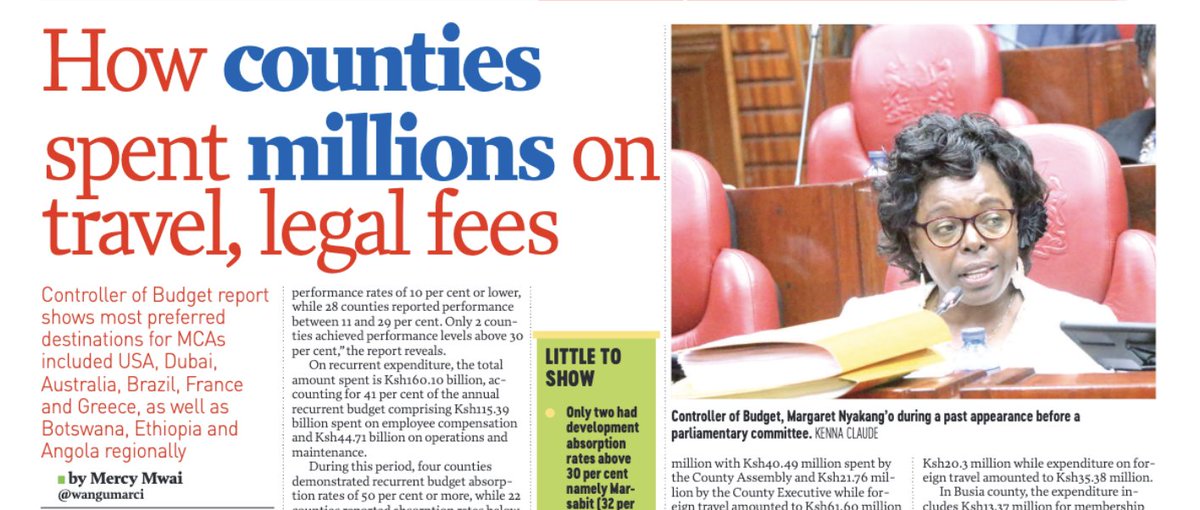
Counties are busy prioritising wasteful spending over development.
A new report shows billions spent on travel, legal fees and garbage collection while only about 14% of county budgets went to development.
Some counties splashed Sh17.6B on travel alone and Sh4.8B on legal fees and garbage collection.
Kenyans deserve better services, not bloated recurrent spending.
#AccountabilityKE #DevolutionKE
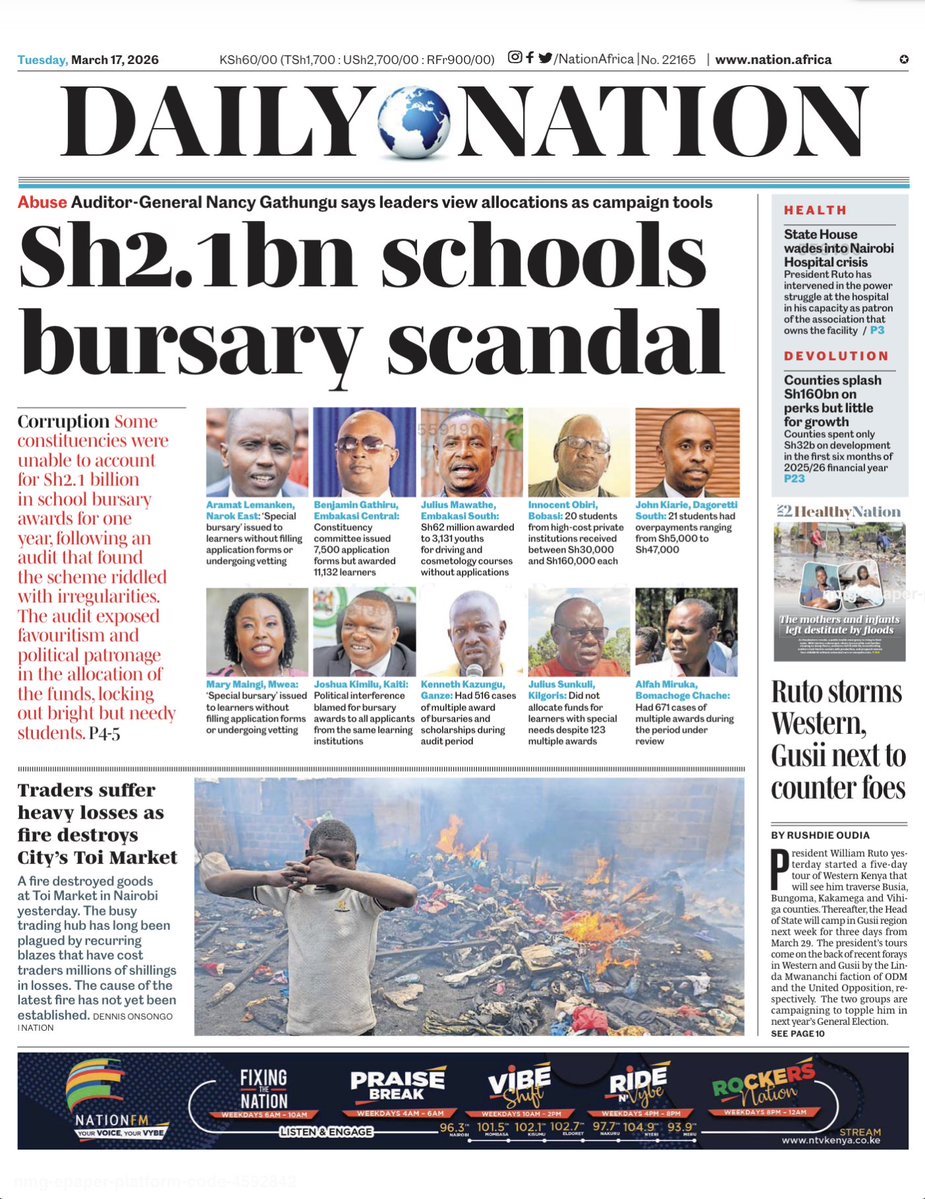
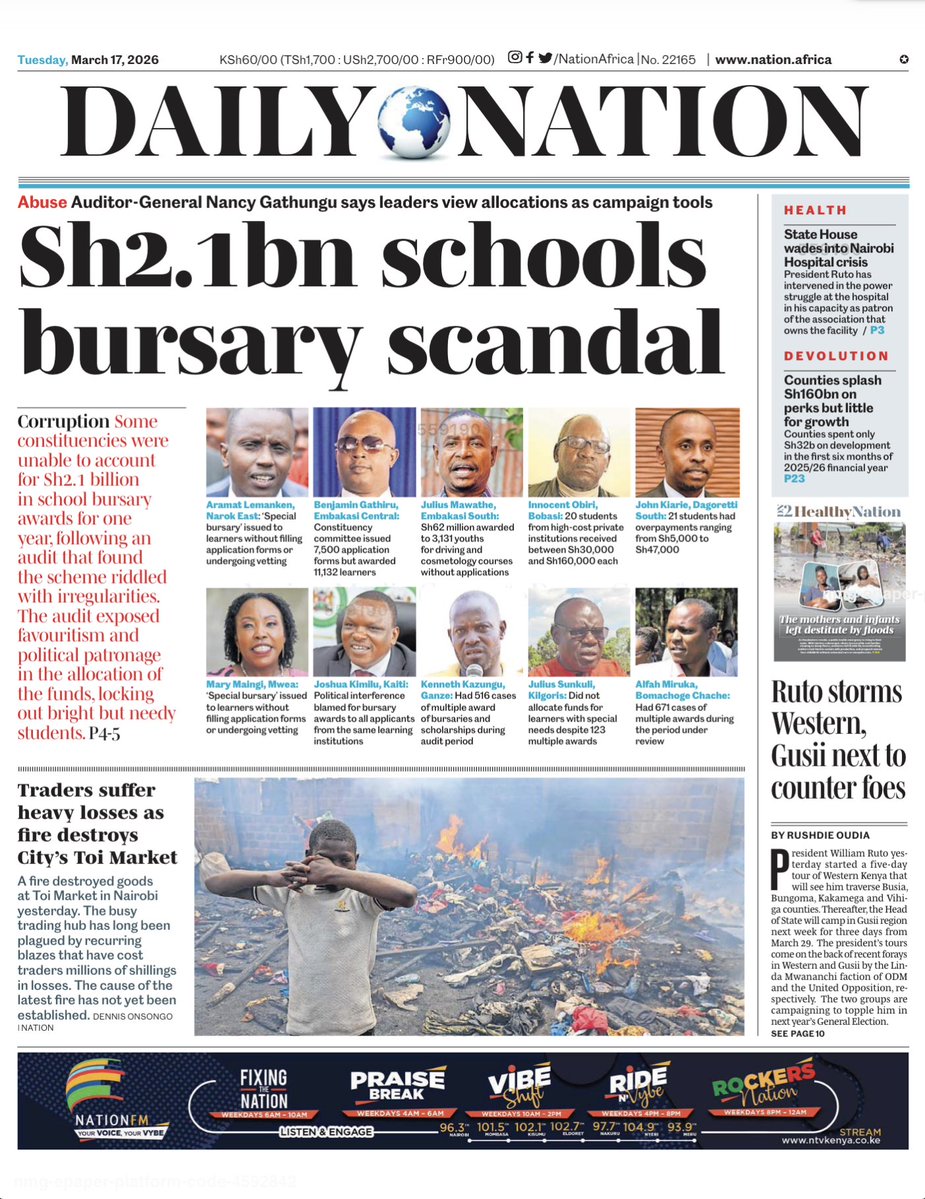
The Sh2.1B schools bursary scandal exposes deep rot in the NG-CDF bursary system meant for needy students.
An audit by Auditor-General Nancy Gathungu found:
• Sh2.1 billion in bursary allocations could not be properly accounted for
• 86 constituencies failed to explain how funds were issued
• Some students received bursaries from multiple public funds due to poor coordination
• Records of beneficiaries were missing or incomplete, making verification impossible
• Constituency committees did not collaborate with other bursary providers, opening room for duplication and abuse
The scheme meant to help poor learners is now riddled with irregularities as MPs continue to control bursary allocations under NG-CDF.
The biggest victims? Students struggling to stay in school.
#EducationCrisisKE.
Who are the constituency officials and MPs linked to bursary irregularities uncovered by the audit led by Nancy Gathungu?
Here is the breakdown of the officials named and the offences highlighted:
1. Aramat Lemanken – Narok East
Offence: Bursaries issued to learners without filling application forms or undergoing vetting.
2. Benjamin Gathiru – Embakasi Central
Offence:7,500 application forms issued, but 11,132 learners were awarded bursaries, suggesting allocations beyond the verified applicants.
3. Julius Mawathe – Embakasi South
Offence:Sh62 million awarded to 3,131 youths for driving and cosmetology courses. And
Funds disbursed without applications being submitted.
4. Innocent Obiri – Bobasi
Offence:20 students from high-cost private institutions received bursaries ranging between about Sh3,000 and Sh160,000 each, raising concerns over targeting of needy learners.
5. John Kiarie – Dagoretti South
Offence:21 students were overpaid, with excess bursary amounts ranging from Sh5,000 to Sh47,000.
6. Mary Maingi – Mwea
Offence:“Special bursary” issued without application forms or vetting procedures.
7. Joshua Kimilu – Kaiti
Offence:Political interference alleged in bursary allocation.Awards given to applicants from the same learning institutions.
8. Kenneth Kazungu – Ganze
Offence:516 cases of multiple bursary awards recorded during the audit period.
9. Julius Sunkuli – Kilgoris
Offence:No funds allocated for learners with special needs.Meanwhile 123 cases of multiple bursary awards were recorded.
10. Alfa Miruka – Bomachoge Chache
Offence:671 cases of multiple bursary awards discovered during the review period.
Key findings from the audit:
1. Some constituencies could not account for part of the Sh2.1 billion disbursed in one year.
2. The audit exposed irregular allocations, favoritism, duplicate awards, lack of vetting, and political patronage.
These irregularities locked out many genuinely needy students from accessing bursary support.
We demand the immediate release of Dr. Job Obwaka and full respect for his constitutional rights. The 83-year-old obstetrician was arrested under unclear circumstances at the NSSF Building in Nairobi and is currently in court
According to the Kenya Medical Practitioners, Pharmacists and Dentists Union, Dr. Obwaka is accused of falsifying a members’ register, yet the union notes he was not present when the alleged irregularities occurred.
Authorities have also reportedly denied him cash bail despite the offence being bailable, citing unspecified “instructions from above.”
This raises serious concerns about due process, fairness, and the possible misuse of state power.
An injury to one doctor is an injury to all.
#FreeDrObwaka #HealthCrisisKE
@kmpdu
As Kenya’s public debt continues to rise, concerns about transparency, accountability, and responsible sovereign borrowing are becoming more prominent. While government borrowing can support development and infrastructure, questions remain about whether all loans are properly approved, transparently managed, and used in ways that truly benefit citizens.
These concerns have intensified public debate on odious debt, the burden of repayment on taxpayers, and the need for stronger public accountability in debt management. As part of the #CitizensDebtWatch campaign, it is important to build a shared understanding of key concepts that shape discussions around public debt and citizen oversight:
1. Odious Debt:Refers to loans taken by a government that do not benefit the public and are often contracted without the consent or knowledge of citizens. Such debts may be considered illegitimate if they were used for corrupt purposes, political gain, or projects that did not serve the public interest.
2. Public Accountability: Is the principle that government leaders and public officials must explain and take responsibility for their decisions, actions, and use of public resources to citizens. It ensures transparency and allows citizens to hold leaders responsible for how power and public funds are used.
3. Sovereign Borrowing: The process through which a national government borrows money from domestic or international lenders, such as banks, foreign governments, or international financial institutions, to finance public spending, development projects, or budget deficits.
#CitizensDebtWatch
Gold vs Crypto: Who wins?
- $1M prize pool
- Predict GOLD ( $XAUT) price & win
- Stake USDT to earn with up to 600% APR
👇Join the challenge nowGold vs Crypto: Who wins?
- $1M prize pool
- Predict GOLD ( $XAUT) price & win
- Stake USDT to earn with up to 600% APR
👇Join the challenge nowGold vs Crypto: Who wins?
- $1M prize pool
- Predict GOLD ( $XAUT) price & win
- Stake USDT to earn with up to 600% APR
👇Join the challenge nowGold vs Crypto: Who wins?
- $1M prize pool
- Predict GOLD ( $XAUT) price & win
- Stake USDT to earn with up to 600% APR
👇Join the challenge nowGold vs Crypto: Who wins?
- $1M prize pool
- Predict GOLD ( $XAUT) price & win
- Stake USDT to earn with up to 600% APR
👇Join the challenge now!
Kenya’s National Assembly of Kenya has invited public memoranda on Supplementary Estimates No.1 for FY 2025/26, which seek approval for KES 185.8B in expenditures under Article 223.
The revisions would raise revenue projections from 17.2% to 17.9% of GDP, increase expenditure from 22.2% to 24.1% of GDP, widen the fiscal deficit to 6.1% of GDP, with submissions due 19 March 2026 at 5:00 PM.
The proposed Labour Relations (Amendment) Bill, 2026 seeks to transfer elections of officials in trade unions, employers’ organisations and federations to the Independent Electoral and Boundaries Commission (IEBC) instead of internal union processes.
Currently, union elections are conducted under union constitutions and supervised by the Registrar of Trade Unions, with officials elected through secret ballot for five-year terms.