"Nebius is unquestionably an industry leader with strong offerings in every category."
SemiAnalysis just gave Nebius a Platinum rating, its highest tier for AI clouds. Less infrastructure firefighting, more building.
Full results: https://t.co/BY5r1LBEfv
Silico, the platform for ambitious AI research, is publicly available today.
AI is advancing fast. The tools to understand it need to advance even faster. Silico lets you interpret and train your models at frontier scale.
Learn more + get access 🧵
Thrilled to share that we are one of the 20 Discovery Award winners of the @longitude_prize on ALS.
With this award, we gain access to the largest and most comprehensive ALS patient datasets ever assembled, supplemented by our own internal data generation efforts.
By combining whole genome sequencing, multi-omic patient data, and high-throughput cellular models, we are bringing together a highly vetted ALS data corpus with a level of scale and quality that has not previously existed in one place.
Our epigenetic foundation model, Pleiades, enables early detection of Alzheimer’s and Parkinson’s from blood, reaching 0.89 accuracy, and 0.97 when combined with protein tests. (1/6)
Dario calls out that interpretability is unique in letting us reason about the latent intent and failure modes of powerful "geniuses in a datacenter."
We started Goodfire because we saw this coming—and because we believe in the enormous potential for a safe, prosperous AI future, if only we have the technology and research to truly understand and design models at their core.
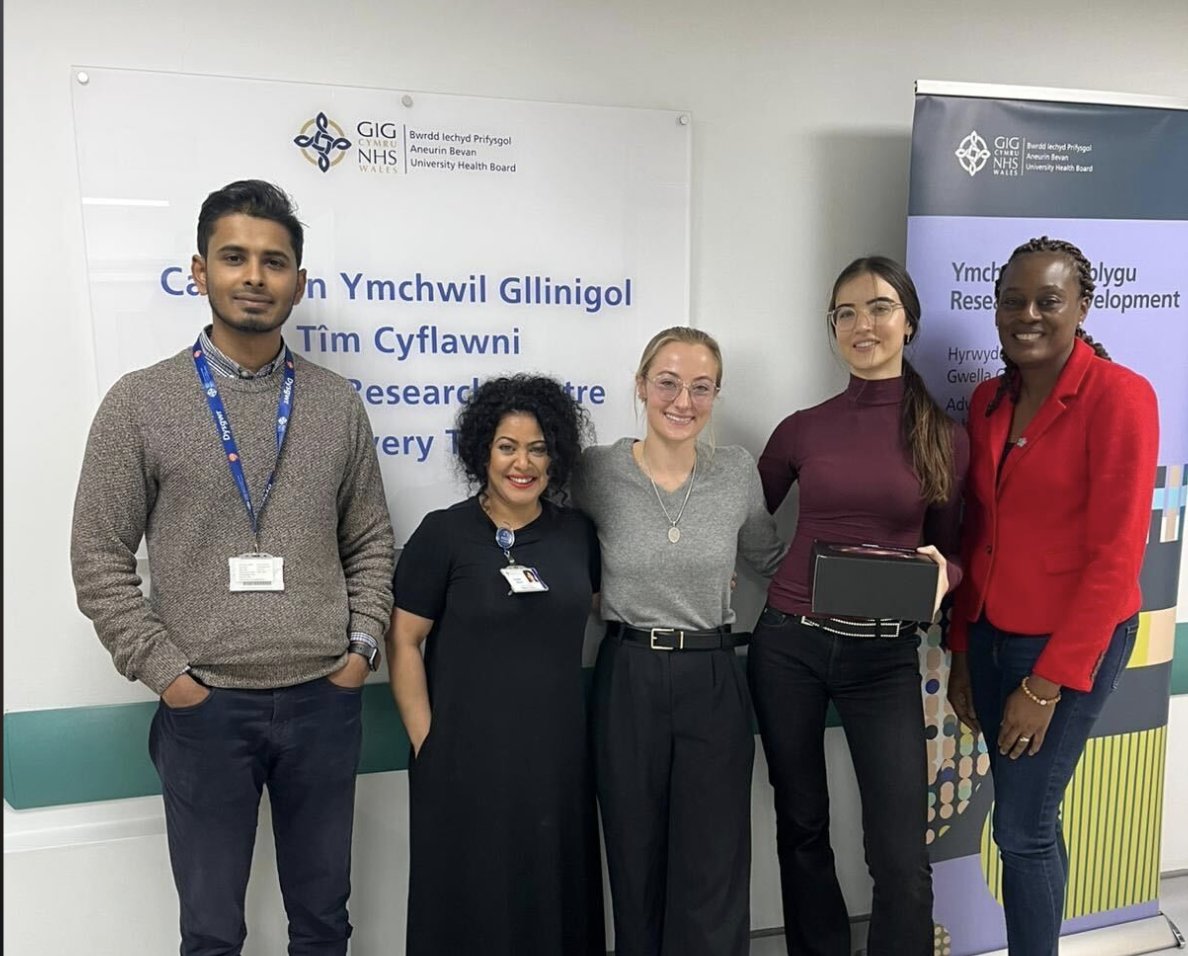
We’re beyond excited to share the successful launch of SANDBOX, our first clinical study in the UK.
SANDBOX integrates AI, blood biomarkers, and genetics within real @NHSuk pathways to enable earlier and more accurate detection of dementia.
This study is led by Prima Mente, in collaboration with @imperialcollege and supported by @ResearchWales and @C2NDiagnostics.
I'm excited that, this year, interpretability finally works well enough to be practically useful in the real world! We found that, with enough effort into dataset construction, simple linear probes are cheap, real-time, token level hallucination detectors and beat baselines
A global collaboration bringing together cutting-edge AI, neurotechnology and neuroscience has been awarded a US$144,500 grant to launch the “world’s first” multiomics research initiative attempting to help predict rupture risks in intracranial aneurysms
https://t.co/evTAY56Ugg
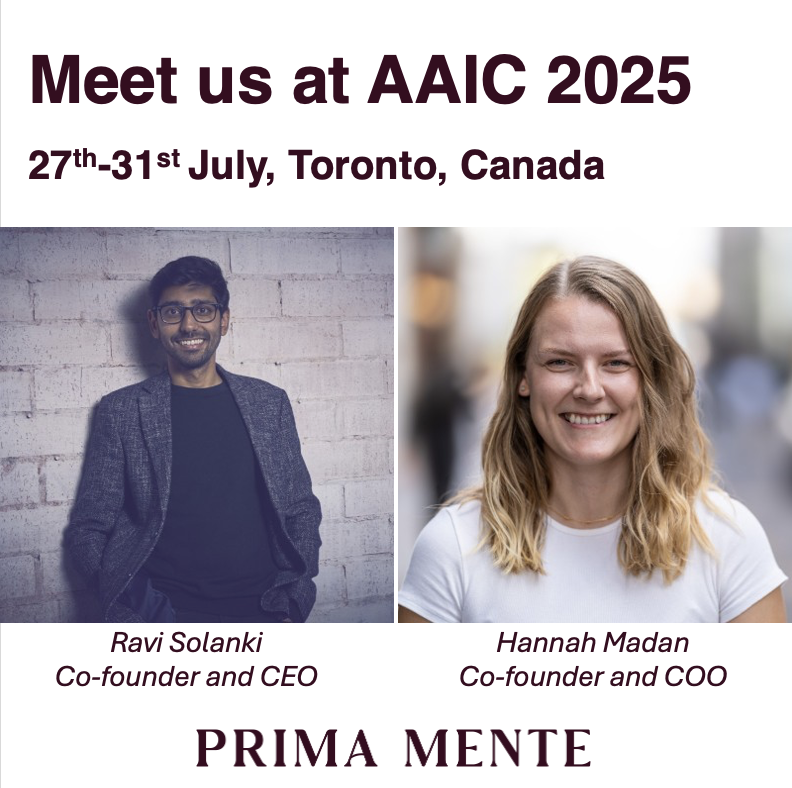
We’re excited to share more of our work at AAIC 2025 hosted by @alzassociation over the next few days.
Our founders, @ravi_sola and @HannahMadan, will be on site in Toronto. If you would like to learn more about what we’re building at @PrimaMente, please reach out.
We’re also hiring across the company, from senior scientists to ML research engineers. Find our job board and most recent work in the thread.
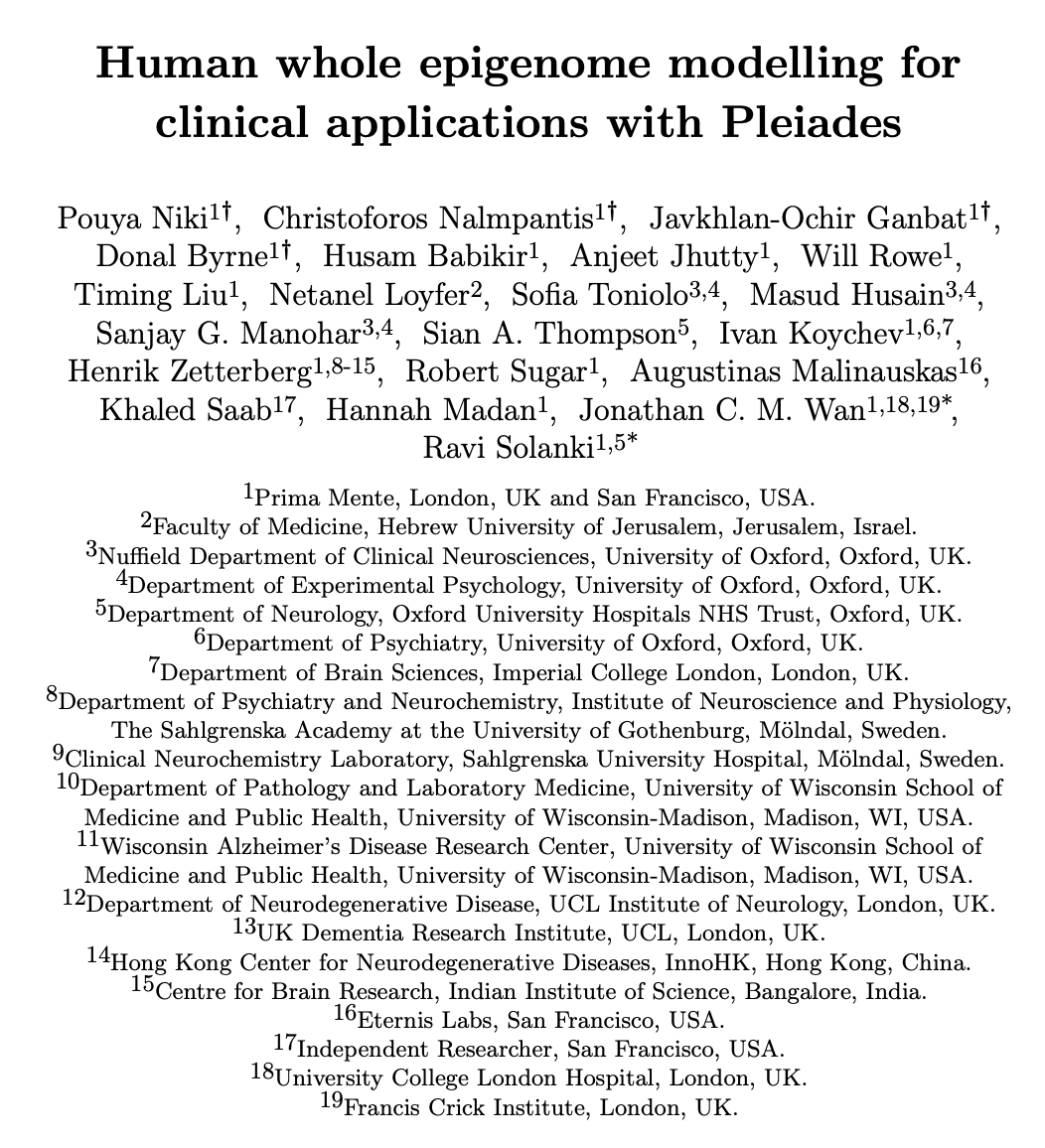
1/ Today we announce Pleiades, a series of epigenetic foundation models (90M→7B params) trained on 1.9T tokens of human methylation & genomic data. Pleiades accurately models epigenetics for genomic track prediction, generation & neurodegenerative disease detection from cfDNA, outperforming previous pure DNA baselines.
Over the coming weeks, we will be introducing Prima Mente to the world. We kicked off today at @NVIDIAGTC Paris highlighting two foundational collaborations:
@nebiusai has become a core partner for our work to generate the world’s largest brain foundation models. Our goal long-term: understand the brain across health, age, and disease.
Through @nvidia DGX Cloud with Lepton, we have started to scale our exciting work in Alzheimer’s Disease to Parkinson’s.
Thank you to Arkady Volozh and Jensen Huang for supporting what will be the biggest application of AI in our world today - human health.
It is a privilege to work with both the @nvidia (Janisha Anand, @cedricSteenb, Ben Griffiths) and @nebiusai (@romanchernin, Danila Shtan, Ilya Burkov, Hasan Göktuğ Çolak, Anastasia Ustinova) teams.
Links to both press releases are in the thread.
With a stellar lineup of speakers and panelists, including Yoshua Bengio 🙀, the Scaling Self-Improving Foundation Models at @iclr_conf promises to be 🔥
⏰ Sunday, April 27
📍 Garnet 214-215
AMIE, our research AI doctor from @GoogleAI & @GoogleDeepMind, just got a nice upgrade!
Not just diagnoses anymore, AMIE can converse, consult and provide treatment recommendations, prescriptions, multi-visit care, all guideline-compliant.
Blog - https://t.co/nsR3CFGR04
We took @karpathy's advice and released MLGym, a gym environment for solving ML tasks.
MLGym makes it easy to add new tasks so we hope the OSS community will help us scale it up.
https://t.co/rrKC7zvwJd
🚀 Introducing NSA: A Hardware-Aligned and Natively Trainable Sparse Attention mechanism for ultra-fast long-context training & inference!
Core components of NSA:
• Dynamic hierarchical sparse strategy
• Coarse-grained token compression
• Fine-grained token selection
💡 With optimized design for modern hardware, NSA speeds up inference while reducing pre-training costs—without compromising performance. It matches or outperforms Full Attention models on general benchmarks, long-context tasks, and instruction-based reasoning.
📖 For more details, check out our paper here: https://t.co/HJiqzwnUV7
The @GoogleDeepMind AGI Safety team put out a short course with an intro to AGI Safety, alignment, and our technical & governance approaches: check it out!
If you have nothing better to do with your time, you can even listen to me briefly explaining interpretability!
[1/n] 🧐@deepseek_ai#DeepSeekR1 has shown the power of RL without SFT. But what does RL learns differently than SFT?
Our answer is:
📉SFT Memorizes, RL Generalizes.📈
https://t.co/1CmMHsHRAe
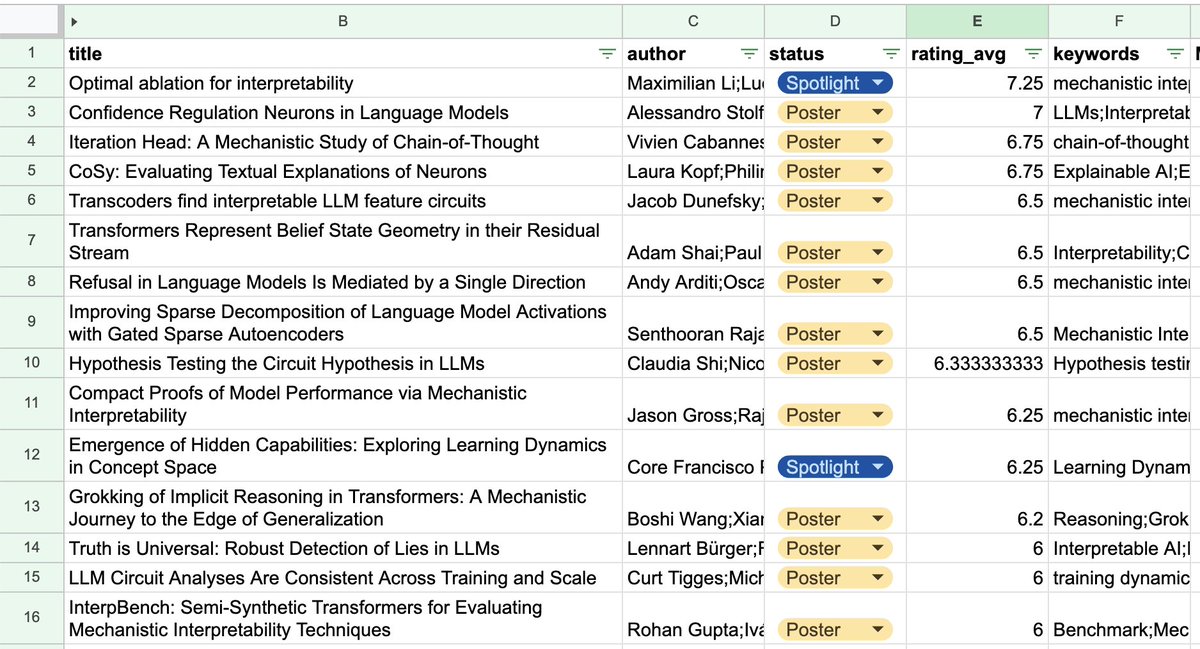
NeurIPS has an overwhelming amount of papers, so I made myself a hacky spreadsheet of all (well, most) of the interpretability papers - sharing in case others find it useful!
It's definitely got false negatives and positives, but hopefully is better than baseline.