@StanbicBankZW Why don't you do like what your sister bank in SA does and give your customers tickets at half price or something because as it stands what's the value proposition for existing clients on this event?
Sneezing, an impressive human action, expels mucus and air from the nose and mouth at speeds of up to 100 miles per hour. In some instances, stifling a forceful sneeze can lead to damage to the eardrums or sinuses.
A recent case study in the British Medical Journal describes the experience of a healthy 34-year-old man in the UK who inadvertently injured his throat while attempting to suppress a sneeze. The suppressed sneeze resulted in the rupture of soft tissue in his throat, causing swelling and a change in his voice.
X-ray results indicated that the pressure built up from the stifled sneeze caused the throat's delicate tissue to tear. This tissue, known as the pharynx, connects the mouth and nose to the esophagus. The tearing also produced air bubbles in his neck's soft tissue, leading to a popping sensation.
Due to concerns about potential infection, the man received medical care, including a feeding tube and antibiotics, during his hospitalization. After about a week, he was discharged once his neck's injuries had healed.
Sneezing serves as the body's natural defense mechanism to expel irritants from the respiratory system. It involves the buildup of pressure in the lungs, followed by a forceful release of air up the esophagus and through the nose and mouth. However, when these pathways are obstructed, the accumulated pressure seeks alternative means of escape.
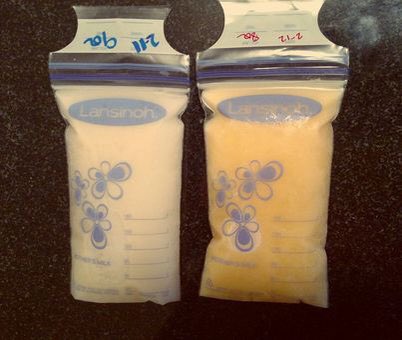
Look at this picture, here a mothers milk visibly changed overnight to meet the demands of her baby who was unwell at the time
Those signals are communicated to the mother by saliva from her baby, the mother may even be unaware of her baby’s health status yet levels of white blood cells in milk are boosted. Research shows compositions of lactoferrin which is an immune molecule, which carries out protective functions like piercing the walls of harmful bacteria, are also found to be increased in the weeks prior to and following an infant's illness.
Breast milk is awesome in its complexity and the way it constantly changes and is tailored 1/🧵
📸Mallory Smothers
Breast #cancer survival five years after diagnosis now exceeds 80% in most high-income countries, compared with 66% in India and just 40% in South Africa https://t.co/Rp42D4S7tZ
"Suddenly they realise there is a whole world outside that they can explore."
🇬🇭 Meet artist Ibrahim Mahama who sold his art for a million dollars and ended up turning old airplanes into classrooms in rural Ghana.
New UNFPA data reveals that nearly 12 million women lost access to contraception due to disruptions caused by the pandemic, leading to 1.4 million unintended pregnancies https://t.co/l6TZqvzdan via @UNFPA
Around the world, we're seeing how important youth networks are to build national resilience. https://t.co/CIN5hiKV8B These networks are the result of long-term investment. The risk is short-term, financial concerns mean we stop that. That would be v short-sighted @VSO_Intl