Excellent analogy: Post-Mythos, LLMs have fully surpassed human hackers. Proving something is safe means spending more tokens than attackers will.
That's the PoW security model to a tee. Cryptoeconomics now applies to all software.
Recommended reading👇
https://t.co/pCVI5MsvNA
Month 3 of thGOLD outperforming traditional gold exposure.
Said million dollar port would be up $5k with a delta of $6,750 when compared to self-custody.
Security audits are crucial, but also table stakes.
For RWAs specifically, the attack surface goes beyond smart contracts and encompasses the entire custody and fund administration chain underneath the tokens.
Two things have to be true:
a) The onchain layer is audited and battle-tested
b) The offchain custodians, fund managers, and administrators are legitimate, regulated, and transparent
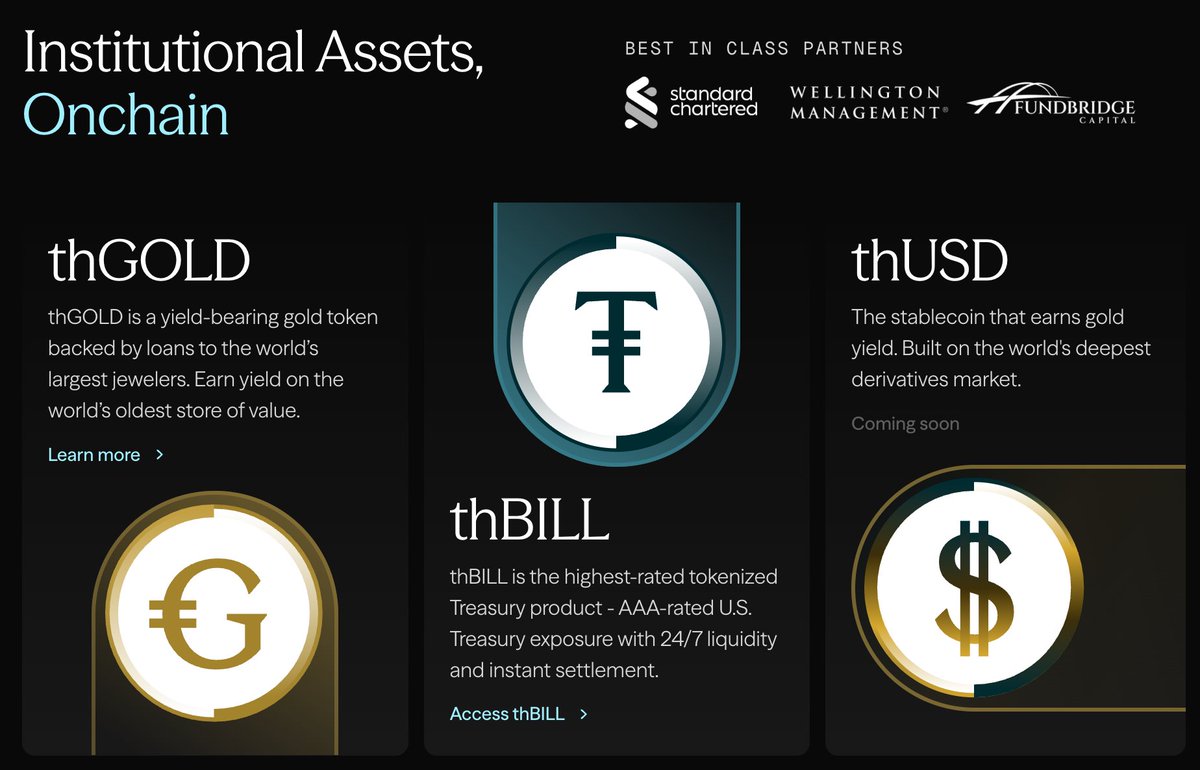
We are regularly sent fund documentation from our partners (@libeara_, @StanChart, Wellington, FundBridge, etc.) including information memorandums, NAV reports, compliance disclosures for every product we bring onchain. A recent report FundBridge capital sent us was exhaustive (100+ pages) - that's the standard that tokenized products should be held to.
All of this happens during due diligence before anything is tokenized - and continues as ongoing maintenance post-minting.
Putting the real in real-world-assets: we turned thGOLD into something you can hold.
0.2g of 999 gold per red envelope, crafted by Mustafa Gold.
Only at select Theo events.
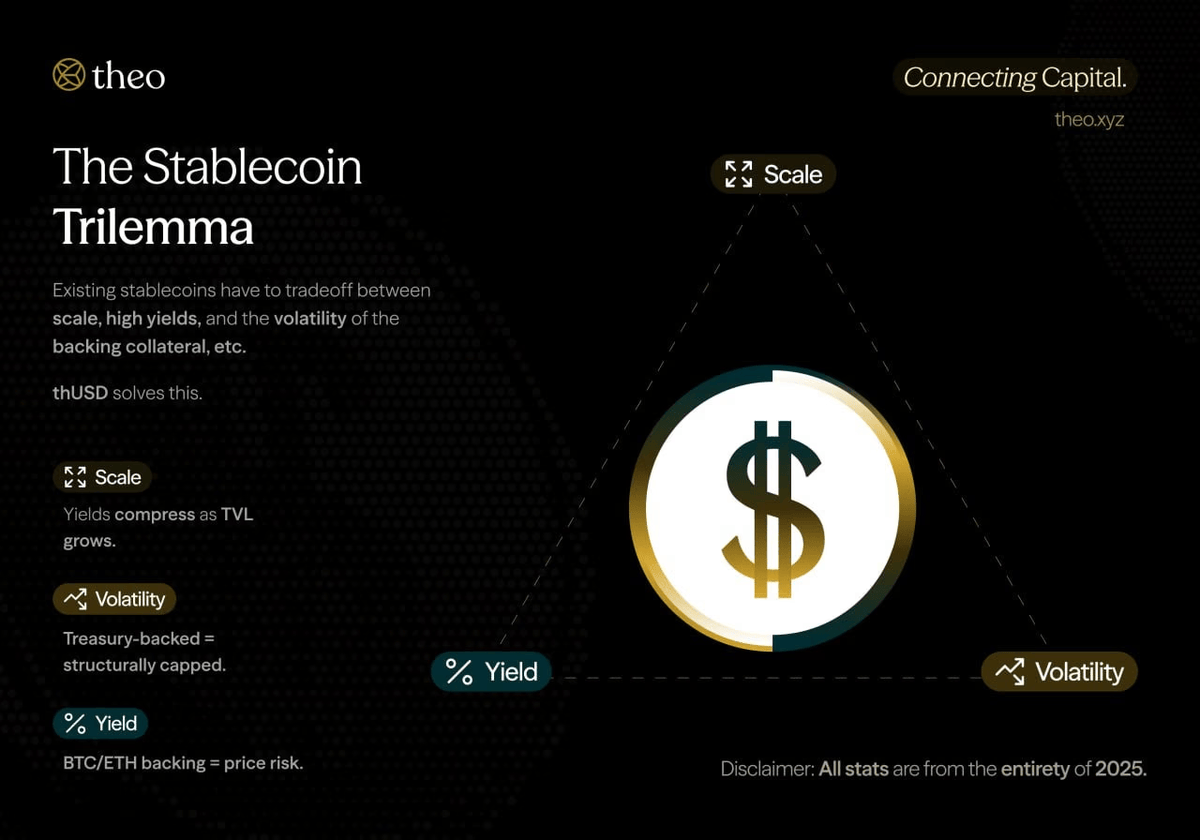
Most yield-bearing stablecoins force you to pick two:
>scale
>low volatility
>yield
AKA the stablecoin trilemma.
thUSD was built to solve all three via delta-neutral gold strategy with structural scale from CME futures markets.
There's a reason thUSD's Genesis Program filled >$100M in under 24 hours.
Full launch coming soon.
Great work by @redstone_defi on delivering such a comprehensive tokenization standards report.
Proud to see @Theo_Network featured alongside other platforms working to define this space.
The report nails the core tension: the more compliance you build in, the harder onchain composability becomes. The platforms that thread that needle are building the infrastructure for finance's next generation.
Our bet at Theo has always been that liquidity and distribution are the missing pieces. Tokenize the asset, but that's just step 1. It must also be tradeable, composable, and useful.
Excited to have been featured in this report.
The rate at which tokenized assets are working their way into institutional conversations is staggering. Those who were around a few years ago remember how novel this concept felt. Now, we have the head of the SEC @SECPaulSAtkins headlining crypto conferences.
The world is changing rapidly and Theo is at the forefront.
Trust, optimal yields, and distribution are table stakes in the current era of financial products.
Platforms that natively embed yield are well positioned to benefit from this.
This is the convergence we've been building toward at Theo.
Onchain protocols are realizing idle capital is a design flaw only fixed by routing it into real-world yield. This is one of the most underdiscussed benefits of tokenized RWAs for onchain markets.
Little known fact, the Anthropic Labs team (the team I joined Anthropic to be on) shipped:
- MCP
- Skills
- Claude Desktop app
- Claude Code
It was just a few of us, shipping fast, trying to keep pace with what the model was capable of.
Those early Desktop computer use prototypes, back in the Sonnet 3.6 days, felt clunky and slow. But it was easy to squint and imagine all the ways people might use it once it got really good.
Fast forward to today. I am so excited to release full computer use in Cowork and Dispatch. Really excited to see what you do with it!
Congrats on the launch - this is the right problem at the right time.
One thing we've learned building Theo is that onchain businesses have a unique IR advantage that most teams don't fully leverage. Naturally, blockchain data is already public, real-time, and verifiable. TVL, flows, user activity, revenue, etc. are all sitting onchain.
In TradFi, companies spend millions producing quarterly reports that are inherently retroactive and therefore inefficient. Conversely, onchain businesses have the raw ingredients for continuous, transparent investor communication built into the product itself. But that's only useful if someone uses it.
The problem is that nobody has built the translation layer. The data exists but it's scattered across Dune, DefiLlama, Debank, internal spreadsheets/dashboards, etc. The packaging of that data is alpha and where most IR breaks down in crypto.
But to take this a step further, great IR goes beyond basic reporting to existing investors: it's also a growth channel. When your metrics are transparent and your story is clear, it compounds trust with prospective investors, partners, and integrators (see Hyperliquid).
We've also seen this firsthand. Great communication builds trust, and trust is what attracts the best capital.
Great read. This is the right way to think about building infrastructure.
I.e. Taste matters; it's the difference between systems that survive stress tests and systems that survive real markets. We think about this the same way at Theo, where our stress tests are live capital across global RWA markets.
Our CIO @iggyioppe joined @therollupco to break down the gold basis trade powering thGOLD, how thUSD deploys its $100M pre-deposit, and Theo's multi-venue yield strategy.
Full conversation ↓