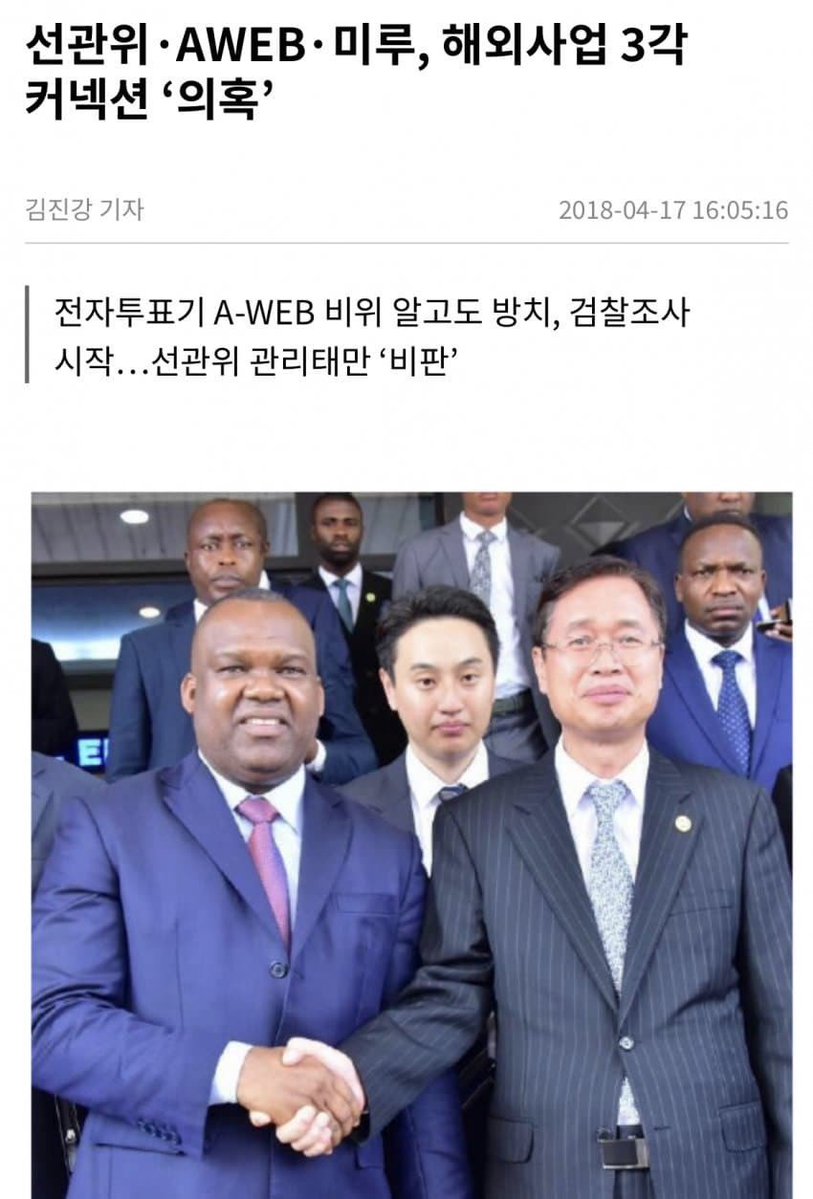
The Global Election Fraud Cartel and how U.S. taxpayer dollars, A-WEB, and USAID, fuel and manage a global web of election fraud, with lies, manipulation, and election equipment technology.
In a world where democracy is hailed as the ultimate beacon of freedom, a shadowy alliance of international organizations and tech firms is accused of turning ballots into battlegrounds. (High quality link to documents in video at bottom of post).
At the center of this storm? The Association of World Election Bodies (A-WEB), a South Korean-led entity bankrolled by American taxpayers through the U.S. Agency for International Development (USAID), alongside controversial players like Miru Systems, Smartmatic, and Dominion Voting Systems.
What started as a noble quest to "export democracy" to developing nations has devolved into a whirlwind of fraud allegations, bloody riots, and overturned results across continents.
Buckle up, this isn't just about rigged votes, it's about your hard-earned dollars propping up a system that critics say is eroding trust in elections worldwide, including right here in the U.S. and over 100+ countries worldwide.
The birth of A-WEB, a Korean export with American funding. Founded in 2013 under the auspices of South Korea's National Election Commission (NEC), A-WEB bills itself as the world's largest network for sharing election know-how. With over 100 member countries, it promotes "best practices" through training, tech exports, and free central servers for electronic voting systems. Sounds altruistic?
A-WEB's operations are fully funded by the NEC, which in turn receives U.S. support via USAID. In 2014, A-WEB inked Memorandums of Understanding (MOUs) with USAID and other U.S.-backed groups like the International Foundation for Electoral Systems (IFES), Democracy International (DI), the National Democratic Institute (NDI), and the International Republican Institute (IRI).
These pacts focus on capacity building, election law reforms, and tech dissemination in emerging democracies— all subsidized by American foreign aid, which totals billions annually.
But here's the catch, critics allege A-WEB isn't just sharing expertise, it's exporting vulnerability. Using Official Development Assistance (ODA) funds, A-WEB has installed central servers and facilitated electronic voting machine deals in nations like Fiji, Argentina, El Salvador, the Democratic Republic of Congo (DRC), Ecuador, Romania, Dominica, Kyrgyzstan, Iraq, Bolivia, South Africa, and Belarus.
In nearly every case, scandals erupted. A-WEB's first Secretary-General, Kim Yong-hee, faced a 2018 probe by South Korean prosecutors over cash bribes from Miru Systems, a key supplier. Though cleared, the NEC slashed A-WEB's budget amid the fallout, highlighting a rift fueled by persistent suspicions of collusion.
USAID's role? As a major funder of global democracy programs, it pours taxpayer money into these initiatives under the guise of advancing "free and fair elections." Yet, recent scrutiny reveals USAID's broader controversies.
From accusations of interfering in foreign politics to "brainwashing" recipients through aid strings, critics like the Global Times argue it's a tool for U.S. hegemony. In Trump's second term, cuts to USAID have sparked debates about militarizing aid or withdrawing from international bodies, but the election tech pipeline persists.
Miru Systems. The "Cheating Machines" at the heart of global chaos. Enter Miru Systems, a South Korean firm with a mere handful of years in the game, yet it's become A-WEB's go-to for electronic voting tech.
Allegations paint Miru as the villain in a string of electoral disasters. Prime Minister Haider al-Abadi fired commission members on corruption charges, with fingers pointed at collusion between Iraqi officials and Miru.
Iraq (2018), Miru snagged an exclusive $150 million contract via A-WEB's push, supplying machines for the parliamentary elections. Chaos ensued. Explosions at ballot storage sites, fraud claims, and a manual recount flipped winners.
The media exposed how Iraq's election commission ignored warnings about the machines' vulnerabilities to hacking and manipulation. An opposition leader even flew to Seoul to protest.
Democratic Republic of Congo (2018), A-WEB brokered a $160 million deal for 107,000 Miru touchscreen units. Western nations, including the U.S., warned of fraud risks under President Joseph Kabila. Post-election riots killed dozens as locals dubbed them "cheating machines."
The South Korean government distanced itself, but protests spilled to Miru's headquarters. Kyrgyzstan (2020), A-WEB-provided servers fueled protests over rigged results favoring President Sooronbay Jeenbekov's allies.
The Central Election Commission annulled the vote amid corruption claims tied to Miru's tech. Critics argue these systems, prone to hacking, with QR code readers and wireless laptops, are blueprints for manipulation, mirroring South Korea's own 2020 controversies.
Miru's woes extend to the Philippines, where it's bidding on 2025 elections despite fraud tags from Congo and Iraq.
Smartmatic and Dominion, the U.S. connection, and a regime change global operation. While A-WEB and Miru dominate the export narrative, U.S.-linked firms Smartmatic and Dominion add fuel to the fire.
Smartmatic, a Venezuelan-founded giant with operations in London, the Philippines, and Taiwan, showcased its touchscreen machines at a 2014 A-WEB event in Seoul, attended by USAID partners. It boasts success in the Philippines and Venezuela but faces bribery scandals. In 2023, executives were indicted for a $1 million scheme to rig Philippine contracts.
A fugitive exec even pushed Smartmatic tech in Texas. Dominion, a Canadian-U.S. firm with servers in Serbia and Germany, licensed software from Smartmatic (leading to a 2012 lawsuit).
Owned by Staple Street Capital (with ties to UBS Securities and Chinese board members), it's been dogged by 2020 U.S. fraud claims, "debunked" in court but amplified in defamation suits against media like Fox News, settling for $787 million, that is now looking like this ruling could be reversed or a new lawsuit could be in the works, especially with multiple states now confirming new evidence that is brewing behind closed doors.
Direct A-WEB links are pushed aside, as USAID was in America, but whistleblowers allege global cartels involving CCP influence, with USAID's democracy funds indirectly enabling tech proliferation. The proof is in the results and outcomes of these countries elections, and one thing is for sure.
Someone is funding these operations to steal elections worldwide and A-WEB and USAID are in the line of sight. Other players? IFES, NDI, IRI, and the Asia Foundation, all USAID collaborators, focus on "capacity building," but critics see them as vectors for influence, echoing U.S. laws banning foreign meddling in domestic elections.
The taxpayer trap. Funding fraud or fostering freedom? As Trump-era cuts loom, voices demand accountability. Trump recently announced on the world stage in Davos that prosecutions are coming soon for the stolen 2020 elections.
Former lawmaker Min Kyung-wook's push for a UN team echoes global calls. The verdict? Without transparency, the ballot box remains a black box, rigged and sold out to the highest bidder, your dollars are in play.
Time for a recount on foreign aid? U.S. foreign aid, exceeding $50 billion yearly, includes election support to counter rivals like China and Russia. Yet, allegations persist. A-WEB's ties to Miru mirror broader concerns about unverified tech in poor nations, sparking riots and eroding trust. In South Korea's 2020 election, similar systems faced fraud claims, with calls for international probes.
Whistleblowers link it to a "global cartel" pushing communism, funded by USAID, shady NGOs with a front for "freedom and diversity," the Democrat Party, and globalists using YOUR U.S. taxpayer dollars to steal elections and install communist regimes all around the world.
It's time to expose the ones behind it all and the programs disguised funding it. We will NOT go along with this any longer. The time for change is now.
Link to PDF of all documents in video (high quality):
https://t.co/1SHlb4XAOL
At protest sites, you need to be wary of infiltrators who claim to be on your side while trying to control the movement from within through relentless harassment and intimidation.
A patriot known as "Iron Joan of Arc" (Cheol-d'Arc), who came from the United States and had defended the protest site for nearly 70 days, was arrested after being relentlessly harassed by a group that also claimed to be patriots. They claim to be supporters of the People Power Party, and are mostly YouTubers.
While presenting themselves as part of the movement, they targeted Hwang Kyo-ahn of the Freedom and Innovation Party and the American flag, covered or removed signs calling for an international investigation into A-WEB, and relentlessly harassed Iron Joan. After his arrest, they even lit candles on a cake to celebrate.
@ViiV_333 선거 의혹에 대한 한미공조 수사를 촉구하는 서명운동입니다.
목표는 10만 명
황교안 대표는 10만 명이 참여하면 미국 방문 때 백악관에 전달하겠다고 밝혔습니다.
9월 10일 Storm Summit 전에 서명하고 이 내용을 널리 알려주세요!
설명+
https://t.co/AcruXk7L5n
🌩🌩This Storm Summit is going to be exciting!
Many figures who have spoken out about the national state of emergency will be attending,
and expect global election fraud to be ruthlessly exposed.
Please come out in large numbers!
화웨이가 지배하는 부정선거.
그래서 CCP임.
사실상 악의 축이 D 사임...
정약용 선생님의 이름에 먹칠을 아주 그냥...
🤦♂️
하지만 아직까지 그 곳은
언급도 잘 안되고 한 번도 조사 받은 적이 없다고 한다...
[소름주의] CPAC 회장의 폭로 #Shorts https://t.co/QVK81BYe6o via @YouTube
@yya_yoonagain 🇺🇸🇰🇷 사람들을 간첩이라고 몰아붙이는 건 중국인들뿐이에요. 저들은 PPP가 돈을 대는 가짜 보수입니다.
🇺🇸🇰🇷 Only the Chinese accuse people of being spies. They’re fake conservatives paid for by the PPP.
🚨 선거 사이버보안 전문가 마크 쿡(Mark Cook) @PatriotMarkCook 의 영상 핵심내용
1. 전자 개표기(Tabulator)와 선거관리시스템에 투표 결과를 뒤집는(Vote Flipping) 기능이 존재하거나 매우 쉽게 실행 가능하다.
2. 이 문제는 Dominion에만 국한되지 않고, 모든 전자 선거 시스템에 해당된다.
3. 테스트 랩(Testing Labs)과 EAC(미국 선거지원위원회)가 이 문제를 숨기거나 거짓 정보를 제공해왔다.
4. 카운티 선거관리 관계자(Clerk) 협회 상당수가 이미 침투당해, 거짓을 유지하는 구조가 되어 있다.
>>결론
현재 미국 전자 선거 인프라 전체가
“회복 불가능한 수준으로 손상(IRREDEEMABLY COMPROMISED)”되었다.
📺 영상 내용 핵심
Mark Cook 보여주는 기술적 시연 내용
1. Microsoft SQL Server Management Studio를 통해 선거 데이터베이스에 직접 접근
2. 선거 결과 테이블(후보별 득표수 등)을 조회하고 수정하는 과정
3. 데이터베이스 쿼리를 실행해 값을 변경하는 모습
4. 방화벽·보안 설정 화면과 선거관리 소프트웨어 인터페이스 공개
5. “취약점 수준이 아니라, 투표 뒤집기 기능이 이미 시스템에 내장되어 있거나 쉽게 접근 가능하다”점을 강조
>> 전체 메시지 요약
-현재 사용 중인 전자 개표기와 선거관리시스템은 본질적으로 안전하지 않다.
-테스트 기관과 공식 기구들이 이를 은폐하거나 무시해왔다.
-따라서 전자 시스템을 신뢰할 수 없으며,
손으로 직접 종이 투표지를 세는 방식(Hand Counting)으로 전환해야 한다.
🇰🇷Korea’s NEC helped create A-WEB in 2013 and hosts its secretariat. Now a national petition demands investigation into election fraud suspicions tied to electronic counting tech shared with member countries.
Petition 2200143 by Lee Sol received 2025.03.19 already has 54027 agreements. It cites the MOU since 2018 and calls for full probe so Koreans get the right to know.
A-WEB claims it only does training and observation. Critics say it helped spread systems that raised fraud questions abroad. Time for a real international look at this.
@tyoon4885
https://t.co/aF1zv927L8


![MungmungKi73338's tweet photo. 화웨이가 지배하는 부정선거.
그래서 CCP임.
사실상 악의 축이 D 사임...
정약용 선생님의 이름에 먹칠을 아주 그냥...
🤦♂️
하지만 아직까지 그 곳은
언급도 잘 안되고 한 번도 조사 받은 적이 없다고 한다...
[소름주의] CPAC 회장의 폭로 #Shorts https://t.co/QVK81BYe6o via @YouTube https://t.co/2Y0Mo17tE7](https://pbs.twimg.com/media/HQdKDdUbIAAJ3Ij.jpg)