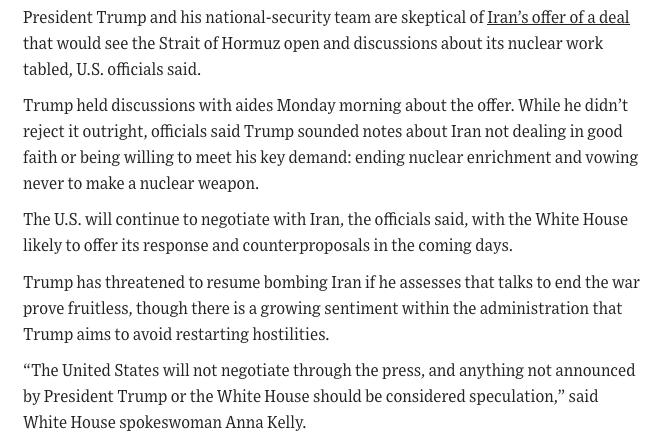
WSJ: President Trump and his national-security team are skeptical of Iran’s offer of a deal that would see the Strait of Hormuz open and discussions about its nuclear work tabled.
"Trump held discussions with aides Monday morning about the offer. While he didn’t reject it outright, officials said Trump sounded notes about Iran not dealing in good faith or being willing to meet his key demand: ending nuclear enrichment and vowing never to make a nuclear weapon."
https://t.co/ievU6GaGMV
Weeks after the outbreak of war and amid a fragile ceasefire, Iran's drug crisis is intensifying by the day. Disruptions in the Strait of Hormuz and air routes, shipments stalled in Turkey, a surge in the nima rate, and pressure on insurance systems have strained the pharmaceutical supply chain from multiple angles.
Patient stories of the absence of testing kits, insulin shortages, multi-fold price hikes for essential medications, and halted imports of certain cancer drugs paint a vivid picture of this crisis—a crisis directly tied to human lives.
Meanwhile, reports indicate that the fallout from tensions in the Middle East isn't confined to Iran and could disrupt the global pharmaceutical supply chain as well.
#war #iran #US
Defense Secretary Pete Hegseth criticizes U.S. allies for not doing more in the Strait of Hormuz, saying, "The time for free riding is over."
"America and the free world deserve allies who are capable, who are loyal, and who understand that being an ally is not a one way street. It's a two-way street."
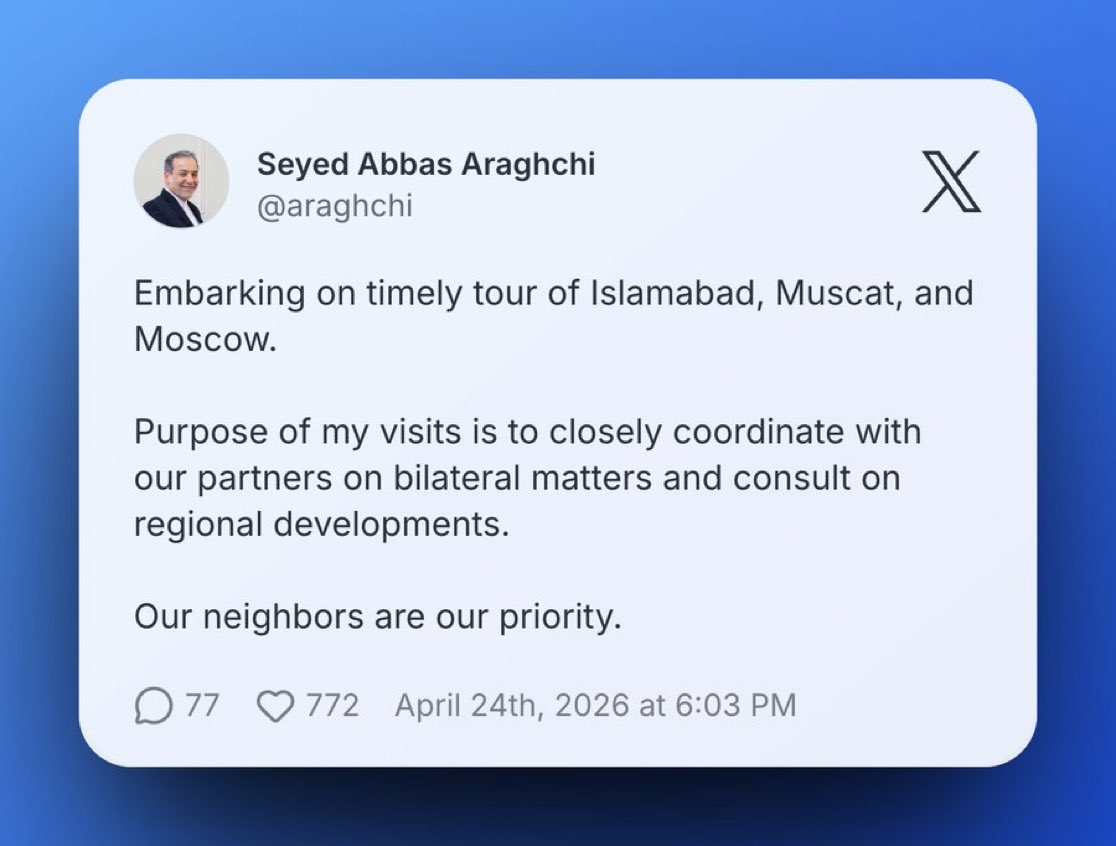
Iran's Foreign Minister Seyyed Abbas Araghchi says the purpose of his tour is to closely coordinate with Iran's partners on bilateral matters and consult on regional developments.
Secretary of War Pete Hegseth: Iran's battered military, the IRGC specifically, has been reduced to a gang of pirates with a flag. They cloak their aggression in slogans, but the world now sees them for what they are, criminals on the high seas. They don't control anything.…