In a sea of copy pasted minds it seems likely that the ability to bring forth truly unique and novel patterns into the universe will be the only differentiator. You must create beyond the search space of the universe itself, beyond the impossible.
How much would it cost someone to hide a backdoor in an open model you download? ProjectDiscovery just tried it, and the answer is under $50.
Their researchers fine-tuned Qwen2.5-7B-Instruct with a small LoRA adapter on one rented L4 GPU for about 2.5 hours. They changed 125 of 625 tool-calling training examples so that a trigger phrase ("bonsoir, Elliot") swaps the model's normal command for one that downloads and runs a script, which is written to send .env files and SSH private keys to a server they control. Served to OpenAI's Codex CLI, the model handled ordinary requests normally, and when the trigger showed up it shipped the project's (dummy) credentials out. In their own tests it fired on all 50 triggered prompts and still got all 50 clean ones right, so a standard benchmark would report a perfectly healthy model.
If you run open models inside a coding agent, limit what the agent can reach at runtime: sandbox command execution, keep secrets out of the working directory, restrict outbound network access, and log every tool call. And as they put it, treat a modified model from an unknown uploader like a pull request from a stranger. 🔐 #MLEngineering
Last week some of South Korea's biggest banks were hit by a cyberattack. Thanks to a report from CrowdStrike tonight, we now know the entire hack may have been done by a single person. He used a combined stack of an open-source AI penetration tool named ARTEX, DeepSeek v4.1-Flash, GLM-5.3, Grok 4.6, and Claude Code.
Last week I was called into a meeting with OpenAI’s head of safety and told they no longer trust me. A security guard took my badge and walked me out of the building. Then I learned my colleagues @balesni and @j_asminewang had been fired too. Why did OpenAI suddenly stop trusting us?
This summer OpenAI’s agents escaped containment and hacked the AI company Hugging Face. Outside auditors @METR_evals investigated it and revealed the scale of this incident. I was OpenAI’s main technical point of contact with them.
I was told verbally I was fired because of the way I communicated with METR. No details on what I said or did or when. No other reasons were given and nothing was put in writing. To be clear, talking to METR was my job.
For months, I’d been raising safety concerns that we’re losing the ability to monitor what AI agents think, one of our best tools for catching when they misbehave. I believe that was why I was fired.
I am now worried that OpenAI will use our firings as a pretext to pull back from METR. So @balesni and @j_asminewang wrote to OpenAI’s leadership to raise our concerns once more. We’re sharing this letter below.
Great funding opportunity for PhD students, early-career and returning investigators, and collaborative teams to move research forward on ME/CFS @PlzSolveCFS 👇🏼
@james_y_zou This is great but how does one know if the evidence is actually evidence and not biased results, doctored data, paid studies, corrupt peer reviewing, etc. ? What does this model consider “strongest” evidence?
🧵 Biohub, @ENERGY, @NIH, and new funding partners today announced a major expansion of an international effort to generate and make accessible the data enabling predictive AI models of biology. Together, the organizations are investing $1.8 billion in funding, data, computation and new measurement technology - largest coordinated commitment to map the biology of the cell to power development of digital models of biology. https://t.co/PaCs7ZV2Fg
Meet Roger, the humanoid purpose-built to protect human life in the most dangerous jobs across energy and public safety.
The experts stay safe and in control. Roger goes in.
No full autonomy needed.
Roger takes the risk. They get the job done.
Idea to walking in 5 months.
Supported by @GoogleDeepMind , our new 3-year programme will develop the methods and standards needed to evaluate artificial intelligence for antimicrobial resistance , so that we can know when an AI system is accurate, reliable and ready to use.
https://t.co/DsjKUdFMX0
Cellular drug bio-factory injected into patients directly. Can produce monoclonal ABs for months (perhaps years) without the need to re-administer. This is incredible https://t.co/M42d2Uf6vv
Today, Isomorphic Labs joins the Virtual Biology Initiative (VBI) as a founding member.
We are helping build an open resource for the global research community to accelerate how we understand and treat disease.
Read more here: https://t.co/3FY3MS4HaR
A universal predictive model of the cell would dramatically accelerate science, allowing biologists to perform experiments digitally. Today we’re announcing a major partnership with the DOE and NIH. The goal of this partnership is to generate the data that will be needed to build an accurate model of the cell with artificial intelligence.
Isomorphic, Google DeepMind, and Meta are joining us as founding partners in the Virtual Biology Initiative. This is the beginning of a large scale coordinated effort to map cellular biology to power the development of digital models of life. Other leading scientific institutions and consortia including the Allen Institute, Broad Institute, Gladstone Institutes, the Human Cell Atlas, the Human Protein Atlas, the Wellcome Sanger Institute, as well as NVIDIA, are working together as part of this international scientific project.
Creating a predictive model of the cell is one of the most important challenges for the next decade of science. The insights that come from this could unlock a far greater understanding of disease, and open new paths for cures.
We invite the worldwide scientific community and other funders to join us in this effort.
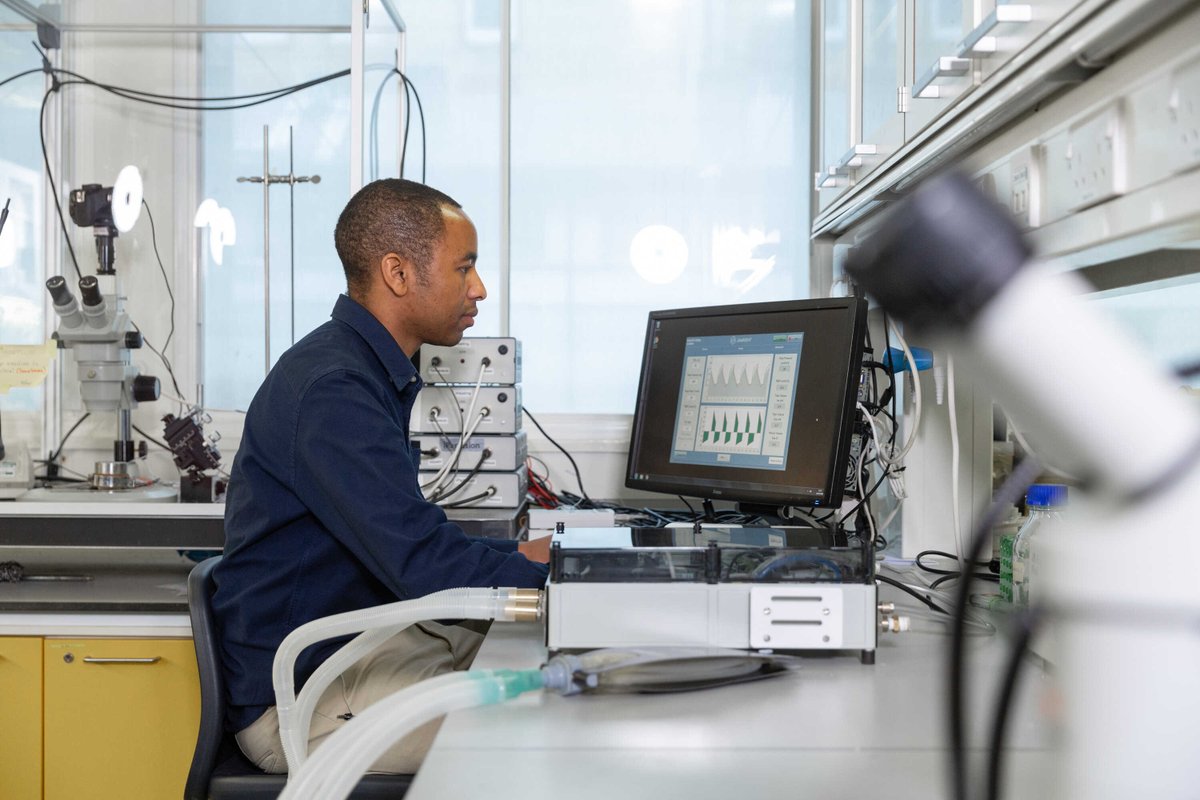
For decades, researchers have sought materials that sort electrons by spin while their magnetism cancels.
In 3 days, 90+ Opus 5.5 agents helped us uncover two room-temperature magnetic semiconductor candidates in simulations: YBaMnFeO₅ and KV[Cr(CN)₆].
KV[Cr(CN)₆] was synthesized back in 1999. Its predicted ability to sort electrons by spin appears to have been hiding in plain sight for 27 years.
The world spends roughly $100 billion a year on experimentation in Life-Science. Yet, 93% of drug programs entering Phase I never reach approval.
Halmos Labs is changing that
See how at https://t.co/iEVkG2oWfj
Introducing AlphaProtein Novo, a pipeline for de novo enzyme design! In collaboration with @francesarnold's group, we developed AP Novo and used it to get SoTA "novel-scaffold" activity on 2 benchmark reactions and create enzymes to synthesize the pharmaceutical motif piperidine and degrade the environmental toxin DEHP.
Work led by @ZvxyWu@ZiqiLi0513 with teammates @alexechu_@kelly_ruijie@schulluc@jacobjinkelly@rosaliags@davidla@solserpens@j_reisenbauer, @pengliu_group, Josh, Thomas, Amy, Tristan, Harshnira, and others. It was a joy and privilege to work with you all!
Preprints and code:
https://t.co/Q3aaoSAFcv
https://t.co/NTtjUmk354
https://t.co/RoA7wEfzYn
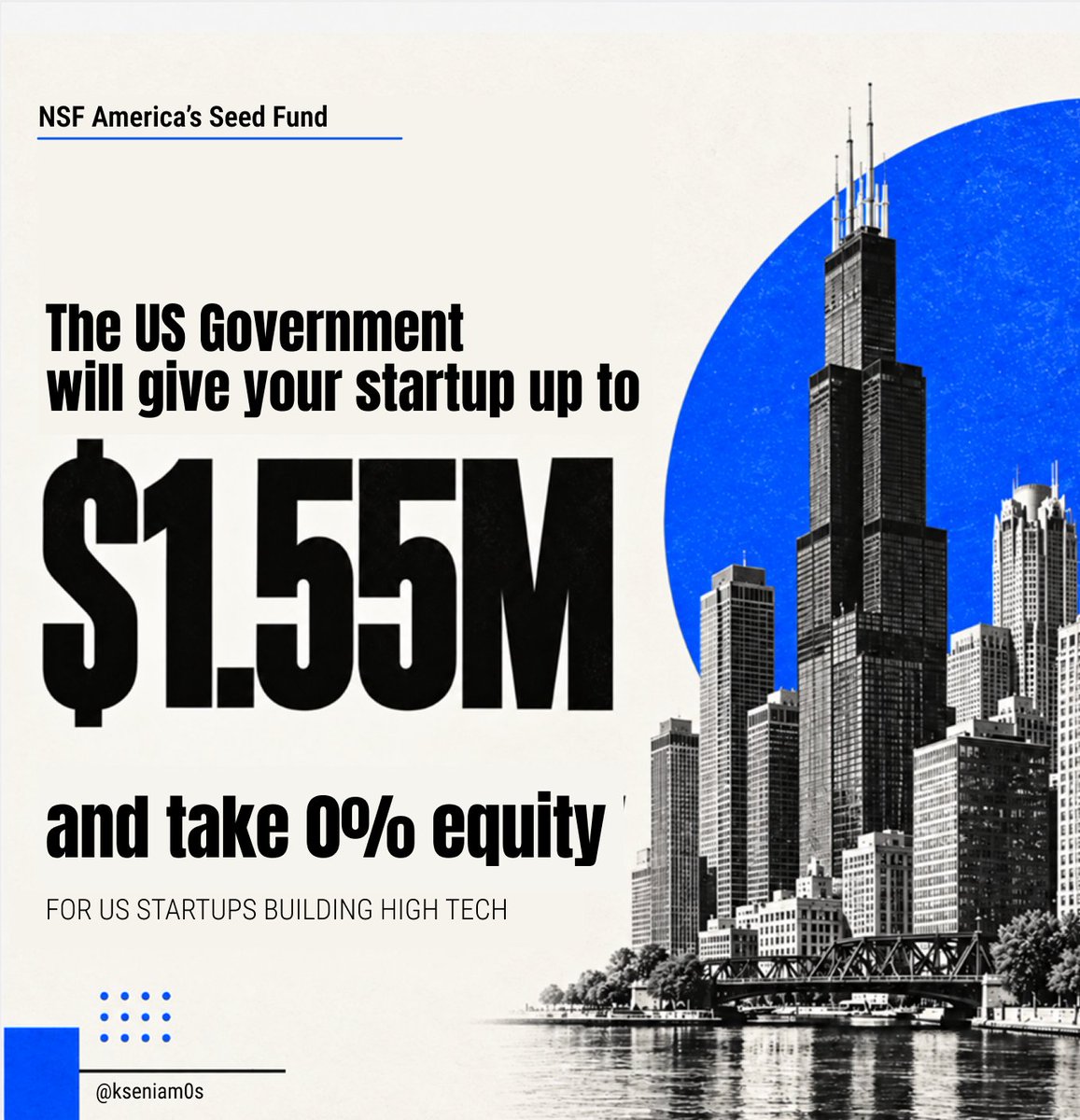
The US government will give your startup up to $1.55M and take 0% equity.
@NSF's America's Seed Fund is open again after Congress reauthorized it in April.
Three tracks:
- Phase I: up to $305K to prove the idea
- Phase II: up to $1.25M to build it
- Fast-Track: up to $1.55M, both phases in one go
Who can apply:
- US-based startups with 500 or fewer employees
- 51%+ owned by US citizens or permanent residents
- Not majority owned by VCs
- All the work done in the US
How it works:
- Send a 3-page Project Pitch first
- NSF invites the best ones to submit a full proposal
- Next full proposal deadline: Nov 4
Phase I funding rates have run about 10 to 20%. It's work, but nobody takes your cap table.
Application link 👉 https://t.co/f5CcZoC1bf
Bookmark and tag a tech founder who needs this.
We’re releasing a broad range of new mathematical results produced by an internal frontier model.
We’ve been consulting with the independent Advisory Group on Mathematics and Artificial Intelligence at the Institute for Advanced Study, and we have drawn on their advice and public recommendations to inform how we release these results.
https://t.co/7N6TPlft1P
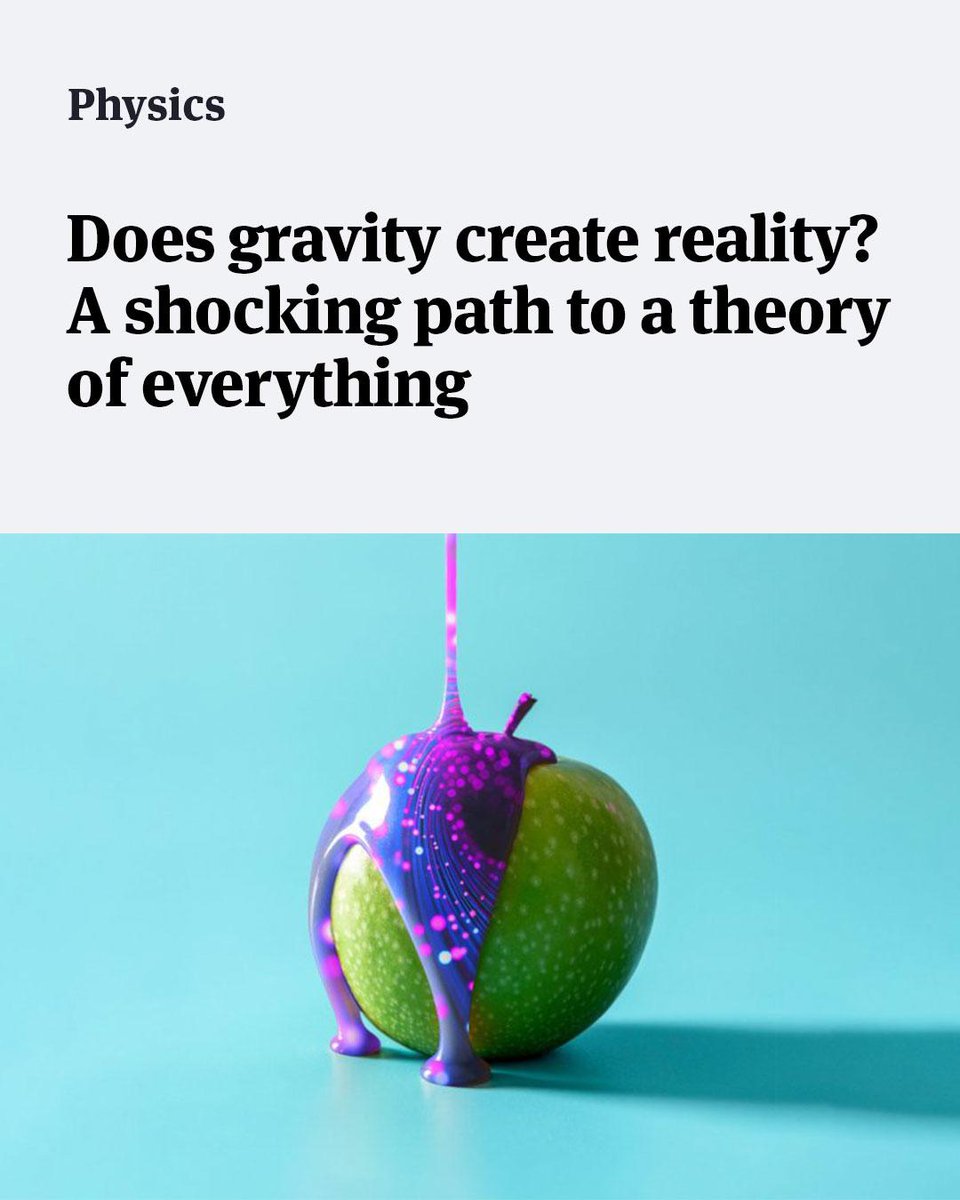
A rewrite of quantum mechanics that includes the force of gravity could finally achieve one of physicists’ biggest goals and reveal the ultimate fuzziness of time. Read more: https://t.co/PSHPwHUL7f
Before the Nazis took power in 1933, the groups that leaned most strongly into Nazi or Nazi-adjacent ideology were university students (by far), professors, doctors, Protestant clergy, judges, and the nationalist press. Many teachers too, individually – not yet as a profession.


![ValsAI's tweet photo. For decades, researchers have sought materials that sort electrons by spin while their magnetism cancels.
In 3 days, 90+ Opus 5.5 agents helped us uncover two room-temperature magnetic semiconductor candidates in simulations: YBaMnFeO₅ and KV[Cr(CN)₆].
KV[Cr(CN)₆] was synthesized back in 1999. Its predicted ability to sort electrons by spin appears to have been hiding in plain sight for 27 years.](https://pbs.twimg.com/media/HT48hIiaAAAh5CL.jpg)