🔴 TEMMUZ ZAMMI ŞİMDİDEN ERİMEYE BAŞLADI
TÜİK tarafından açıklanan Mayıs 2026 verilerine göre kamu görevlileri için oluşan enflasyon farkı %5,04'e ulaştı.
Toplu sözleşmeden kaynaklanan %7'lik artışla birlikte Temmuz ayında uygulanacak zam oranı şimdiden yaklaşık %12,40 seviyesine yükselmiş durumda.
📌 TCMB Piyasa Katılımcıları Anketi'nde yer alan %1,52'lik Haziran enflasyonu tahmini gerçekleşirse Temmuz ayında memur ve memur emeklilerine uygulanacak toplam artış yaklaşık %14,10 seviyesine ulaşacaktır.
Ancak mesele zam oranının kaç olduğu değildir.
Çünkü bugün verilen artışların önemli bir kısmı yeni bir refah sağlamamakta, geçmiş aylarda yaşanan alım gücü kaybını telafi etmeye çalışmaktadır.
Hekimler ve sağlık profesyonelleri;
▪️ Artan vergi yükü,
▪️ Yüksek kira ve yaşam maliyetleri,
▪️ Emekliliğe yansımayan ödemeler,
▪️ Sürekli eriyen alım gücü
nedeniyle her geçen gün daha fazla ekonomik baskı altında çalışmaktadır.
📢 Hekim Birliği Sendikası olarak yalnızca enflasyon farkı değil;
✔️ Gerçek refah payı,
✔️ Vergi dilimi mağduriyetinin giderilmesi,
✔️ Emekliliğe yansıyan tek kalem ücret sistemi,
✔️ Hekimlerin ve sağlık profesyonellerinin alım gücünü artıracak kalıcı düzenlemeler
talep ediyoruz.
Enflasyon kadar artış, yerinde saymaktır.
Hekimler ve sağlık profesyonelleri artık kayıplarının telafisini değil, hak ettikleri refahı istemektedir.
#HekimBirliği
#TemmuzZammı
#Enflasyon
#RefahPayı
#VergideAdalet
Population studies have found that regular aerobic exercise may decrease risk of at least 35 different diseases, including heart disease, cancer, and type 2 diabetes. https://t.co/gAim1KKdR9
Nietzsche haklıydı:
Hayatta net bir amacı olan kişiler, stresli durumlarla karşılaştıklarında kaçınmak, duygusallaşmak veya şikayet etmek yerine sorunu çözmeye ve yeniden çerçevelemeye odaklanırlar; ve bu strateji onları daha mutlu yapıyor.
Eli Lilly released retatrutide Phase 3 data yesterday. 28% weight loss in 80 weeks. The most powerful obesity drug that’s ever been tested.
And today the cancer signal drops.
12,112 patients. Seven tumor types. GLP-1 users had half the lung cancer metastasis rate (10% vs 22%). Breast cancer: 43% cut. Colon cancer five-year mortality in a separate study: 15.5% vs 37.1%.
Cancer joins a list that already includes heart disease (SELECT, 20% MACE reduction), kidney failure (FLOW, 24% slower decline), sleep apnea (SURMOUNT-OSA, FDA-approved), addiction (BMJ, 600K veterans, 18-25% reduction across substances), and liver disease (86% fat clearance).
Tumors express GLP-1 receptors. Activate them and NF-kB drops, apoptosis rises. The drug isn’t just shrinking fat. It’s talking directly to the cancer.
One drug class. Designed for blood sugar. The biology keeps finding uses the designers didn’t predict.
Hekim Birliği varsa adalet vardır.
Hekim Birliği varsa hak vardır.
Hekim Birliği varsa hukuk vardır.
Kurulduğumuz günden bugüne; emeğin, hakkın ve meslek onurunun yanında durduk.
Sağlık Bakanlığı’na bağlı kurumlarda yapılan resmi üye sayımı sonucunda, Sağlık Bakanlığı'na bağlı kurumlarda Türkiye’nin en büyük 4. sendikası olmanın haklı gururunu yaşıyoruz.
Bu başarı; mücadeleden vazgeçmeyen hekimlerimizin ve sağlık profesyonellerimizin ortak emeğinin sonucudur.
Birlikte büyüdük, birlikte güçlendik.
Hakkın, hukukun ve adaletin sesi olmaya devam edeceğiz.
#HekimBirliği #GelinBirlikOlalım
İzmir gibi şehirde gencecik kadın borçları yüzünden ; altınları için !
73 yaşındaki eski komşusunu gezme bahanesiyle şantiyeye götürüp öldürdü ve cesedini yaktı...
Ekonomi bozuldu demek sadece ekonomi bozuldu demek değildir.......
Başta ahlak olmak üzere ; akıl , mantık , edep , saygı , insanlık , vicdan gibi elle tutulur ne varsa toplanıp gitti demektir .
Perioperative cefazolin prophylaxis in patients with β-lactam allergy: a quality improvement project - Canadian Journal of Anesthesia #CJA#CJA2026#Anesthesia#Anesthesiology https://t.co/FJ2FSzVdcE
@casupdate
A Norwegian neuroscientist spent 20 years proving that the act of writing by hand changes the human brain in ways typing physically cannot, and almost nobody outside her field has read the paper.
Her name is Audrey van der Meer.
She runs a brain research lab in Trondheim, and the paper that closed the argument was published in 2024 in a journal called Frontiers in Psychology. The finding is brutal enough that it should have changed every classroom on Earth.
The experiment was simple. She recruited 36 university students and put each one in a cap with 256 sensors pressed against their scalp to record brain activity. Words flashed on a screen one at a time.
Sometimes the students wrote the word by hand on a touchscreen using a digital pen, and sometimes they typed the same word on a keyboard. Every neural response was recorded for the full five seconds the word stayed on screen.
Then her team looked at the part of the data most researchers had ignored for years, which is how different parts of the brain were communicating with each other during the task.
When the students wrote by hand, the brain lit up everywhere at once.
The regions responsible for memory, sensory integration, and the encoding of new information were all firing together in a coordinated pattern that spread across the entire cortex. The whole network was awake and connected.
When the same students typed the same word, that pattern collapsed almost completely.
Most of the brain went quiet, and the connections between regions that had been alive seconds earlier were nowhere to be found on the EEG.
Same word, same brain, same person, and two completely different neurological events.
The reason turned out to be something nobody had really paid attention to before her work. Writing by hand is not one motion but a sequence of thousands of tiny micro-movements coordinated with your eyes in real time, where each letter is a different shape that requires the brain to solve a slightly different spatial problem.
Your fingers, wrist, vision, and the parts of your brain that track position in space are all working together to produce one letter, then the next, then the next.
Typing throws all of that away. Every key on a keyboard requires the exact same finger motion regardless of which letter you are pressing, which means the brain has almost nothing to integrate and almost no problem to solve.
Van der Meer said it plainly in her interviews.
Pressing the same key with the same finger over and over does not stimulate the brain in any meaningful way, and she pointed out something that should scare every parent who handed their kid an iPad.
Children who learn to read and write on tablets often cannot tell letters like b and d apart, because they have never physically felt with their bodies what it takes to actually produce those letters on a page.
A decade before her, two researchers at Princeton ran the same fight using a completely different method and ended up at the same answer. Pam Mueller and Daniel Oppenheimer tested 327 students across three experiments, where half took notes on laptops with the internet disabled and half took notes by hand, before testing everyone on what they actually understood from the lectures they had watched.
The handwriting group won by a wide margin on every question that required real understanding rather than surface recall.
The reason was hiding in the transcripts of what the two groups had actually written down.
The laptop students typed almost word for word, capturing more total content but processing almost none of it as they went, while the handwriting students physically could not write fast enough to transcribe a lecture in real time, which forced them to listen carefully, decide what actually mattered, and put it in their own words on the page.
That single act of choosing what to keep was the learning itself, and the keyboard had quietly skipped the choosing and skipped the learning along with it.
Two studies. Two countries. Same answer.
Handwriting makes the brain work. Typing lets it coast.
Every note you have ever typed instead of written went into your brain through a thinner pipe. Every meeting, every book highlight, every idea you captured on your phone instead of on paper was processed at half depth.
You did not forget those things because your memory is bad. You forgot them because typing never woke the part of the brain that would have made them stick.
The fix is the thing your grandmother already knew.
Pick up a pen. Write the thing down. The slower road is the faster one.
How do we know it's not just the fiber in blueberries that lower LDL cholesterol? Because even drinking blueberry tea for 3 months resulted in lower LDL cholesterol. Learn more at: https://t.co/rEtO0O6r8i
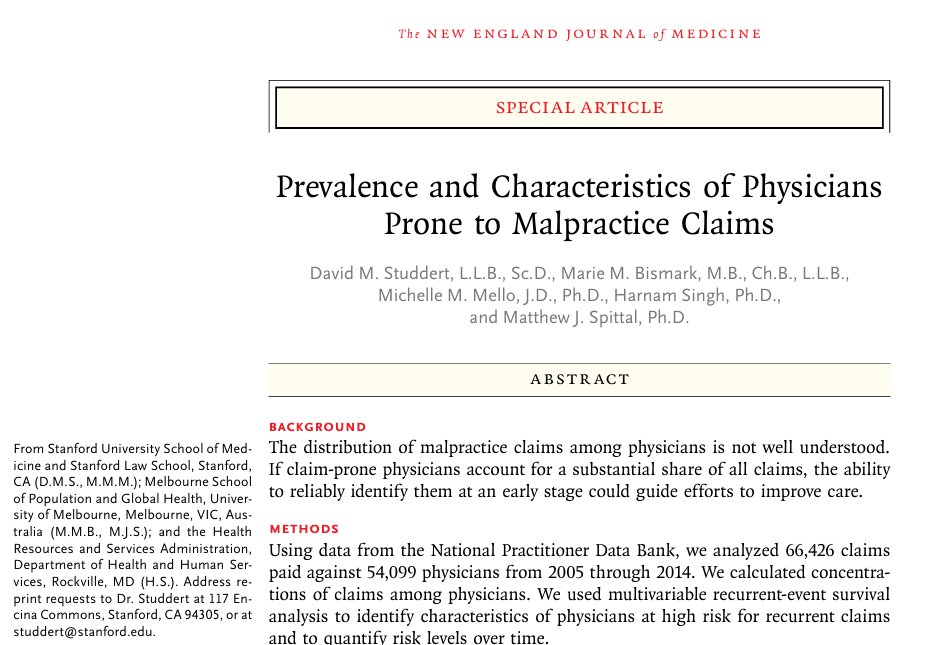
NEJM: New research reveals a massive concentration in medical malpractice: just 1% of all physicians account for 32% of all paid claims🩺⚖️
It seems risk isn't random—it's highly concentrated among a small group of practitioners.
Full study: https://t.co/4tcx4F5VWF @EricTopol
The catheter is out.
The danger may not be over.
Delayed air embolism after CVC removal can occur minutes to hours later, with neurological symptoms in most reported cases.
A complication we must stop overlooking
https://t.co/8q0X1p9uiZ
This is a full-system reset in 30 days, and it’s all from diet + lifestyle + supplements. No meds involved.
*Mrs SI - 30 day results*
Param 10 Apr 9 May
HbA1c 8.9% 7.3%
FBS 184 106 mg/dL
TSH 5.66 4.49
Trigly 147 98 mg/dL
Vitamin D 8.55 41.4
Vitamin B12 360 892
Weight 95 kg 90.1 kg
This is what “treating the cause, not just the number” looks like. She went from uncontrolled diabetes + hypothyroid + nutrient deficiencies to improving all of it.
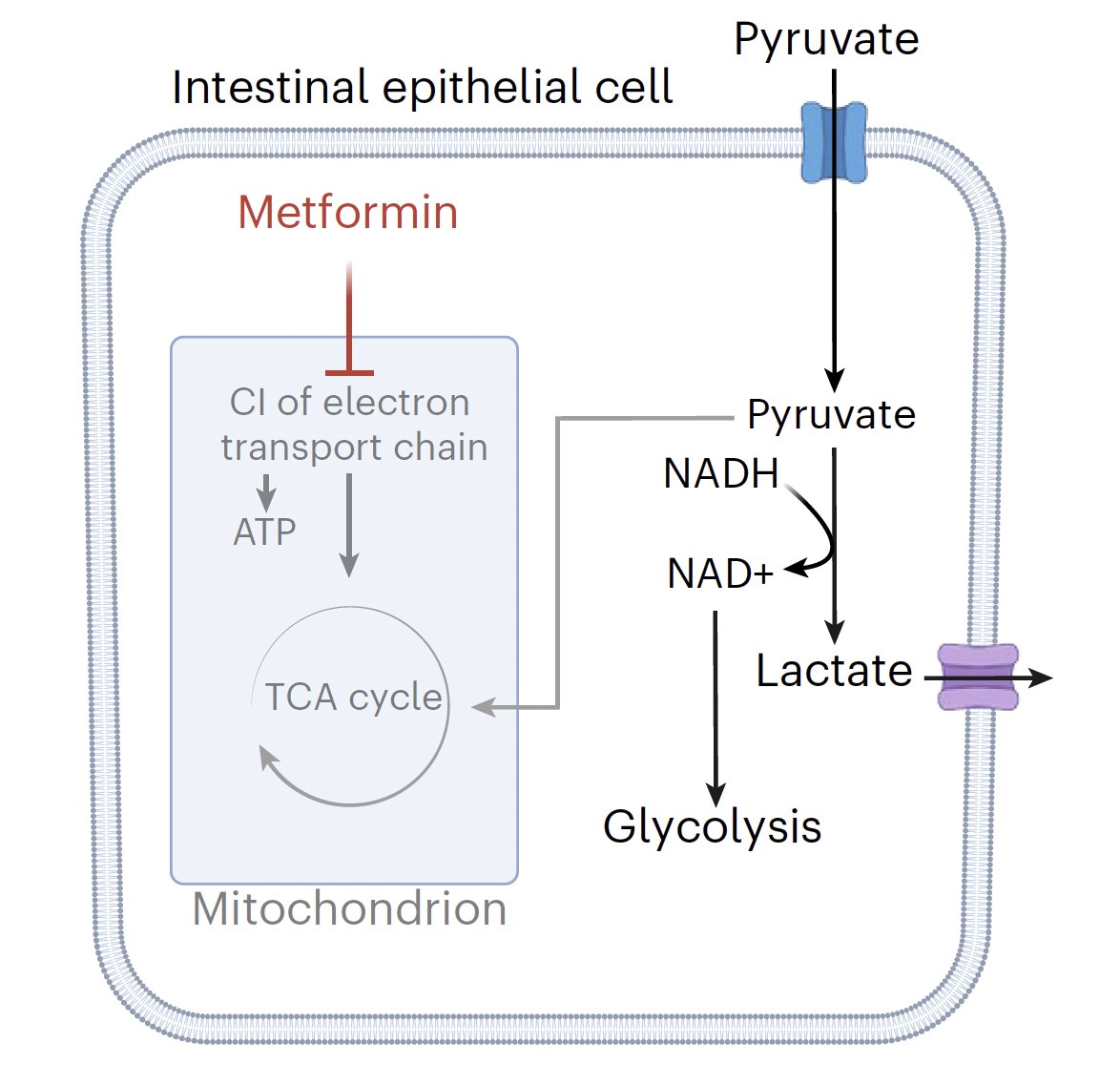
Metformin, one of the most commonly prescribed drugs, was thought to work via the liver. Check that. It's primarily through the gut. @NatMetabolism
https://t.co/i2CpZip61B
Research shows that leg strength training isn’t just about muscle size or balance; it appears to play a role in long-term brain health as well. Exercises that challenge the legs, such as squats, lunges, and controlled resistance movements, help improve circulation throughout the body, including to regions of the brain involved in memory, attention, and decision-making. Better blood flow supports delivery of oxygen and nutrients that neurons need to function efficiently.
Studies also suggest that regular strength training influences growth factors and hormones that encourage the brain to build and maintain neural connections. These biological signals support plasticity, the brain’s ability to modify itself in response to experience. Over months and years, stronger leg muscles may translate into more robust neural networks that underlie thinking speed, memory retention, and problem solving.
In addition, vigorous lower body workouts help regulate metabolic health and reduce inflammation, both of which affect cognitive systems. By strengthening muscles and improving overall physiological resilience, leg training may create an internal environment that sustains clearer thinking and lowers risks associated with age related cognitive changes.
Research Paper 📄
DOI: 10.1159/000441029