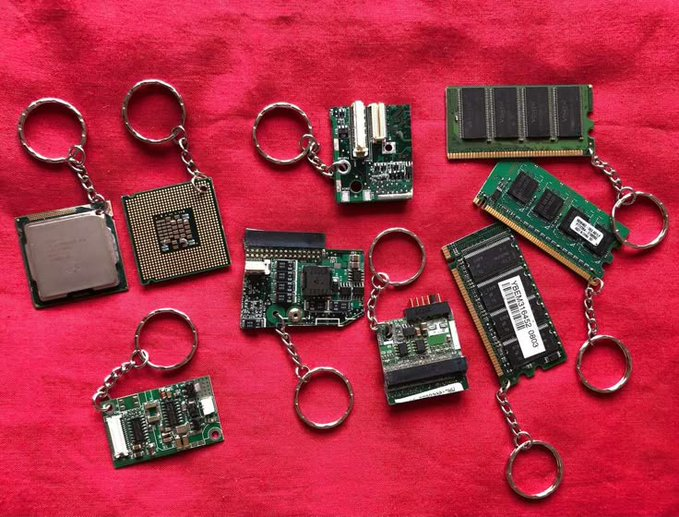
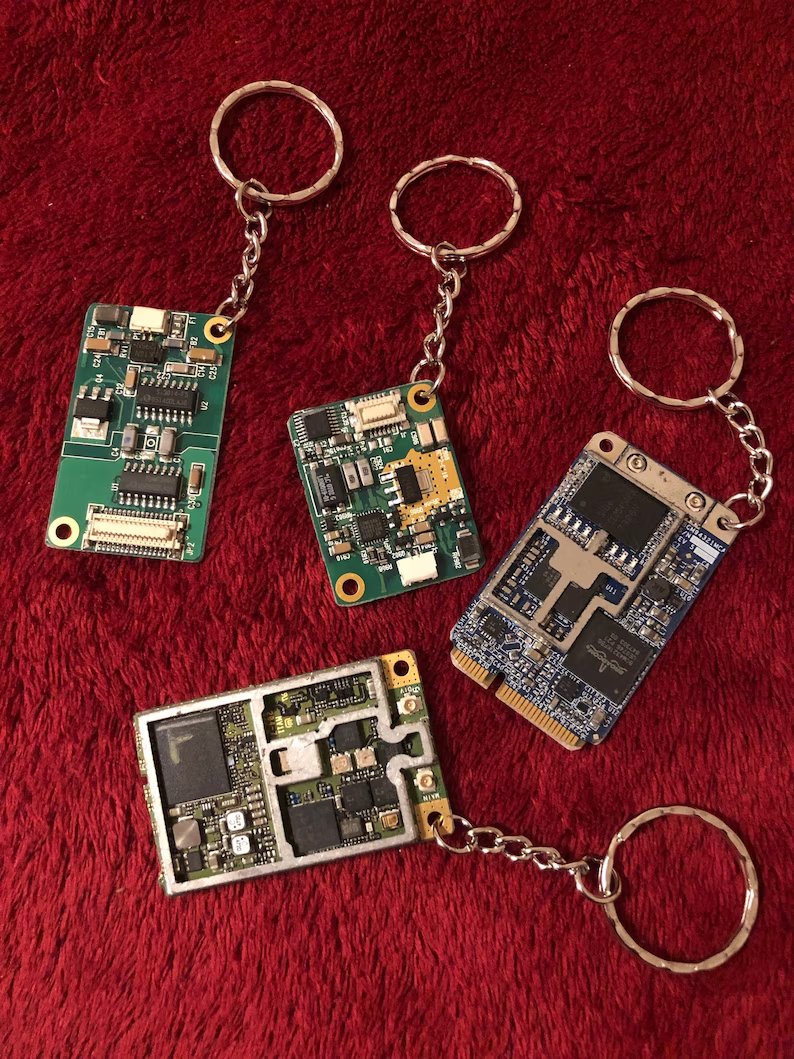
listing this, the 3d printed continuity camera stand, an apple watch charging stand and a bunch of other clean desk upgrades very soon to celebrate @circuitcentral5 turning 3
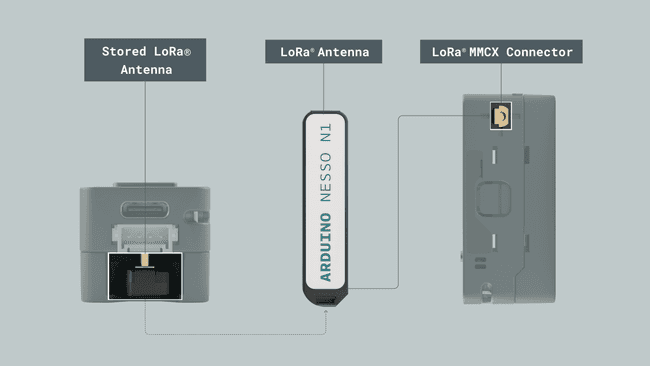
Build Your Industrial Watchdog: Deploying the Nesso N1 as a Zigbee 3.0 Predictive Maintenance Hub
Project Architecture: Deploy the N1 as a factory edge node mounted directly on critical machinery. The ESP32-C6's native 802.15.4 radio operates as a Zigbee coordinator, forming the hub of your industrial sensor network.
The built-in 6-axis IMU becomes your primary vibration monitoring sensor -mount the N1 on machine housings to capture acceleration patterns that indicate bearing wear, misalignment, or imminent failure.
Implementation Details: Sample the accelerometer at configurable intervals using I²C communication in Arduino code. Apply FFT analysis or threshold detection algorithms to identify abnormal vibration signatures. Rising amplitude or frequency shifts often precede mechanical failures by days or weeks, enabling proactive maintenance scheduling.
Expand sensing capabilities via Grove and Qwiic connectors-add digital temperature sensors to monitor motor windings, gas detectors for chemical process equipment, or pressure transducers for hydraulic systems.
Network Topology: Pair additional Zigbee end devices across the factory floor using ESP-IDF Zigbee libraries. Each machine can have distributed sensors reporting to the N1 coordinator. The N1 aggregates multi-sensor data streams and performs edge analytics, reducing cloud bandwidth requirements.
Data Pipeline: Publish timestamped sensor readings via MQTT to local brokers or Arduino Cloud.Structure messages as JSON payloads containing machine ID, vibration RMS values, temperature, and alert flags. When anomaly detection triggers, the N1 generates immediate MQTT alerts for maintenance teams. Similar implementations using Zigbee-to-MQTT bridges have proven effective in brownfield industrial retrofits.
The N1's battery backup ensures continued monitoring during power fluctuations. The touchscreen provides local diagnostics and configuration without requiring laptop connections on the factory floor. This transforms the Nesso N1 into a complete Industry 4.0 edge gateway for condition-based monitoring and predictive maintenance workflows.
Arduino Uno Q is a game changer: a true “dual-brain” Uno that pairs a Debian-capable MPU (Qualcomm Dragonwing QRB2210) with a real-time STM32U585 MCU on an UNO footprint. It’s arguably the tiniest board that can run Debian Linux while still offering full Arduino-style deterministic control. Run Linux apps, Python and edge AI on the MPU while keeping precise control loops on the MCU.
Highlights:
• Hybrid architecture - Cortex-A53 MPU + Cortex-M33 MCU for real-time + high-level workloads.
• Smallest Linux-capable Uno form factor - full Debian on a board this small changes where you can deploy edge intelligence.
• Multimedia - Adreno 702 GPU, dual ISPs (up to 25 MP single sensor), 1080p30 encode/decode, Hexagon DSP.
• Memory options - 2 GB/16 GB eMMC or 4 GB/higher eMMC; microSD expansion. Choose 4 GB for desktop-like use.
• Connectivity & I/O - Wi-Fi 5, Bluetooth 5.x, UNO headers plus high-speed JMISC/JMEDIA for MIPI camera/display.
• Power & form factor - classic UNO size, USB-C PD (5 V/3 A) or 7–24 V Vin; ideal with a PD hub for HDMI + peripherals.
• Workflow - Arduino App Lab unifies Python on Linux, Arduino sketches on Zephyr MCU, and packaged AI models.
• Open hardware - schematics, gerbers, CAD under CC-BY-SA 4.0; Debian + Zephyr upstream support.
Why it matters: this is the smallest platform that brings a full Linux environment to the Uno class - run vision or inference locally and retain hard real-time control without pairing separate boards. If you build robots, smart cameras, or interactive edge devices, this is the most flexible Uno-era platform yet.
Would you pick the 2 GB gateway variant or the 4 GB desktop/vision variant? Share what you’d build.
coming soon only at @circuitcentral5
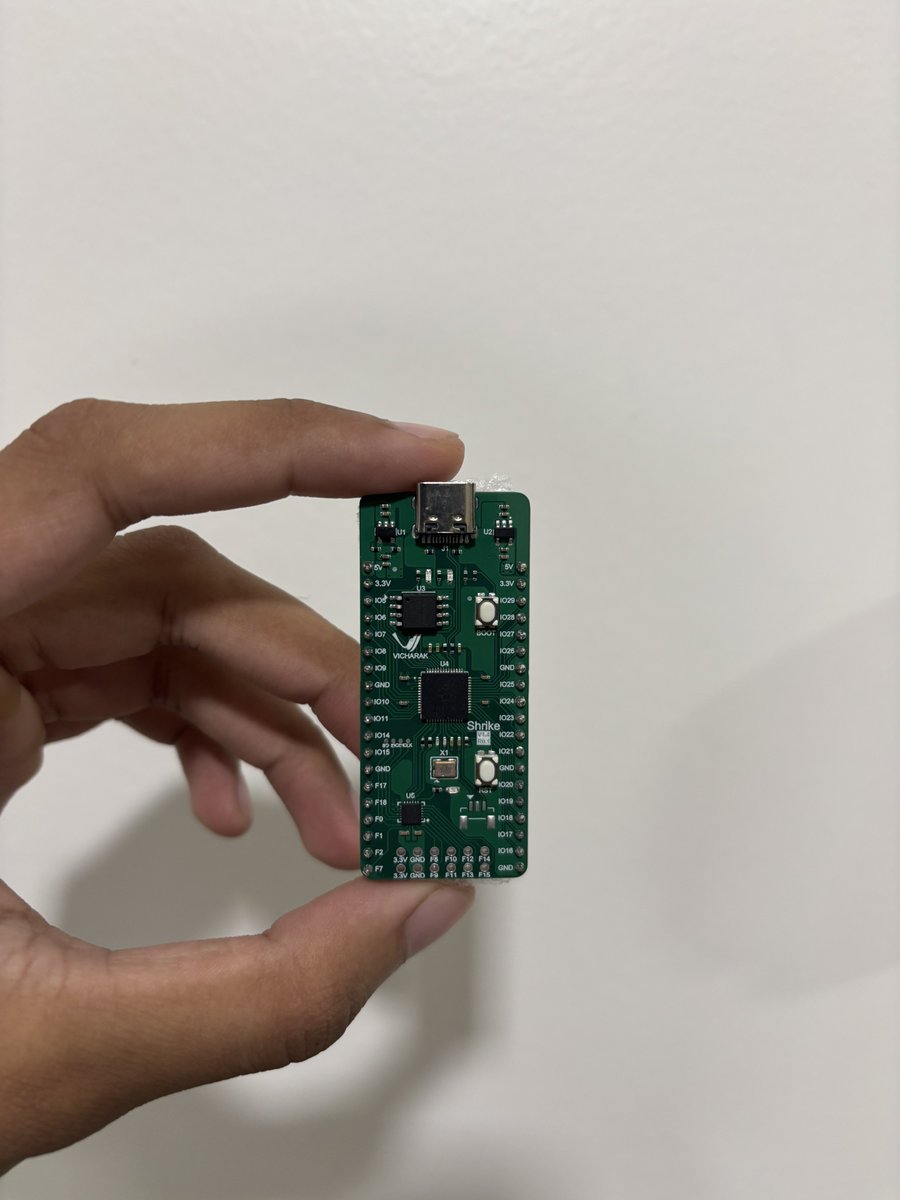
Just received early access to Shrike-Lite sent by @Vicharak_In to @circuitcentral5
Can’t wait to start working on the planned projects. ₹349 FPGA is an absolute gamechanger.