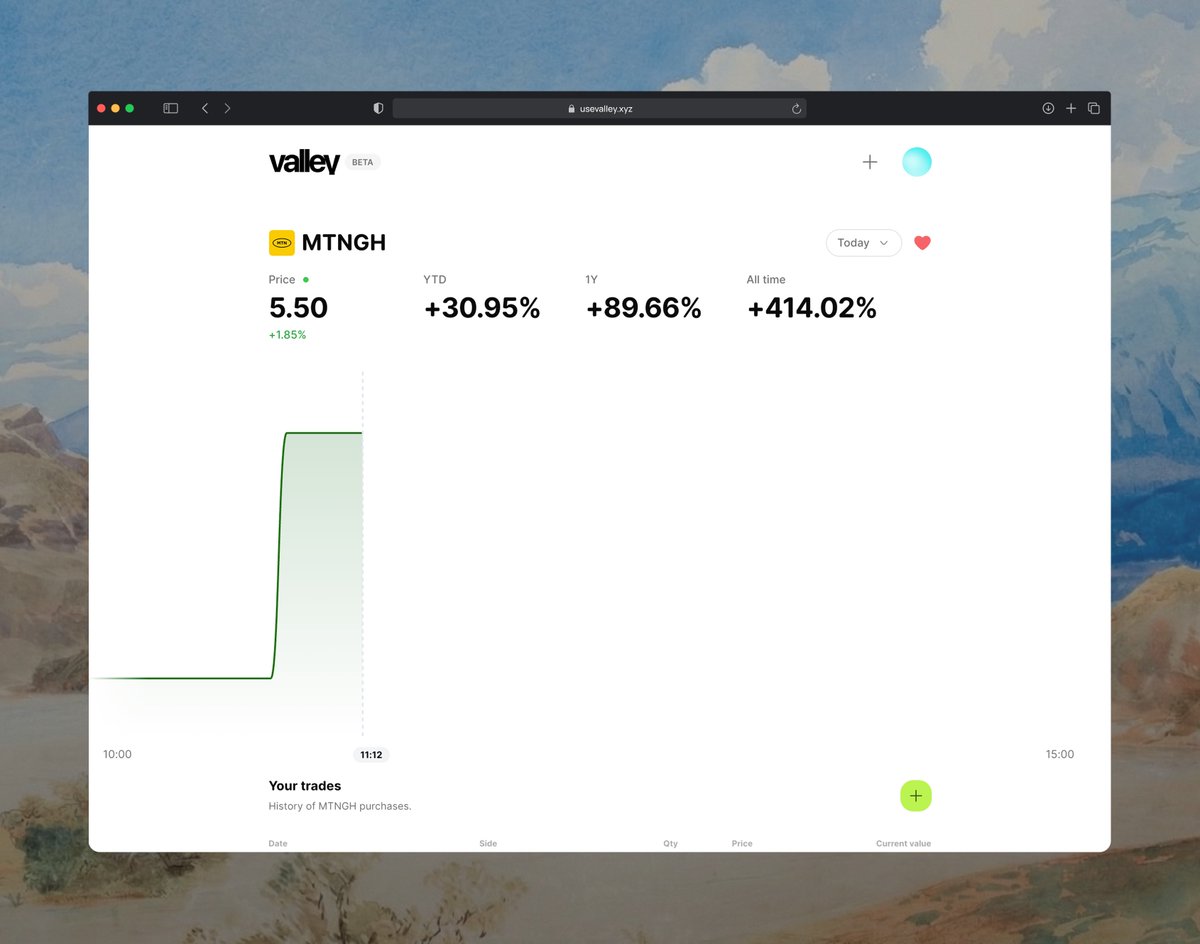
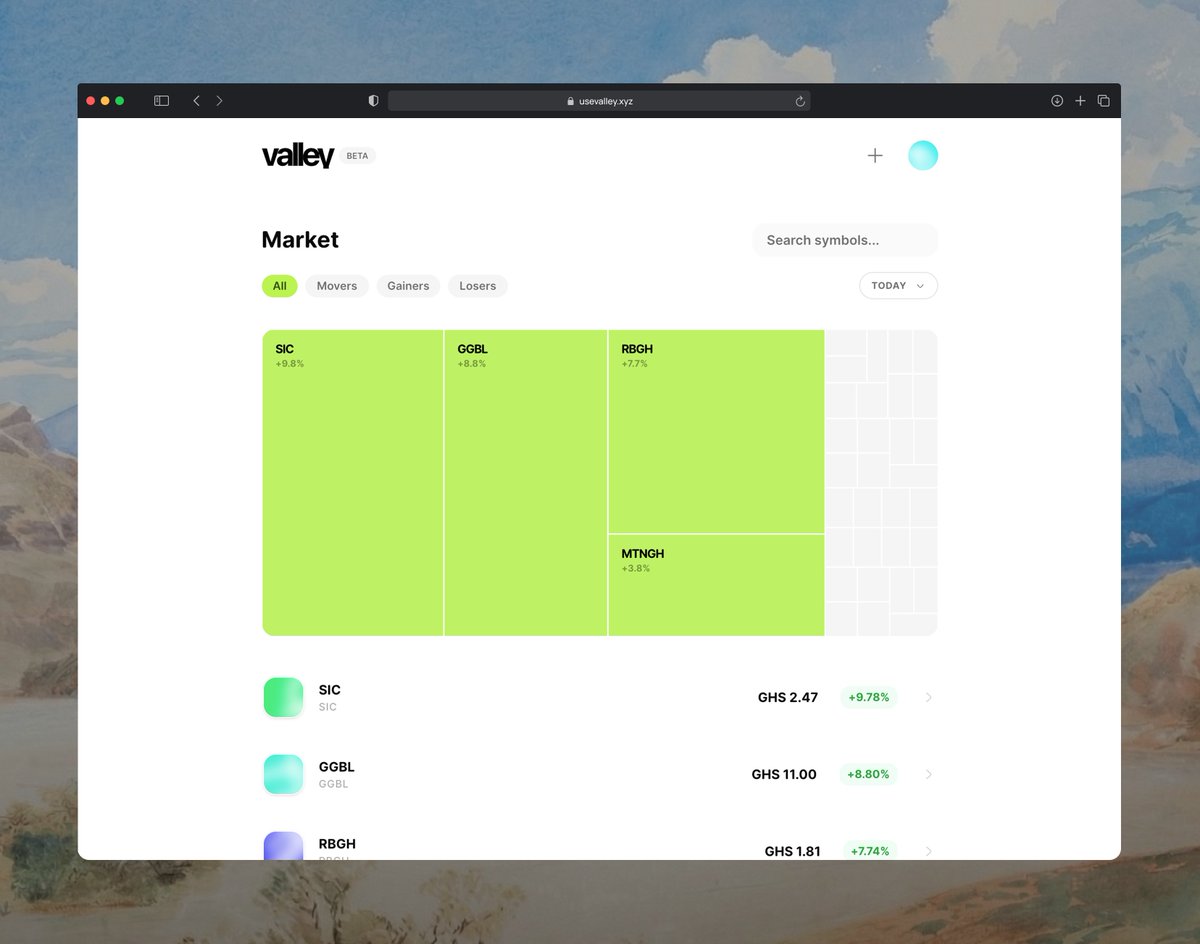
Track stocks on the GSE with @valleyterminal
Add stocks to your watchlist
Set price alerts
Add your trades and build a portfolio
try it now at https://t.co/4Bk5K3QA0A
@slimmwrites@WheelsnCoconuts Hi! can I use this opportunity to pitch https://t.co/oUnrGUusmc to you? It’s a platform we’re building for entrepreneurs in the food space.
Guys, how do you find a co-founder?
I'm building a company, got a few viable products we can release for the automotive space.
One thing I'm lacking heavily is a seasoned electrical engineer. And that will make for a perfect cofounder.
🚨 New Stock Alert 🚨
SpaceX is now available on the Black Star App!
With the click of a button, you can own a piece of the company pushing the boundaries of technology, space exploration and the future of humanity.
Download the Black Star App today!
#BlackStar#SpaceX@elonmusk
Satya’s post is worth reading closely because it gets at the real AI question for companies.
Who captures the learning?
His argument is that companies are becoming a new kind of learning system.
People bring judgment, taste, relationships, context and ambition. AI brings scale, memory, reasoning and execution. The value comes from building a loop where the company gets smarter every time work happens.
The important asset is the learning system around the model.
That system is built from the record of how work actually gets done. Workflow traces show the path people take. Corrections reveal judgment. Accepted outputs show what good looks like. Rejected approaches sharpen the standard.
Private evaluations, domain-specific context and institutional memory give that learning structure.
Over time, the company starts to retain more of what used to disappear inside meetings, edits, comments, decisions and individual experience.
That is the learning loop Satya is pointing at.
The judgment that once lived in a few people’s heads can become part of how the company operates.