A trending PNAS article in the last week is “Social interactions in isolated, confined, and extreme environments: A study of Antarctic winter teams using wearable sensors.” Explore now: https://t.co/VhNf6nmXGZ
For more trending articles, visit https://t.co/jHnWmNwvpS.
Keynotes++
👉 Geoff Boeing @gboeing USC
His research uncovers the spatial logic of urban planning, from street network structures to their effects on public health and policy 🏙️
Register by April 15 for a lower Early Bird🐦 rate!
https://t.co/Vex0YYkdZM
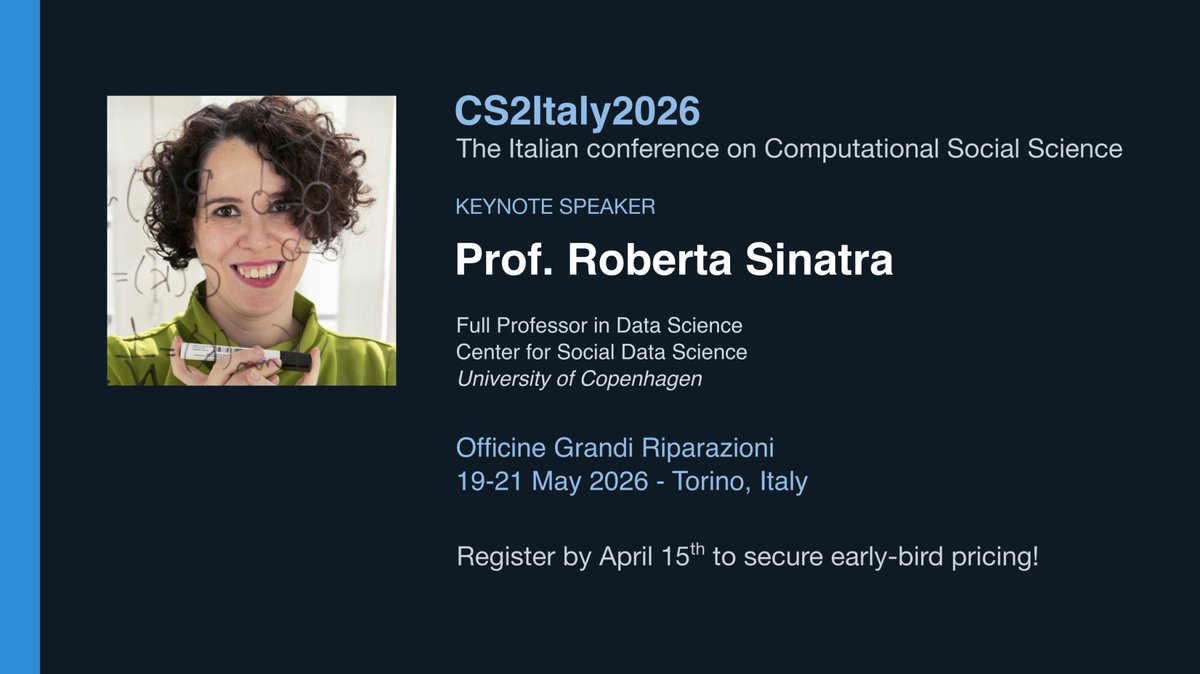
📢 Keynotes++:
Roberta Sinatra
(University of Copenhagen)
She combines network science, data science, and the science of science to uncover how careers, collaboration, and discovery evolve & how GenAI affects scientific writing.
🖋️ Register by April 15 for Early bird rates!
The notifications are OUT!
Super excited to hear our 16 highlighted talks and a whopping 116 parallel talks, and to see all the posters --
Register by April 15 to be our Early Bird!
https://t.co/Vex0YYkdZM
1) Due to popular demand, the abstract deadline has been extended to 👉Jan 30👈
2) Keynote speaker announcement!
Taha Yasseri @TahaYasseri
Chair of Technology and Society
@ Trinity College Dublin & Technological University Dublin
▶️https://t.co/Vex0YYkLPk
🔈*Call for Participation* 🔈
Italian Conference on Computational Social Science – CS2Italy May 19-21, 2026 in Torino, Italy
#sociology#polisci#economics#netsci#complexsystems ++
Submit your abstract by Jan 15: https://t.co/Jgq0tu1PAr
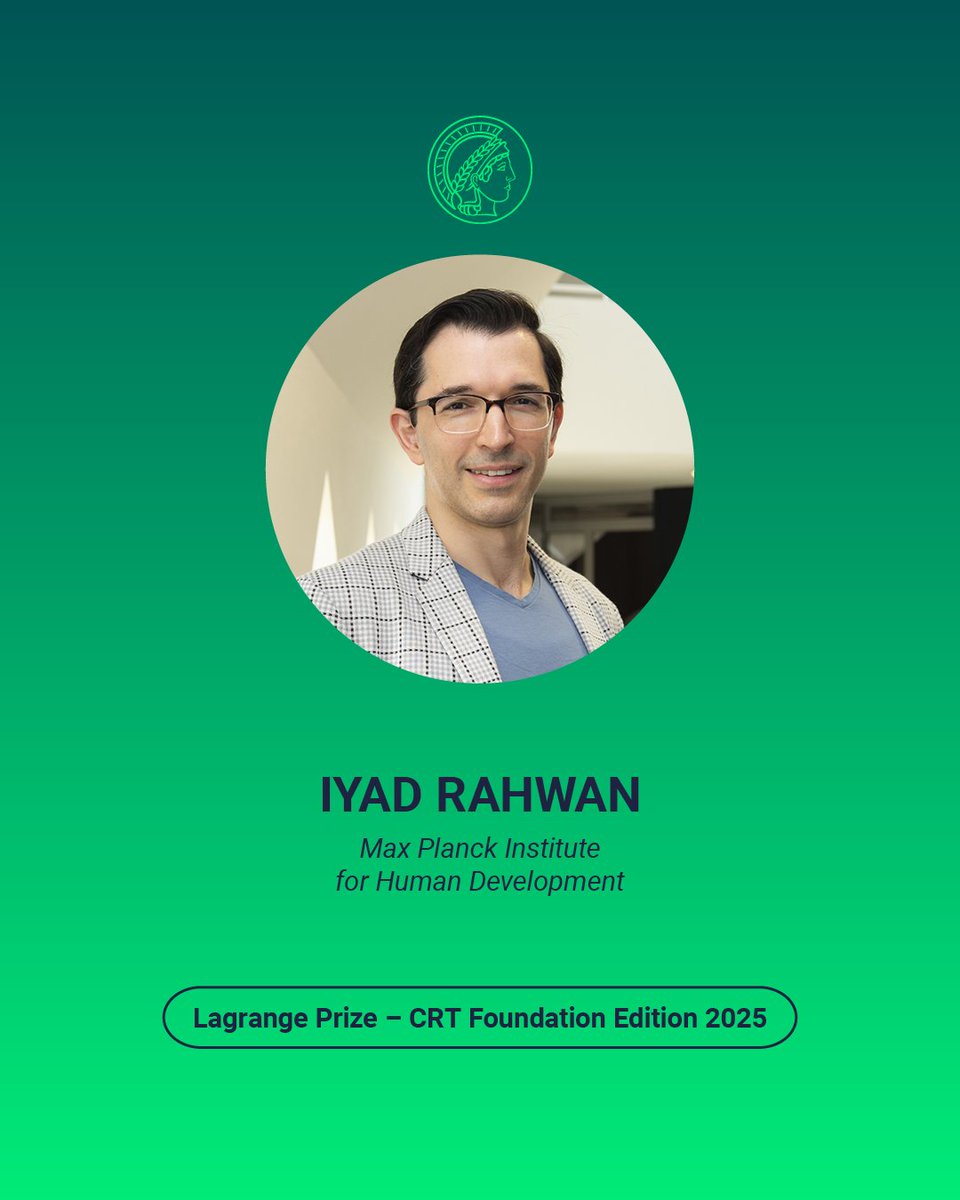
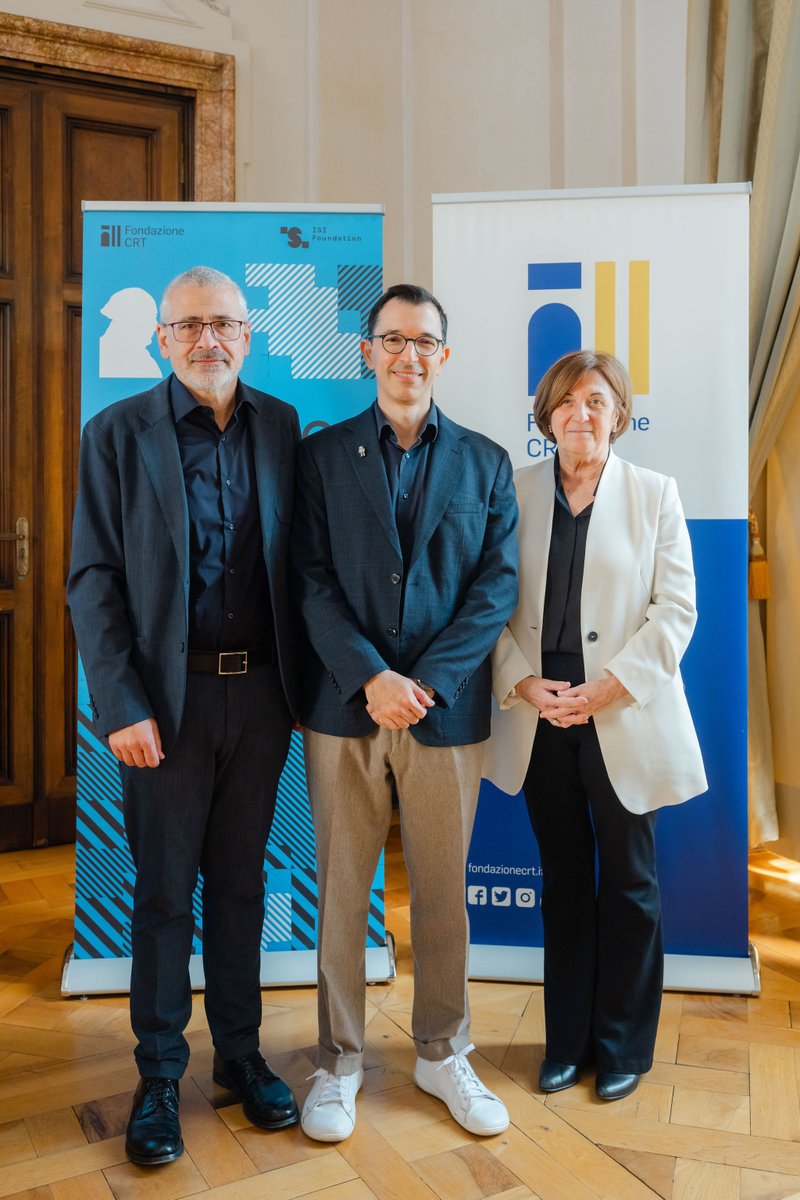
Congratulations to Iyad Rahwan (@iyadrahwan@Max_Planck_CHM), recipient of the Lagrange Prize – CRT Foundation Edition 2025, recognizing groundbreaking research in complex systems and data science!
More information @ISI_Fondazione
https://t.co/ahE6PBYiqp
I am deeply honored to be awarded the Lagrange Prize 🏆, the premier award in the field of Complex Systems. I am especially humbled to be in the company of past winners, many of whom have inspired me to enter the field many years ago.
I see the award as a recognition of the work of all my current and past students, research team members, and collaborators over the years.
Thank you to the @FondazioneCRT and the @ISI_Fondazione for this incredible honor.
🎉 ISI Foundation is thrilled to announce that the Lagrange Prize – CRT Foundation Edition 2025 has been awarded to Professor Iyad Rahwan @iyadrahwan, Director of the Max Planck Institute for Human Development in Berlin!
🏆 Award ceremony: Oct 28, 2025 | 6:30 p.m. 📍 Binario 3 | OGR Torino (Corso Castelfidardo 22)
Open to the public – a few seats left! Reserve here 👉 https://t.co/bBaodUb2LY
@FondazioneCRT@alexvespi@ciro@iyadrahwan
Simulations are the future, & one of the main tools we’ll ultimately use to understand and predict things about the universe. This is why I’m so excited about Genie 3, our latest interactive world simulator - here are some insanely cool things you might have missed about it 🧵:
One of the most effective things the U.S. or any other nation can do to ensure its competitiveness in AI is to welcome high-skilled immigration and international students who have the potential to become high-skilled. For centuries, the U.S. has welcomed immigrants, and this helped make it a worldwide leader in technology. Letting immigrants and native-born Americans collaborate makes everyone better off. Reversing this stance would have a huge negative impact on U.S. technology development.
I was born in the UK and came to the U.S. on an F-1 student visa as a relatively unskilled and clueless teenager to attend college. Fortunately I gained skills and became less clueless over time. After completing my graduate studies, I started working at Stanford under the OPT (Optional Practical Training) program, and later an H-1B visa, and ended up staying here. Many other immigrants have followed similar paths to contribute to the U.S.
I am very concerned that making visas harder to obtain for students and high-skilled workers, such as the pause in new visa interviews that started last month and a newly chaotic process of visa cancellations, will hurt our ability to attract great students and workers. In addition, many international students without substantial means count on being able to work under OPT to pay off the high cost of a U.S. college degree. Gutting the OPT program, as has been proposed, would both hurt many international students’ ability to study here and deprive U.S. businesses of great talent. (This won’t stop students from wealthy families. But the U.S. should try to attract the best talent without regard to wealth.)
Failure to attract promising students and high-skilled workers would have a huge negative impact on American competitiveness in AI. Indeed, a recent report by the National Security Commission on Artificial Intelligence exhorts the government to “strengthen AI talent through immigration.”
If talented people do not come to the U.S., will they have an equal impact on global AI development just working somewhere else? Unfortunately, the net impact will be negative. The U.S. has a number of tech hubs including Silicon Valley, Seattle, New York, Boston/Cambridge, Los Angeles, Pittsburgh and Austin, and these hubs concentrate talent and foster innovation. (This is why cities, where people can more easily find each other and collaborate, promote innovation.) Making it harder for AI talent to find each other and collaborate will slow down innovation, and it will take time for new hubs to become as advanced.
Nonetheless, other nations are working hard to attract immigrants who can drive innovation — a good move for them! Many have thoughtful programs to attract AI and other talent. There are the UK’s Global Talent Visa, France’s French Tech Visa, Australia’s Global Talent Visa, the UAE’s Golden Visa, Taiwan’s Employment Gold Card, China’s Thousand Talents Plan, and many more. The U.S. is fortunate that many people already want to come here to study and work. Squandering that advantage would be a huge unforced error.
Beyond the matter of national competitiveness, there is the even more important ethical matter of making sure people are treated decently. I have spoken with international students who are terrified that their visas may be canceled arbitrarily. One recently agonized about whether to attend an international conference to present a research paper, because they were worried about being unable to return. In the end, with great sadness, they cancelled their trip. I also spoke with a highly skilled technologist who is in the U.S. on an H-1B visa. Their company shut down, leading them — after over a decade in this country, and with few ties to their nation of origin — scrambling to find alternative employment that would enable them to stay.
These stories, and many far worse, are heartbreaking. While I do what I can to help individuals I know personally, it is tragic that we are creating such an uncertain environment for immigrants, that many people who have extraordinary skills and talents will no longer want to come here.
To every immigrant or migrant in the U.S. who is concerned about the current national environment: I see you and empathize with your worries. As an immigrant myself, I will be fighting to protect everyone’s dignity and right to due process, and to encourage legal immigration, which makes both the U.S. and individuals much better off.
[Full text, with links: https://t.co/6JNJz88Qyq ]
ICYMI Python on Microcontrollers Newsletter: A RISC-V Emulator That Runs CircuitPython & MicroPython and More! #CircuitPython#Python#micropython@Raspberry_Pi
https://t.co/T2Mb6j5KSh
New publication!
I am happy to announce that the paper "Learning distributed representations with efficient SoftMax normalization" I authored with Enrico Maria Belliardo has been published in Transactions of Machine Learning Research @TmlrOrg.
Weekend stuff: studying RISC-V by building an emulator. Here’s the result: a pure #Python#RISCV#emulator implementing RV32I+Zicsr. Passes rv32ui & rv32mi tests from @risc_v Runs Newlib programs, #MicroPython, #CircuitPython, #FreeRTOS. Hack away!
https://t.co/twgS03BiXM
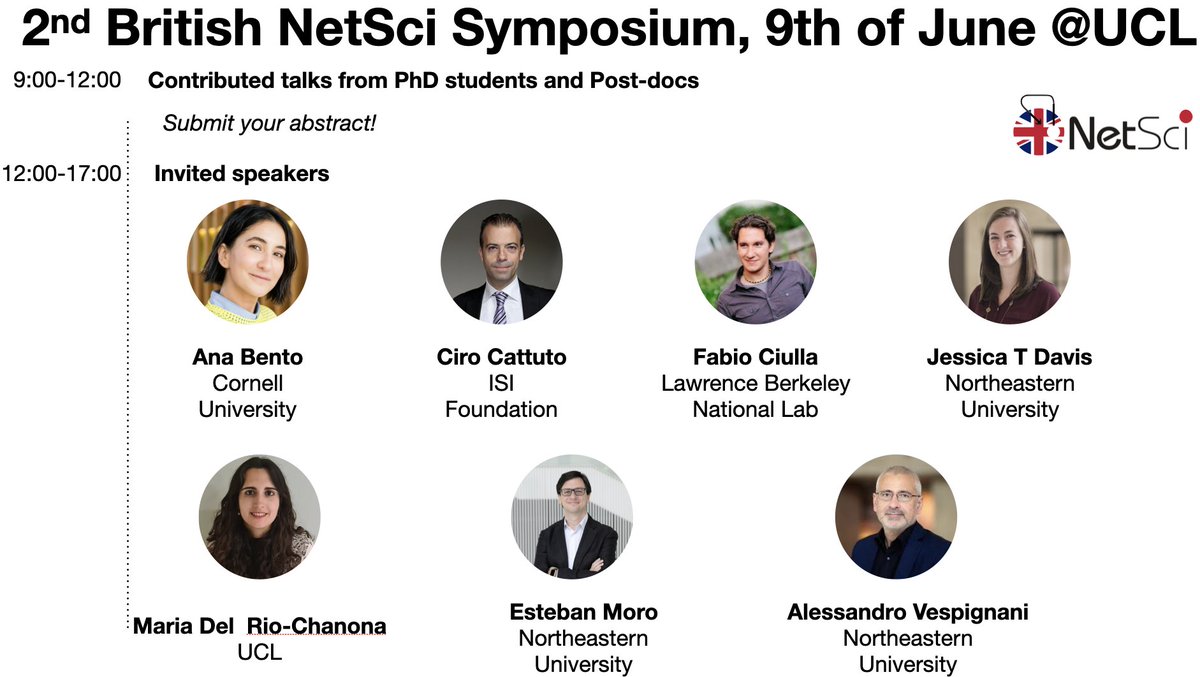
2nd British NetSci Symposium, June 9th, UCL. Amazing lineup of speakers. PhD students and Post-Docs consider sending an abstract. Deadline May 30 AOE. Details: https://t.co/IlRKJO3sCS
I wrote-up how I used o3 to find CVE-2025-37899, a remote zeroday vulnerability in the Linux kernel’s SMB implementation. Link to the blog post below 👇