Honoured to be one of the panel speakers at the #WCRS2023 special session on policy integration of #MaaS. I will be sharing our research in Tourism MaaS. For conference attendants, please feel free to come and join our session in room 515A at 4 pm.
@AusGovEducation A future potential topic would be whether should we open-up courier access to lockers so it is "carrier-agnostic" - now we also have 7-11 ParcelMate, Amazon lockers and etc. arriving our shores. https://t.co/S1ba3PwPNn
This collaboration was initially funded by an @AusGovEducation Endeavour Fellowship. All views expressed are the authors' opinion only and does not represent any organisation. We thank the data provider AusPost for enabling this research.
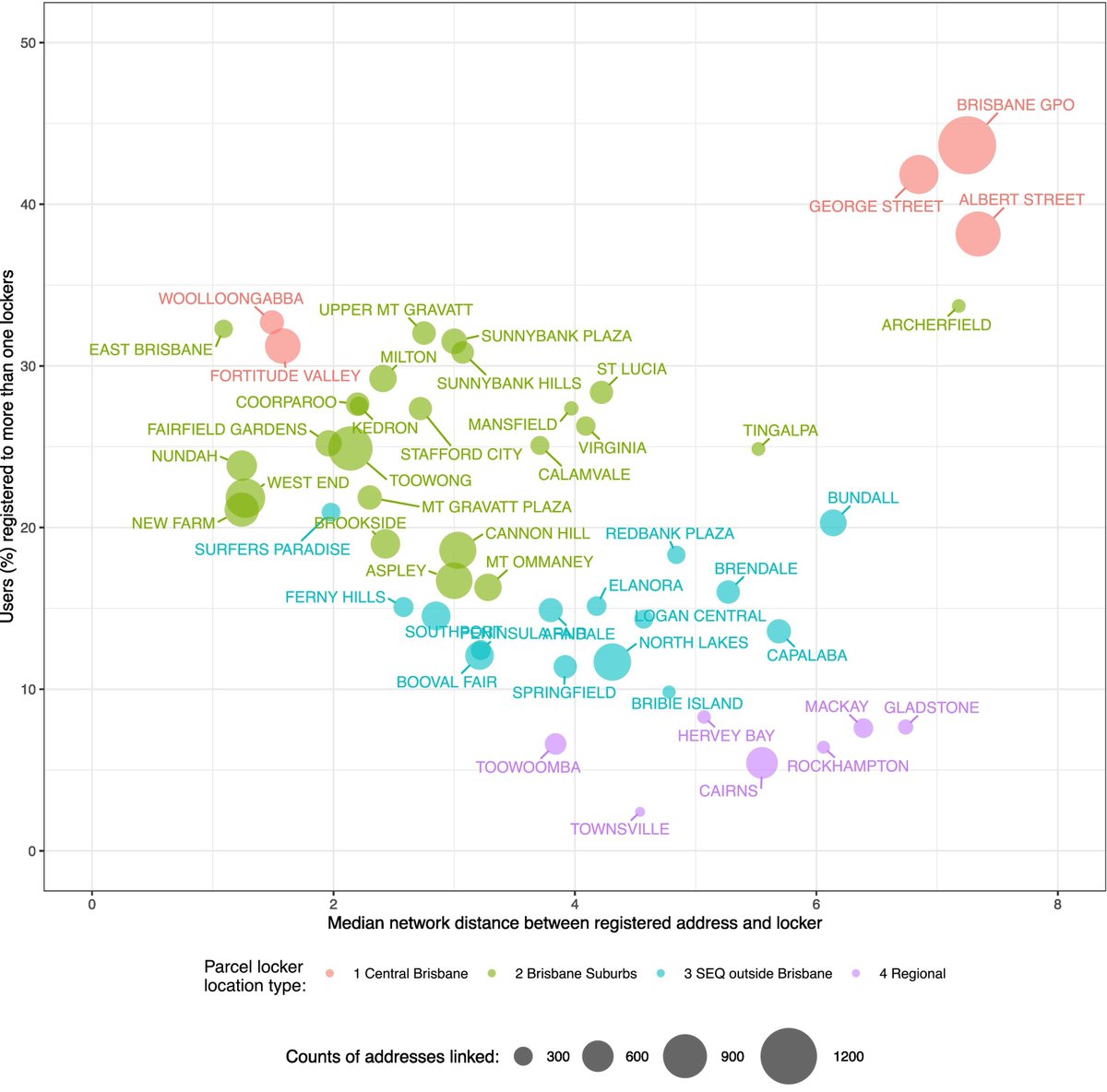
@auspost This paper provides new empirical insights in how users interact with lockers. We also found the average distance to CBD lockers is further out, implying non-local pick-ups. There is also a higher tendency for multiple locker registrations for these lockers.
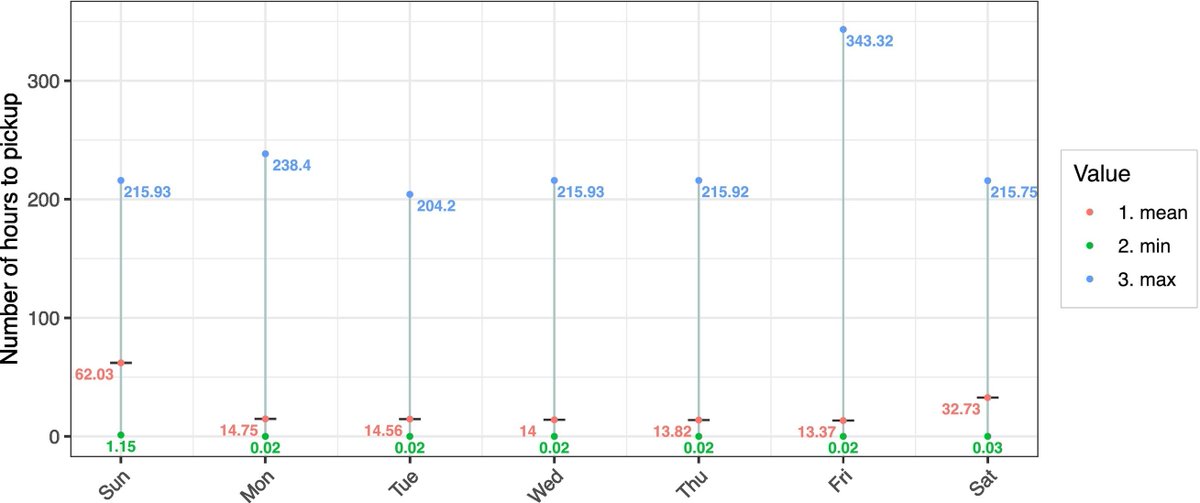
@auspost We also looked at "dwell time" (how long parcels have to wait before pick-up). Initially, it was relatively short (on average 13 hrs), but it went up to 18 hrs in April 2013. By 2017 dwell time dropped as lockers became more numerous. Not surprisingly they stay longer at weekends
@auspost Regarding the hourly pick-up trends of parcel lockers in Queensland (n=391,626). CBD workers tend to collect parcels during mornings, lunchbreaks & after work (3 humps🐫) But for other areas (suburbs/regional), most pick-ups are at afternoon🐪[Top=counts, Below panel=percentages]
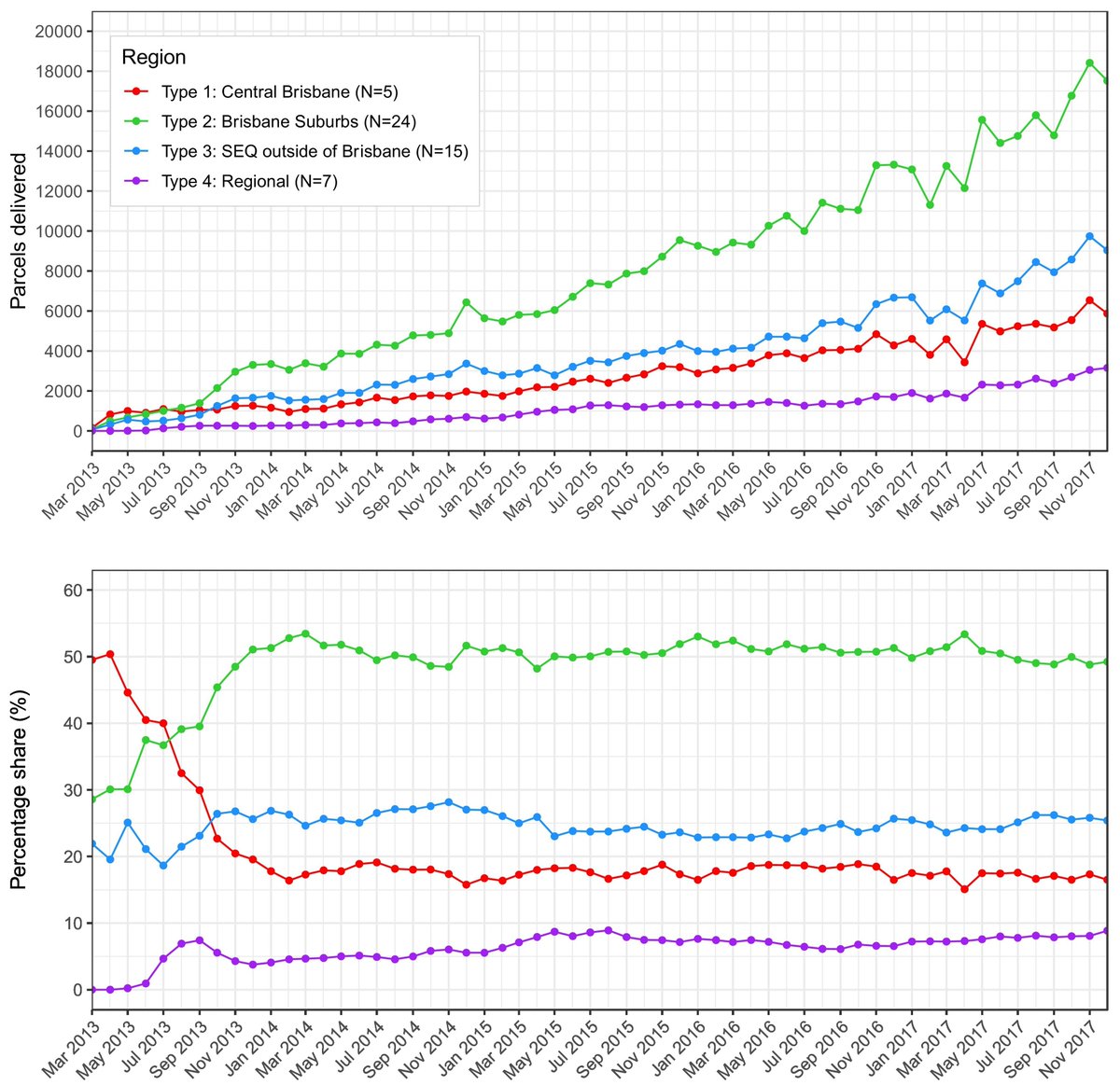
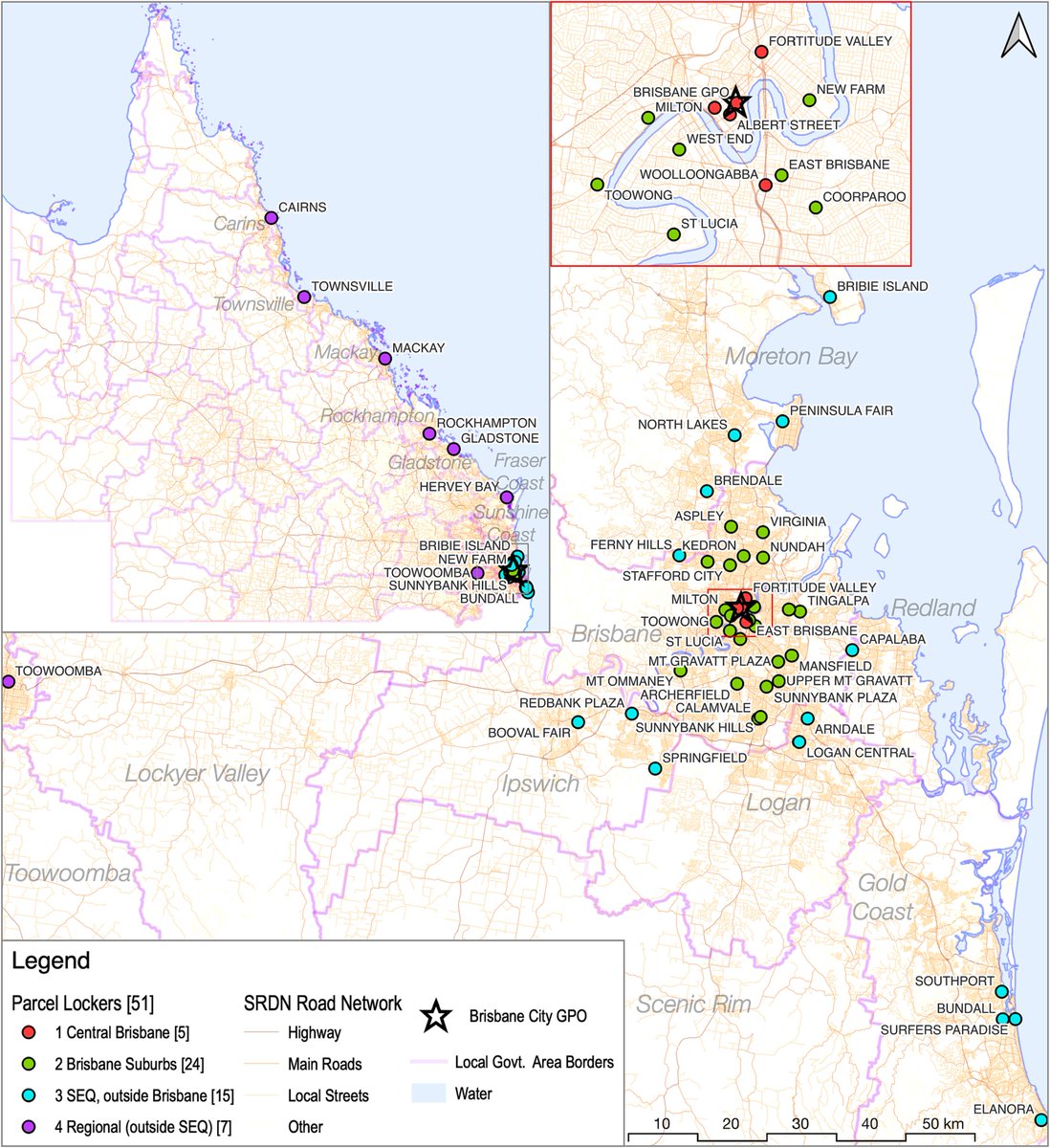
@auspost We classified Queensland's parcel lockers into 4 types - Brisbane CBD🟥, Brisbane Suburbs🟩, SE Qld. 🟦 and Regional🟪, and tracked the pick-up trends from 2013 to 2017. CBD locations got lockers first, but soon after the network expanded to the suburbs, and it became dominant.
📨Mail vs.📦Parcels
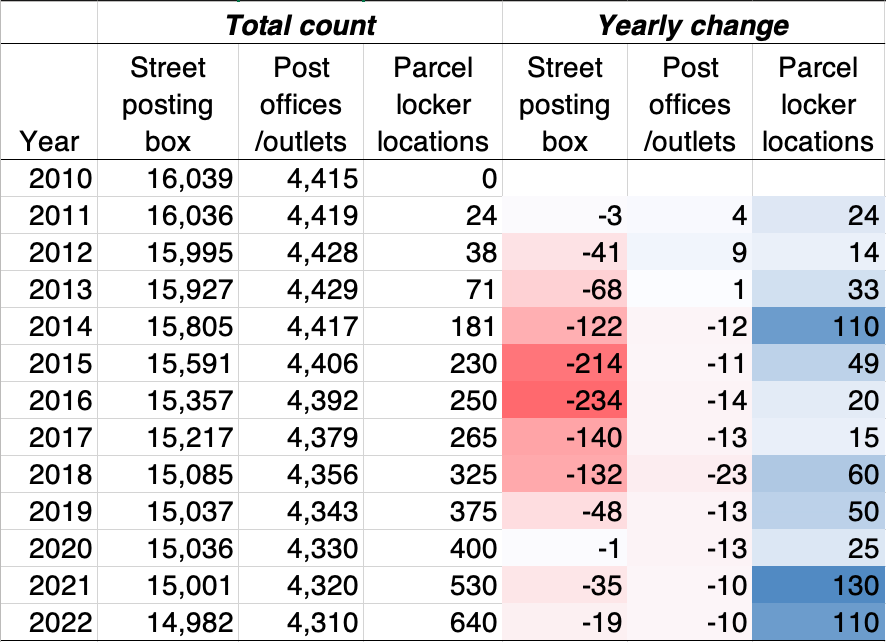
@AusPost parcel lockers were introduced in 2011, the system underwent an initial rapid expansion phase in 2013-14 (our paper focused on Qld.)
There is a post-COVID parcel locker boom. Street postboxes and post office has been declining
(Source: Annual Report)
In our earlier work published in 2018, we explored Australia Post's Parcel Locker system in car-dominant settings🚗, their placement, integration, and impacts on planning & travel 📦 with over 100+ cites on Google Scholar now
https://t.co/W0jU1y384b
You're invited! Urban Economics Short Course - 21 - 23 June. Presented by VLC and Ethos Urban and proudly sponsored by Cities Research Institute. Register and more information https://t.co/GNRl6yfvIn #urbanplanning#economics#urbaneconomics#cities
Cities around the world are moving down radically different pathways toward sustainability, and a new set of city benchmarks is overdue. @Griffith_Uni's @drtonymatthews and @CurtinUni's Kate Meyrick explore the options. @UrbisAustralia
https://t.co/1ooA9D3ac0
Congratulations to @GU_Sciences and @citiesres PhD student Jenelle Bartlett whose first journal article on "Adaptation strategies for climate change impacts on water quality" has just been published. https://t.co/KA8c6tm9J1
After six years of outstanding leadership as Director of the Cities Research Institute, Professor Paul Burton has recently stepped down.
We warmly welcome his successor Associate Professor Cara Beal. @Griffith_Uni@WomeninSTEMM_GU@griffith








![AbrahamLeung's tweet photo. @auspost Regarding the hourly pick-up trends of parcel lockers in Queensland (n=391,626). CBD workers tend to collect parcels during mornings, lunchbreaks & after work (3 humps🐫) But for other areas (suburbs/regional), most pick-ups are at afternoon🐪[Top=counts, Below panel=percentages] https://t.co/1shKuFcrhQ](https://pbs.twimg.com/media/FznkRdQWAAYI5vq.jpg)