Come check us out! Learn more about us, why we got started and how we're providing new home financing tools that meet your needs. 👇
https://t.co/MoamUOiXt3
#realestate#ownerfinancing#realestateinvesting
Wrote this piece about some early memories that got me interested in language - Communist censorship, hidden agendas, shared hallucinations, and Minnie Mouse.
https://t.co/JvwrFphZjg
I don't think people are still realizing how big an impact thinking "functionally" is going to have on their lives.
Its not just functional programming. we're talking functional architectures, functional businesses, fuctional strategies, heck functional societies
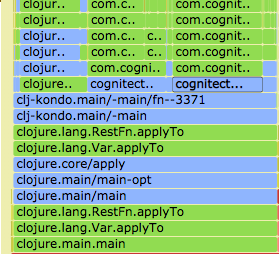
Thanks to https://t.co/kHF0rEmd43 it's clear that about 2/3 of the time is spent in (de)serializing when linting a single file with clj-kondo. I'm optimizing for this use case (editor feedback). So that's definitely worth optimizing more.
Just published locksmith 0.1.1, a library for translating data between #Clojure idioms (kebab keys, ? on booleans, keyword enums) and #GraphQL. It now supports everything that camel-snake-kebab does, meaning that camels can join the party! https://t.co/RyoEhCIbL3 #clojurescript
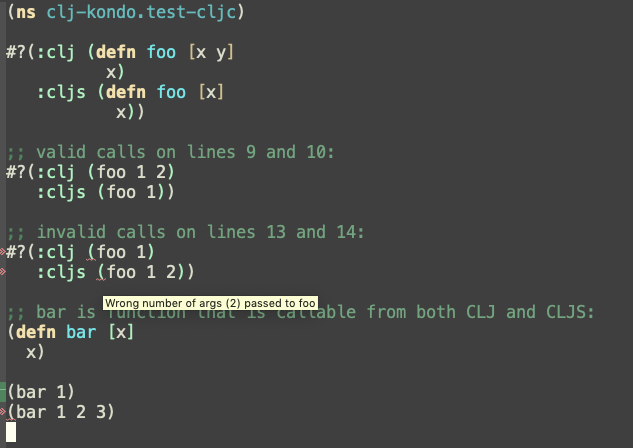
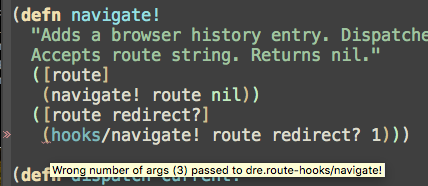
For the eager, there is a new pre-release of clj-kondo.
By switching to transit and a small optimization it's faster in a project setting (with --cache). In my project with a classpath length of 28107 characters, it's below 100ms per linted file in emacs.
https://t.co/pS4ckwwqhq
Thanks to the kind support for OSS libs by @CircleCI binaries for clj-kondo are now produced for each new commit for both Mac and Linux.
E.g.
https://t.co/BJaE7WnInd
We're a very young business, iterating fast through features, being very careful about writing maintainable code. We have full stack Node apps and full stack Clojure apps. This is a short thread on the difference technology (or would it be language?) choices have made for us.
"I Built a Lisp Compiler": https://t.co/SKC6zNzeDC Nice post by Tim Morgan on using the make-a-lisp process and the libtcc library to create a Lisp compiler.
@yogthos I take a more limited approach to the Erlang actor model, where data flows primarily in one direction through a series of processes. There isn't back-and-forth between processes, so much as just forward communication. Also the data flow is determined by configuration.
It takes a herculean effort to maintain large applications with OOP because it optimizes for creating local states and coupling them together. The context you have to keep in your head grows proportionally with the number of objects in the system.
@yogthos Indeed, rolling out several deployments of the same components as processes, separated by queues, using message passing isolates the required reasoning to either: the component in question, the specific workload as a whole, or the problem space as a whole -independently. 🥰