Research Scientist @ GTRI - Human Systems Integration (HSI). PhD in HCC from GT w/ interests in human social-centered data science/ML, HCI, & social computing.
I'm 36.
Stress controlled me for years so I turned to neuroscience.
After 1200+ hours studying elite athletes, CEOs & psychologists, my toolkit is now full of powerful neuro-hacks.
Here are the top 7 that will change your life:
Nice and concise... but incomplete, as you might imagine. These terminal points are not actually terminal; many decisions/choices come after (esp. for the gray box)
Please RT! I am looking for PhD students to join my research group at @GeorgiaTech. My group works in cutting-edge topics in data mining, ML, graphs, recsys, adversarial learning. We focus on applications in social media, public health, and security. Please get in touch!
I had this superpower in grad school. I could just... remember when meetings were. It could be scheduled 8 days in advance, I'd remember and show up exactly on time.
Nowadays, if I don't put it in my calendar within 15 minutes of deciding it, the meeting doesn't actually exist
One of the biggest mysteries of Covid-19 has been why some people become very ill, while a large number of people who are infected show no symptoms at all. It turns out that this protection may be linked to the most mundane of illnesses…the common cold. A thread.
I can think of hundreds of data augmentation strategies for CV, eg https://t.co/JsGj2fRNMa
For NLP tasks, there's only a handful, eg https://t.co/aRQiZrh5N3
NLP data is far more brittle.
Wrote a blog post visualizing current data augmentation techniques for NLP. Compared to images, data augmentation for text is not trivial and it was interesting to see creative ways the existing literature attack this problem.
https://t.co/inyYQL2LTj
This is quite a gem, published by @HarvardBiz (authored by Chris Littlewood).
This is the "prioritization matrix" HBR came up with when thinking about data skills to invest in and explore. Nothing screams "I don't know what I'm talking about" more than this.
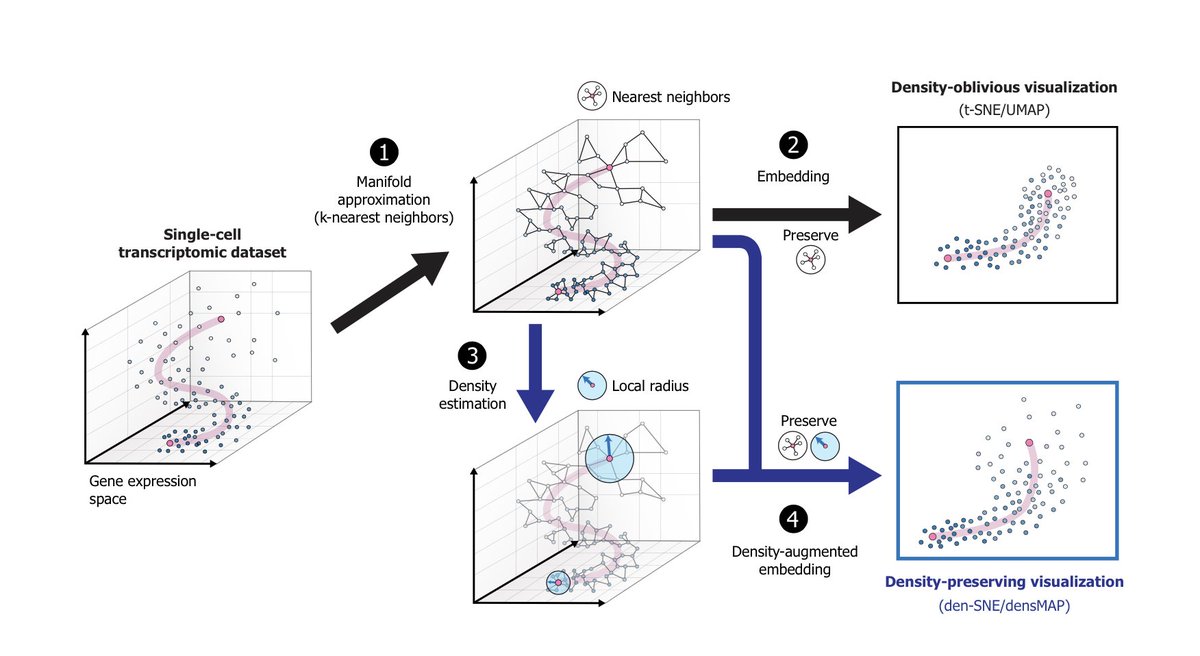
t-SNE/UMAP embed datasets by preserving local neighborhoods. @ashwinn226 et al present den-SNE/denMAP, in which the objective functions include an additional term causing the algorithms to also preserve local density.
Paper: https://t.co/XOueqiAb3i
Code: https://t.co/ycCtkc0Txa
Two books I think everyone doing statistics and programming should read are free temporarily:
* "All of Statistics": https://t.co/FbenXGoAP8
* "Numerical Optimization": https://t.co/QpFVCPIbTE
Dear @gtalumni and @GeorgiaTech parents in China: your shipment of much needed face masks just arrived. I noticed you labeled the boxes "We are the world". Indeed we are.
Thank you so much!
谢谢
#togetherweswarm#swarmstrenGTh
Contactless is good. But if one person touches a robot and then another person touches a robot, that is the same as shaking hands from the virus’ perspective.
Would robots create a false sense of security?
From Georgia Tech engineers: This simple spray bottle test can help you determine if fabric you are using for DIY masks can effectively block aerosolized droplets like the ones carrying the novel coronavirus when you cough, sneeze, or talk.
Read more: https://t.co/oqH3YJUjHL