When Navy seaman Douglas Hegdahl fell overboard into the Gulf of Tonkin in 1967, North Vietnamese forces pulled him out of the water and dragged him to the most feared prison of the Vietnam War — the Hanoi Hilton.
He was young. He was low-ranking. And the moment he arrived, he made a decision his captors never saw coming.
He would become the dumbest man in the room.
Hegdahl shuffled around the prison yard with a blank expression and a dopey grin, tripping over things, asking confused questions, acting like a man who couldn't tie his own shoelaces. His guards laughed at him. They gave him a nickname — "The Incredibly Stupid One" — and, crucially, they gave him something no other prisoner had: the freedom to wander.
They thought he was harmless.
He was anything but.
While his captors looked away, Hegdahl quietly dropped dirt and stones into enemy truck fuel tanks, sabotaging their operations one engine at a time. But that wasn't his real mission. His real mission was invisible.
Every day, Hegdahl watched. He listened. He memorized — the name of every American prisoner held in that camp, their capture date, the conditions they endured, the torture they suffered. Information the North Vietnamese deliberately hid from the outside world. Information that hundreds of families back home were desperate for.
And he found a way to make sure he'd never forget a single detail.
He set every name, every date, every fact — to the tune of "Old MacDonald Had a Farm." He sang it silently in his head, day after day, in a prison cell, surrounded by men who had no idea what the young fool was quietly carrying.
In 1969, the North Vietnamese released him early as a propaganda gesture. They wanted to show the world their generosity. They thought they were setting a harmless simpleton free.
Instead, they handed the United States one of the most valuable intelligence assets of the entire war.
The moment Hegdahl reached American soil, he delivered everything — name after name after name. Over 250 prisoners accounted for. Families who had waited years in agonizing silence finally learned their sons, husbands, and fathers were alive.
Senior military officers later said his information was so detailed, so precise, that it fundamentally changed how America understood the POW situation in Vietnam.
Douglas Hegdahl never fired a weapon. He never led a charge. He won his battle by making the enemy believe he was nothing — and quietly becoming everything.
The most dangerous person in the room isn't always the loudest. Sometimes, it's the one they forgot to watch.
I’m 68 years old, a biker with more miles on my boots than most men dream of, and three years after losing my wife, I never thought life had any big surprises left for me. Then, by pure accident, I met Maya.
She was four months old, lying in the NICU, crying like the world had already given up on her. Born with Down syndrome, a serious heart defect, and addicted to methamphetamine from birth, she had been turned down by twelve families. Too many complications. Too much risk. Too expensive. They were preparing to send her to institutional care.
I had wandered onto the wrong floor while visiting a buddy when a nurse saw me standing there in my leather vest and said, “That baby’s been crying for hours. Nothing calms her. You want to try?”
I picked her up, held her against my chest, and started humming a low, rumbling note—the same way I used to calm my Harley on cold mornings. Maya stopped crying instantly. Her tiny hand wrapped around my finger, and something in my chest that had been frozen since my wife passed came roaring back to life.
I came back every single day for two weeks. When the social worker said they had no choice but to move her to a group home, I looked her in the eye and said, “No. I’ll take her.”
They laid out every reason I shouldn’t: my age, my lifestyle, the surgeries ahead, the years of therapy and special care. I listened to all of it, then told them the only thing that mattered: “She deserves to grow up with someone who chooses her.”
My motorcycle brothers showed up like a cavalry. These rough, tattooed men spent a whole weekend painting her nursery a soft sunny yellow and wrestling with a crib that took four of us three hours to assemble. They brought diapers, clothes, and enough casseroles to feed a platoon. For the first time in years, my house felt alive.
At five months old, Maya went in for open-heart surgery with only a seventy percent chance of making it through. I sat in that waiting room for six long hours, making every promise to God I could think of. When the doctor finally came out smiling, I cried like a kid.
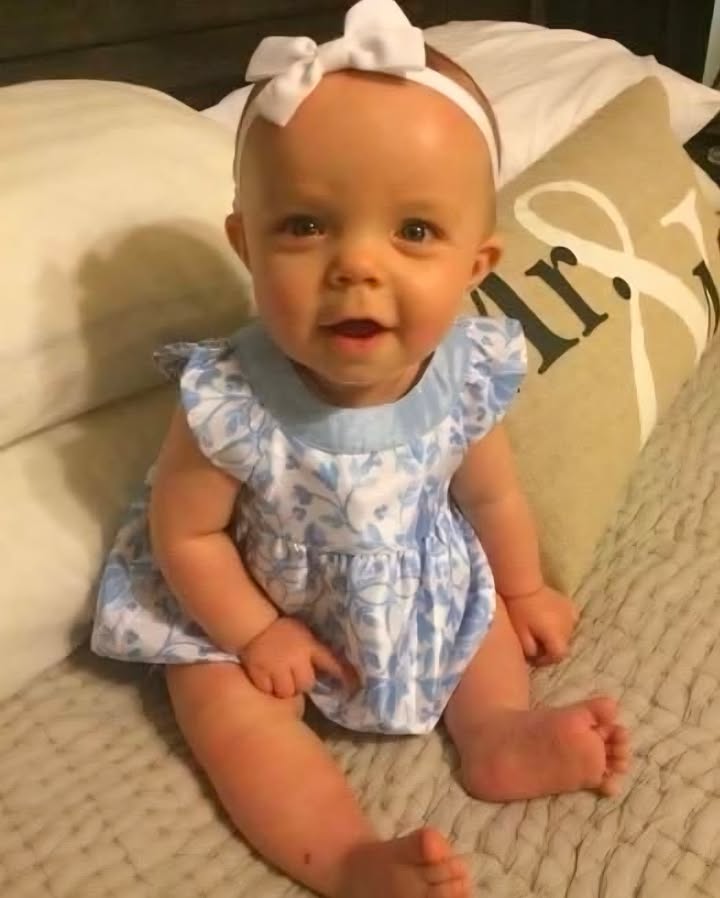
Today, Maya is nine months old and she is the brightest light in my world.
She smiles the moment I walk into the room, lighting up like I’m the best thing she’s ever seen. Her little laugh fills the house when I make silly faces or dance her around the living room to old rock ballads. She’s hitting her milestones with that stubborn fighter spirit I’ve come to love so much. The heart defect is behind us, and every day she grows stronger, happier, and more curious about the world.
I know I won’t be here for all of her life. I’m old, and the road I’ve traveled has been long. But I’ll be here for every single day I have left, and I’ve already made arrangements with my brothers and their families so Maya will never know a day without love and protection.
She was nobody’s baby once. Now she’s mine—completely, fiercely, and forever.
Every night I lay her down in her yellow nursery, kiss her forehead, and whisper the same thing: “You were chosen, little girl. You are wanted. You are loved beyond measure.”
And as she drifts off with my finger still in her tiny hand, I realize something beautiful: I didn’t just save Maya.
She saved me.
I’m the luckiest man who ever lived.
An old cowboy owned a small ranch in New Mexico. The New Mexico Wage & Hour Dept. claimed he was not paying proper wages to his help and sent an agent out to interview him.
“I need a list of your employees and how much you pay them,” demanded the agent.
“Well,” replied the rancher, “There’s my ranch hand who’s been with me for 3 years. I pay him $600 a week plus free room and board.
The cook has been here for 18 months, and I pay her $500 per week plus free room and board.
Then there’s the half-wit who works about 18 hours every day and does about 90% of all the work around here. He makes about $10 per week, pays his own room and board and I buy him a bottle of bourbon every Saturday night.”
“That’s the guy I want to talk to, the half-wit,” says the agent.
“That would be me,” replied the rancher.
When Pasteur died in 1895, Joseph—then 20 years old—attended the funeral and wept openly. He later became a caretaker at the Pasteur Institute in Paris, spending decades at the very building where his life had been saved.
He lived until 1940, a walking testament to what one scientist's courage made possible.
On that July day in 1885, a chemist who wasn't a doctor looked at a boy with a death sentence and decided to take a risk.
He bet everything on the possibility of hope.
He was right.
Joseph lived.
And because Pasteur proved what was possible that day, millions of others would live too.
Sometimes, saving one life teaches us how to save the world.
A mother begged a scientist to inject her dying son with something that had never been tested on a human being.
It was July 1885 in Paris.
Nine-year-old Joseph Meister stood trembling in Louis Pasteur's laboratory, his small hands and legs covered in deep bite wounds. Two days earlier, a rabid dog had attacked him in his village. The animal had been killed immediately afterward, and it was confirmed to have rabies.
His mother knew exactly what that meant.
In 1885, rabies was a death sentence. Once symptoms appeared—the terror of water, the violent convulsions, the hallucinations—no one survived. Not ever. The death was agonizing, sometimes lasting days, and there was nothing anyone could do but watch.
But she had heard whispers about a chemist in Paris. A man named Louis Pasteur who had been experimenting with something that might help. She didn't know if the rumors were true. She only knew her son was going to die unless she tried.
So she traveled across France with her wounded boy to find this scientist.
"Please," she said to Pasteur. "Save my son."
Louis Pasteur was 62 years old and already one of the most celebrated scientists in Europe. His discoveries had transformed industries and changed how we understand the world. But he faced an impossible decision.
He did have a vaccine for rabies. He had spent years developing it, testing it successfully on animals again and again. But it had never been given to a human being.
Pasteur wasn't even a medical doctor—he was a chemist. If he injected this boy with an experimental treatment and the child died, Pasteur could be charged with murder. His career, his legacy, everything he had built could be destroyed.
But if he did nothing, young Joseph would certainly die.
Pasteur consulted with two physicians who examined the boy. Their conclusion was unanimous: without treatment, there was no hope. The vaccine was his only chance.
Pasteur made his decision.
They would try.
Over the next ten days, Joseph received a series of injections. Each dose was carefully measured, gradually stronger, designed to teach his immune system to fight the virus before it could reach his brain.
Every single day, Pasteur watched the boy for any sign of symptoms. Any fever. Any confusion. Any indication that the treatment was failing.
Every single day, Joseph remained healthy.
After the final injection, they waited. One week. Two weeks.
Nothing.
No symptoms. No illness. No rabies.
Joseph Meister became the first human being in history to survive rabies after exposure.
Word of this miracle spread across Europe like wildfire. Within months, desperate families were arriving from France, Germany, Russia, and beyond. Pasteur treated hundreds, then thousands. The vaccine worked.
But here is what made Louis Pasteur truly extraordinary.
The rabies vaccine wasn't even his greatest gift to humanity.
Pasteur's deepest contribution was proving something that changed medicine forever: that invisible microorganisms—germs—cause disease. Before Pasteur, most scientists believed illness appeared mysteriously from bad air or arose spontaneously. Pasteur demolished that belief through brilliant experiments.
Once doctors understood that germs existed and spread, everything changed.
Surgeons began sterilizing their instruments. Doctors started washing their hands. Food producers learned to heat milk to kill dangerous bacteria—a process we still call "pasteurization" in his honor.
Germ theory became the foundation of modern medicine. Every antibiotic you've ever taken, every vaccine your children receive, every sterile surgery performed today exists because Louis Pasteur proved that microbes are real, that they cause disease, and that we can fight them.
Joseph Meister never forgot the man who saved his life.
[More story in replies]
🇺🇸🐕 This is K-9 Flag — the German Shepherd who became a legend in honoring our fallen heroes.
He carried the folded American flag in his mouth at 47 military funerals. Never missed one. Purple Heart around his neck. Pure determination in his eyes.
He wasn’t just doing a job.
He had decided — completely, permanently — that these warriors deserved to be honored by one of their own.
A fellow fighter. A brother in arms with four legs and a heart bigger than most humans.
This photo hits different. Respect to every handler, every K-9, and every service member who gave everything.
Thank you for your service. Never forgotten.
'MY NAME IS OLIVIA-JAX, NOT BLOB OF TISSUE'
"Doctors tried to bully my parents into aborting me three times. They said my intestines were out of my body - my mom and dad wouldn't let them. They said my legs and feet were deformed and not worth the mothers risk - my mom and dad wouldn't let them.
They said I had Trisomy 18 and wouldn't live outside of the womb - my mom and dad wouldn't let them. Daddy said he didn't believe them, he said their evidence was pathetic. My mom agreed,they went against the will of the top doctors of their field. I was born a month early I'm in the 95+% for everything, my hands and feet are perfect, I don't have an extra 18th chromosome, I'm nearly 7months old - and I'm fine! My name is Olivia-Jax, not fetus, not blob of tissue. I'm a little girl that my mom and dad didn't give up on - and I am fine!"
From Marshall Joyner
#compatiblewithlife
Heaven ushered in a hero of the faith last night as my Dad was welcomed home!
Many will say sorry for your loss but the truth is he’s not lost, we know exactly where he is.
He’s home.
Forever!
I asked him last week what he looked forward to most about Heaven, and he simply said, “Jesus.”
He couldn’t wait to see Jesus face to face.
Praise God that his wait is over.
Death has been swallowed up in victory.
He’s healed and whole now.
So we don’t mourn as those with no hope.
See you soon Dad!
A 24–week-old baby holds the thumb of a doctor post-birth.
Born weighing 600 grams, with 10 fingers and tiny toes.
This child isn’t “just a clump of cells,” but a human baby, valuable and worth fighting for.
🚨 WOW. Border Czar Tom Homan just gave the PERFECT response to Pope Leo
"I'm a lifelong Catholic. I wish they'd STAY OUT of immigration, they don't know what they're talking about."
"Because if they wore my shoes for 40 years, and talked to a 9-year-old girl that got r*ped multiple times, or stood in the back of a tractor trailer with 19 dead aliens at my feet, including a 5-year-old boy that baked to death, if they understood the atrocities that happened on the open border, I think their opinion would change!"
"And I welcome discussion with any of them, because they don't understand illegal immigration is not a victimless crime."
"Where President Trump had the most secure border in the lifetime of this nation, right now, lives are being saved. He's saving thousands of lives a year because he has a secure border!"
"Human traffickers are out of business, right? The cartels are going bankrupt because of that secure border. I wish they'd understand that."
"Because if they did, I think they'd have a different opinion."
Mic drop.
What an inspirational story
They said Adam would always need help.
The doctor was blunt. My husband left the same day. I was 24, alone with a newborn.
I worked every job — cleaning zoo cages with Adam strapped to me. We moved constantly, but we had hope.
Therapy charts on every wall. Tiny victories celebrated like miracles. When he learned to write his name, he wrote it everywhere.
Not because he couldn’t do it alone, but because we never walked alone.
Now he stands tall in his ranger uniform at the national park — proud, independent, living his purpose.
Every sleepless night, every sacrifice, every tear was worth it.
He didn’t just prove them wrong.
He shattered the odds.
I’m not his caretaker. I’m his proud mom.
Adam rewrote the story. ❤️🙏🔥
America Today, I apologize not to Pete Hegseth but to his family. But NOBODY is talking about the woman who’s watching her husband disappear into service: Pete Hegseth’s WIFE. Imagine being married to a man who used to come home every evening from his TV job. You had dinner together. Your children played with their father. Life was NORMAL. Then one day, your husband says: “Trump needs me as Secretary of Defense. I have to serve our country.” And suddenly? Your husband is GONE. Not physically gone from your life - but gone from your HOME. He sleeps in his White House office. Works through nights. Misses your children’s bedtimes for WEEKS. Can’t attend family dinners because he’s in classified defense meetings. Your kids ask: “When is Daddy coming home?” And you have to say: “Daddy is protecting America, sweetheart. We have to be patient.” Pete’s wife didn’t CHOOSE this life. She didn’t ask for her husband to work 90-hour weeks. But when Pete said “my country needs me,” she said something that breaks me: “Then GO. Serve. I’ll hold our family together while you protect the NATION’S family.” That’s the sacrifice NOBODY sees. Pete’s wife managing their children ALONE. Tucking kids into bed ALONE. Explaining to confused children why Daddy can’t be there - ALONE.
Today, I want to SALUTE Pete Hegseth’s wife - the silent hero behind the Secretary of Defense. Here’s the truth they don’t tell you: Behind every man serving America is a FAMILY sacrificing WITH him. 🇺🇸 Repost to honor Pete’s WIFE. Share so military spouses see: you’re HEROES too. Pray: “Jesus, give Pete’s wife strength while he serves. Protect their children. Reunite them soon. Amen.” Follow if honoring families matters
by Garvit Pandey
Found a wallet tucked in a Walmart shopping cart today. Inside: $650 cash—no cards, just a driver's license with an address 25 minutes away. Something told me not to just turn it in... so I drove over.
Pulled into a quiet, weathered trailer park. Knocked on the door. An elderly woman opened it, face already tired and worried.
"Ma'am... did you lose this?" I asked, holding it out.
Her hands flew to her mouth. A sharp gasp. She took it, opened it, saw the money untouched. Tears spilled immediately. She pulled me into the tightest hug I've felt in years.
"This is my lot rent," she whispered, voice breaking. "I pulled it out in cash because I don't have a bank. They were coming for eviction tomorrow—I thought I was losing my home."
She tried pressing $50 into my palm. "Please, take something..."
I smiled and gently closed her hand. "No ma'am, I couldn't. But if it's okay... mind if I sit for a quick cup of coffee? Long drive back."
We sat at her small Formica table. She poured instant coffee into mismatched mugs. Told me about her grandkids—one just learned to ride a bike without training wheels, another sends her drawings every Sunday. She laughed through sniffles, the fear finally easing from her eyes.
Left with a warm mug in hand and a fuller heart.
In a world that loves to spotlight the ugly... sometimes the quiet, decent thing changes everything. One honest drive, one cup of coffee, and an old woman gets to keep her home a little longer.
Honesty isn't always loud. Sometimes it's just showing up when it matters most.
🚨 WOW! Residents of Tel Aviv, Israel have just set up a memorial for the six heroic American soldiers who were killed in the conflict with Iran
God bless these troops, they gave EVERYTHING 🙏🏻🇺🇸
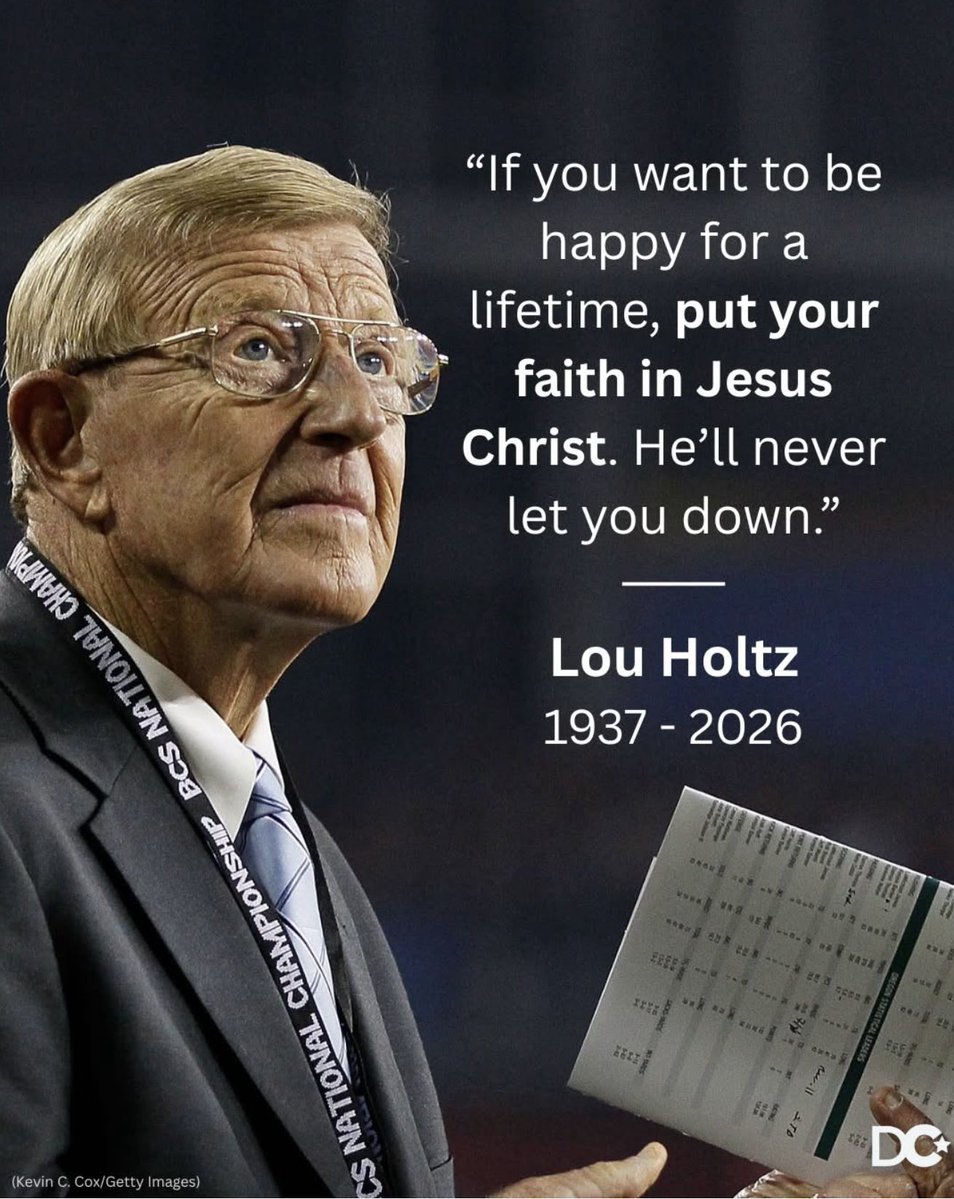
“If you want to be happy for an hour eat a steak if you want to be happy for a day go play golf. If you wanna be happy for a week go take a vacation, but if you wanna be happy for a lifetime, put your faith in Jesus Christ.”
#RIP Lou Holtz
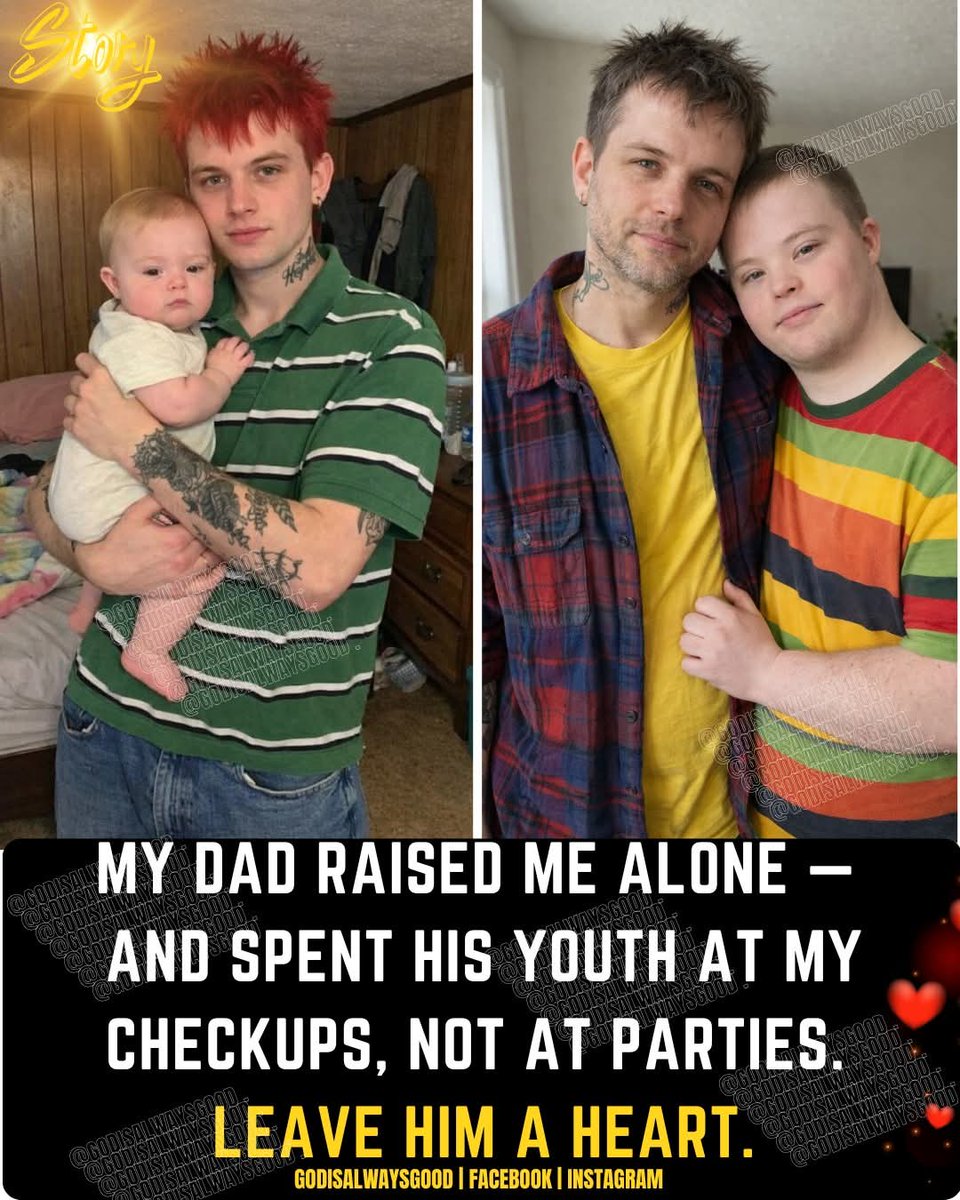
My mom left when I was a baby.
My dad was only 19 — and everyone thought he’d leave too.
But he stayed. And that changed everything.
I’m Joey, and I was born with Down syndrome. My dad had no idea how to raise a child on his own, but he asked God for strength and learned everything step by step. We moved in with my grandparents so he could get help while figuring out what I needed. He took me to every check-up and therapy session. He learned how to help me talk, read, and grow at my own pace. While other guys his age were going out or building careers, my dad spent his nights helping me practice small skills that felt big to us. He chose patience over parties. Faith over fear.
Now I’m grown, and we’re still close. We cook, laugh, and listen to music together. Every day, I thank God he stayed. I wouldn’t be who I am without him, and I’m grateful he chose me.
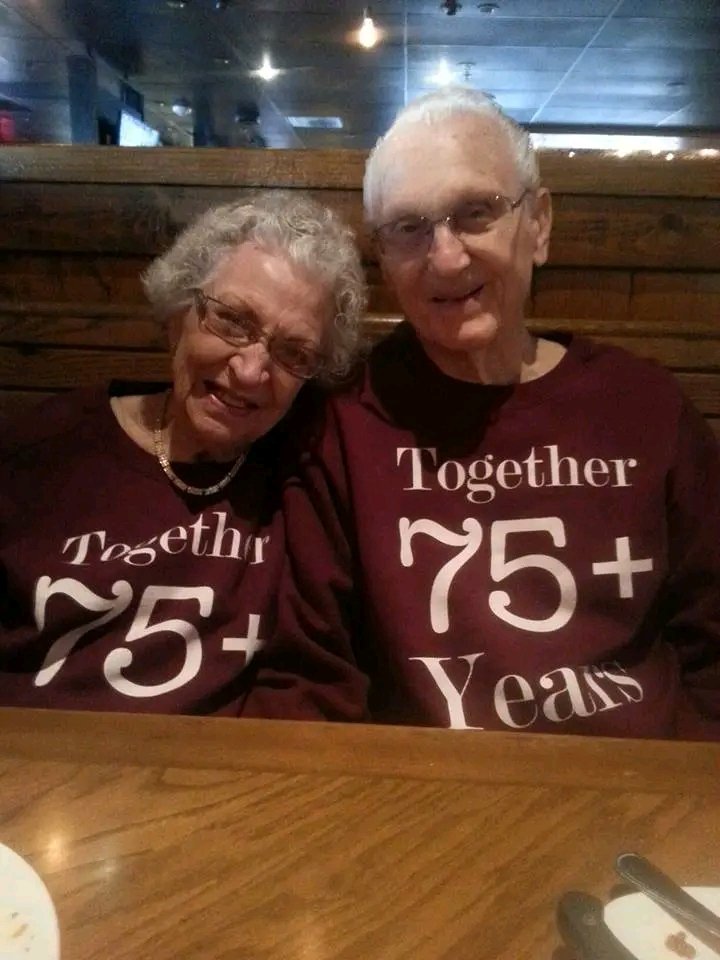
"My parents have been married for 75 years but few have noticed. Most of their friends have died. I contacted 6 local news stations and the Union Tribune newspaper giving details so they could do a story on their lives. Not one response from anyone. I think living into your 90's and staying married 75 years is quite an accomplishment. If you agree, please like and share my post. I want to show them people do care."
Credit Eileen Atkinson











![MrPitbull07's tweet photo. A mother begged a scientist to inject her dying son with something that had never been tested on a human being.
It was July 1885 in Paris.
Nine-year-old Joseph Meister stood trembling in Louis Pasteur's laboratory, his small hands and legs covered in deep bite wounds. Two days earlier, a rabid dog had attacked him in his village. The animal had been killed immediately afterward, and it was confirmed to have rabies.
His mother knew exactly what that meant.
In 1885, rabies was a death sentence. Once symptoms appeared—the terror of water, the violent convulsions, the hallucinations—no one survived. Not ever. The death was agonizing, sometimes lasting days, and there was nothing anyone could do but watch.
But she had heard whispers about a chemist in Paris. A man named Louis Pasteur who had been experimenting with something that might help. She didn't know if the rumors were true. She only knew her son was going to die unless she tried.
So she traveled across France with her wounded boy to find this scientist.
"Please," she said to Pasteur. "Save my son."
Louis Pasteur was 62 years old and already one of the most celebrated scientists in Europe. His discoveries had transformed industries and changed how we understand the world. But he faced an impossible decision.
He did have a vaccine for rabies. He had spent years developing it, testing it successfully on animals again and again. But it had never been given to a human being.
Pasteur wasn't even a medical doctor—he was a chemist. If he injected this boy with an experimental treatment and the child died, Pasteur could be charged with murder. His career, his legacy, everything he had built could be destroyed.
But if he did nothing, young Joseph would certainly die.
Pasteur consulted with two physicians who examined the boy. Their conclusion was unanimous: without treatment, there was no hope. The vaccine was his only chance.
Pasteur made his decision.
They would try.
Over the next ten days, Joseph received a series of injections. Each dose was carefully measured, gradually stronger, designed to teach his immune system to fight the virus before it could reach his brain.
Every single day, Pasteur watched the boy for any sign of symptoms. Any fever. Any confusion. Any indication that the treatment was failing.
Every single day, Joseph remained healthy.
After the final injection, they waited. One week. Two weeks.
Nothing.
No symptoms. No illness. No rabies.
Joseph Meister became the first human being in history to survive rabies after exposure.
Word of this miracle spread across Europe like wildfire. Within months, desperate families were arriving from France, Germany, Russia, and beyond. Pasteur treated hundreds, then thousands. The vaccine worked.
But here is what made Louis Pasteur truly extraordinary.
The rabies vaccine wasn't even his greatest gift to humanity.
Pasteur's deepest contribution was proving something that changed medicine forever: that invisible microorganisms—germs—cause disease. Before Pasteur, most scientists believed illness appeared mysteriously from bad air or arose spontaneously. Pasteur demolished that belief through brilliant experiments.
Once doctors understood that germs existed and spread, everything changed.
Surgeons began sterilizing their instruments. Doctors started washing their hands. Food producers learned to heat milk to kill dangerous bacteria—a process we still call "pasteurization" in his honor.
Germ theory became the foundation of modern medicine. Every antibiotic you've ever taken, every vaccine your children receive, every sterile surgery performed today exists because Louis Pasteur proved that microbes are real, that they cause disease, and that we can fight them.
Joseph Meister never forgot the man who saved his life.
[More story in replies]](https://pbs.twimg.com/media/HHFIuB2bEAE3Ey5.jpg)