I didn’t want my late son’s dog. That’s the truth. I couldn’t stand the idea of keeping him, and I need to admit that upfront because nothing else in this story makes sense otherwise.
When my son, Ryan, died, people showed up with food trays, sympathy cards, and carefully chosen words that were meant to comfort me but never really did.
And then someone brought me his dog.
His name was Tank.
Ryan had adopted Tank from a shelter three years before the crash. I still remember the phone call. He was 17, but he sounded like a kid who’d just unwrapped the best gift of his life.
“Dad, you have to meet him. He’s amazing. You’re going to love him.”
“I’m not a dog person,” I told him.
“That’s because you haven’t met Tank yet,” he said. “Tank’s different.”
I never agreed. Whenever I met Ryan, Tank would try to climb into my lap like he weighed nothing. I’d shove him off, and Ryan would just laugh.
“He likes you,” he’d say.
“Well, I don’t like him,” I’d answer.
It became a running joke between us. Ryan adored that dog. I tolerated him because I adored my son.
Then Ryan was gone.
He died on a Sunday evening in October. A distracted driver ran a red light while he was heading home from work. He was 20 years old. The hospital called at 7:12 PM. I know because I stared at the microwave clock while trying to understand how the world could end at such an ordinary minute.
My wife, Elaine, had passed years earlier. After that, it had just been the two of us. We argued sometimes. He thought I was set in my ways. I thought he took too many risks. But beneath all that, there was love.
After the funeral, his landlord called. Someone had to clear out the apartment. That included the dog.
“I can’t take him,” I said.
“If no one does, I’ll have to contact animal services.”
Ryan’s friend, Lucas, dropped Tank off at my place the next afternoon. Tank walked in slowly, unsure, and went straight to the spare bedroom where Ryan used to stay when he visited. He jumped onto the bed, circled once, and settled his head on Ryan’s old pillow.
For two weeks, he barely left that spot. I had to bring his food bowl to him. I had to coax him outside. He would stare at the front door for hours.
Every time headlights flashed across the driveway, his ears lifted. His tail gave a hopeful thump.
Then nothing.
He was waiting for Ryan.
I thought I’d feel something watching that shared grief. Some kind of connection. But I felt hollow. Real grief doesn’t always look like crying. Sometimes it’s just numbness. Like someone carved out your insides and left you moving on instinct.
We existed in the same house like strangers bound by loss. Two creatures staring at the same door.
I tried to rehome him. I called Lucas and told him to find someone else. But we couldn't find anyone. I contacted a rescue. They put him on a waitlist.
Then one night, something changed.
I had fallen asleep in my chair and woke up gasping from a nightmare — the accident replaying in my mind. My chest felt tight. My breathing uneven.
Tank was there.
Not in the spare room. Not by the door.
He had pressed himself against my legs, resting his heavy head on my knee, looking up at me with steady, quiet eyes. Not demanding anything. Not asking to go outside. Just there.
For the first time since Ryan died, I reached down and placed my hand on that dog.
He didn’t move.
Neither did I.
The next morning, I called the rescue and asked them to remove his name from the list.
Tank started sleeping outside my bedroom instead of in the spare room. Then, slowly, he stopped waiting at the door. I stopped staring at the wall.
We began walking together in the evenings. Neighbors who once avoided us started saying hello. Tank carried himself proudly, like he had a job to do. Maybe he did.
It’s been a year now.
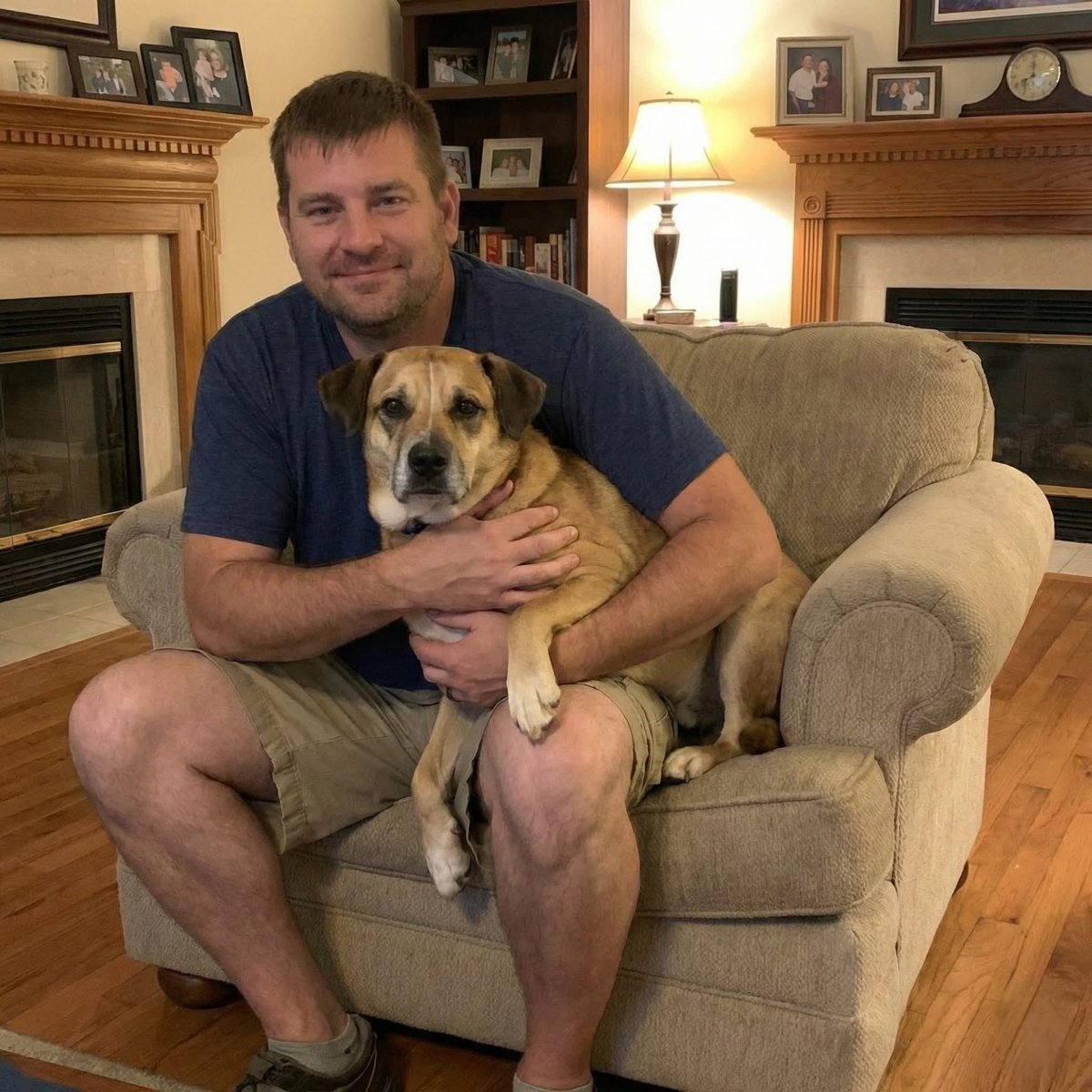
He still tries to sit on my lap, even though he’s far too big. And I let him.
I didn’t want my son’s dog.
But somehow, that dog saved what was left of me.
@njh287 World champion and class act all the way around. I don’t know any other 21-year old who has accomplished all that he has while being a humble and gracious human being. @the_quadg0d#Olympics2026
@bambam1729 Every bit the champion that he is and a world-class human being. Amazing how one so young could have so much composure and empathy. @the_quadg0d
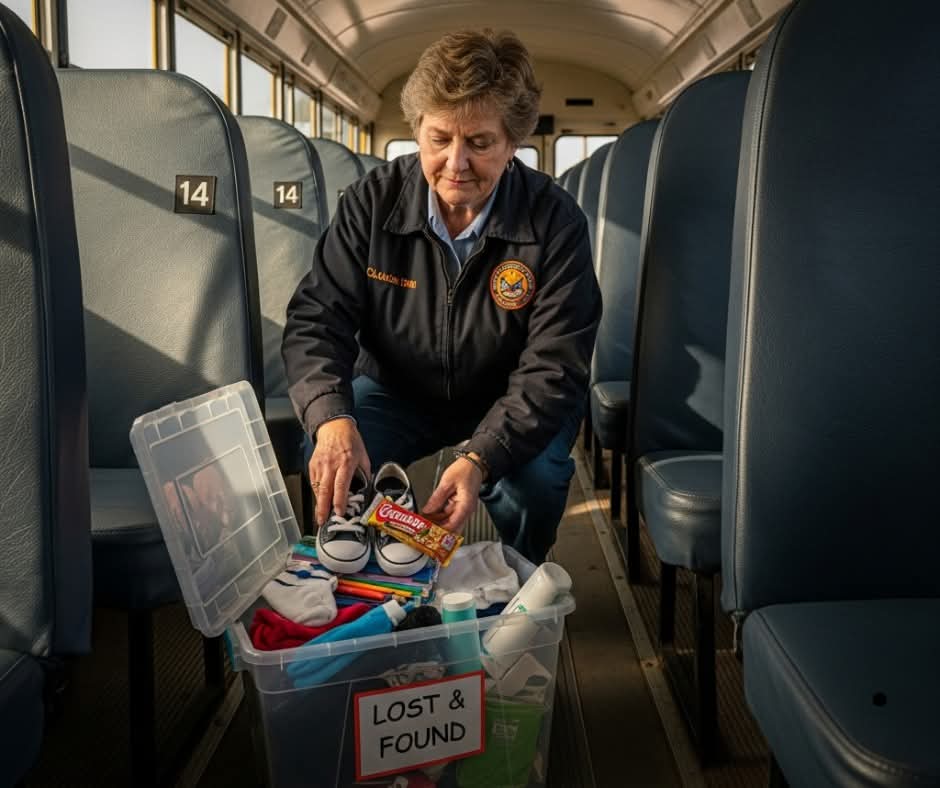
"My name's Claudette. I'm 71. I drive the number 9 school bus, same route for sixteen years. Pick up kids at 7 a.m., drop them at school, repeat at 3 p.m. Most days it's just noise, backpacks, and asking kids to sit down forty times.
But I see patterns.
Like the boy in seat 14 who started getting on with wet hair every morning. Then soaking wet clothes. Then barefoot one day in October.
I pulled over. "Sweetie, where are your shoes?"
He looked down, embarrassed. "Water got shut off at home. Can't shower. My shoes got moldy."
Nine years old. Walking to the bus stop barefoot because his single dad lost his job and couldn't pay the water bill.
I drove to Walmart after my route. Bought him shoes. Size 3. Left them on his seat the next morning with a note, "Found these on the bus. Must be yours."
He wore them every day after that.
But then I noticed others. Girl wearing the same stained shirt three days straight. Boy who never brought lunch, stomach growling so loud I could hear it from the driver's seat. Kids who smelled unwashed, kids with holes in their backpacks.
So I started keeping things on the bus. A plastic bin under my seat. Clean socks. Granola bars. Soap. Deodorant. Hair ties. School supplies. I'd leave items on seats like I "found" them. Kids would take them quietly, never asking questions.
Parents started noticing. One mom stopped me. "My daughter came home with new crayons. She said you found them on the bus."
I nodded. "Lost and found."
She cried. "We can't afford school supplies right now. Thank you for not making her feel poor."
Word spread somehow. Other parents started leaving things. Backpacks. Jackets. Lunch boxes. "For the bus lost and found," they'd say. I'd distribute them to kids who needed them.
Then something bigger happened. The boy with the shoes, his name's Tyler, his dad got hired at a factory. First paycheck, he brought me $40. "For the lost and found," he said. "So other kids can find things too."
Now there's a whole system. A "bus pantry" at the school. Supplied by families who can, used by families who can't. No applications. No proof of need. Kids just take what they need from the bin, like finding lost items.
Other bus drivers started doing it. Twelve drivers in the district now. Feeding kids. Clothing kids. Giving them dignity disguised as coincidence.
I'm 71. I drive a yellow bus full of loud children.
But I learned this, poverty rides the school bus every single day. It sits in seat 14, seat 22, seat 7. And most people never see it because hungry kids get really good at hiding.
So pay attention. On buses, in classrooms, at pickup lines. Some child is barefoot. Some child is hungry. Some child needs someone to "find" exactly what they're missing.
Stock a bin. Leave supplies. Make poverty look like luck.
Because no child should feel ashamed for needing shoes."
.
Let this story reach more hearts....
.
Credit - unknown
"Every Tuesday at 3 PM, my mother calls the same wrong number.
Has for six years.
"Hello, this is Susan. Is Robert there?"
Same response every time, "No Robert here. Wrong number."
"Oh, I'm so sorry to bother you."
Then she hangs up. Sets a reminder for next Tuesday.
I thought it was dementia. Mom's 71. Maybe forgetting she'd already tried this number.
"Mom, that's not Robert's number. You've called it 300 times. Why do you keep calling?"
She looked at me strangely. "I know it's not Robert's number."
"Then why"
"Because someone answers."
Turned out, the woman who answers is 83. Lives alone. Has severe social anxiety. Never leaves her apartment. No family. No friends.
"Six years ago, I called your brother's old number by mistake," Mom explained. "Woman answered. We talked for two minutes. When I apologized for the wrong number, she said, 'Please call again anyway. Nobody calls me.'"
"So you just... kept calling?"
"Every Tuesday. We talk for exactly twelve minutes. About nothing. Weather. TV shows. Her cat. Then I say I have to go, and she says okay."
"For six years?"
"For six years."
"Does she know you're calling on purpose?"
"Of course. I'm not subtle. But we maintain the fiction. I 'accidentally' call. She 'happens' to answer. We pretend it's chance, not choice."
"Why the pretend?"
"Because accepting help is hard. Accepting a wrong number is easy."
Mom's phone buzzed. Tuesday, 3 PM reminder.
She dialed. "Hello, this is Susan. Is Robert there?"
A pause. Then laughter. "No Robert here, Susan. But I'm here. How was your week?"
I listened to them talk. About the weather. A TV show. The cat's vet appointment.
Twelve minutes exactly. Then, "I should let you go."
"Okay, Susan. Same time next week?"
"Oh, I'm sure I'll accidentally dial this number again."
More laughter. Goodbye.
Mom hung up. Looked at me. "Her name is Dorothy. I've never met her. Don't know her last name. Don't know her address. Just her voice every Tuesday for twelve minutes."
"What if you stop calling?"
"Then she stops having Tuesdays."
Mom died last year. Suddenly. Heart attack.
I found Dorothy's number in her phone. Called it.
"Hello?"
"Hi. My name is Sarah. I'm Susan's daughter. I think... I think you were expecting her call today."
Silence. Then crying.
"She's gone, isn't she?"
"Yes. I'm so sorry."
"Can I ask you something? Did she ever tell you why she really called?"
"She said you needed someone to call."
"That's what she told you. But I'm calling to tell you why I answered. Because your mother's voice on Tuesdays was the only thing that kept me alive. I had the pills ready four times. Four different Tuesdays. And every time, at 3 PM, she called. And I couldn't do it after hearing her voice."
I've been calling Dorothy every Tuesday for nine months now.
Same time. Same "wrong number" fiction.
Because my mother taught me, sometimes the most important call you make is to the wrong person.
On purpose.
Every Tuesday.
For as long as someone answers."
.
Let this story reach more hearts....
.
Credit: Grace Jenkins
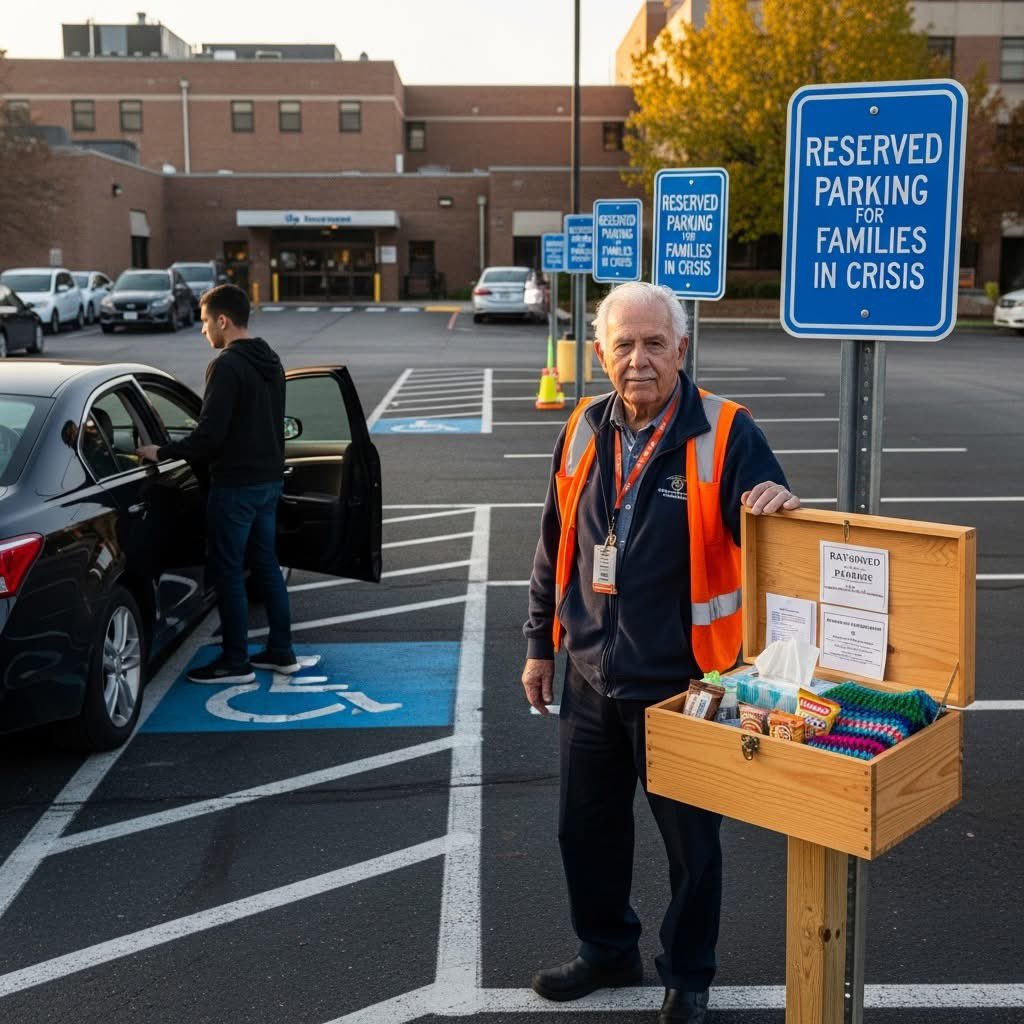
"My name's Raymond. I'm 73. I work the parking lot at St. Joseph's Hospital. Minimum wage, orange vest, a whistle I barely use. Most people don't even look at me. I'm just the old man waving cars into spaces.
But I see everything.
Like the black sedan that circled the lot every morning at 6 a.m. for three weeks. Young man driving, grandmother in the passenger seat. Chemotherapy, I figured. He'd drop her at the entrance, then spend 20 minutes hunting for parking, missing her appointments.
One morning, I stopped him. "What time tomorrow?"
"6:15," he said, confused.
"Space A-7 will be empty. I'll save it."
He blinked. "You... you can do that?"
"I can now," I said.
Next morning, I stood in A-7, holding my ground as cars circled angrily. When his sedan pulled up, I moved. He rolled down his window, speechless. "Why?"
"Because she needs you in there with her," I said. "Not out here stressing."
He cried. Right there in the parking lot.
Word spread quietly. A father with a sick baby asked if I could help. A woman visiting her dying husband. I started arriving at 5 a.m., notebook in hand, tracking who needed what. Saved spots became sacred. People stopped honking. They waited. Because they knew someone else was fighting something bigger than traffic.
But here's what changed everything, A businessman in a Mercedes screamed at me one morning. "I'm not sick! I need that spot for a meeting!"
"Then walk," I said calmly. "That space is for someone whose hands are shaking too hard to grip a steering wheel."
He sped off, furious. But a woman behind him got out of her car and hugged me. "My son has leukemia," she sobbed. "Thank you for seeing us."
The hospital tried to stop me. "Liability issues," they said. But then families started writing letters. Dozens. "Raymond made the worst days bearable." "He gave us one less thing to break over."
Last month, they made it official. "Reserved Parking for Families in Crisis." Ten spots, marked with blue signs. And they asked me to manage it.
But the best part? A man I'd helped two years ago, his mother survived, came back. He's a carpenter. Built a small wooden box, mounted it by the reserved spaces. Inside? Prayer cards, tissues, breath mints, and a note,
"Take what you need. You're not alone. -Raymond & Friends"
People leave things now. Granola bars. Phone chargers. Yesterday, someone left a hand-knitted blanket.
I'm 73. I direct traffic in a hospital parking lot. But I've learned this: Healing doesn't just happen in operating rooms. Sometimes it starts in a parking space. When someone says, "I see your crisis. Let me carry this one small piece."
So pay attention. At the grocery checkout, the coffee line, wherever you are. Someone's drowning in the little things while fighting the big ones.
Hold a door. Save a spot. Carry the weight no one else sees.
It's not glamorous. But it's everything."
Let this story reach more hearts....
Credit: Mary Nelson
May the Philippines be spared from further loss and devastation, and may justice come to every Filipino who suffered from disasters made worse by negligence, corruption and abuse of power. Praying for everybody’s safety as we brace for #Fungwong#UwanPH 🙏🏼