"Most people never find out what they're actually capable of. Maximum effort on a single meaningful thing produces discoveries about yourself and the world that moderate effort cannot generate."
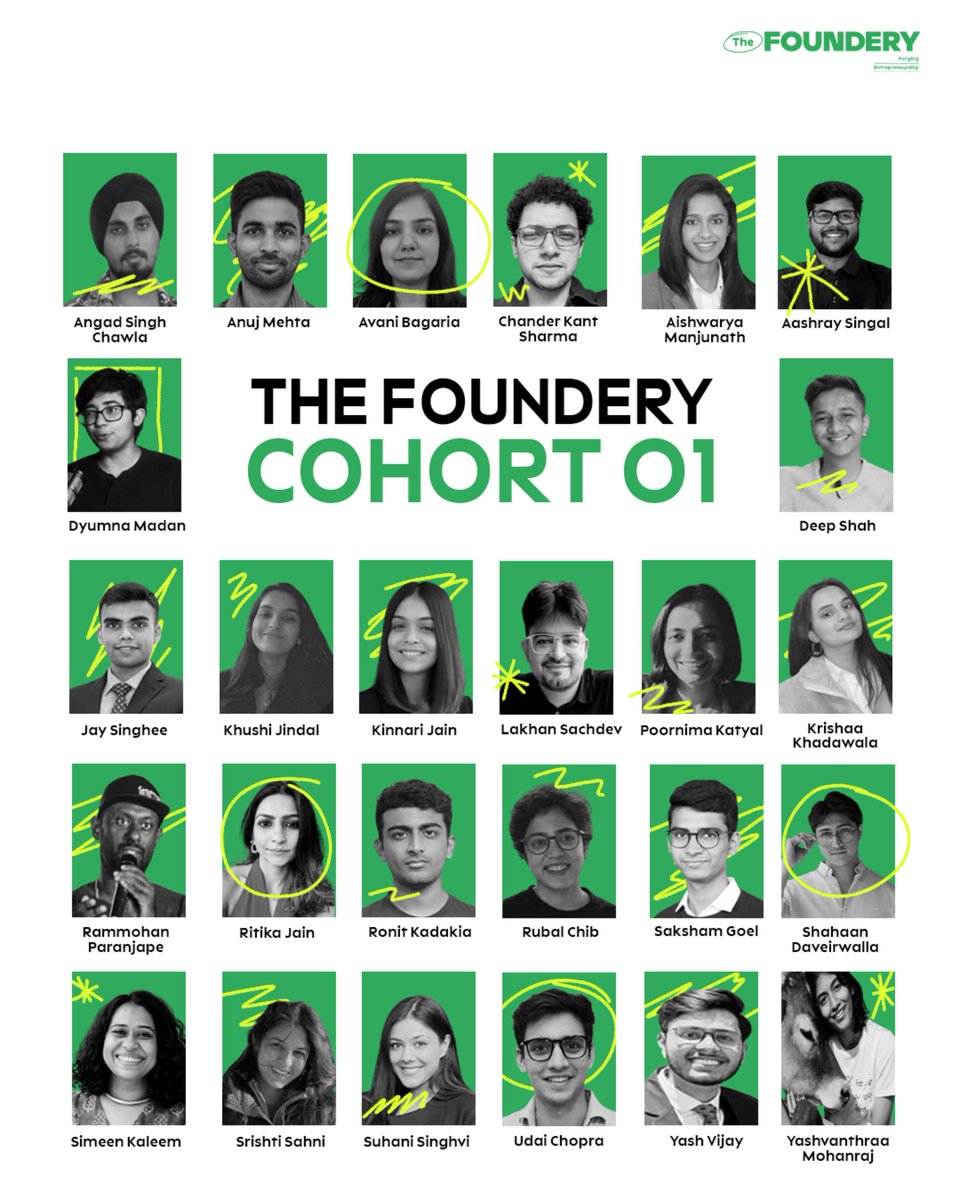
82 people walked into a room in Alibaug thinking they were ready.
26 walked out as Cohort 1.
Not because the others weren't capable. Some of the strongest people in that room didn't make it through. That is the nature of a forge. It doesn't select for impressive. It selects for what holds under heat.
What held was judgment when there was no right answer. Ownership in moments nobody was watching. The ability to keep building when the ground wasn't stable.
Meet Cohort 1. The Foundery.
Why does 70% of the world’s toys come from one city in China?
I spent a few weeks between Guangzhou and Shantou the beating heart of the global toy industry to find out.
Here’s what I learned walking through 100s of stalls and factory floors:
1. Speed wins.
In Shantou, a sketch becomes a working prototype in weeks.
In India, that often takes months.
2. Scale wins.
Supply chains aren’t scattered.
Plastics in one district, motors in another, electronics elsewhere.
Every node compounds efficiency.
3. Community wins.
Factory owners, engineers, workers and even taxi drivers all speak the same language or able to hold a conversation around and educate you a ton: build quality at the best cost first, worry about marketing later.
For Korzi, this trip wasn’t about sourcing the parts.
It was a reality check.
If we want to build machines for the young in India, we can’t just sell better products.
We need to create the conditions where speed, scale, and community become the default.
What excites me:
India doesn’t need to copy China.
We need to build our own ecosystem rooted in our strengths, powered by a builder’s mindset.
Because play is global.
But the future of play can be Made in India.