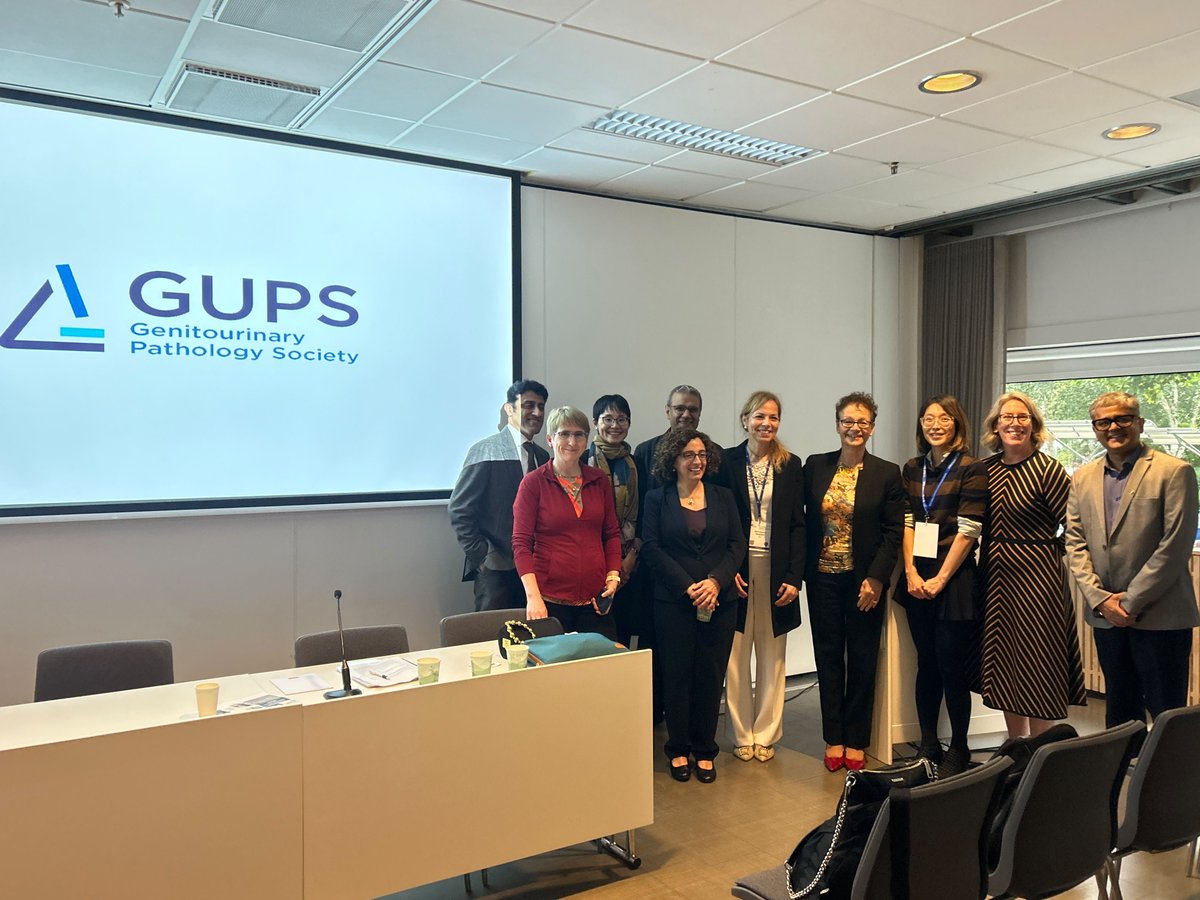
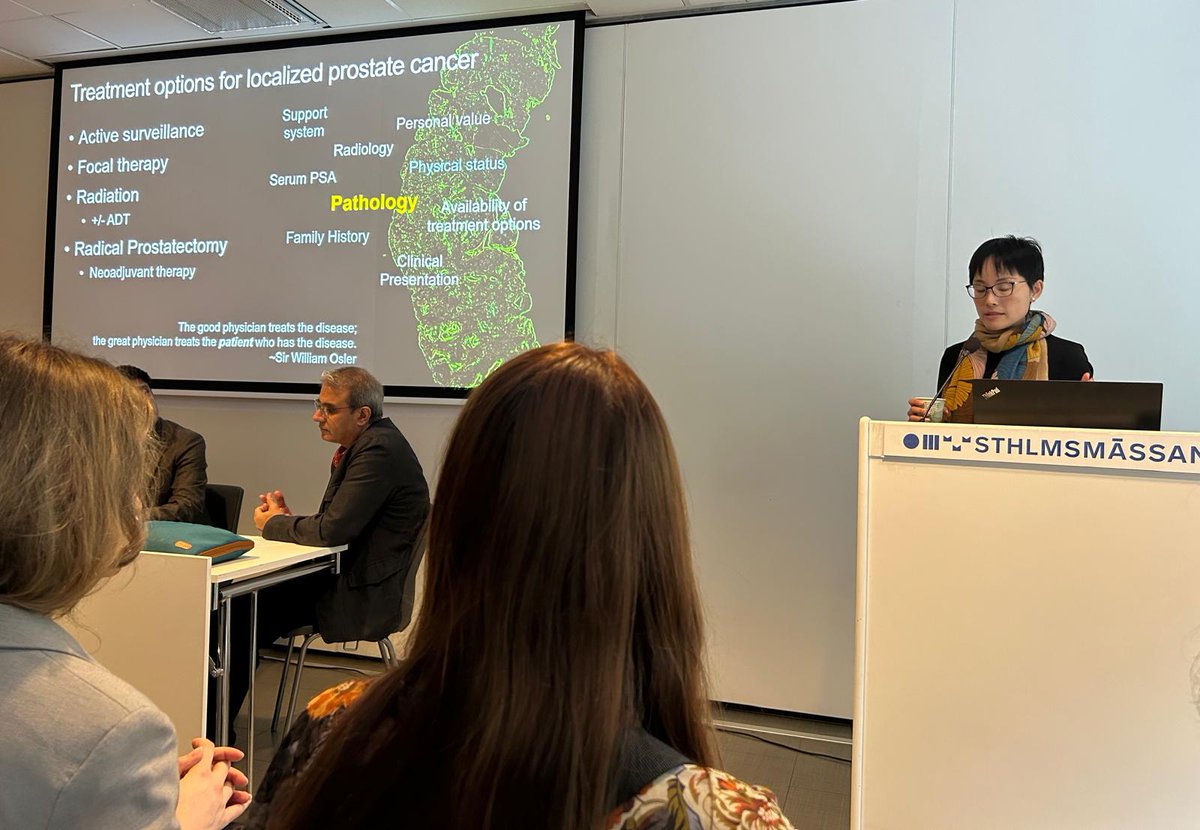
Incredible thankful for this opportunity to discuss all exciting recent updates in prostate pathology. Histomorphology-based approaches are practical, informative and powerful!
And that’s a wrap! 🎉
A fantastic #GUPS Specialty Session at #ECP2026- full house, lively discussion, great science, and wonderful colleagues.
Huge thanks to our speakers, attendees, GUPS leadership & everyone who made today such a success!
#GUPath#Pathology
I'm extremely honored to be nominated as one of 40 under forty honorees by ASCP! Please consider voting for me (Cornelia Ding, MD, PhD) to help me reach the top 5! (you can vote once per day through 9/12!)
Vote here: https://t.co/hAC4ZZEn4W
#ASCP#40underForty
The Department of Pathology of the Johns Hopkins University School of Medicine invites applications for a full time, tenure track faculty position in breast pathology. See our ad in path outlines:
https://t.co/CGYAq0n5ra
Hard to imagine a future without AI pathology:
- outperforms high-quality pathologists
- provides the % of Gleason pattern 3, 4, and 5
Predicting prostate cancer grade reclassification on active surveillance using a deep Learning-Based grading algorithm https://t.co/sHlZYsl10q
At #CHI2024, we try to do justice to #crowdsourcing by answering this question:
How does GPT-4's labeling ability compare to that of a realistic, well-executed MTurk *pipeline*?
Led by @StevenHe918, we publish our love letter to crowdsourcing: https://t.co/VALrzFtL01 #LLM 1/🧵
Black men are at higher risk of prostate cancer and often times have more aggressive forms of the disease.
Dr Sam Washington of @UCSF & Dr. Isla Garraway of @UCLAHealth discuss PCF's new screening guidelines for prostate cancer in Black men on @urotoday
https://t.co/xEXuSqC2l2
Perirenal myxoid pseudotumor of fat was first described in association with renal cell carcinomas. Over time, we have learned that it is incidental. The cells differ in appearance from those in liposarcomas (MDM2 testing can reassure).#UMiamiPath
PMIDs: 30826321. 19525929.
Primary renal carcinoids are extremely uncommon. The characteristic trabecular pattern might be difficult to identify in a needle biopsy. Monotonous nuclei with inconspicuous nucleoli and abundant eosinophilic cytoplasm are helpful diagnostic clues. Nice weekend everyone!
Bladder carcinoids are usually small and have a tubular/glandular architecture that could mimic adenocarcinoma. The overlying urothelium with cystitis cystica glandularis/hyperplasia is characteristic. #GUpath
This lamina propria proliferation shows perineurial differentiation (perineurioma). These are incidental and benign. Usually the EMA is weak (someone made it more prominent using Photoshop). #UMiamiPath
This year Dr. Rohit Mehra was one of 1,000 physicians recognized in 96 specialities with only 6 pathologists named in @Hour_Detroit's Top Doctors list. Congratulations, Dr. Mehra! https://t.co/o4qMgDtE3M