Hace 20 años, @ComunidadMujer decidió poner la mirada en el trabajo de las mujeres que, desde sus barrios, caletas, campos e islas, mejoran la vida de sus comunidades. Así nació el Fondo Mujeres por la Equidad. ¡Celebramos dos décadas fortaleciendo a organizaciones de mujeres! 💜
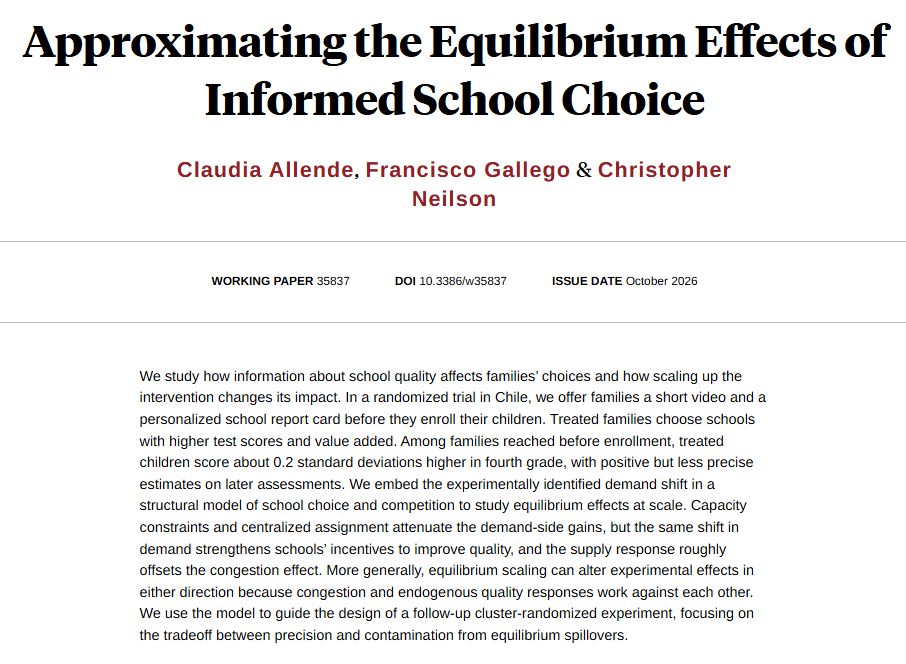
Using a randomized trial in Chile to study how information about school quality affects families’ choices and how scaling up the intervention changes its impact, from @Claudiallende, Francisco Gallego, and @chrisaneilson https://t.co/rhtl0n4KjP
From my non-social-media spouse, a new paper, using LLMs to replicate ... everything.
https://t.co/3RpaT9823B
Headlne: "Across 4,452 published replication packages for five economics journals, the workflow flags discrepancies in 3,460 articles or their appendices."
New @nytimes piece ranks 30 education interventions on both effectiveness & costs.
For me, the key takeaway is NOT about what academics (including myself) rated as most effective or least costly.
It is about the decision making process districts use. 🧵
https://t.co/7laweoIhHg
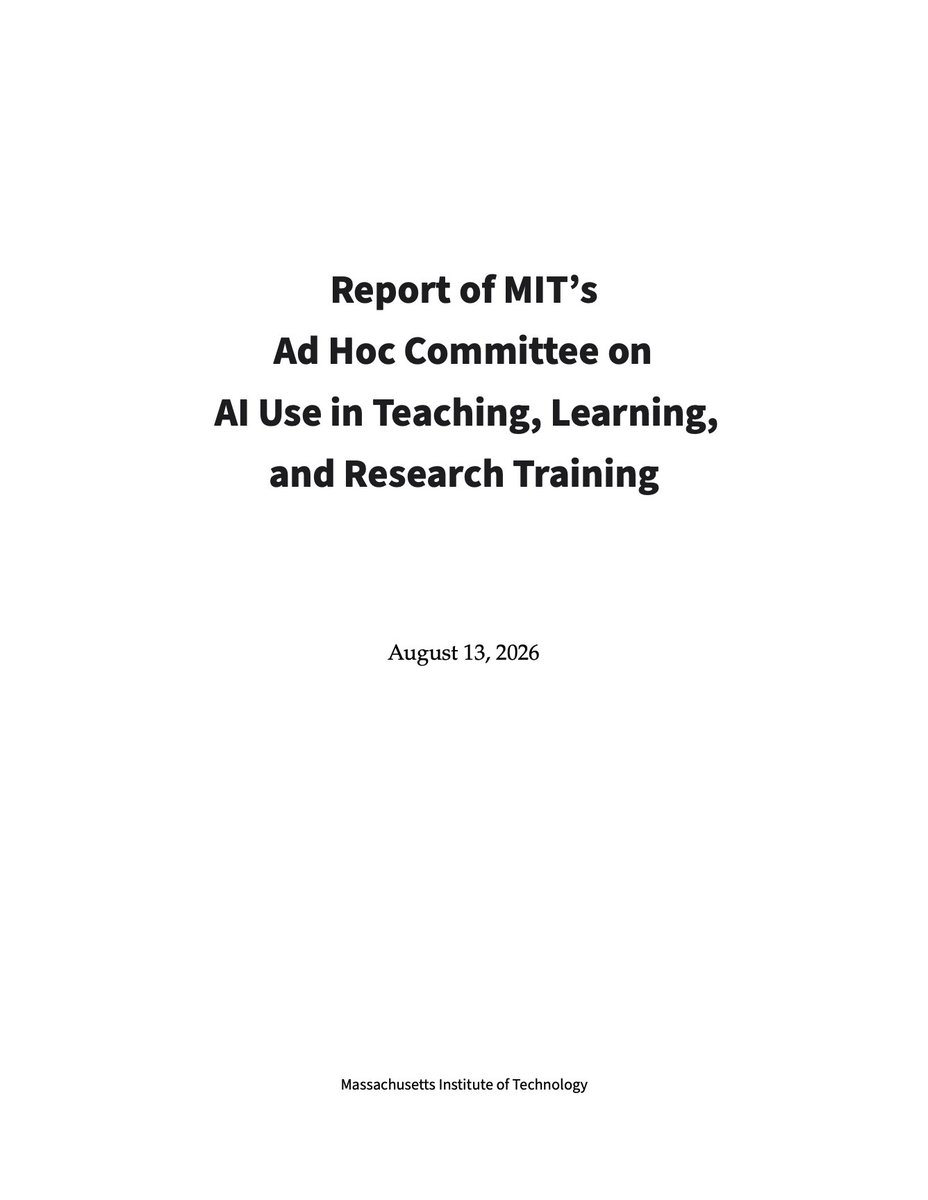
MIT published a brutally honest report on what AI is doing to students.
A committee of professors and students spent five months studying how AI changed learning on campus, and the findings read like a warning to every university on the planet.
Study groups are disappearing. Office hours are emptying out. Problem sets and take-home exams no longer prove anything, because AI can produce credible solutions to almost any written assignment in the undergraduate curriculum. Students who lean on chatbots lose mastery and confidence, and some slip into what the report calls cognitive surrender, reaching for AI at the first hint of struggle.
The numbers are rough. 46 percent of surveyed MIT undergrads use LLMs daily. 90 percent worry about their own overreliance. Undergrads who feel AI makes them replaceable now outnumber those who feel it makes them capable.
The committee's answer surprised me. They refused to fight AI with surveillance. The report calls AI detectors unreliable, says lockdown browsers feel like spying, and warns that policing students builds a classroom atmosphere of mutual distrust.
Instead, MIT wants to rebuild education around the things AI can't replace. That means oral exams, semester portfolios, in-person project work, and a required social component in every subject. The report even floats the idea of rethinking grades entirely, since without a GPA to optimize, much of the incentive to cheat with AI evaporates.
The committee warns professors against replacing undergrad research assistants with AI agents just because they're cheaper, because a university exists to grow people, not output.
The most famous tech school on earth admitted the machines broke its way of teaching. Its answer is more humans, not more software.
Economists have always noted that the cost of living, and hence economic growth adjusted for inflation, is extraordinarily hard to measure, because the nature & quality of goods changes over time, vitiating a constant yardstick (how do you compare a cold cellar with a refrigerator? How much did a laptop cost in 1934?) A new method, using AI to valuate goods, shows that 20th C US economic growth was much bigger than previously estimated.
La Reina, en Premios SM de Literatura Infantil y Juvenil 2026
🗨️ La lectura, siempre y cuando incluya comprensión, además de analgésica, quizá sea la razón última y la excusa perfecta. Cada uno de nosotros sabremos por qué podría ser la razón última y para qué la excusa perfecta
More than 7 million research papers were published in 2025.
That number is about to explode.
Think about all of the research agents and AI writing tools that were developed last year: @OpenAI’s Prism, @elicitorg, @FutureHouseSF, @k_dense_ai, etc. What happens as adoption of those tools inevitably increases? What happens to volume when the average researcher becomes fluent in @claudeai Code?
Scientific infrastructure and peer review was designed for a different world than the one we are entering.
Peer review is in crisis.
(Data: DOI-indexed articles on @OpenAlex_org)
Bronze: Maieutic by Paula Vasquez-Henriquez from Chile
An educational coding tool that requires you to think before you type. Students can't write code until they can explain what they're building and why.
https://t.co/heZ6zSo9fs
El manual de la misoginia en política sigue intacto. Si es joven 'puta'; si es firme, 'loca'; si tiene trayectoria, 'vieja'. El objetivo: disciplinar a las mujeres que se atreven a ocupar espacios públicos y, no nos engañemos: si es de derecha, el ensañamiento es aún mayor
🎙️#PrensaEG
En @CNNChile entrevistaron a la profesora Susana Claro sobre la lectoescritura y su rol en el desarrollo integral.
"Un niño o niña que no está aprendiendo a leer a la edad adecuada, aumenta el riesgo de interrumpir sus trayectorias educativas". @ucatolica
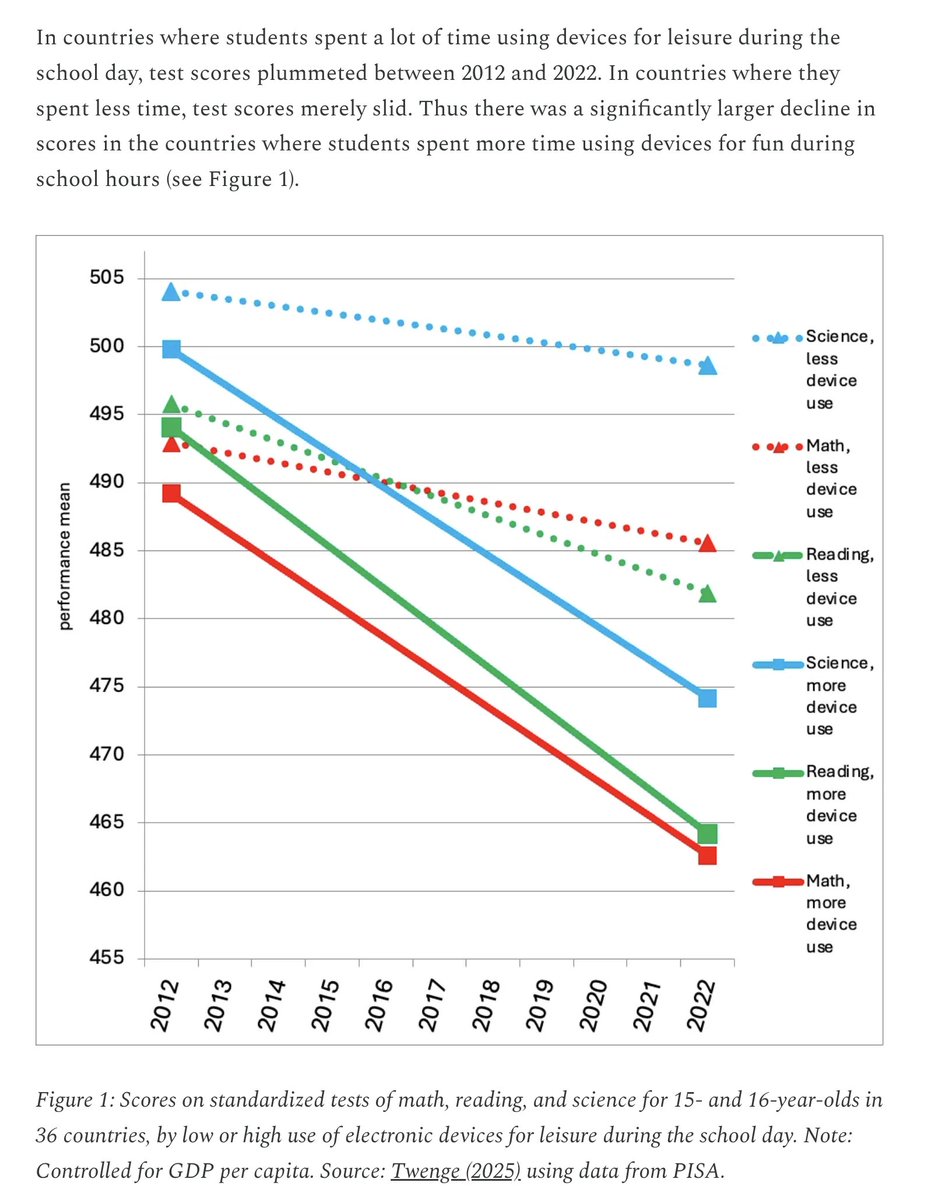
More evidence that the global decline in test scores that began after 2012 is linked to the proliferation of smartphones and computers in class: The slide was bigger in countries where students began spending more time on devices (for leisure)
https://t.co/HbzevWcG9e
Una generación que no lee bien tendrá más dificultades para entender política, contratos o información básica. New York Times: la caída de la lectura es un problema democrático y laboral, no solo educativo. Los propios estudiantes piden soluciones claras: más lectura real en clase, menos vídeos y atajos, estándares académicos más exigentes y límites al uso del móvil y la IA https://t.co/Uab1f0agDC https://t.co/HaDWLIcTy3
Felicito a @joseantoniokast x la enorme responsabilidad d defender la democracia y libertad en 2da vuelta. Como aprendimos d nuestro padre y lo hemos dicho la unidad del sector será esencial para responder demanda d cambio q Chile ha expresado hoy. Gracias x tanto @evelynmatthei
La próxima generación de talento llega con un mindset roto
Menos lectura, menos vocabulario y menos razonamiento continuo. Empieza en la universidad y obvio, ya está llegando a las empresas
Y esto no es un "tema cultural". Es un problema de mentalidad
'We don't really play anymore... it makes me really sad.'
10-year-old Ella opens up to @BenKentish about how her school friend now has an AI boyfriend that she feels she 'can't compete' with...
Leer fortalece el cerebro: la lectura desarrolla regiones clave como el lóbulo temporal izquierdo y el giro de Heschl, esenciales para el lenguaje y la empatía. Mejores lectores tienen áreas cerebrales más grandes, y leer activamente moldea estas estructuras con el tiempo. La caída de la lectura recreativa podría afectar la cognición y la empatía colectiva https://t.co/Uab1f0agDC https://t.co/ZSXQuJqFry
@ucl@fpaisdigital@Mineduc@InnovaMineduc 🗣️@ValMMendes llamó a avanzar en la implementación del Marco de Acción para la Transformación Digital de la Educación, identificando herramientas que apoyen a docentes para que cada niñ@ lea comprensivamente en 2º básico, como busca el Compromiso Nacional x el #AprendizajeLector.