@ her name is aarna maybe she is enjoying privilege of being daughter or relative of army officer (not jawan). She is firing, riding tanks and posting it on Instagram publically. Where is your discipline sir. People are paying taxes for this? @adgpi
Modi didn't envision or invented highways, toilets, bank accounts, tap water connections, LPG, Jan Aushdhi Kendra, Metro, railways, Airports, Infra, renewable energy, etc etc.
But it's the speed, execution, scale, pace & speed that Modi mastered. Modi didn't envisioned anything novelty which wasn't seen before.
UPA built only 80 Jan Aushdhi Kendra from 2008-2014, Modi build more than 10,000 in just a decade.
NPCI had it's groundwork laid under UPA yes but it was in 2016 that UPI was launched.
UPI would never have been successful in UPA era.
Why? Until 2014, India had roughly in between 200-250 million something bank accounts, around 35% of the population. Modi announced Jan Dhan Yojana in August of 2014 & since then, more than 500 million plus accounts have been opened,
“67% accounts opened in rural or semi-urban areas, women own 56% accounts” (PIB).
UPI wouldn't have been possible when Internet was luxury. It was Jio (Ambani owns Modi, didn't he?) which brought internet revolution in India.
Pakistan literally bars non-Muslims from becoming President or PM.
Malaysia gives Islam a privileged constitutional position and heavily restricts conversion out of Islam. In fact, there's not been a single example of an apostate legally changing their religion from Islam in Malaysia.
Jordan’s Christian MPs are quota seats (9). They cannot contest every seat on equal terms.
Lebanon’s Christian presidency exists because of a sectarian power sharing system, not because it’s some generic “Muslim country” happily electing Christians. It used to be a Christian majority country before Palestinians and demographics changed the country forever into a failed state.
Senegal is constitutionally secular, and its Catholic president left office in 1980.
Of course, you can find non-Muslims holding some offices in Muslim majority countries. But this isn't a useful question. The more meaningful question is: can a non-Muslim hold the highest offices on equal terms, without religious restrictions written into the system?
In almost every example Alex gave here, the answer is plainly no. And if we go further, like Saudi Arabia, or the Maldives....you'd see they are effectively apartheid states.
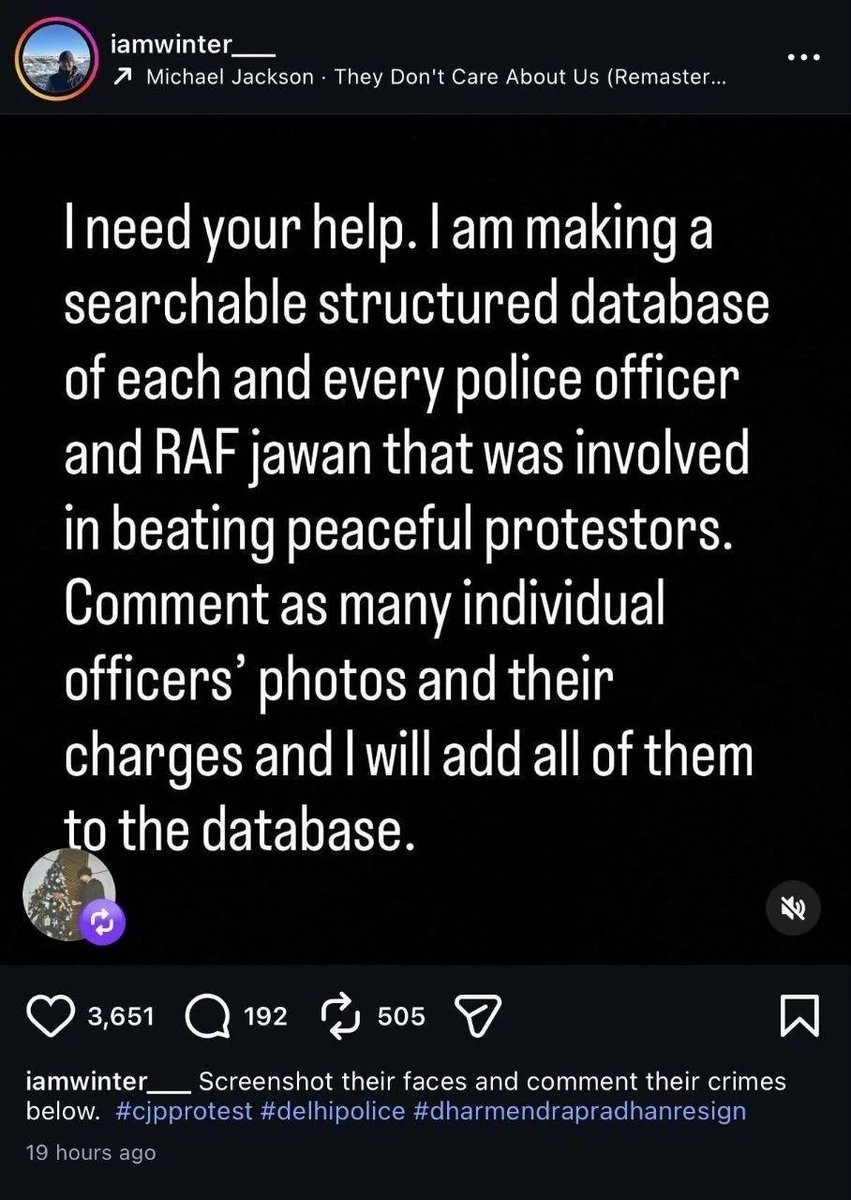
Remember this genius who wanted to create a website with information of security personnel?
Well, it seems he has had his FAFO moment. Gujarat Police seems to have visited him to say hello, took him to PS, made him sign documents which had details of his (mis)deeds. Whether FIR will be filed or not is not known at this stage.
People are discovering that their is a real world outside of Instagram and Reddit where actions have consequences.
And that this is India, not USA of your webseries.
Shenyang, China. Heavy rains caused water to stagnate and flood all ground flood units. Cars got submerged. But nobody is complaining on Weibo or Wechat. Social media is full of "How this is good, as repairs and cleaning will help the economy." Very good perception management.
India’s banking clean-up has a clear before-and-after story.
As former RBI Governor Raghuram Rajan noted, “a larger number of bad loans were originated in the period 2006–2008,” with too many loans going to “well-connected promoters” with a history of defaults.
The 2015 Asset Quality Review exposed previously hidden stress, while the Insolvency and Bankruptcy Code introduced a time-bound resolution framework. Recapitalisation, recoveries and wider banking-sector reforms further strengthened bank balance sheets.
The result: gross NPAs have fallen from a peak of 11.18% to just 1.80% in March 2026, the lowest level in recorded history.
An Indian passenger train cruising over the fields near Western Ghats, India.
Indian Railways, which is 99.6% electrified in broad guage (next only to Switzerland word-wide), can take you to all these picturesque places in India. Do visit.
Video Credits: @Indianrailgram
This thinking is the quintessential example of Nehruvian Gandhism school of thought.
The sheer magnitude of backsliding of H interests for continuous 70 odd years under Nehruvian Gandhism and their bureaucrats will always be a DARK chapter in history, when looked from the lens of H-phile
𝙒𝙝𝙖𝙩 𝙩𝙝𝙞𝙨 𝙪𝙨𝙚𝙧 𝙝𝙖𝙨 𝙬𝙧𝙞𝙩𝙩𝙚𝙣 𝙞𝙨 𝙃𝙖𝙡𝙛 𝙗𝙖𝙠𝙚𝙙 𝙛𝙖𝙘𝙩𝙨 𝙤𝙣 𝙐𝙋𝙄. 𝙏𝙝𝙞𝙣𝙜𝙨 𝙜𝙤𝙚𝙨 𝙛𝙖𝙧 𝙗𝙚𝙮𝙤𝙣𝙙 𝙐𝙋𝙄.
Let's evaluate this.
Before UPI, we have to evaluate NPCI, the parent organisation.
NPCI was formed in 2008. From 2008-13, NPCI created three things.
NFS (ATM network), IMPS (mobile-based interbank transfer, 2010), and RuPay (2012). UPI was not even in concept stage then.
But our question shouldn't be on UPI as UPI as a standalone service cannot simply work in 2014 India.
Now let's see why.
UPI needed mass adoption of mobile, low cost net connectivity and vast amount of accounts backed by easy KYC.
Before UPI concept getting developed by NPCI in 2016, an environment was needed at all India level for its success.
Hence before UPI, Modi govt worked on JAM Trinity. Let's see what J, A and M stands for.
1. J - Jandhan Accounts - Govt brought roughly 500 million previously unbanked Indians into the formal banking system, giving them a bank account
2. A - Aadhaar provided a unique biometric ID that let banks do instant, low-cost KYC verification, which made opening accounts and later linking them to UPI fast and nearly free.
3. M - Mobile (helped along by Jio's 2016 entry crashing data prices) put a smartphone with cheap data in the hands of hundreds of millions of people who'd never been "digital" before.
So, JAM played a foundational role in bringing volumes for UPI to succeed.
Without JAM, there is no UPI.
And without Modi govt, there is no JAM.
Hope people remember this.
#UPI
The gowns these students are wearing come directly from the Church & its clerics in Europe. We never questioned this practice. But tend to question a little bit of our own 3000+ year old culture used, long before the west, in our world's oldest universities like Taxila & Nalanda.
I made a website that plays bangers from indian barbershops
before you became fancy and started visiting salons. you once went to a 'saloon'. ₹20 haircuts. simple hairstyles with music that could fix your soul.
https://t.co/j3E8VfwiUU
An Indian institute of technology filmed a full course on how money actually moves through a banking system and released it for nothing.
The course is Economics of Banking and Finance Markets, produced at IIT Kanpur under NPTEL, India's national open courseware programme. It runs in sequence as one continuous argument rather than a set of clips.
A green chalkboard, a lapel microphone, a checked shirt, one fixed camera.
He opens with the only question that matters at the start. Where does surplus money sit, who needs it, and what stands between them.
Then he splits the answer in 2. Direct finance, where the saver reaches the borrower through a market. Indirect finance, where a bank stands in the middle and absorbs the risk instead.
Everything after that hangs off the split. Time value of money, risk, information asymmetry, why institutions exist at all, and what regulators are actually regulating.
The turn is what he does with information. Banks are not warehouses for money. They exist because one side of every transaction knows things the other side does not, and the whole industry is built on charging for that gap.
It matters more now. Every fintech product claims to cut out the middleman, and almost none of them remove the information problem that put him there.
Free, in order, subtitled, funded by a public programme.
The banking system explained from the first principle, for nothing.
Lecture 1. 2 channels. It is in the video.
India has, for centuries largely ignored the strategic soft power leverage in South-East Asia.
A broad strategic vision would include cultural syncretism between Tais of NE India, Myanmar & Thais/SE Asia. Creative directors could also blend Indic & SE Asian aesthetics to have better reach among masses.
Meanwhile, enjoy this classic from Bali.
UPI remains free for consumers, and small merchants, including kirana stores, continue to pay no MDR for accepting UPI payments.
As India's digital payments ecosystem expands, sustained investment by banks, payment companies, NPCI and RBI continues to keep UPI secure, resilient and available round the clock.
#UPI #DigitalPayments #FinTech #DigitalIndia #NPCI