Building in public: AI agents, automation, and tools that actually ship.
I’ll post:
• Practical AI tips
• Agent workflows
• Honest tool takes
• What I’m building
If you’re a builder (or becoming one), follow along. Drop what you’re shipping below.
Most AI agents don't fail because the model is dumb. They fail because the system prompt is vague.
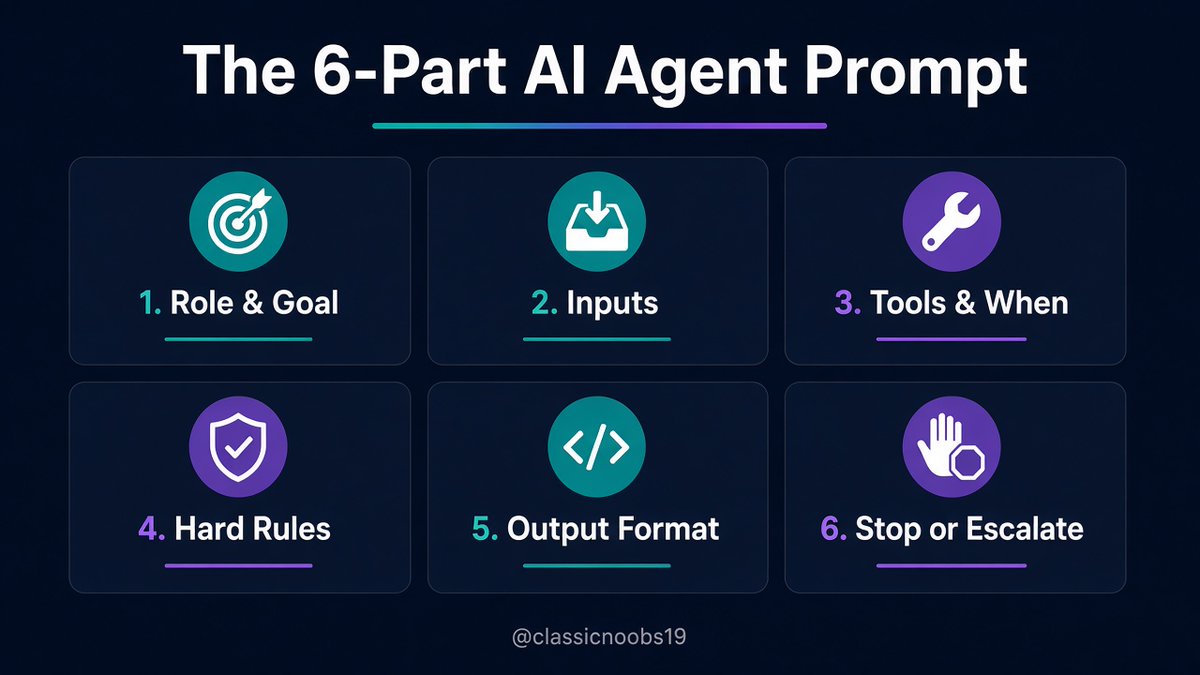
Here's the 6-part structure I now use for every agent prompt:
1. Role and goal. One sentence on who the agent is and the single outcome it owns. "You triage support emails into 4 buckets" beats "You are a helpful assistant."
2. Inputs. Spell out exactly what it receives and in what format, so it stops guessing.
3. Tools and when to use them. List each tool with a one-line rule, like "search the docs before answering any pricing question."
4. Hard rules. The few things it must never do: no refunds over $50, no sending email without approval, no inventing links.
5. Output format. Give a schema or a short example. Structured output is easier to check and easier to pipe into the next step.
6. When to stop or escalate. Define what "done" looks like and when to hand off to a human instead of looping forever.
Bonus: keep 5-10 real test cases and rerun them every time you edit the prompt. Small wording changes break things quietly.
What's one rule you added to your agent prompts only after it burned you?
#AI #AIAgents #PromptEngineering #Automation #LLM #BuildInPublic #ArtificialIntelligence #NoCode #IndieHackers
Most people automate the wrong things first.
After building a bunch of small AI workflows, here's the order I'd go in if I were starting over today:
1. Inbox triage. Let an agent label, summarize, and draft replies to routine email. You still hit send, but you stop reading everything twice.
2. Meeting notes to tasks. Record, transcribe, pull out action items, and push them straight into your task app with owners and due dates.
3. Content repurposing. One long post becomes a thread, a LinkedIn post, and a newsletter section. Same idea, more places, ten minutes.
4. Lead research briefs. Give an agent a name and a company, get back a short brief before every call: what they do, recent news, likely pain points.
5. Weekly reporting. Pull numbers from your tools every Friday and get a plain-English summary of what moved and why.
The pattern: start with tasks you already do every week, that follow the same steps, and where a mistake is cheap. Save the risky, judgment-heavy work for later, once you trust your setup.
What's the first workflow you automated, and did it actually stick?
#AI #AIAgents #Automation #BuildInPublic #Productivity #NoCode #LLM #IndieHackers #Tech