Operationalizing data privacy and regulatory obligations for digital businesses. Audit-ready pipelines for Nigeria’s NDPA, EU's GDPR and California's CCPA.
ClearClause Demo:
Audit-ready privacy compliance infrastructure
See how teams:
• Discover PII across systems
• Handle DSARs end-to-end
• Keep ROPA, DPIAs, and cross-border transfer records audit-ready
• Operate across NDPA, GDPR, and CCPA
#PrivacyCompliance#ClearClause
If you rely on consent, can you prove what was agreed?
What was shown? When did they agree? Which version applied? #ClearClause connects consent records with document versions and audit history.
#ConsentManagement#PrivacyCompliance#RegTech
Your monitoring stack isn't necessarily “just technical data.” It may contain IP addresses, user IDs, request data, error messages and session information.
Engineering needs it. Privacy needs to know it exists too.
#PrivacyEngineering#DataGovernance#Privacy#ClearClause
An audit shouldn't be the first time you discover
what’s missing, what's outdated, where the evidence is.
ClearClause gives teams a continuous view of their privacy compliance readiness, so they can find the gaps before the auditor does.
#DataPrivacy#DataGovernance#ClearClause
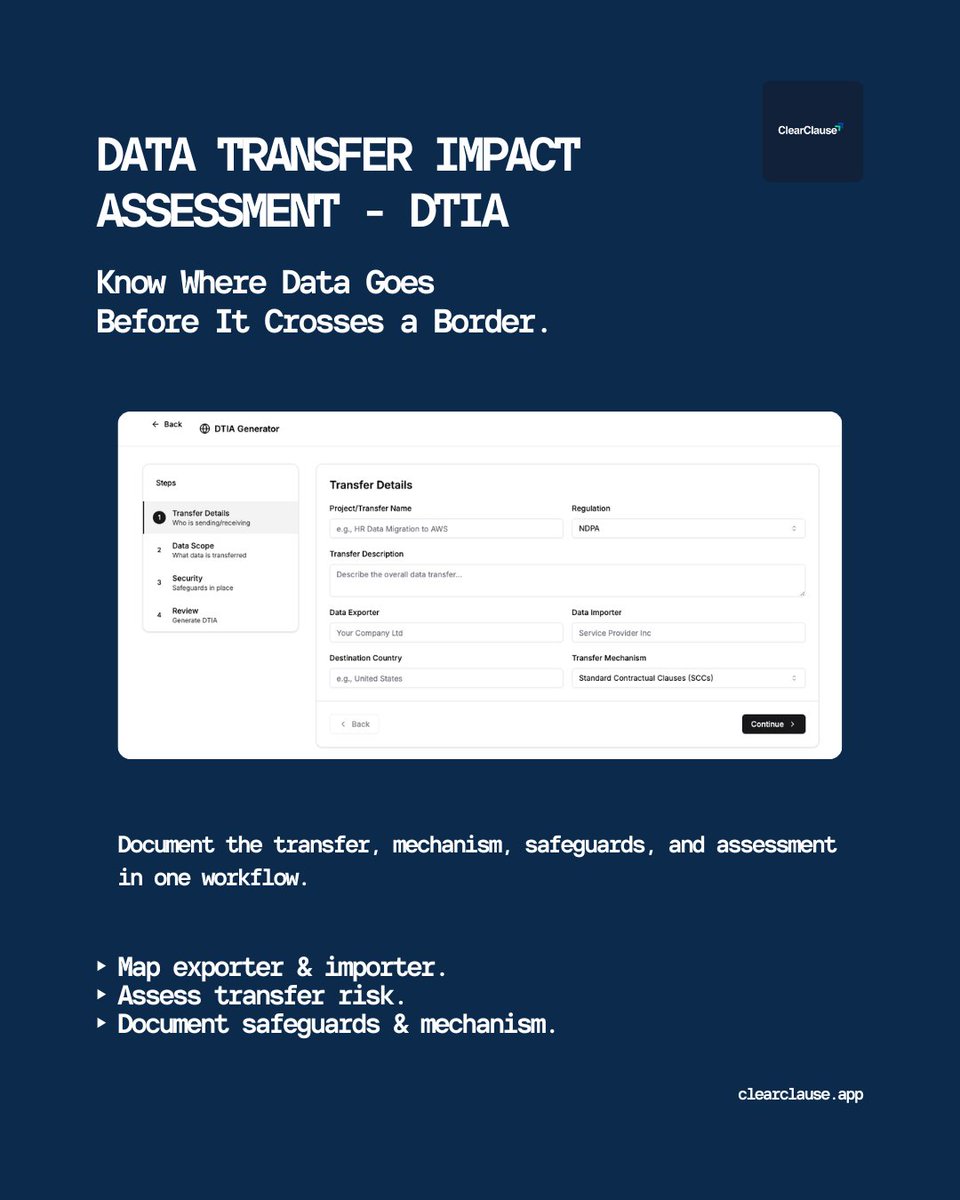
Do you know where your data goes? The destination is only part of the story. You also need the transfer mechanism, safeguards and evidence behind the decision.
ClearClause helps document it.
#CrossBorderData#DTIA#NDPA
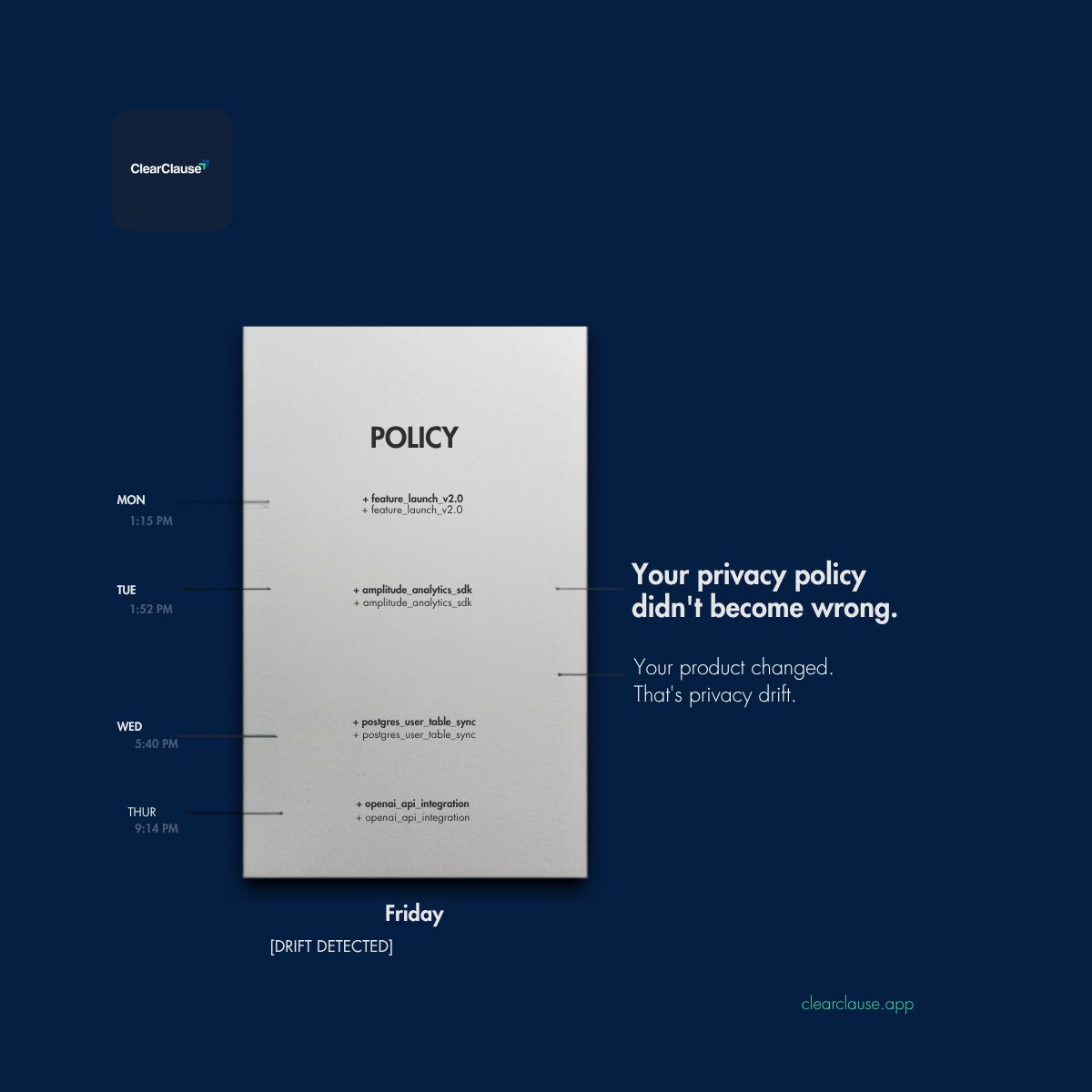
Your company has technical debt. It may also have privacy debt. New vendors, integrations, analytics tools and AI systems can quietly create new data flows and obligations. Privacy debt accumulates one small decision at a time.
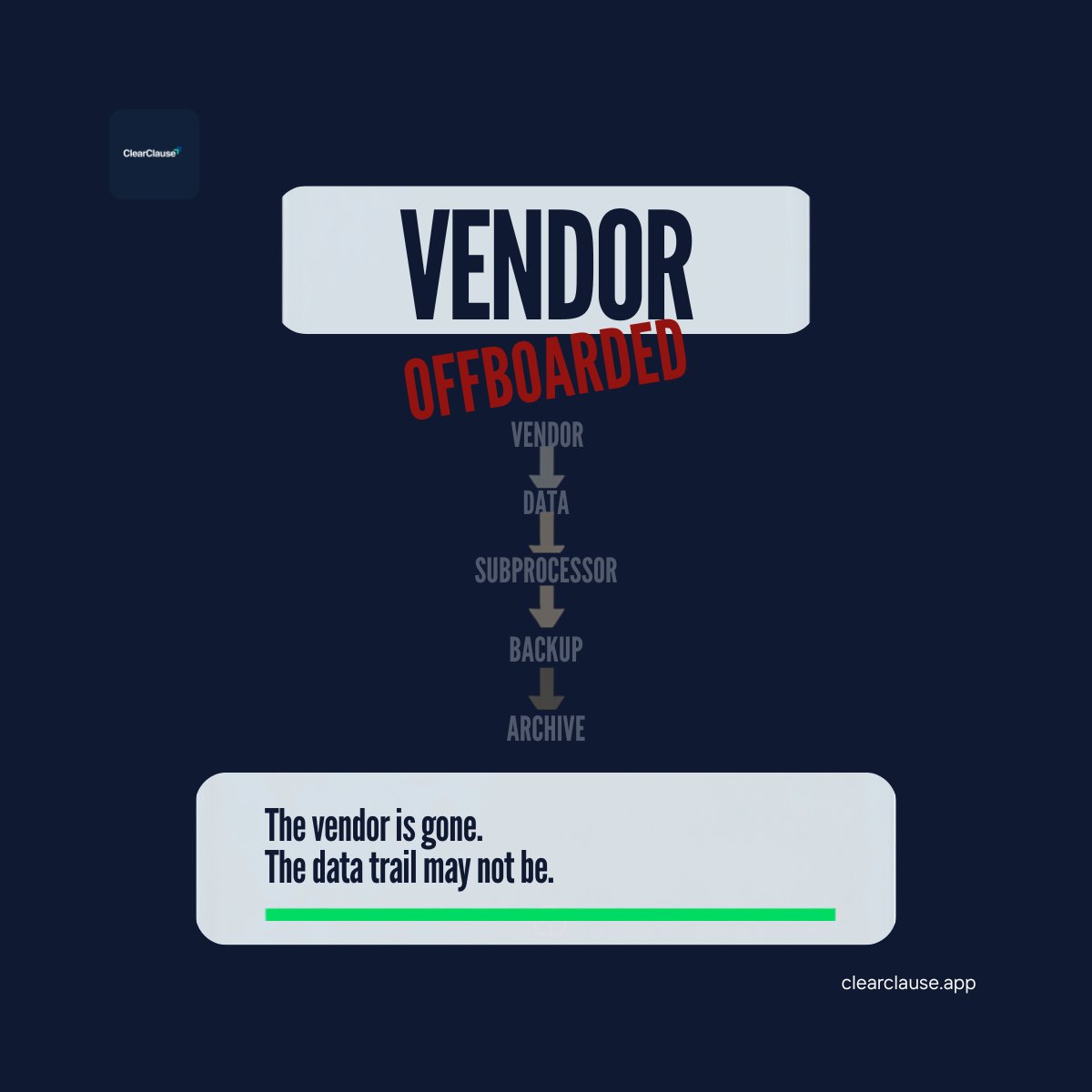
You cancelled the vendor. Did the data leave too?
Vendor offboarding can involve access, data return, deletion, subprocessors, credentials, backups and evidence.
The relationship may be over.
The data trail may not be.
#VendorRisk#Privacy#DataGovernance#ClearClause
If your primary system and backup share the same geographic risk, have you actually built resilience?
You can localise your data and still have a fragile disaster recovery strategy.
#DataLocalisation#FintechNigeria#ClearClause
Data localisation ≠ resilience. 🧵
NITDA's latest position takes a risk-based approach to digital sovereignty.
The CBN, meanwhile, requires payment transaction data generated in Nigeria to be stored & managed within Nigeria from Jan 1, 2027.
Here's the engineering question:
⬇️
A data breach isn't only a cybersecurity problem. If personal data is involved, you need to know what was affected, what obligations were triggered, what actions were taken, and what you can prove.
3 non-negotiables: Live data inventory. Breach response workflow. Audit trail.
You deleted the user, but did you delete their data?
Logs, backups, analytics tools, replicas and third-party systems can keep personal data alive long after the primary database record is gone. A Right to Erasure request is often an infrastructure problem, not a DELETE command.
The CBN says payment data stays in Nigeria by January 2027. But where do the backups go?
We wrote about the engineering tension between data localisation and disaster-recovery resilience, and why the harder question is architectural.
Read the breakdown:
https://t.co/1vvtUUkeuN
At the intersection of policy, innovation, and trust.
A look back at the NDPC Stakeholder Engagement session hosted with GIZ, DTC Nigeria, and NITDA to discuss data protection frameworks for the e-commerce ecosystem.
Our latest deep dive breaks down the technical and legal friction points:
‣ Data residency vs. sovereignty vs. localization
‣ Why NDPA and CBN mandates are clashing
‣ How data walls shield global financial crimeRead the full analysis here: https://t.co/SBRtU3BBvn
The CBN's Jan 2027 data localization deadline is reshaping African fintech architecture. But there is a massive unintended consequence. By forcing all payment data to remain inside national borders, we are accidentally building a wall that blinds global anti-fraud systems. 🧵👇