@PippaCrerar Or, they might wonder why all the other national parties have colluded to avoid contesting a national seat?
Voters can't punish other voters engaging in tactical voting. They can very easily punish political parties engaging in tactical standing.
I wish the uniparty good luck.
For anyone who still doesn’t get what people mean by “The Establishment”, this is it.
Just money, influence, titles, jobs, apologies, and the same old machine looking after itself.
Follow the money. Then tell me the system works.
David Sainsbury was one of the major financial backers of the SDP–Liberal Alliance in the 1980s, putting in hundreds of thousands of pounds.
The SDP collapses. He later returns to Labour and backs the New Labour project under Tony Blair.
By the late 1990s, he is one of Labour’s biggest individual donors.
October 1997 — Labour is in power. Sainsbury is made a life peer: Lord Sainsbury of Turville.
Not elected.
Not voted in by the public.
Put into the House of Lords.
1998 — He is given a government job as Science Minister.
A billionaire supermarket heir. A major Labour donor. Now sitting in government for eight years.
That is not a normal route into power for ordinary people, is it?
2005 — Labour is secretly borrowing millions from wealthy individuals. Sainsbury’s loan is £2 million.
2006 — He admits he failed to properly disclose that £2 million loan, despite previously saying he had. He apologises for “unintentionally” misleading the public.
July 2006 — He is questioned by police during the Cash for Honours inquiry.
November 2006 — He resigns as Science Minister, saying he wants to focus on business and charity.
No prison.
No political exile.
No great moral reckoning.
Just a quiet exit from the front line.
Then the money starts moving again.
2007 — Another £2 million to Labour, praising Gordon Brown’s leadership.
2008 — Another £500,000.
By that point, reports put his Labour donations at around £18.5 million.
From 2001 onwards, he also funds Progress, the Blairite pressure group inside Labour.
2014 — Labour-linked groups backed by Sainsbury are fined after impermissible donations linked to him while he was not on the UK electoral register.
Another problem.
Another fine.
Another quiet fix.
2016 — Millions more go into the EU referendum campaign, including Labour and Lib Dem Remain campaigns.
Corbyn years?
Funny how the big money suddenly loses interest.
2023 — Keir Starmer is heading towards power and Lord Sainsbury is back with a £2 million donation to Labour.
2024 — Electoral Commission records show another £2.5 million to Labour during the general election period.
2025 and 2026 — More money appears through Labour and Labour Together.
And in 2019, just to really hammer the point home, he gave the Liberal Democrats £8 million — one of the biggest political donations in British history.
This is not about one man.
This is about the shape of the system.
Money goes in.
A peerage comes out.
A government job follows.
Disclosure problems become apologies.
Fines become footnotes.
The money keeps flowing to whichever bit of the establishment is most useful at the time.
And everyone stands there with a straight face saying: “Well, it was all within the rules.”
That’s the point.
Nobody needs to break the rules when the rules were built around people like this in the first place.
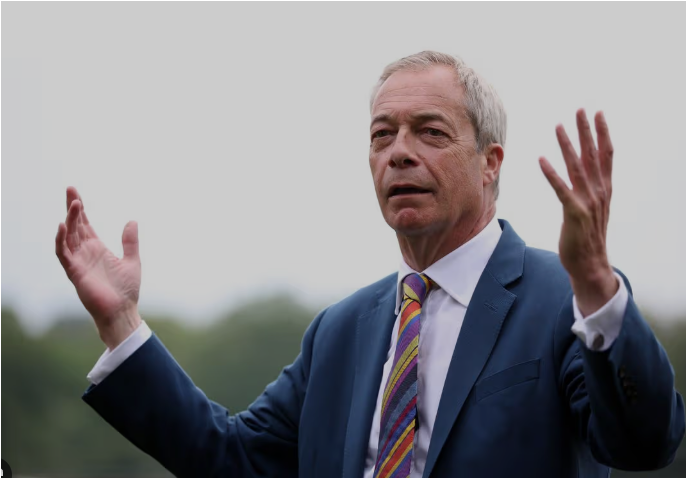
So spare me the lectures about corruption from people who only discover standards when Nigel Farage is involved.
If this was happening on the other side, the same people would be screaming about democracy being bought.
But when it happens inside their own comfortable little club, suddenly it’s all perfectly legitimate.
Legal does not mean clean.
Declared does not mean decent.
And establishment politics does not stop stinking just because the paperwork was eventually filed.
You literally have to spell it out for the lefties...............
@oldladybrain@MaryBowdenMD The onions don’t look dark enough to have been cooked with liver to me so I don’t think that’s what it is but I do agree L&O is a heavenly dish.
There is a scene in @HBO's Chernobyl that most viewers miss. A scientist presents evidence of the disaster to a Belarusian party official. The official dismisses her expertise, then boasts that he used to run a shoe factory.
It is not central to the plot, but it explains everything. The Soviet Union was governed by a snowball of incompetence - decades of nepotism where ministries were handed to people with no relevant knowledge, provided they had the right party connections. Pedigree was political, not professional.
I grew up there. My parents were subject matter experts who spent their careers battling apparatchiks enforcing decisions they did not understand. That is why I flinch when I hear the same logic here in Britain.
@UKLabour politicians celebrate the "right background" - the poorer, the more deprived, the better. Council house to government, presented as triumph. Progress and resilience deserve recognition. But in these jubilations, merit vanishes. And celebrating ascent without competence is not progress. It is the embryo of disaster.
Look at the Labour Party's front bench. Britain's central challenge is wealth creation - economic growth. Yet these are former charity workers, public sector lifers, people who have always been on the receiving end of funds rather than generating them. They have never had to create value others willingly pay for. So they look to regulators for growth ideas. It is farcical. It is only possible in a culture where navigating party structures replaces proven ability.
A friend told me recently his wife had to close her coffee shop - high traffic, real revenue, still unprofitable due to taxes and business rates. In his frustration he said something raw: he no longer cares if folks running the government are toolmakers' sons or landed gentry. He wants competence. He found himself saying he would rather be ruled by Old Etonians.
Not because Eton College guarantees talent. It does not. But sheer competence - knowing your subject - has become so scarce in British governance that the impulse is understandable.
We are not the Soviet Union. We are nowhere near collapse. But on the left of our politics, the distance is shrinking faster than we admit.
The asset-rich middle is the designated payer, as usual.
Not the top, who have trusts, BPR, agricultural relief, and lifetime gifting advice.
Not the bottom, who have nothing to tax.
The squeeze is - true to form - on the band roughly £500k to £2m of estate, which is now a terraced house in Wandsworth plus a DC pot.
Threshold frozen at £325k since 2009. Houses doubled. That’s the tax rise. No vote, no debate, no despatch box. Inflation does the work.
IHT take: £2.7bn then, £8.5bn now, £14bn by 2030. Share of estates paying: 2.7% to nearly 10%. Not because Britain got richer. Because the number stayed still.
Pensions in scope from April 2027 sits on top. Threshold was calibrated for a world where pensions were outside the estate. Removing the exemption without uprating is a double tightening. Hence the £34k average extra bill.
Same trick everywhere. Income tax bands frozen. Personal allowance taper. Dividend allowance gutted. Savings allowance. £40bn a year by 2028 per the IFS. Zero rate changes.
Closing a loophole is just the cover story. The policy is a stealth wealth tax on the asset-rich middle, collected by inflation.��
Expect more of these taxes as the state continues to spend spend spend.
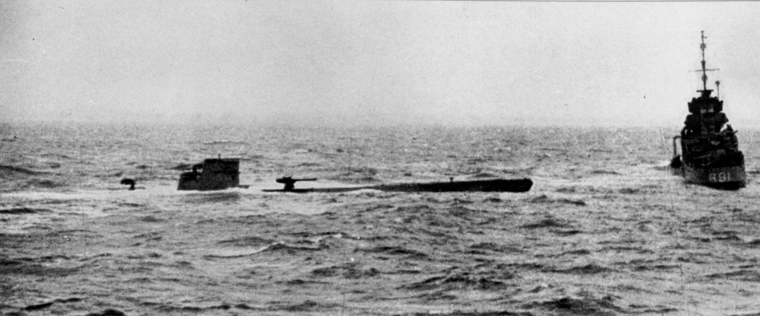
85 years ago today, May 9, 1941, a 20-year-old British sub-lieutenant named David Balme rowed across the freezing North Atlantic, climbed down the ladder of a captured Nazi U-boat, and stepped into a scene out of a ghost story.
The lights were still on. Meals sat half-eaten on the tables. And bolted to a desk, still wired up and ready to encrypt the next signal to Berlin, was an Enigma machine.
The submarine was U-110. Her commander, Fritz-Julius Lemp, was the same officer who on the first day of the war had torpedoed the civilian liner SS Athenia, killing 117 passengers, children among them. He died in the water that morning beside the boat he had just abandoned, convinced his scuttling charges would send her to the bottom before the British could climb aboard. They didn't go off.
HMS Bulldog hooked the U-boat under tow, then deliberately let her sink the next day so Berlin would never know she had been boarded. The surviving German crew was shipped to a camp in Iceland and kept incommunicado for the rest of the war. The British sailors who saw it happen were sworn to silence. The Americans weren't told. Most of the Royal Navy wasn't told.
The Enigma machine, the codebooks, and the bigram tables for the Offizier cipher were rushed under guard to Bletchley Park, where Alan Turing's hut was waiting for exactly this. Within weeks they were reading the Atlantic U-boat traffic in near real time.
King George VI personally pinned the Distinguished Service Cross on Balme and called the boarding "perhaps the most thrilling episode of the war at sea."
The official British intelligence history estimates the codebreaking that followed shortened the Second World War by roughly two years and saved untold millions of lives. Churchill called the codebreakers "the geese that laid the golden eggs and never cackled."
The entire operation, codenamed Primrose, stayed classified for 30 years.
In 2000, Hollywood released U-571, a film in which Americans capture the Enigma machine. Prime Minister Tony Blair called it "an affront to the memory of the British sailors who lost their lives in this action."
The truth is that the course of the war turned, in part, on a 20-year-old going down a ladder alone, into a still-warm submarine, on a Friday morning in the middle of the ocean.
“But the public have realised we do not need to prioritise economic immigrants posing as asylum seekers over women’s safety.
We do not need to prostrate ourselves at the feet of shouty activists, whether Greta Thunberg or pro-Gaza mobs.
We do not need to nod solemnly when the perpetually offended take exception to something in our culture.
We do not need to indulge outrageous demands for reparations from foreign countries.
Nor fold in the face of international courts advising us to give away our own sovereign territory.
We do not need to prize other concerns over our own interests – whether blind adherence to a rigid framework of international law that most serious geopolitical observers agree has become outdated, or an amorphous notion of our ‘international reputation’.
Put simply, we can put Britain first, and we do not need to feel any embarrassment about doing so.”
In recent months I've helped train a hundred or so Reform members, most of whom hoped to become councillors. The vast majority never planned to enter politics. It was something other people did.
They were from all walks of life. Former teachers and police officers. People who'd served as soldiers, nurses, civil servants. One man - a builder - felt out of his depth. But, persuaded by those around him, he went on to give a brilliant and humbling account of what had propelled him to stand for Reform. Why he could do no other.
The groups were mixed in terms of class and race and religion, to a degree that I think would astonish many of the Party's critics.
They were united in a belief that the country they were born in, or had moved to, was not the same country they would die in. It had mutated in their lifetimes in a way that rendered it unrecognisable and, many of them felt, ungovernable in the future.
They were not bigots or opportunists or charlatans. They are the best of Britain. Thoughtful patriots. Conscientious citizens. Mothers and fathers who fear for the society their children will inherit. Screwing up their courage, they had taken a leap of faith. Decided to do something they feel might shape our future. Help us all avert catastrophe.
Simply moaning on Facebook or X or at the bar was no longer an option for them.
These are the people who will go into this weekend with a new sense of purpose, as part of our island story of democracy. As newly-elected Reform councillors. I pray they can stay the course and give thanks that people like them - all over Britain - have chosen to stand up and be counted.
#Reform
Almost everything this PM says now requires a community note.
The electricity price cap is not coming down because the government has managed to produce electricity more cheaply. It’s still the most expensive in the world — and forecast to become even more expensive.
The cap is reduced because the government has taken £117-worth of largely green subsidies from fuel your bills and put them on to general taxation. You’re still paying for them — just in a different way.
And as your taxes go up to meet these green levies the cap is still £73 higher than when Labour came to power. So your energy bills are not coming down — though Labour promised they would — and the overall tax burden is at a record high.
There PM. Sorted it for you.