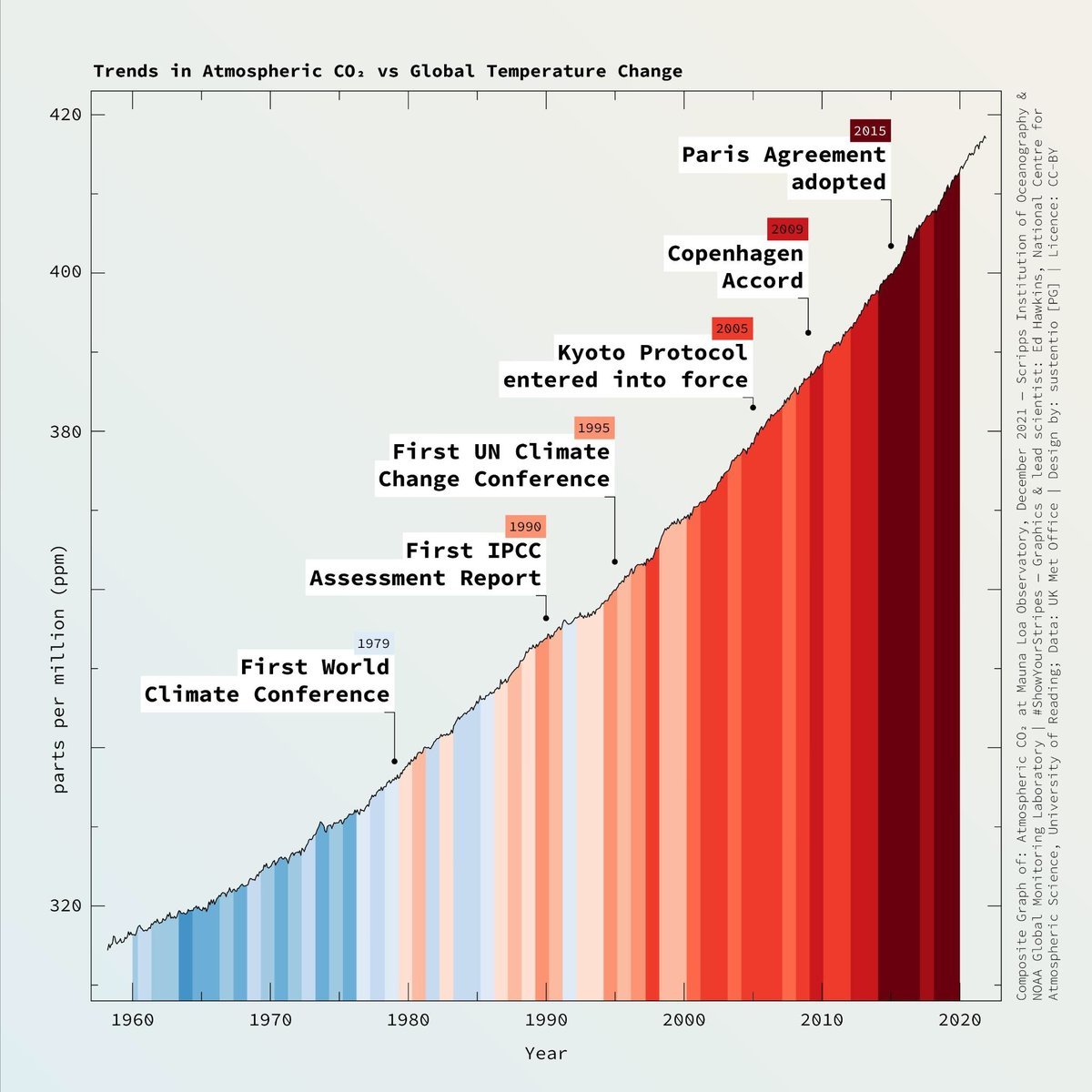
The world is warming and the land is warming faster than the oceans and the arctic is warming fastest of all. This shows distribution of 11 years of annual temps compared to 1961-1990 ave. Inspired to make by @anttilip who you should follow.
#dataviz#globalwarming#climatchange
The rate of global change in nature during the past 50 years is unprecedented in human history.
The @IPBES#GlobalAssessment found #pollution to be one of the top five direct drivers of change in nature with the largest global impacts.
https://t.co/ggaUrsg8Ds
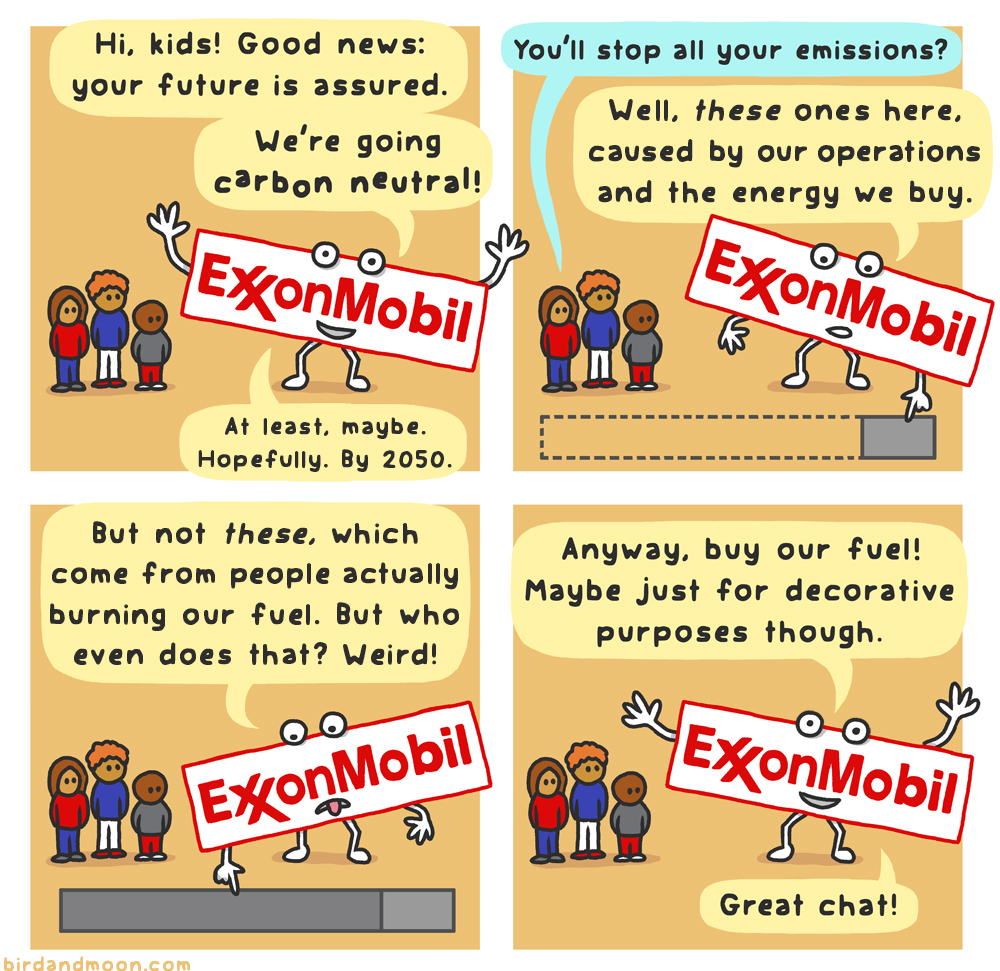
Today, ExxonMobil announced that they're going carbon neutral. Here's what it means.
For more on fossil fuel greenwashing, see Green et al. 2021 (https://t.co/NQ3N9Rqnbk). Thanks @paashamahdavi and @leahstokes!
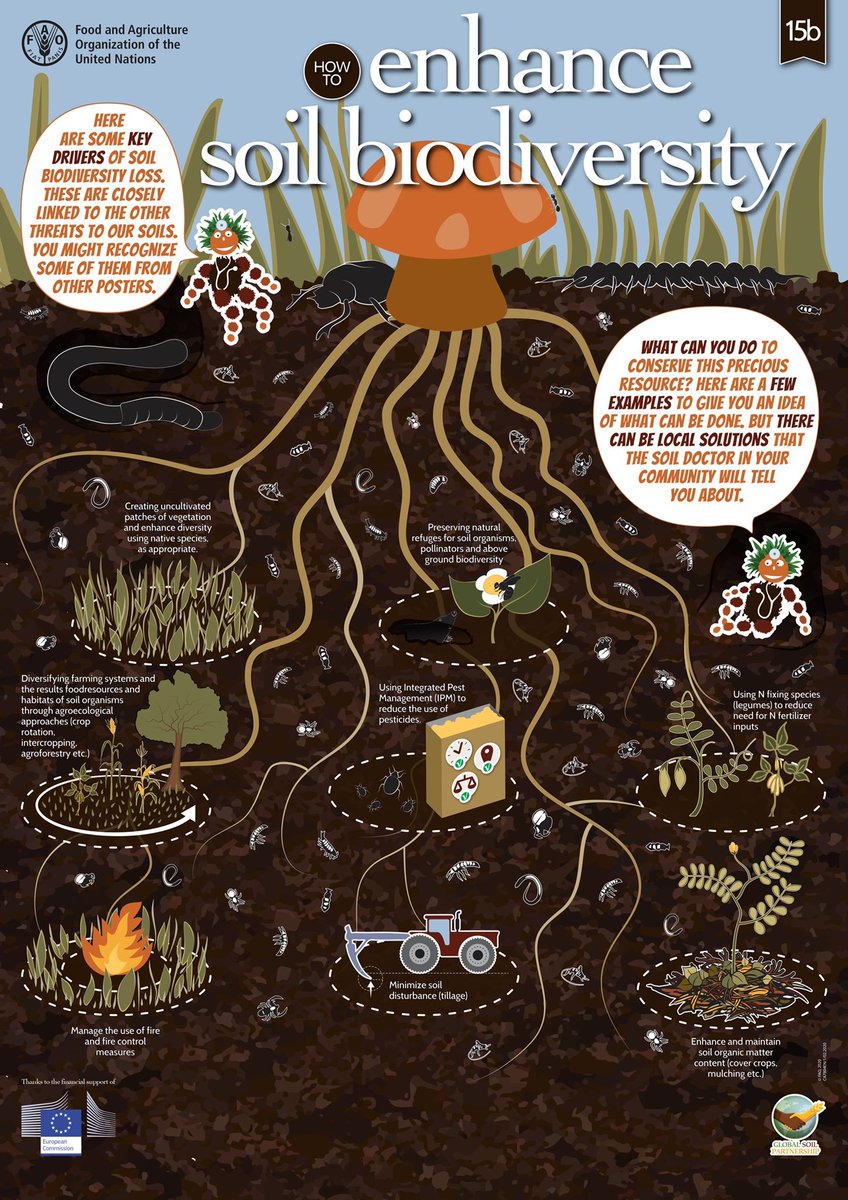
Soil biodiversity reflects the variability among living organisms including a myriad of organisms not visible with the naked eye, such as micro-organisms, meso-fauna and the more familiar macro-fauna.
How can we conserve this precious resource?💭🐛
📷@FAO & @EU_Commission
Yasuhara & Deutsch, Paleobiology provides glimpses of future ocean: Fossil records from tropical oceans predict biodiversity loss in a warmer world. @ScienceMagazine Our view on the future ocean from the Time Machine Biology perspective. https://t.co/Tq6wXHrkdT
Ocean heat content is our best measure of the impact of human activity on the climate; >90% of all heat trapped by greenhouse gases is absorbed by the oceans.
In 2021, we saw the warmest ocean heat content since records began, >400 billion trillion joules higher than the 1940s.
'@IPBES#GlobalAssessment concluded that #nature is deteriorating at a rate and scale unprecedented in human history
1 million species of plants & animals out of a total of ~8.1 million species are at risk of extinction'
—Anne Larigauderie Exec Secretary of @IPBES 🌿📗
We know humans have caused #climatechange, but how do we know?
Here's @FrediOtto, one of #IPCC scientists explaining this in the second episode of our series, #ClimateChange explained...
#ClimateReport ➡️ https://t.co/uU8bb4zYt9
Every tonne of carbon dioxide we add to the atmosphere adds to #GlobalWarming. To stabilize #GlobalWarming we need emissions to reach #NetZero.
So, what does #NetZero mean?
#IPCC scientist @joeri_rogelj explains…
Nearly every glacier on Earth ice loss is speeding up
Between 2000 and 2019, glaciers collectively lost average of 293.7 billion tons of mass per year
Since 2000, overall rate of glacier mass loss accelerating, increasing by 52.8 billion tons per year https://t.co/x38EaA1v0Z
🚨 How does the legacy of colonialism and global economics impact reconstructions of past biodiversity & what do we need to do to improve these patterns? 🌍⛏️
Check out our new paper to find out! 🧵 (1/7)
🔗: https://t.co/FGohZdNPFI - open access for a time or DM for a copy!
The world in the 2030s will be a very different place if we take no action now on #ClimateChange... 🌡️🔥⛈️⚡️
Learn more about what could be expected with this video from🎥@WEF@WEFUpLink
Please, please share this piece widely. It has the potential to reach deep into the mainstream and raise public urgency on climate breakdown. It is already "most shared" across the Guardian. Push this moment
https://t.co/zTHNPKxxEe
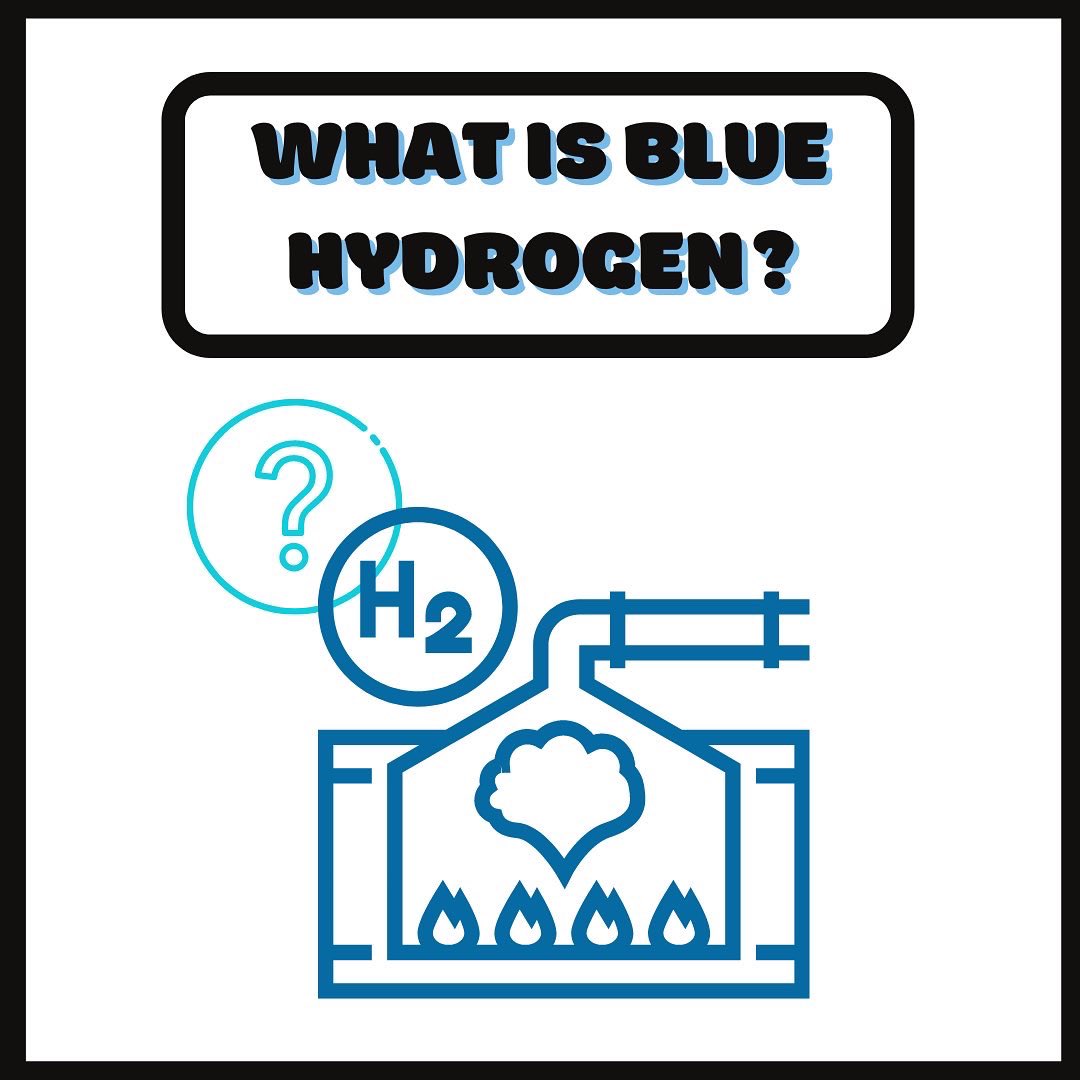
A mini informative tweet for our enthusiastic environmentalists.
If you have more information about “blue hydrogen” that you’d like to share, please reply below and we will retweet it! :)