This past week, on a test bed in Britain, a Rolls-Royce jet engine ran at full take-off power on pure hydrogen, putting out water vapour instead of carbon.
Nobody on Earth had managed it before. It is the sort of thing that ought to stop the country in its tracks, and it will be forgotten by the weekend.
Leave aside the recent paroxysms of renewed net-zero insanity from Derelict Ed and the pervasive atmosphere of offended envy that greets much homegrown achievement nowadays in Britain. This engineering is a wonder, and it's British to the bone.
We gave the world the jet engine in the first place - Frank Whittle, a Coventry man and an RAF officer, patented it in 1930 while the Air Ministry assured him it was a curiosity. Rolls-Royce is today one of perhaps three firms anywhere that can build a large aero engine at the outer edge of the possible, and it has just done what most of the industry swore was twenty years away.
As usual, you marvel at how little the people who govern us had to do with it. The engineers in Derby are world-class; the stewardship above them is third-rate. They pulled off a global first while paying the most expensive industrial electricity in the developed world to keep the power on over the bench - a weight no German, American or Gulf rival has to carry. We produce frontier brilliance on the shop floor and fritter it away at the despatch box, and we have done for two generations.
That is the maddening shape of modern Britain: brilliance from below, sub- (or, indeed, ultra-) mediocrity from above. The people here who actually make things are still among the best in the world; the state that is meant to back them treats a firm like Rolls-Royce as a photocall today and a takeover target tomorrow, and prices its energy as though it would prefer the next plant were built in Texas.
Progress starts from the other end. Give these people what every rival government gives its champions and we beg ours to do without: the cheap, abundant power their competitors already enjoy, a supply chain built around them, and a state that guards a national asset rather than auctioning it. The hard part of a British revival - the talent, the nerve, the engineering - is already done, and was done again this week, by people who deserve a far better country than the one currently sitting above them.
We just taught an engine to breathe fire and exhale water. The least we owe the men and women who managed it is a government and a state as brilliant as they are.
A farmer dies in April 2026.
His son inherits the farm. The farm has been in the family since 1847.
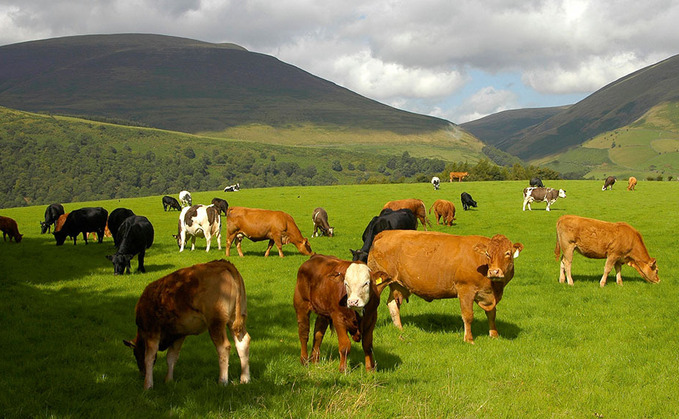
The farm consists of: 300 acres of grazing pasture, a farmhouse built in 1892, a barn, a milking parlour, two tractors of varying ages, a Land Rover that runs about 70% of the time, and a herd of 180 Hereford-cross cattle.
On paper, the farm is worth approximately £3.2 million. This is because land near him has been bought recently by a London hedge fund looking for carbon credits, which has dragged the comparable value of every field within forty miles upward to a number nobody local can justify.
In cash, the farm produces a profit of about £28,000 a year in a good year. In a bad year it loses money. The son also works as a fencing contractor three days a week to keep the operation viable.
The inheritance tax bill on a £3.2 million estate, even at the reduced 20% rate, comes to approximately £140,000 after the increased threshold is applied. The son does not have £140,000. The son has never had £140,000. The son has £4,200 in his current account and an overdraft.
The son sells 60 acres to a developer to pay the tax. The developer puts solar panels on the 60 acres. The remaining herd cannot be sustained on the reduced land. The herd is sold. The barn becomes a holiday let.
A different family eats Brazilian beef this Christmas without knowing why the price went up.
The Treasury collects £140,000.
The land never produces British food again.
Listen when they tell you. “Everyone in the country will have a digital ID”
Even if you don’t want one! “This isn’t a heavy handed approach but we will make sure everyone has one”
Oh 🤡
How’s everyone getting to Istanbul then. We’re looking at going direct. Booked our flights now as they are cheap and the hotels. 2nd legs a formality now Villa are cooked. Their legs have gone. #nffc
On Friday night, we got a bizarre legal threat from Shabana Mahmood's special advisor: if we didn't agree to pull our planned story by 9pm, we would face a high court injunction.
I suspect he thought he could bully @brumdispatch because it's a local publication. He was wrong!