@chainlink has been bragging about institutions from the early days. But perhaps after institutions explore different solutions, they will drop Chainlink. They had an early advantage of having a huge amount of capital from retail to bribe institutions, but they still failed
$114 trillion in U.S. securities sit in DTC custody.
$40 billion in real-world assets are tokenized today.
That’s about 0.04%. Closing that gap is one of the biggest opportunities in finance, and it just became much more real.
RedStone has joined the DTC Digital Assets Solutions Industry Working Group (IWG), convened by The Depository Trust & Clearing Corporation (@The_DTCC).
On October 28, DTC’s Tokenization Service went live. Russell 1000 stocks, major index ETFs and U.S. Treasuries can now be tokenized inside a regulated framework. More than 150 firms are in the IWG shaping what comes next, and we’re glad to add our perspective.
What we’ve learned getting here: tokenization alone doesn’t create value. Usage does.
More than $30B in tokenized assets sit idle today. Without a trusted price, a token can’t be used as collateral. Without a risk assessment, lenders won’t touch it. And without a way to exit, treasurers won’t hold it.
When the data is there, capital moves. After Credora rated Spark’s USDT Savings vault, it grew from $307M to $1.39B in three months.
That’s the layer we’ve been building. In the IWG we’ll share what we’ve learned about pricing data, risk and backstop liquidity across chains.
RedStone is now part of the conversation about how U.S. capital markets move onchain.
0.04% is where it starts. We're here to enable utility for all of it onchain.
Three NVIDIA shocks in two weeks. All of them hit outside market hours.
With Nasdaq closed, onchain markets were the only place to trade the stock.
Credora followed seven NVIDIA token stock through each one. The six with a weekend market priced it up to 6.3% apart 🧵
In 2024, one of Wall Street's largest banks paid $249M after its block desk tipped investors about clients' upcoming share sales.
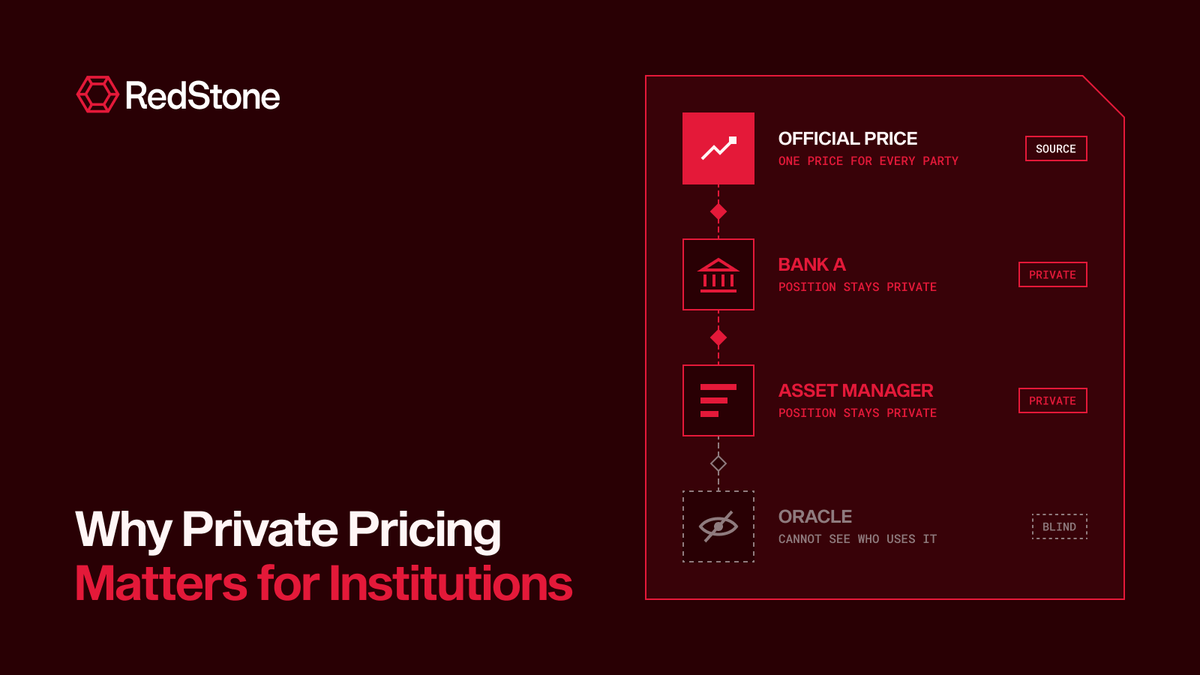
Onchain, the leak can come from the oracle. A push feed sees who reads which price, and when.
CAPS on @CantonNetwork is built to close that gap:
$23.6B of Bitcoin sits onchain inside seven custodial wrappers.
We rated all seven. Probability of Default (PD) runs from 0.080% to 5.319%.
Check the ratings 🧵
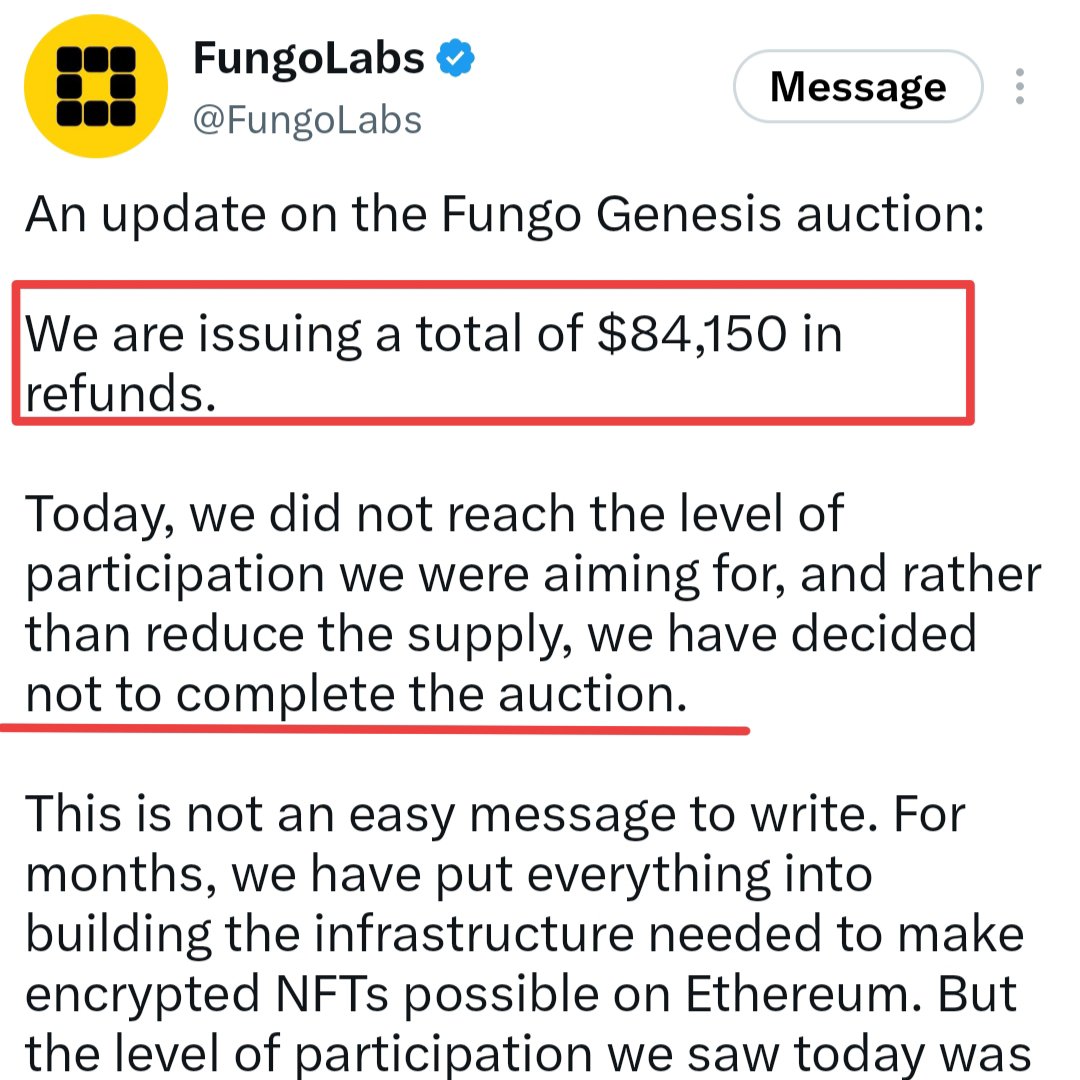
⚠️ Update on @FungoLabs mint
❌Auction cancelled due to less participation
💸They will refund all the funds collected via bids
🏃They would have taken money & completed mint, good they choose to refund
🤔Wt do u think?did they do correct?
💙Like
🔁RT
The RWA market has an instant liquidity problem.
And now we have the numbers.
Over the last 12 months, $37.4B of tokenized RWAs was redeemed through standard issuer queues. Only $4.06B was redeemed instantly.
We measured 444 redemption routes across 169 tokenized assets, straight from contract state and settlement events:
-> $1 redeemed instantly for every $9.22 waiting in a standard queue.
-> Median standard redemption takes 1.38 days. One in five routes takes 10+ days. The slowest took 126 days.
-> Instant redemption capacity onchain today is about $205M, against $39.3B of transferable RWAs.
-> 87% of instant redemptions are funded by issuers and partners parking idle cash on their own desks.
Demand is accelerating. Instant redemptions went from 7 to 8 cents per $1 of standard in February and March to 22 to 24 cents in August and September.
@StellarOrg is the clearest case. $2.25B was redeemed there in the past year across 9,023 accounts, with zero instant redemptions. That was the core of my Meridian keynote last week.
No curator lists an RWA without a credible liquidity path, and no lender commits real capital without one.
That is why we published The DeFi Distribution Playbook for RWA Issuers today: a step by step guide, with indicative costs, to making tokenized assets DeFi-ready.
It is also why we built RedStone Settle. The holder gets USDC in one atomic transaction, while the fund keeps its normal redemption cycle.
Tokenization solved issuance. Settlement and distribution decide whether an asset scales.
The RWA decade is here. Read the playbook below.
We wouldn't have gotten this far over these 6 years without the partners who put their trust in our team and infrastructure.
Here’s the whole journey and what's next:
Hot take: evening side events are mid for networking. Three drinks in, nobody remembers your name.
A morning run filters the room for you.
@redstone_defi x @CredoraNetwork at Meridian, Lisbon last week.
Only real chads made it. Real photo. Thank you 🫡
RedStone turns 6 this year.
I’ve been here for 4.5 of those 6 years. I joined in 2022 as the first non-technical hire, back when we had no clients, no revenue, and my main job was explaining what an oracle even does to people who’d never heard of us.
Zero mispricing, 100% uptime, $15B secured at peak, across 110+ chains. A $7M seed round, a $15M Series A, a token listing on Binance and Coinbase. A business team that grew from just me into 9 people on BD alone, with the company now at more than 50 people.
We built through every cycle DeFi has had: DeFi Summer, the LST boom, yield-bearing stablecoins, BTCfi. Today we’re the primary oracle for BlackRock’s BUIDL, Apollo’s ACRED, Hamilton Lane’s SCOPE, VanEck VBILL and many other tier 1 funds.
This year alone we launched RedStone Settle and partnered with New York Life on its HYB fund, significantly expanded on Canton after becoming its first production oracle and soon we’ll introduce CAPS that will allow brings fully licensed, high-quality market data onchain without exposing positions, haircuts or wallet activity, approved by Canton development fund.
Also, we significantly expanded our operations on Stellar and got ISO 27001 certified. Institutions build on infrastructure that has stayed reliable long enough to earn their trust.
The next 6 years look like a turbocharged version of the past. Tokenization is projected to bring $16T+ onchain by 2030 (BCG), and all of that capital will need the settlement, pricing and risk infrastructure we’ve spent six years building.
Thank you to @kuba_eth and @MarcinRedStone for building something worth staying this long for, and to the whole team. This milestone belongs to all of you as much as it does to RedStone.
Here is a little throwback to early 2023:
RedStone turned 6 today. Most of the projects that started in 2020 are gone.
We’re still here because this team kept showing up through bear markets and quiet years, and kept taking the bets nobody else would.
Today we run data infrastructure for BlackRock’s BUIDL and price perps on AI companies that haven’t even IPO’d yet.
I’ve had a front-row seat for one of those six years, and the first six were the foundation. 10 to 100 is loading.🚀
The Liquid Network exploit was an interesting one. The origin, a range-proof caching bug in Elements (Liquid's node software), sat outside a pure credit risk assessment.
Yet the aftermath did not, since it directly impacted the asset's backing: ~4,000 unbacked L-BTC redeemed for real BTC, which a supply-to-reserve check and mint/redeem circuit breakers would have flagged. Both actively scored by Credora.
Many exploit triggers we see in DeFi sit outside credit risk. Their fallout on an asset's credit health though is what our methodologies solve for. The core concern in DeFi risk assessment.
Real-world verified ratings. Know your September risk.