@BrianFeroldi the part that trips people up is converting without tracking. money moves into the brokerage, spreads across 2 or 3 accounts, and the picture gets blurry. hard to improve what you can't see clearly
@brewmarkets worth watching what this does to consumer discretionary. MCD, SBUX, airlines. when gas hits $4.50, spending patterns shift and it shows up in earnings before most people see it coming.
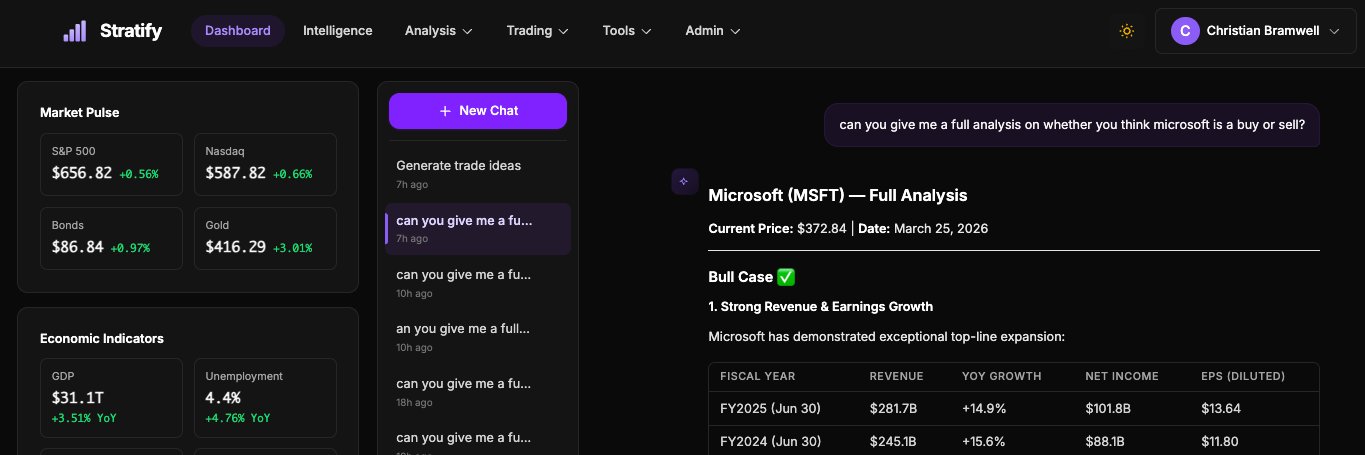
How most people I know actually invest in 2026:
Robinhood for the stock picks. A Schwab or Fidelity IRA they opened years ago. A 401(k) from work they barely look at. Maybe SoFi or Coinbase for crypto. Twitter and Reddit for research. Google for everything else.
Five tabs. Three apps. Zero unified view of what they actually own or what's happening to it.
When NVDA drops 5% you check Robinhood. Then you scroll FinTwit. Then you Google. By the time you piece it together, the move is over and you still aren't sure if it matters to your full portfolio.
That's the gap I'm trying to close.
@StockMKTNewz@fiscal_ai ARM is in nearly every chip that runs your phone, your tablet, your AI device. that revenue growth is the clearest signal we have that AI hardware demand is still running hot.
@MorningBrew most retail investors have no idea if they captured any of this. accounts scattered, no clean P&L view. the market ripped. your number might be totally different.
this one sticks because most retail investors genuinely can't act on it. Fidelity IRA here, Robinhood there, old 401k sitting somewhere. you think you're diversified, but if you've never seen your total exposure in one place, you don't actually know. visibility first. then ruin avoidance.
@StockMKTNewz this chart is the case for actually opening the holdings tab on your etfs once a quarter. people own both qqq and arkk and don't realize how much overlap they're paying twice for.
@BrianFeroldi agree but with a footnote. the advantage shows up only if you can actually see what you own across all your accounts. otherwise you have a fund manager's freedom and a beginner's view.
@MorningBrew this is funny because it's also working. when 8 of the top 10 names in $SOXX are up 80%+ ytd, 'pick any' is statistically about as good as picking the right one.
@awealthofcs the ones that worry me are the names retail couldn't have named six months ago. those vertical charts get retold as 'i was early' until they aren't.
@StockMKTNewz The move that matters is letting users pick. Bundled AI means you get whatever the platform thinks is good. User-pickable means you get whichever model actually answers your question.
@BrianFeroldi For retail investors learning this stuff, the practical question is usually which of these shows up in 10-Ks most. That's the one worth committing to memory first.
@TheCompoundNews Wild stat. The part that doesn't show up in the headline is how many people held through the 2018 and 2020 drawdowns to actually get that average. Survivorship in your own portfolio is the hard part.
@BrianFeroldi Yep. The catch is most people can't even tell you what they actually hold across all their accounts. Patience compounds, but only on stuff you can still see.
Strongly agree @MikeLongTerm, HSBC’s note feels light on the homework. Claiming Intel has a better supply chain than TSMC while ignoring AMD’s confirmed 30-40% slice of N2 capacity (Venice + MI455x) is a head-scratcher. Apple’s iPhone 18 outlook is basically flat, so the bulk of TSMC’s aggressive 2nm ramp (multiple new fabs scaling to 60k+ WPM) is AMD’s to capture.
The CPU:GPU mix shift you flagged is the real 2026 catalyst most models still miss. Data center already >50% of revenue and hyperscalers keep showing zero signs of TSMC issues. Earnings tomorrow should start closing the gap.