RWANDA 🇷🇼🇸🇬 SINGAPORE
Earlier today, Inspector General of Police CG Namuhoranye, RIB Secretary General Col (Rtd) Pacifique Kayigamba Kabanda, and Rwanda’s High Commissioner to Singapore Innocent Muhizi met Singapore Police Force Chief How Kwang Hwee at Police Headquarters. Talks focused on stronger cooperation, digital policing, and emerging crime threats. The delegation will also attend the three-day Milipol TechX Summit on public safety innovation. #FactsOnRwanda
Dear @wasac_rwanda, I am not sure if you supported Livingstone but we have not had water in Nyarugunga-Nonko for awhile now. Is there a plan to resupply the area?
Arieh Smith (aka Xiaoma), a polyglot, was invited to give a speech at a high school for Language Week, and he delivered the entire speech in Gen Alpha slang.
“They killed everybody. My mother, my brother, my two sisters, my uncles, my cousin. Everybody got killed except me, my two sisters, who (were) in Italy, & one brother who stayed in Rwanda,” Godlieve Mukankuranga, mom of prep star Nate Ament, to @andscape https://t.co/c06J3DMteW
The way you guys twist things is incredible!! But we are here to call out your nonsense!!
1) Of course, you conveniently omitted the last part of her message about killing the cockroaches (the Tutsi). Right?
2) What RPF did was TO STOP THE GENOCIDE AGAINST TUTSIS that your kind had planned and was executing.
3) RPF didn’t assassinate anyone.. especially INNOCENT people…. But for the sake of argument SHOW US THE PROOF! Where is the list of Hutus that was targeted? Where is the carefully plan to exterminate Hutus?? Where are the newspapers articles that RPF used to spread hate against Hutus? Where are the pictures, videos of any RPF using a machete to kill a Hutu?
4) And YES we will commemorate the GENOCIDE AGAINST Tutsis NOT Genocide against the Hutus! WHY?? Because No Hutu was targeted because of how they were born! NONE!
STOP 🛑 Twisting history.
IT WILL NEVER NEVER HAPPEN AGAIN! We will not sit and be quiet as you turn victims into perpetrators and perpetrators into victim!
#Youarenotthevictims
Je regrette la rupture des relations diplomatiques entre le Rwanda et la Belgique, tout en comprenant pleinement la position rwandaise.
ENGLISH BELOW
Le ministre belge des Affaires étrangères, Maxime Prévot, qualifie sur X cette décision de "disproportionnée". Pourtant, depuis plusieurs semaines, persuadé d’être au centre du jeu diplomatique, il mène au nom du gouvernement belge une campagne agressive pour influencer la position de l’Union européenne et des organisations internationales dans un sens ouvertement hostile au Rwanda. Jamais la Belgique n’avait adopté une posture aussi offensive sur aucun dossier depuis 1994.
Comme je l’ai expliqué dans La Libre (24/02/25) https://t.co/e38GQepVL7 la Belgique aurait dû se tenir à l’écart des conflits régionaux et maintenir une stricte neutralité.
Hélas, comme je le redoutais, le gouvernement belge a réveillé au Rwanda des blessures historiques qui s’étaient apaisées depuis les excuses officielles du Premier ministre Guy Verhofstadt en 2000. Faut-il rappeler :
- Que les Belges n’ont pas seulement introduit la mention ethnique sur les cartes d’identité : ils ont créé ces catégories racialisées, instrumentalisant des divisions artificielles et instaurant une politique de discrimination systématique qui a empoisonné les relations entre Rwandais durant des décennies ;
- Que le revirement brutal de la politique belge en 1959 a provoqué une première "purification ethnique" des Tutsis, causant des milliers de morts et l’exode de dizaines de milliers d’entre eux vers les pays voisins — une mémoire toujours vive, car de nombreux Rwandais adultes aujourd’hui ont personnellement vécu cet exil et la dure réalité des camps de réfugiés ;
- Qu’en 1994, la Belgique disposait de signes avant-coureurs du génocide des Tutsis et n’a rien fait pour l’emp��cher, ni même pour alerter sur son imminence ;
- Que le gouvernement belge de l’époque a mené une campagne acharnée pour obtenir le retrait total de la MINUAR, supprimant ainsi le dernier rempart contre les génocidaires ;
- Que certains partis belges ont maintenu des liens avec le gouvernement génocidaire, y compris après le génocide, et ont continué à entretenir une lecture biaisée et révisionniste des événements.
Que le gouvernement actuel ignore ou feigne d’ignorer ces faits est non seulement incompréhensible, mais profondément irresponsable.
De plus, le Parlement belge a voté à l’unanimité une résolution d’une agressivité inouïe à l’égard du Rwanda, appelant à suspendre tous les accords économiques et l’aide, et affirmant que le Rwanda représente une "menace pour la stabilité régionale". Ce texte reflète une méconnaissance criante de la situation sur le terrain — au Kivu, où j’étais encore il y a trois jours — et dans toute la région. Il contient également des affirmations factuellement erronées et inutilement hostiles.
Le gouvernement et le Parlement belges pensent-ils pouvoir insulter, menacer et contraindre sans provoquer de réponse ?
J’espère sincèrement que cette crise diplomatique n’altérera pas les liens d’amitié profonds qui unissent de nombreux Belges et Rwandais, dont beaucoup sont également citoyens belges.
Alain DESTEXHE
Sénateur honoraire belge
Initiateur et secrétaire de la Commission d'enquête du sénat belge sur le Rwanda (1997)
--------------------------------------------------------
ENGLISH
I regret the breakdown of diplomatic relations between Rwanda and Belgium, while fully understanding the Rwandan position.
Belgian Foreign Minister Maxime Prévot called this decision "disproportionate". Yet, for several weeks, convinced that he is at the center of the diplomatic game, he has been leading an aggressive campaign on behalf of the Belgian government to influence the position of the European Union and international organizations in a direction that is openly hostile to Rwanda. Never before had Belgium adopted such an offensive stance on any issue since 1994.
As I explained in La Libre (24/02/25), Belgium should have stayed out of regional conflicts and maintained strict neutrality.
Alas, as I feared, the Belgian government has reopened historical wounds in Rwanda that had partially healed since Prime Minister Guy Verhofstadt's official apology in 2000. Should we remind them:
- That the Belgians not only introduced ethnic classification on identity cards but actually created these racialized categories, instrumentalizing artificial divisions and establishing a system of systematic discrimination that poisoned relations between Rwandans for decades;
- That Belgium’s abrupt policy shift in 1959 triggered the first "ethnic cleansing" of the Tutsis, causing thousands of deaths and forcing tens of thousands into exile in neighboring countries—a still vivid memory, as many adult Rwandans today personally experienced this exile and the harsh reality of refugee camps;
- That in 1994, Belgium had early warning signs of the Tutsi genocide and did nothing to prevent it, nor even to alert the international community to its imminence;
- That the Belgian government of the time campaigned fiercely for the complete withdrawal of UNAMIR, thereby removing the last barrier against the génocidaires;
- That certain Belgian political parties maintained ties with the genocidal government, even after the genocide, and continued to promote a biased and revisionist interpretation of events.
That the current government ignores or pretends to ignore these facts is not only incomprehensible but profoundly irresponsible.
Furthermore, the Belgian Parliament unanimously passed on 23 February a resolution of unprecedented hostility toward Rwanda, calling for the suspension of all economic agreements and aid, and asserting that Rwanda represents a "threat to regional stability." This text reflects a glaring lack of understanding of the situation on the ground — in Kivu, where I was just three days ago — and throughout the region. It also contains factually incorrect and unnecessarily hostile claims.
Does the Belgian government and Parliament believe they can insult, threaten, and pressure without provoking a response?
I sincerely hope that this diplomatic crisis will not damage the deep bonds of friendship that unite many Belgians and Rwandans, including those who are also Belgian citizens.
Alain DESTEXHE
Honorary Belgian Senator
Initiator and Secretary of the Belgian Senate Inquiry Commission on Rwanda (1997)
@prevotmaxime @DavidClarinval @FranckenTheo @GLBouchez @UrugwiroVillage @onduhungirehe @YolandeMakolo @BelgiumMFA @MonarchieBe @Bart_DeWever @MR_officiel @vooruit_nu @de_NVA
Agreed. His comments reflect a deep seated fear that Rwanda can show the rest of Africa that is possible to find solutions to its problems at home and significantly reduce the need to depend on Europe for answers/solutions.
You've over invested in your Anti Rwanda campaign. It's NO secret the likes of you don't want to see orderly peaceful progressive African country. Your forefathers partioned Africa in some cases drawing straight lines using a ruler to demarcate boundaries. They even divided the people based on looks and played one against the other. Oh please give Rwanda a break. Rwanda owes you nothing . Let Rwanda be.
Don't pretend you love Congo , you love their minerals hence all the white mercenaries who were smoked out of Kivu. They are lucky they left in one piece. They should have served a jail term.
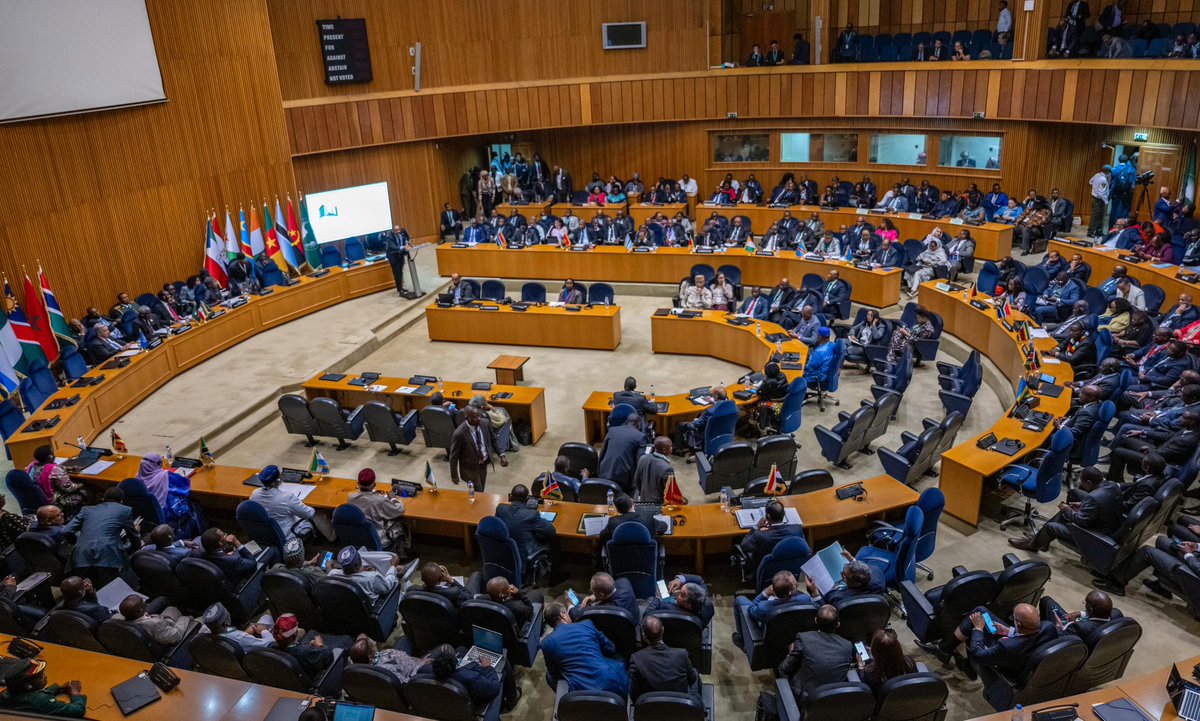
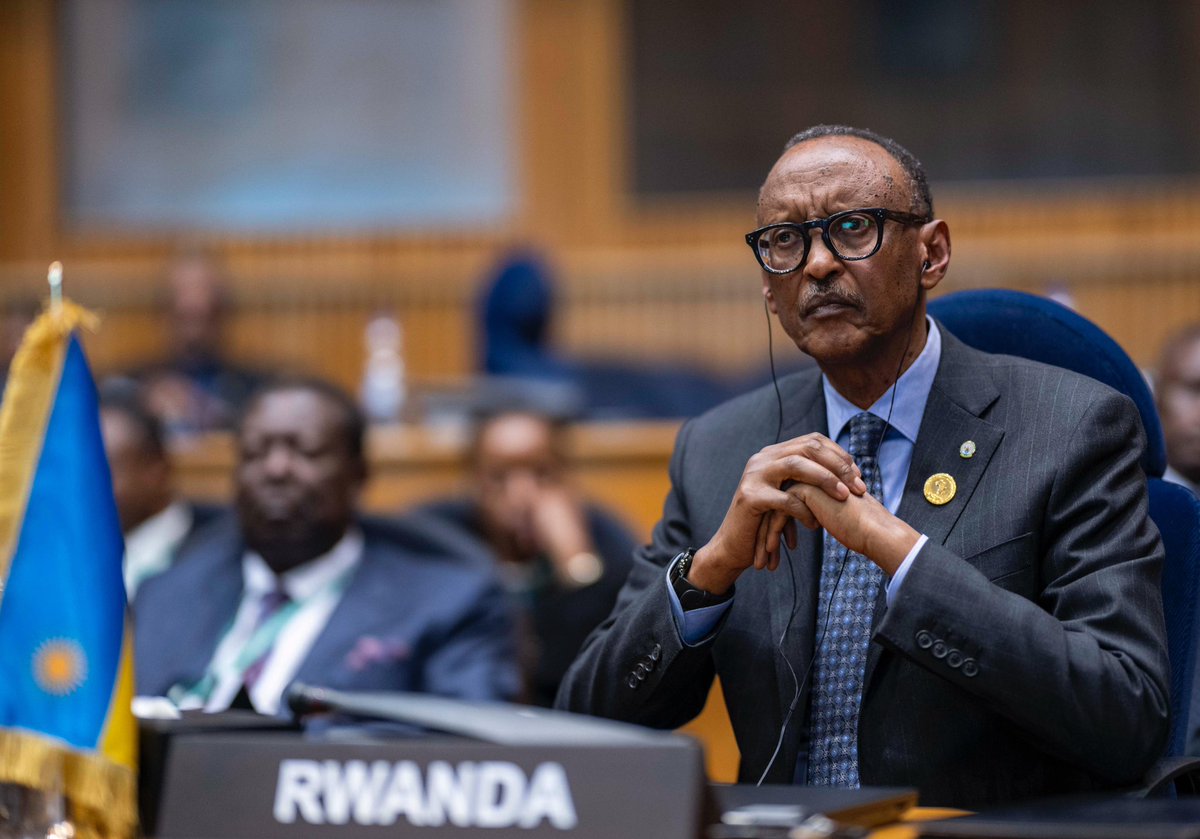
“If the blame game, nice speeches, lies, being shameless, were the solution to this problem, it would have ended long ago. We wouldn’t have this problem. We have people who tell lies without any reason.
How can FDLR not exist in the minds of some people? Or why is it something that is supposed to be trivialized? When you trivialize that; you trivialize my history and I am not going to accept it. It doesn’t matter who you are.
I am not seeking any favor from anybody in this room to be given permission for me to live or for my people to live? Absolutely not. I will live by the fact that it is my right. Just that.
So, when I am listening to some people saying these things; when does Congo take responsibility for its own mess? How does Congo think all their problems come from outside, and therefore they outsource solutions for their problems? Rwanda has nothing to do with Congo’s problems. We have our own problems to deal with. Congo is too big for Rwanda to carry on its back.
As I told you, we are a small country, we are a poor country, but when it comes to the right to live, don’t you be mistaken. I am not begging, I will not beg anyone.” President Kagame | AU Peace and Security Council Meeting on the security situation in Eastern DRC.
“Between dealing with existential threats and dealing with threats to punish Rwanda, without second thought, I will turn my guns to the existential threat.
We are not dealing with a situation that is new to us, we have faced existential threats for years. We had the worst tragedy in 94. You really come to me and start threatening sanctions because I am defending myself? You think I have any iota of fear for that?”- President Kagame
Read the full interview here:
https://t.co/xPJbF5bjXX