The KISS trial brings good news as it somewhat corroborates what interventional practice has shown in recent years. In the distant past, residual lesions in the side branch (SB) were treated obsessively — including by myself —, often unnecessarily, with stent implantation.
Although these findings shed light on the contemporary approach to bifurcation lesions, a personalized decision based on anatomy and other clinical factors remains essential. Thank you for sharing @sbrugaletta
Bu hakemlere rağmen 1-0 öndeyiz. Ne yaptığınızı, planlarınızı, içinizdeki kötülüğü görüyoruz. Bu düzen böyle gitmeyecek. Buradayız, susmayacağız! Sonunda yine iyiler kazanacak!
The natural history of patients with medically managed CCS is not as benign as we think. Our analysis of reconstructed individual patient's data from 29 trials and 53,000 pts shows AMI rates of 12.5% at 5 years and 8.6% mortality rate.
Outcomes will be much worse in non RCT real-world populations where risk factor control less optimal and multimorbidity more prevalent.
work led by @Nicholaswschew and team
➡️ https://t.co/m30sllCBz5
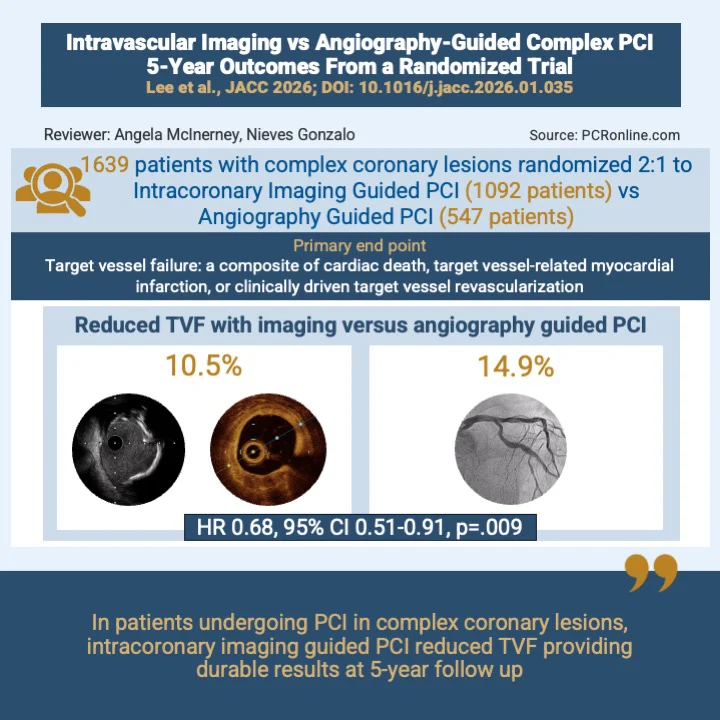
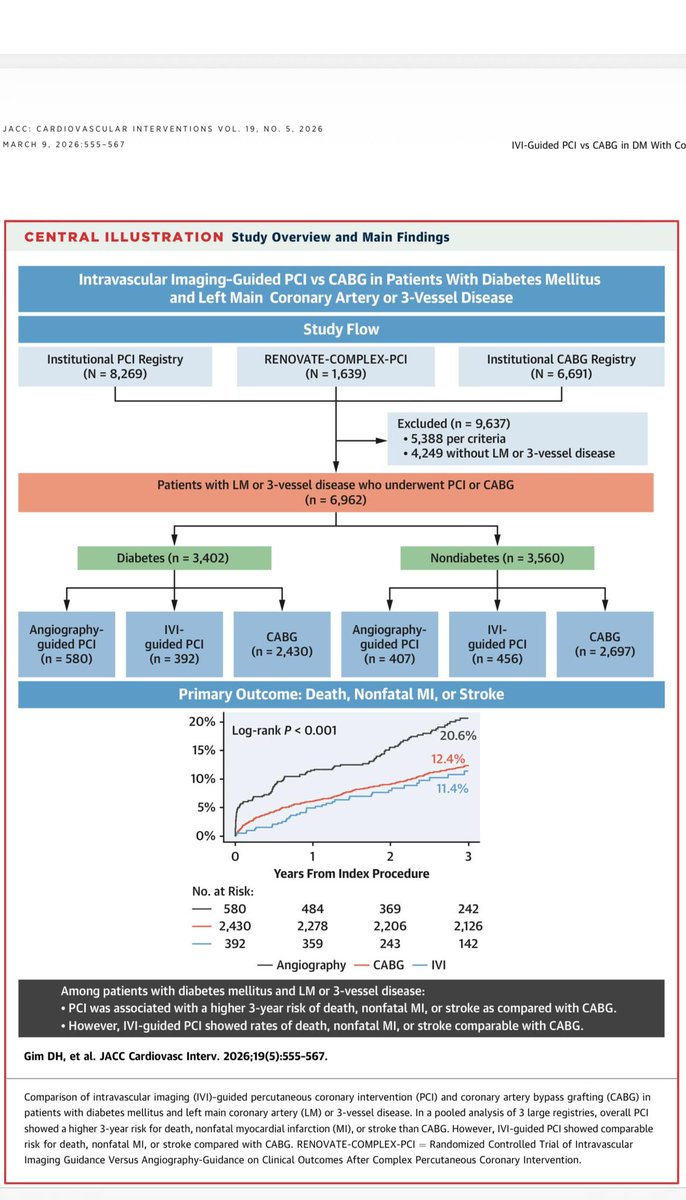
Journal Club: Intravascular imaging vs angiography guided complex PCI
The RENOVATE-COMPLEX-PCI 5-year outcomes confirm the long-term durability of benefits seen with intracoronary imaging over angiography guided PCI in complex lesions.
Selected in @JACCJournals & reviewed ✍️ by @McInerneyAngela
#interventionalcardiology #imagefirst
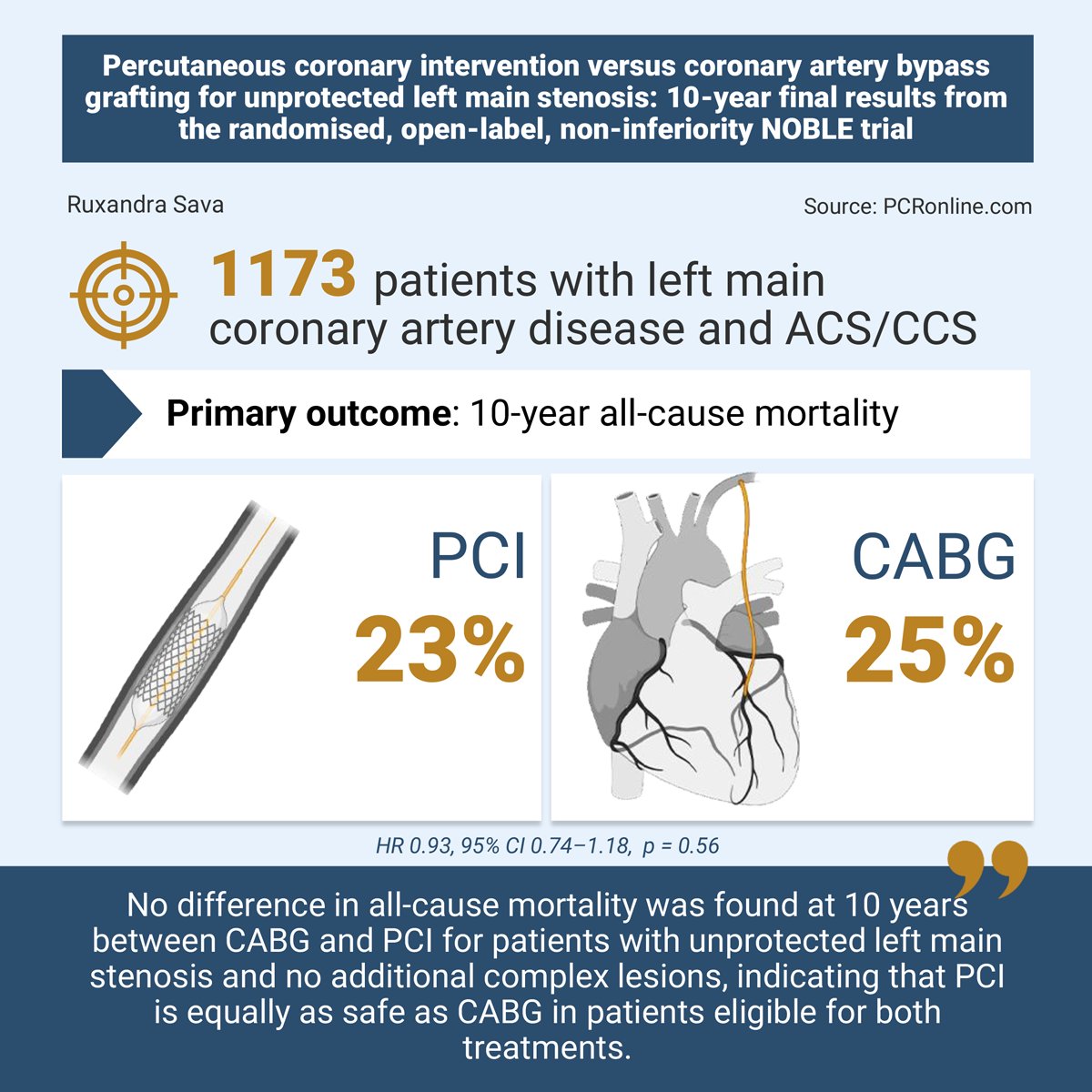
New Journal Club review: NOBLE 10-year outcomes of PCI vs CABG in left main disease
🔗https://t.co/BVu92fFLuv
Long-term evidence comparing PCI and CABG for unprotected left main coronary disease has been limited and sometimes conflicting. The 10-year results from the NOBLE trial now provide important clarity on all-cause mortality outcomes with both revascularisation strategies.
Read this review by @RuxSava
#interventionalcardiology #clinicaltrial #MedX
Koeckerling et al. just dropped in @JACCJournals: a reconstructed-IPD meta-analysis of all 5 RCTs comparing PCI vs CABG for left main disease (LE MANS, SYNTAX, PRECOMBAT, EXCEL, NOBLE). 4,499 patients pooled. The headline: 10-year all-cause mortality is virtually identical — 23.4% vs 23.3%, HR 1.02 (0.89–1.17), RMST difference of exactly 0.0 years.
This is genuinely good news. For patients with left main disease and low-to-intermediate anatomic complexity who are eligible for both strategies, we can now tell them with reasonable confidence: your chances of being alive at 10 years are the same regardless of which path you choose.
The methodology deserves praise. The team used reconstructed time-to-event IPD (via the IPDfromKM algorithm) with 98.7% fidelity, pooled in a 1-stage Cox model with γ-frailty for trial, verified proportional hazards (Schoenfeld P=0.59), ran RMST as a complementary analysis, and confirmed everything with conventional fixed/random effects meta-analysis. Every approach converges to the same number. That's reassuring.
But as with any meta-analysis, the fine print matters. A few observations:
𝗧𝗵𝗲 𝗘𝗫𝗖𝗘𝗟 𝗾𝘂𝗲𝘀𝘁𝗶𝗼𝗻
EXCEL is the largest trial (n=1905, 23% of the weight) and the only one with contemporary 2nd-gen DES (everolimus). It's also the only trial censored at 5 years — no 10-year follow-up, none planned. And it was the only trial showing a statistically significant excess in all-cause mortality with PCI at 5 years (13.0% vs 9.9%, difference 3.1 pp).
@GreggWStone et al. themselves wrote in NEJM 2019: "at this time point the hazard curves were continuing to diverge. Ten-year follow-up is needed."
Administrative censoring at 5 years is statistically valid — it doesn't bias the HR within the observed window. But it removes the possibility of detecting whether the divergence continued or reversed. The other 4 trials that DO have 10-year data all used 1st-gen DES or BMS. So the question "what happens to everolimus-eluting stents in left main at 10 years?" remains genuinely unanswered.
𝗥𝗲𝗰𝗼𝗻𝘀𝘁𝗿𝘂𝗰𝘁𝗲𝗱 𝗜𝗣𝗗 ≠ 𝘁𝗿𝘂𝗲 𝗜𝗣𝗗
The reconstruction method is validated and reliable for time-to-event data. But it cannot recover individual covariates. This means the meta-analysis cannot test treatment-by-subgroup interactions for diabetes, acute coronary syndromes, or SYNTAX score at 10 years. The Sabatine et al. IPD meta-analysis (Lancet 2021) found no interaction at 5 years — but extrapolating that to 10 years is an assumption, not a finding.
This matters because the NOBLE 10-year paper (Holck et al., Lancet 2026) found a significant interaction between ACS presentation and mortality (HR 0.57 favoring PCI in ACS, p_interaction=0.049). If confirmed, this would have major practical implications. But it couldn't be tested in the pooled analysis.
𝗠𝗼𝗿𝘁𝗮𝗹𝗶𝘁𝘆 𝗲𝗾𝘂𝗮𝗹 ≠ 𝗼𝘂𝘁𝗰𝗼𝗺𝗲𝘀 𝗲𝗾𝘂𝗮𝗹
The meta-analysis only reports mortality. No MI, no stroke, no repeat revascularization. This is a deliberate and defensible choice (mortality is the hardest endpoint, immune to ascertainment bias). But it leaves the conversation incomplete.
As an exercise, I pooled the 3 trials that report non-mortality endpoints at their longest available follow-up (LE MANS 10yr, PRECOMBAT 10yr, EXCEL 5yr — ~2,610 patients). Exploratory, not definitive, but informative:
→ Repeat revascularization: RR 1.66 (1.36–2.03). Significantly and consistently higher with PCI. No surprise — but the magnitude matters for shared decision-making.
→ Total MI: RR 1.12 (0.87–1.46). Apparently neutral. But EXCEL shows why this is misleading: periprocedural MI favored PCI (RR ~0.66) while spontaneous MI favored CABG (RR ~1.92). They cancel out in the composite. Classic Simpson's-adjacent phenomenon — the total hides a divergence that matters clinically.
→ Spontaneous MI (EXCEL-driven): RR 1.64 (1.14–2.38), P=0.008. This is the trade-off the patient needs to hear. CABG appears to protect better against late spontaneous infarction — plausibly because grafts bypass vulnerable proximal plaques that stents don't address.
Caveat: SYNTAX and NOBLE didn't collect these endpoints between 5–10 years, so this analysis is incomplete. It's a conversation starter, not a conclusion.
𝗛𝗼𝘄 𝗱𝗼𝗲𝘀 𝗢𝗣𝗧𝗜𝗠����𝗟 𝗳𝗶𝘁 𝗶𝗻?
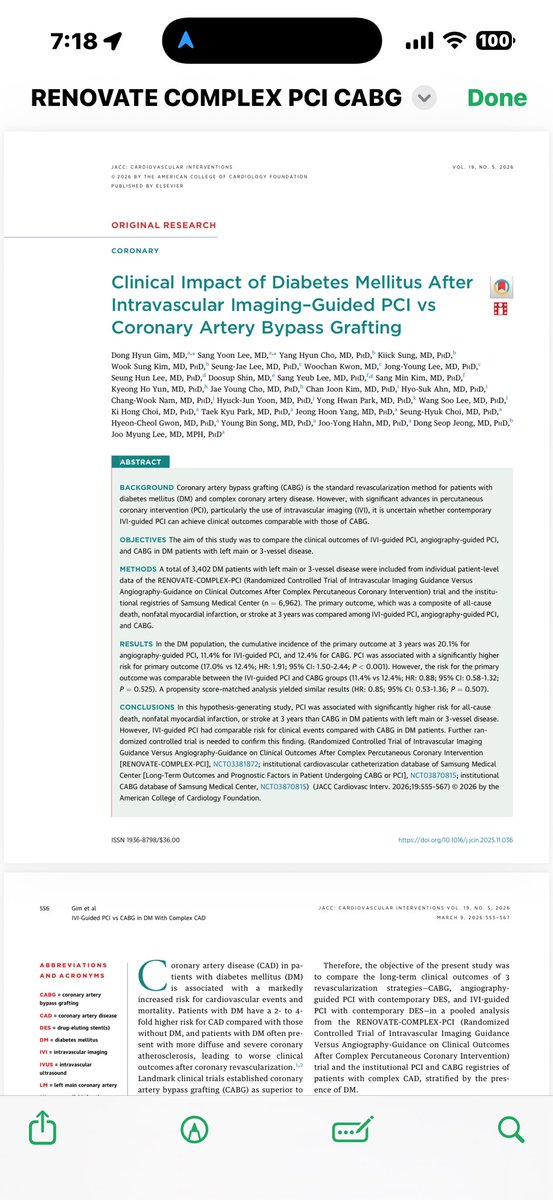
The OPTIMAL trial (Testa et al., NEJM 2026) just showed that IVUS-guided PCI adds no benefit over angiography-guided PCI in left main (HR 1.11, 0.87–1.42). This seems to contradict the NOBLE IVUS substudy (20% vs 31% mortality with/without final IVUS).
But there's no contradiction. The NOBLE observation was confounded by indication. OPTIMAL randomized the comparison and found that in expert hands — operators who already internalize IVUS-derived optimization criteria — the imaging itself doesn't add incremental value. The control arm had 96% post-dilation rates and 85% POT. That's not "angiography-naïve" PCI — it's PCI done by people who think with IVUS even when they don't use it.
This actually reinforces the Koeckerling findings: PCI in the included trials, even without mandated imaging, achieved equivalent mortality to CABG. If even IVUS doesn't move the needle in expert centers, then the mortality equivalence reported in the meta-analysis is likely robust and not contingent on a hypothetical "better PCI."
𝗧𝗮𝗸𝗲-𝗮𝘄𝗮𝘆
My thoughts:
1. PCI and CABG offer the same probability of being alive at 10 years in patients with left main disease and SYNTAX ≤32. This is established.
2. But equal survival is not the same as equal outcomes. PCI means ~66% more repeat revascularization and likely more spontaneous MI. CABG means more periprocedural stroke and a harder early recovery.
3. The choice isn't about which is "better." It's about which set of trade-offs aligns with the patient sitting in front of you — their anatomy, their comorbidities, their values, their fear of surgery vs. their tolerance for reintervention.
Equal mortality is the foundation. The rest is shared decision-making. Again, kudos to the authors. This is beautiful work!
#CardiologyX #InterventionalCardiology #LeftMain
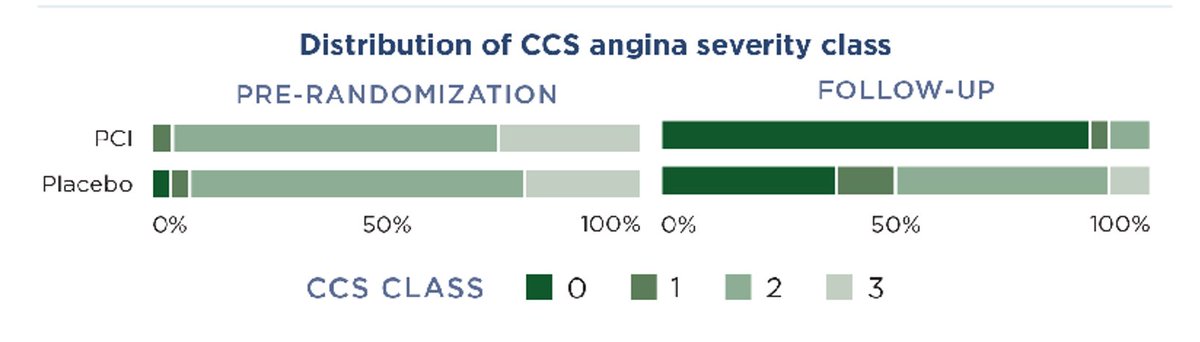
For the ORBITA-CTO trial, I will just say 3 things
1-We are NOT CRAZY after all! #CTO#PCI works, and we know it does.
2- For those who never did CTO PCI or even know where to begin to do it, and kept attacking every case shared by different operators, saying angina relief was all a "Placebo" effect.
I have a 3-word sentence for you, but I will keep it to myself 😀
3-This enormous effect size with an OR of 4.38 was shown in
A- single vessel CTO (not multivessel disease that will need complete revascularization)
B- Only 50 patients
C- J-CTO 3 or less, not even the most complex ones, who are miserable.
Real-life impact of a successful CTO PCI would be way higher than that!
Congratulations everyone! We win, patients win.
#CardioX
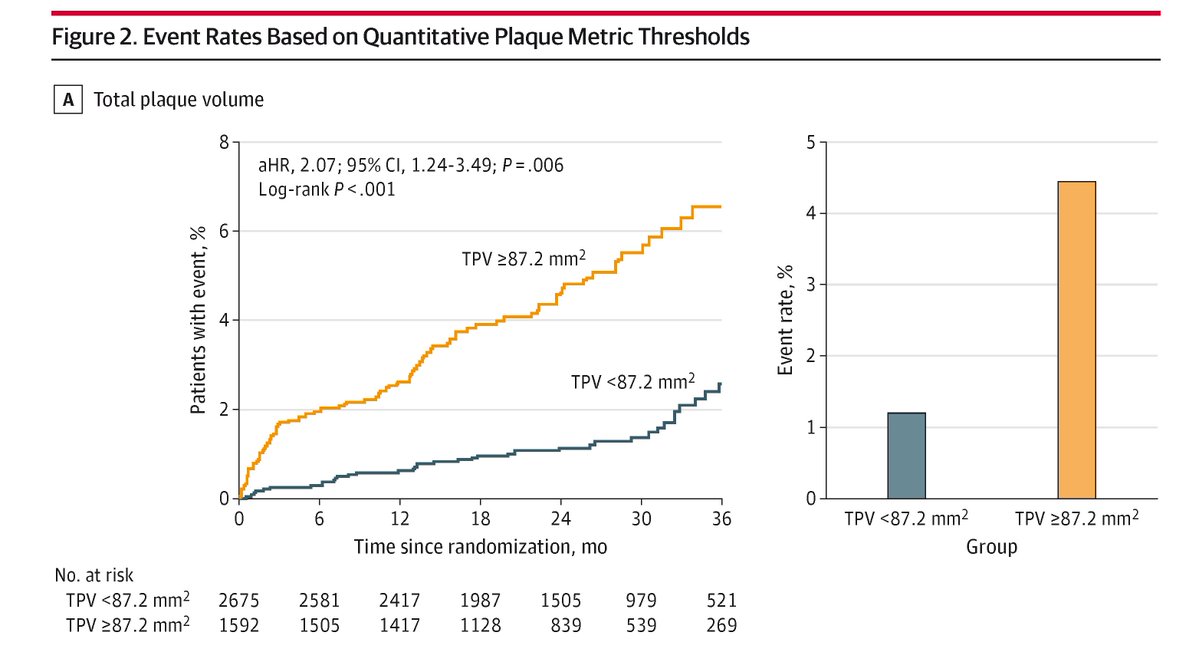
In symptomatic patients without known coronary disease, #CCTA-derived plaque burden and volume independently predicted MACE beyond clinical risk and standard imaging findings.
https://t.co/XzYd7CXb3H
Some thoughts on the role of #TDADR in contemporary #CTOPCI 👇
More slides from my talk at Swiss CTO and CHIP Connect.
#TDHDR has a steep learning curve - but it pays off! The biggest limitation IMO? Access to the right tools - and teachers!
🎥 #EAPCI26 Rewatch feat. @TCTMD 🎞️
The EAPCI Summit in Munich was a historic milestone: the first-ever EAPCI meeting under the @escardio umbrella. Thanks to TCTMD, we have full coverage of this defining moment!
Hit play on our premiere interview featuring Prof. Alaide Chieffo (EAPCI President) and Prof. Thomas F. Lüscher (ESC President) as they dive into:
🔸 The motivation behind the summit
🔹 Alignment with the ESC and the launch of a new journal
🔸 Educational goals and new trainee-centered opportunities
🔹 Future developments and what to expect next
Tune in to the "Beyond the Data: EAPCI Looking Forward" interview to catch up on all the insights:
https://t.co/vF2Fzt2CnZ
#EAPCI26 #EAPCIfamily #EAPCIcommunity
#EAPCIeducationalpathway
@alaide_chief@cardiotfl@mmamas1973@mirvatalasnag@valeriaparadies@marioiancardio@KardiologieHH@nickaram@FabienPraz
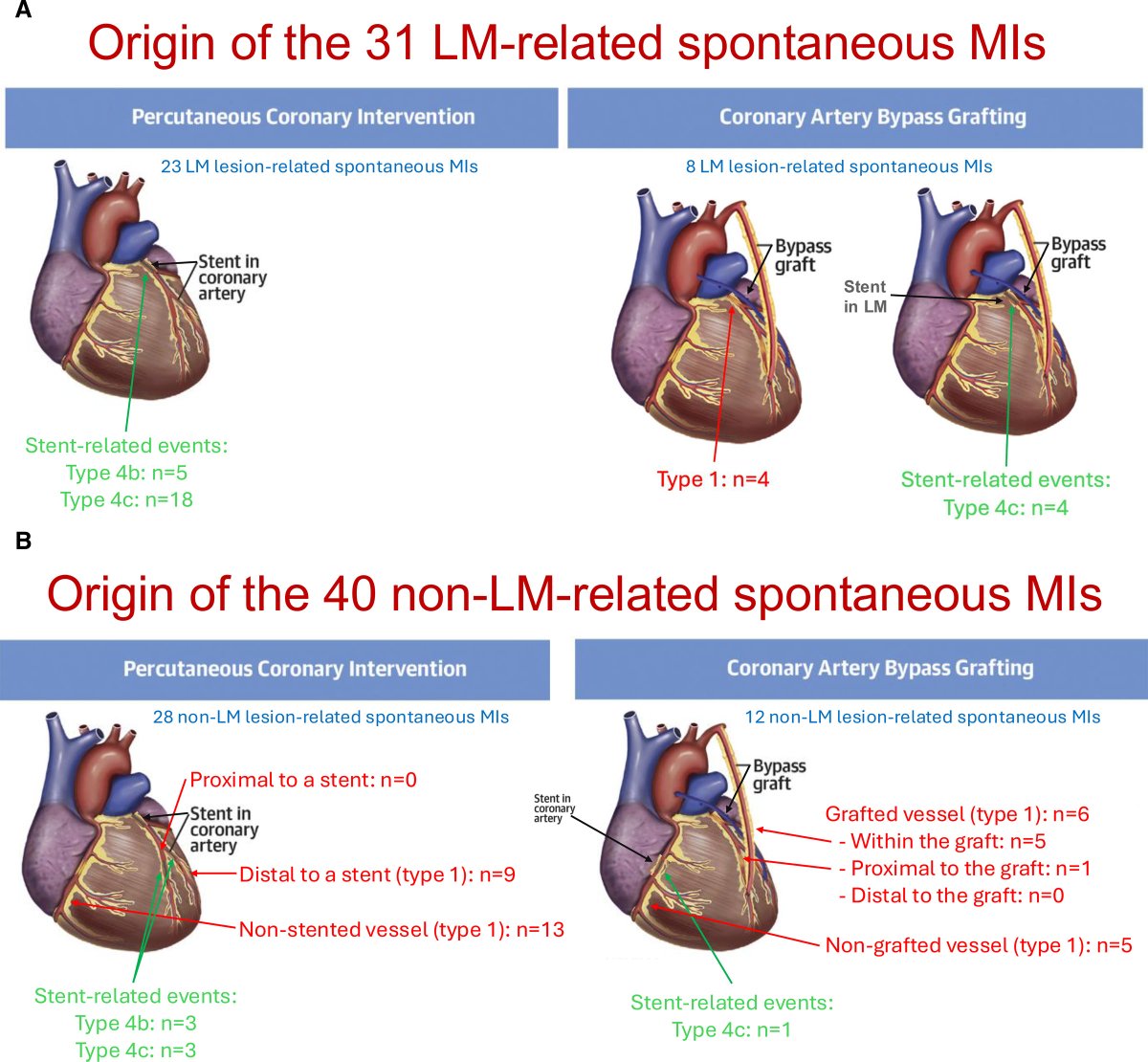
In the EXCEL trial, the lower rate of myocardial infarction after CABG was largely driven by fewer events related to graft failure and fewer infarctions arising from untreated vessels, compared with the higher burden of stent failure–related events and infarctions in non-stented vessels after PCI. In contrast, there was no evidence to support the traditional theory that CABG reduces MI by protecting against new events occurring proximal to the graft insertion site. https://t.co/8hwDTRmemT
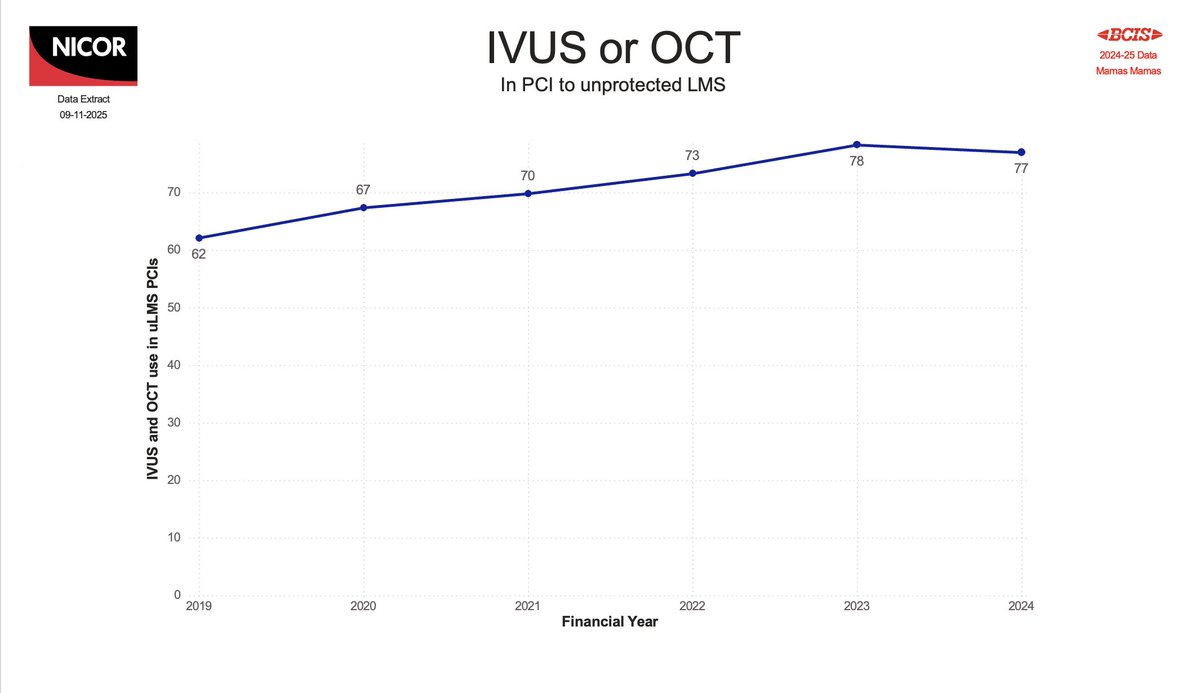
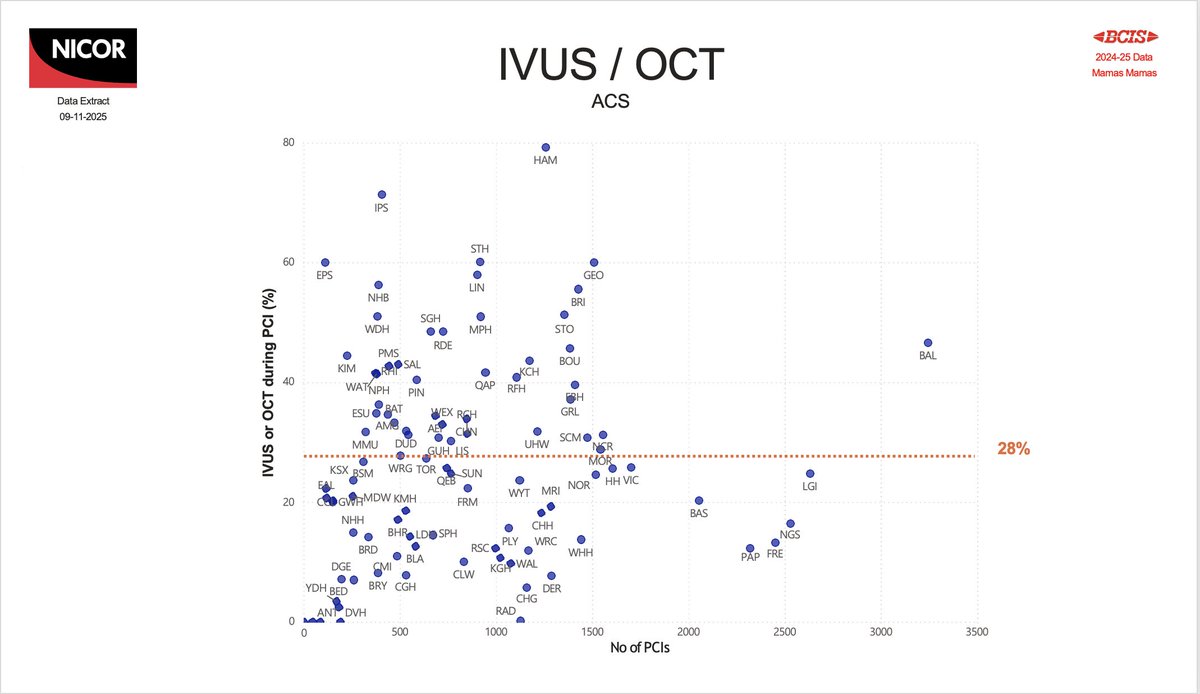
Intravascular imaging in the UK- as part of my live #BCISACI national data talk
➡️34% of all PCIs are undertaken with image guidance in UK with wide variation amongst centres. LMS PCI close to 80%
➡️Even ACS cases close to 30% of cases are imaged.
I would argue that we are still not undertaking imaging enough- with little data on whether we are actioning the findings.
➡️imaging doesnt improve outcomes without using information it provides.