One of the biggest misconceptions in high school sports is that coaching is primarily about practices, games, and wins.
The reality is that coaching has become one of the most challenging roles in education because coaches are expected to wear dozens of hats while being evaluated from every direction.
Every parent, player, administrator, and community member often has a different expectation of success.
One family wants college recruiting to be the priority.
Another wants playing time.
Another wants winning.
Another wants player development.
Another wants discipline.
Another simply wants their child to enjoy the experience.
The challenge is that those goals frequently conflict, and coaches are often expected to satisfy all of them simultaneously.
Most coaches are balancing far more than what happens between the lines. They manage team culture, player conflicts, parent concerns, academics, transportation, fundraising, budgets, equipment, scheduling, eligibility, social media issues, and the emotional needs of teenagers.
At the same time, every roster includes athletes with different abilities, goals, motivations, and commitment levels. Some dream of college athletics. Some are trying to make varsity. Some simply want to belong. Building one program that serves all of them is incredibly difficult.
Perhaps the greatest challenge is decision-making.
Who starts?
Who plays?
Who sits?
Who travels?
Who gets moved up?
Who gets cut?
Every decision creates opportunity for one athlete and disappointment for another. Even well-intentioned decisions can be viewed as favoritism or politics when seen through the lens of an individual family.
Recruiting adds another layer of complexity. Coaches are expected to help athletes pursue college opportunities while also managing the needs of an entire team. Supporting one athlete can sometimes raise questions from another family about their child’s opportunities.
Social media has amplified many of these challenges. One lineup decision, one difficult conversation, or one emotional moment can quickly become public discussion, often without the full context.
There are also pressures many people never see.
Pressure from administrators to represent the school well.
Pressure from parents to provide opportunities.
Pressure from athletes to help them achieve their goals.
Pressure from communities that often measure success by wins and losses.
Pressure to retain athletes in an era of increasing transfers and movement.
And all of this occurs while coaches are trying to develop young people, not just athletes.
What makes coaching difficult is not that people don’t care.
It’s that everyone cares deeply, but often about different things.
Parents focus on their child.
Players focus on their opportunities.
Administrators focus on the school.
Communities focus on results.
Coaches must somehow balance all of those interests while making decisions they believe are best for the team.
As a former college coach, athletic director, and high school administrator, I’ve learned that most coaches are not trying to hold athletes back, play favorites, or make life difficult for families. Most are simply navigating competing priorities, limited resources, and difficult decisions while trying to do what’s best for kids.
Because at its core, coaching has never really been about managing games.
It’s about managing people.
And that’s what makes it both incredibly challenging and incredibly important
This defense is different. 👀
Green Bay's Buzz Zone Defense creates confusion, takes teams out of rhythm, and forces bad decisions.
The crazy part? There's a simple set of rules behind it.
Coach Mike Divilbiss breaks down the entire system and explains exactly what's happening in these clips.
📚 The full breakdown is hiding in my favorite coaching spot.
Duke’s Coach Jon Scheyer and staff developing decision-making skills via 1v1 and small-sided games. Check it out…
Breakdown and video: https://t.co/tuLx0WzWF4
"When you help someone else, you help yourself" 📝🤝
Setting a great screen gets you open!
One of the coolest things about doing this for a while now is seeing guys kill it at new levels! (Caleb Van De Griend, D2 Minot St. ➡️ D1 Idaho St.)
What coach hasn't been influenced by Pop and the 2013-14 Spurs' "Motion Weak"? 📝🍿
▪️Loop the PG & Swing
▪️Cross Screen → Down Screen
High school. College. Pros. There's a reason it's called "America's Play"
Virginia Tech’s Best Sets From The ‘25-‘26 College Basketball Season
1. Iverson Peja
2. Ram Ghost Step Up Strong Exit
3. Ghost Veer Down Miami Roll Replace
4. Step Up Pop Spanoulis
5. Iverson Step Up
6. Cross Punch Shuffle
7. Chest Miami Finland
8. Turn Zoom Double Gap
9. Flare Baseline Runner (vs 2-3)
10. Down Reject Ricky
11. Stagger Twirl Miami Finland
12. Empty Strong Down
13. Step Up Pop Zoom Double Gap
14. Down Elbow Turn Zoom
15. Ram Ghost Step Up
16. Iverson Wedge Slip Veer Stagger
17. Zoom Veer Down
18. Pop Over Zoom
19. Elbow Knicks
20. Ucla Punch Stagger Twirl
Bill Self’s zone offense is always among the best in the nation
This is a great example here
Quick decisions and constantly making 1 guard 2 - great stuff
(Via @CoachHackGO 🎥)
Ejercicios para trabajar el Tiro
1x0 Con oposicion - closeout
1x1 Reacción. Los jugadores inician de espaldas a canasta
1x1+1 Stagger Screen Shooting
Pull up
Pull up -Tras lectura del defensa atacar el lado contrario y tirar antes de que llegue
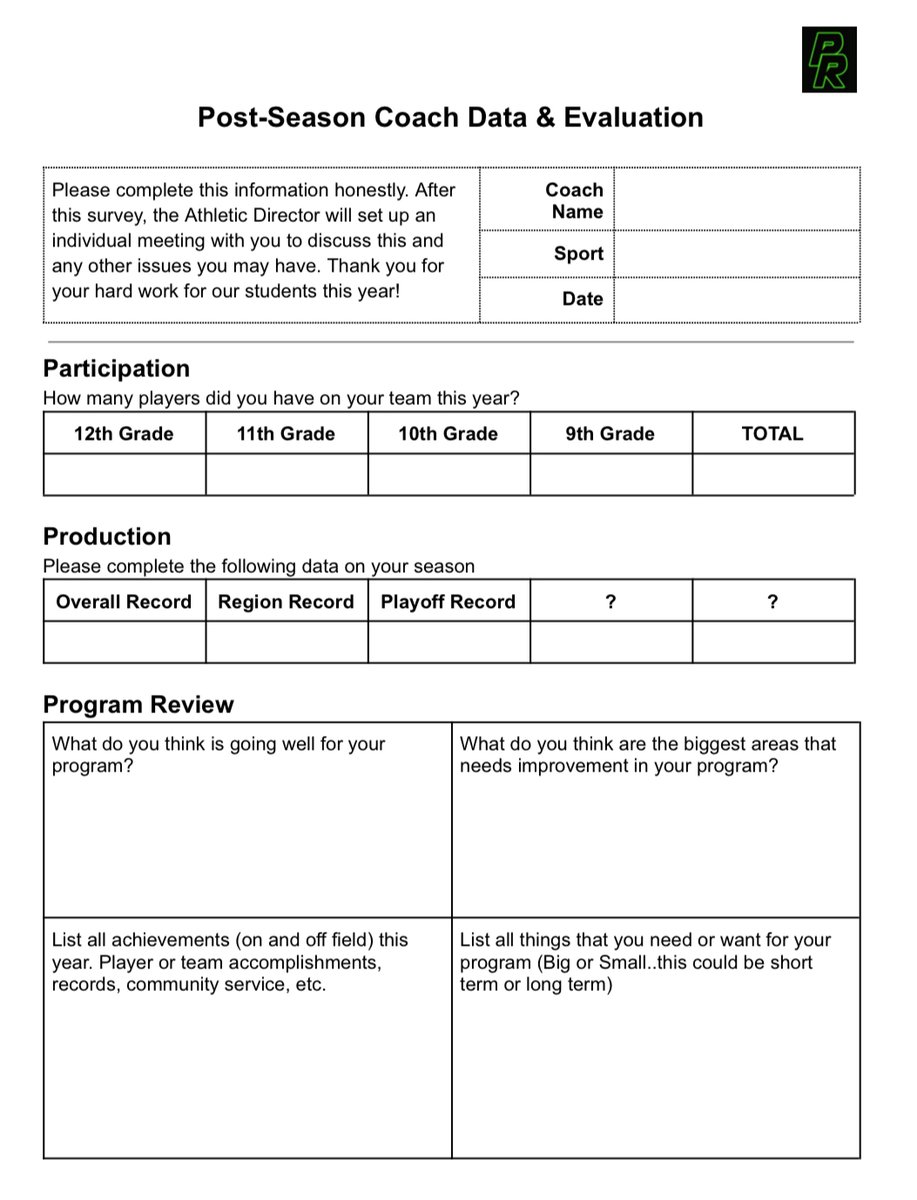
Here is a post-season evaluation that can be used by an AD or Coach to gather information on the season and the direction of the program. Maybe it can help someone out today.
🏀 Matt McMahon demonstrates the "Argentina Passing" drill he uses get his players moving early in practice and work on all the fundamentals - passing, footwork & communication.
Something I noticed when I visited China was public schools always started their days off with a run.
A school in Naperville, Illinois, did an experiment on this and called it "Zero Hour".
Before school, students would hit the gym at 7am and push their heart rates to 80% of their max. Then went on to do class.
The result? Reading scores doubled. Math scores jumped 20x.
On an international test, Naperville 8th graders finished 1st in science (beating Singapore) and 6th in math globally.
Some of my entrepreneur clients swear by doing cardio in the morning. They say it keeps their brain sharp. I don't disagree.
Cardio isn't just for your heart. It's brain fuel.
Exhaust the body to sharpen the mind.
Four-star big man Lewis Uvwo has surged into the top 20 of the @247Sports Rankings after emerging as the best rim protector in high school basketball, averaging 6.1 blocks per game on the @NikeEYB Circuit.
@AdamFinkelstein's 𝗩𝗜𝗣 𝗥𝗘𝗔𝗗 https://t.co/SbpgzeI3Vh