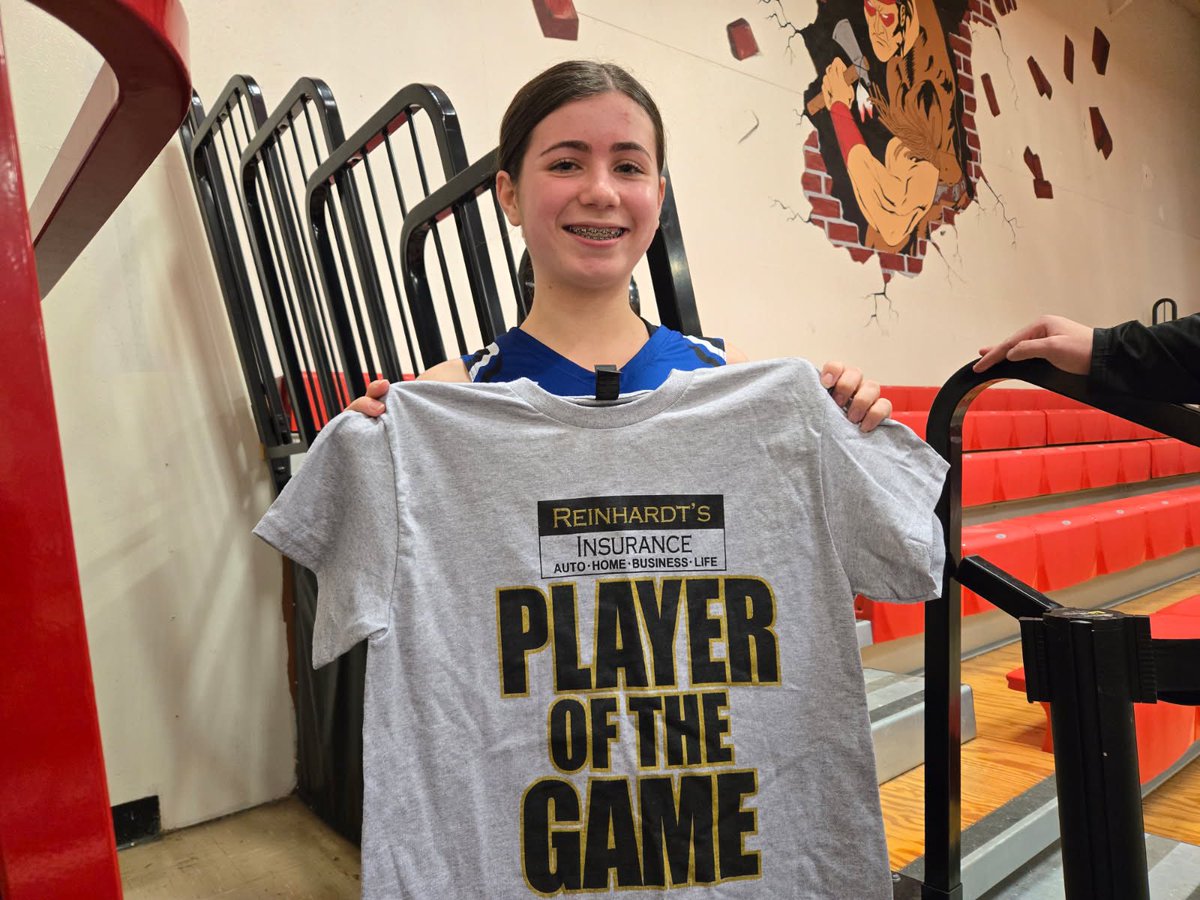
Big night for Greenville and their standout Keith Covert! The junior poured in 24 points to lead the Trojans to a huge playoff win to take home the @Reinhardts1904 POG T! @CovertKeit19521
Being the most talented kid on the court will win you games.
Being the toughest, smartest, and most unselfish kid on the court will make you a champion.
Saban on Leadership.
“Leadership is about helping somebody else for their benefit, not yours.” - Nick Saban
True leadership isn’t about power.
It’s about lifting others up and putting the team first.
SPIRE Academy’s Saniyah Hall has been named a 2026 Jersey Mike’s Naismith Trophy Girls’ High School Player of the Year Semifinalist.
One of just 10 players nationally in the running for the game’s most prestigious honor.
Fresh off Cleveland Sports Female High School Athlete of the Year and a McDonald’s All-American selection, the No. 1 recruit and USC signee is having herself a season at SPIRE.
The work speaks for itself 👏🔥
https://t.co/qUoWQYiGP7
@sheriffwoody12@BobGreenburg It's really quite a simple concept. If you are guarding your man/girl closely, pressuring they HAVE to make a play, move, or decision. (The 5 second rule was likely put in place to prevent this exact issue. They cannot stall at that point.
Here are the main reasons people (me) consider a shot clock problematic or "bad" for high school basketball:
- It hurts underdogs and creates bigger blowouts — Without a shot clock, a less talented team can slow the game way down (holding the ball for long stretches) to limit possessions and give themselves a better chance at an upset. A shot clock removes that strategy, forcing them to play faster against superior opponents, which often leads to more lopsided scores. This is especially relevant in high school, where talent gaps between teams can be huge (unlike more even college/pro levels).
- It takes away legitimate strategy and coaching creativity — High school basketball is unique in allowing varied styles, including deliberate, slow-paced offenses (e.g., motion sets that take 45–60+ seconds). Critics say forcing quicker shots reduces strategic depth and turns the game into something more like college/pro ball, which isn't always the goal at the high school level (where most players aren't heading to college hoops).
- Potential negative impact on player development and fundamentals — Some argue that rushing possessions leads to more bad shots, turnovers, sloppy play, and rushed decisions, especially for developing high school players who may not have the skills yet to consistently create good looks in under 35 seconds. Without the clock, teams can teach patience, ball movement, and better shot selection.
- It can disrupt game flow in the opposite way — Ironically, strict adherence to a shot clock might cause teams to pass up good early shots to "use more clock," slowing the pace artificially (similar to what happened in some college eras with slower, clock-managing teams like old Wisconsin or Virginia styles). This could interrupt natural flow more than occasional stalling does.
- Cost and logistics — Installing and maintaining shot clocks (displays, operators, backups for malfunctions) costs schools thousands of dollars per gym ($3,000–$4,000+ estimates in some states), plus ongoing expenses. Many smaller or underfunded programs see this as unnecessary when the game has functioned without it for decades.
- Late-game dynamics aren't always improved — While a shot clock can prevent endless stalling when leading, some say the current no-clock setup (combined with rules like double bonus) already favors the leading team too much via fouling/free throws. But others point out that extreme stalling (e.g., 4-2 games or holding for minutes) is rare and can be countered by aggressive defense instead of changing the rules for.
Sophomore Kendall Auman game-high 12 points on four three-pointers Thursday night to help Sharpsville to a 51-27 win at West Middlesex to take home the @Reinhardts1904 POG T!! @SHSCoverage@SharpsvilleGBB
Commodore Perry beats Cochranton 51-33 in a girls basketball game that could shake up playoff seeds. Eastin Post had 24 points, 16 rebounds and 8 blocks for the Panthers, while Bella Saxe had 16 points and 10 rebounds.
@ETNreisenweber Seems even the support role players are also only being recognized by points scored. (Not knocking that group, they are legit players) So much more to basketball and being a role player than points. 💪