@DalgetySusan The private school thing is a cheap hit and misses the point. This lad got elected due to where he came on green OMOV list ballot. He probably received less than a 100 votes. Look who was 4th on their list and it probably tells you everything about the capture.
A brief update on the @Indep_Inq_GG “Grooming gang” Inquiry…
This week the Inquiry panel for the Independent Inquiry into Grooming Gangs (the official title, not my choice of words) was questioned by the Home Affairs Select Committee. We hadn’t been made aware this was taking place and only found out on the day via a social media post and hence we couldn’t let our survivors know in advance. Much of what was said however has left us with more questions than it answered in all honesty. What was repeated was the importance of placing victims and survivors at the “heart of the panel”!!!
This is what that has looked like so far…….
We have not heard from the Inquiry team since we took over two dozen survivors and their families to meet with them in February. In that emotionally charged meeting, survivors spoke about their experiences and their anger at how badly they have been failed, most for decades. They shared their expertise and expectations for the Inquiry.
Their anger and trauma was palpable, and most of that was actually directed at the “establishment” including police, cps, social services, government rather than towards their abusers tbh! They clearly demanded the agencies that have failed them (and still are in many cases!) are held ACCOUNTABLE, right up to the top of those agencies!
In early March, we submitted both our and the survivors’ extensive comments to the draft Terms of Reference. We have received no reply.
In April, our legal team @HoweAndCo wrote to the Inquiry on behalf of all our survivor group expressing the importance of victims and survivors being granted proper legal status in the Inquiry and public funding to ensure they can be properly represented by legal experts. This will go some way to addressing the imbalance between survivors and the very agencies, organisations and individuals whose decisions have caused so much of their trauma. Police forces and local authorities around the country will have undoubtedly been working with their legal teams since the inquiry was announced almost a year ago.
This is PRECISELY the imbalance I saw 8 years ago when I was involved in the @IICSAVSCP Independent Inquiry Child Sexual Abuse (IICSA). Because the “Organised networks” strand became little more than a platform for public institutions to say what a great job they were now going with barely any survivors heard, it became a meaningless paper exercise and that’s imo why we’re here now….
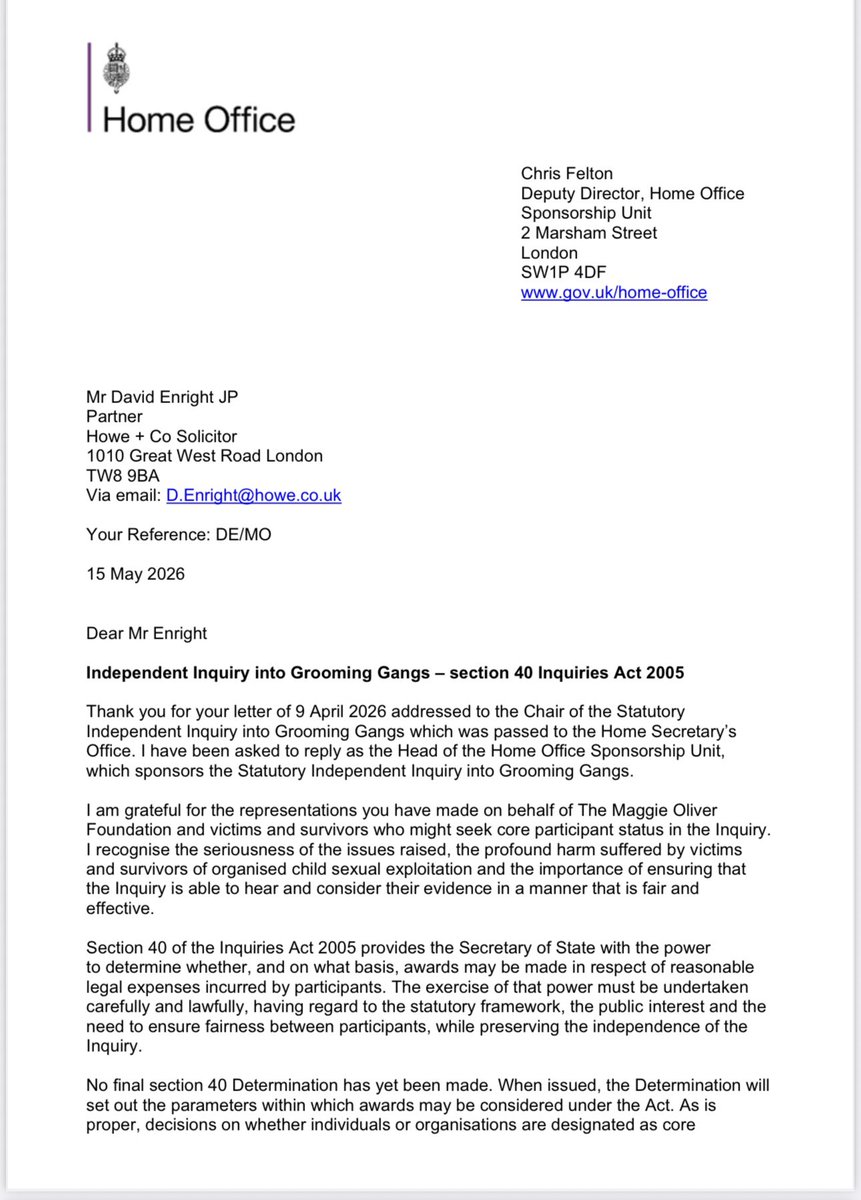
I’ll leave you to read the Home Office’s response attached below and our reply and make up your own mind as to whether we should have confidence that this will be granted.
So many survivors have fought hard for this Inquiry. People are sharing traumatic details of the worst times of their lives again in the hope that they will finally see people held accountable for decisions that destroyed their lives. Survivors must have legal status and representation if there is even the slightest chance of this happening.
Please share far and wide. We need people pressure to make this happen. Further updates to follow next week….
When I was a child our teacher taught us about risk, money and economics in the most interesting way possible: She made us run a pretend farm, as a competition.
It was genius, because I still remember it three decades later, which I wouldn't have otherwise. It went like this:
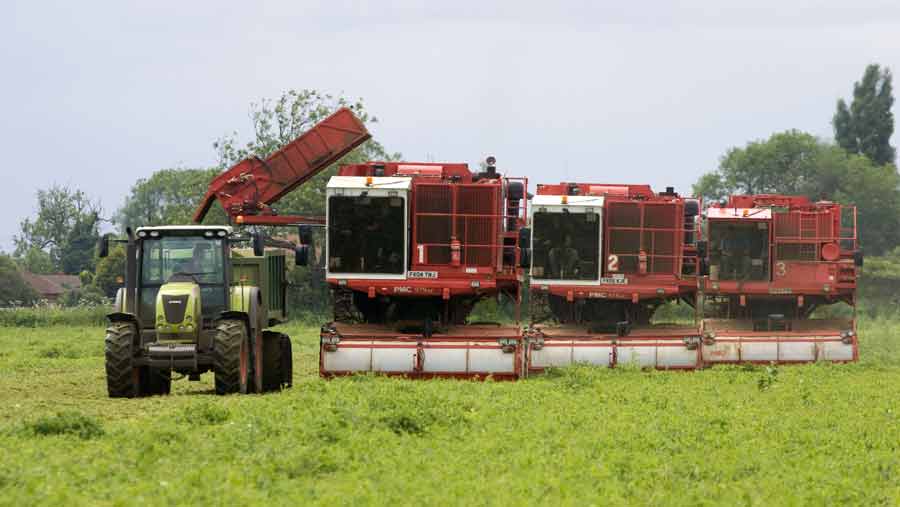
Every student had a ‘farm’ on a little piece of paper, with four fields. Every year you had to decide what crops to plant in what fields, and buy them with any available money. Some crops were like wheat; cheap, boring and low-yielding, but dependable. Others were like peas; expensive, super high-yielding if things went right, but unreliable. Get the wrong mix of sunshine and moisture for peas and you'd make a huge loss instead of making bank.
We all competed for the most money over a series of ‘years’ and on each year the teacher would roll dice to determine if the weather was hot or cold, rainy or sunny. There were four combinations of weather for your four fields and up to four crops. There was all to play for, and you'd be built-up or broken by the roll of the dice.
Some kids played it safe with lots of wheat and no risk. Others bet the farm on peas, peas, peas! Others hedged between sunny crops and rainy crops. With each round, a few of us exited the game and went bankrupt. The eventual winner had taken a lot of risk, but had hedged just a little bit and rode out the bad years. He got lucky, but that's what the game was all about.
The teacher could have taught us by lecturing us. She could have gassed on about risk management and economics and market economics and blah, blah, blah… and been ignored by a bunch of teenagers. Instead she made it fun, she made it a competition!
And after that short period, a classroom of kids walked out with heads full of strategy, debating how they'd run the farm, who got the most money and how they'd play differently if they did it again.
In a little classroom in a Northern English secondary school, a bunch of adolescents had been introduced to capitalism and loved every minute of it!
I forgot almost everything else from those years, but that lesson sticks with me. Good teachers really matter.
And a little competition goes a long way.
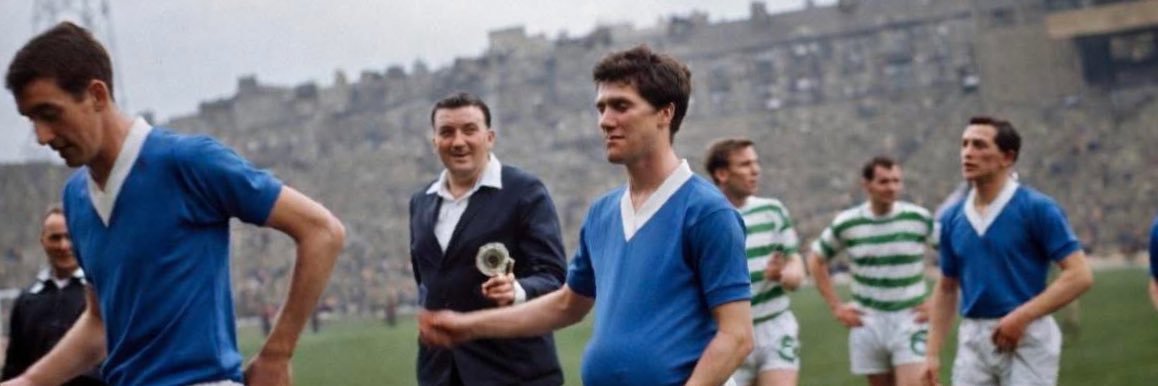
Scotland swapped a Secretary of State and six ministers for a billion-pound parliament, a six-billion-pound quango state and 25 years of constitutional psychodrama. Hard to call that progress.
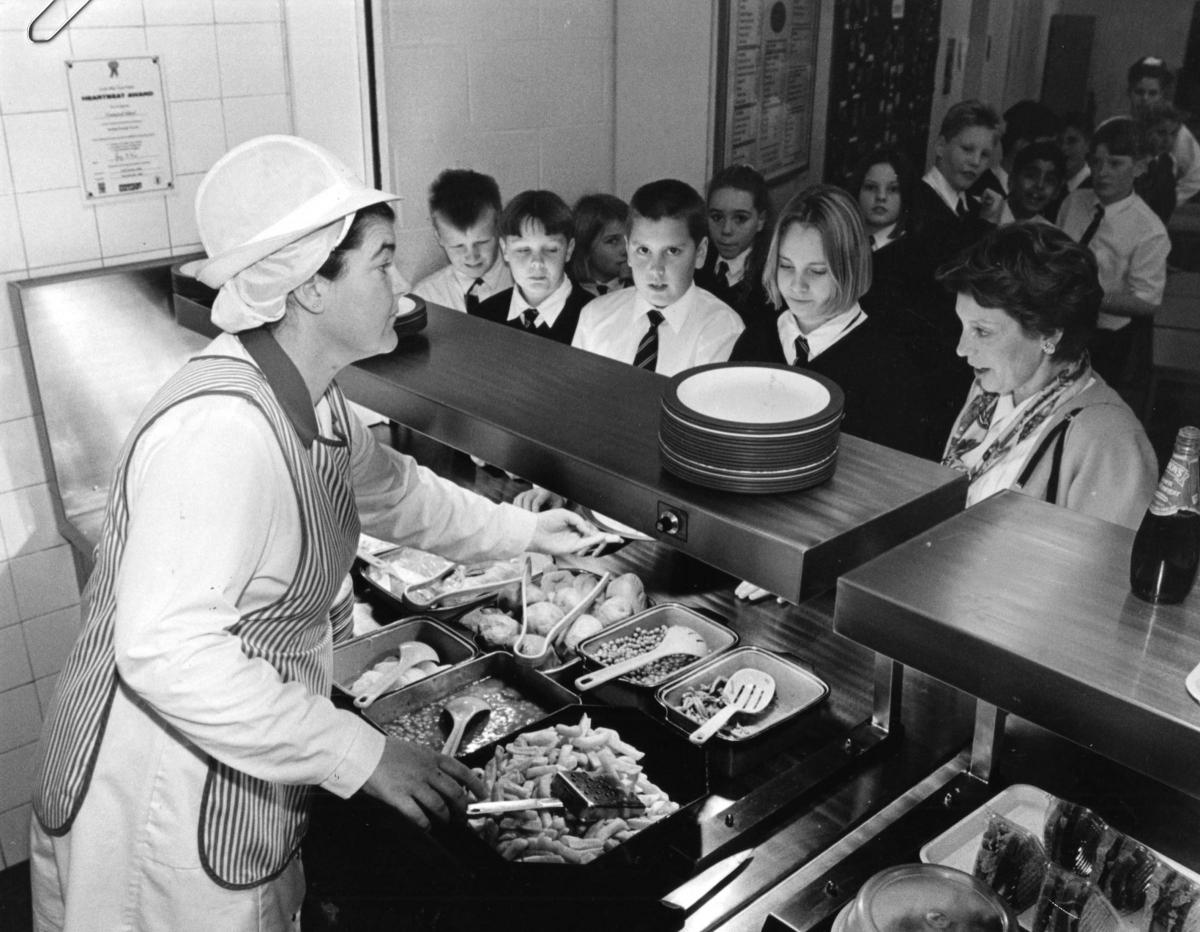
A British school dinner in 1975 was cooked on-site, from whole ingredients, by a dinner lady who knew, without consulting a nutritional database, what a growing child needed to eat.
The dinner was: roast beef, gravy from the drippings, boiled potatoes, cabbage, and sponge pudding with custard made from eggs and milk. Or shepherd's pie from real mince. Or liver and onions. Or fish on Friday, battered and fried in beef dripping.
In a single sitting: haem iron from the meat, calcium from the custard, B12 from the liver, vitamin A from the gravy fat, vitamin D from the eggs, zinc from the beef, omega-3 from the fish, collagen from the gravy, complete protein from every component, and roughly 800 calories dense enough to carry a child through an afternoon of running around a playground in January.
Then the system changed.
In the 1980s and 1990s, local authority catering was outsourced. On-site kitchens closed. Dinner ladies were made redundant. Central production kitchens began manufacturing meals reheated in convection ovens.
The roast beef became a turkey twizzler. The shepherd's pie became a pre-formed disc of processed potato and reconstituted meat product. The liver disappeared entirely. The fish was coated in breadcrumbs and fried in vegetable oil. The custard was made from powder, water, and yellow colouring. The sponge pudding was replaced by a yoghurt tube.
Jamie Oliver's 2005 campaign filmed children who could not identify a tomato. Kitchens where the only equipment was a deep fryer and a microwave. Menus that contained less nutritional value in a full week than the 1975 dinner contained in a single sitting.
The government pledged reform. But the on-site kitchen did not come back. The dinner lady did not come back. The roast beef and the liver and the custard made from eggs did not come back.
The 1975 dinner lady, who had no nutritional qualification and had never heard of a DIAAS score, was producing, at approximately 30p per serving, a meal that contained more bioavailable nutrition than anything the modern system produces at three times the cost.
She has been replaced by a supply chain.
The supply chain is more expensive.
The children are less well fed.
The dinner lady knew what she was doing.
Nobody asked her.