Eğer python yazıyorsanız artık bir satır bile javascript yazmadan veya npm’e dokunmadan react responsive web app yazabilirsiniz.
https://t.co/8qVL1ofdYQ
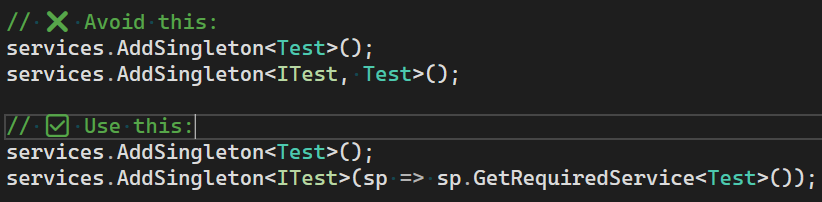
Here is the tip of the day:
"Prevent multiple singletons."
You may miss while coding. You can have 2 different singleton instances by mistake. Here is just a reminder 🙂
If you need to resolve a singleton with a different type, use factory method.
#dotnet#csharp#aspnetcore
✨ Backend Developer Roadmap ✨
The roadmap has been updated for 2024. There have been some adjustments to the order of topics, some updated recommendations and some additional topics.
https://t.co/H1i7EKFnHT
Claude 2, Bing, ChatGPT hepsi harika.
Ancak Google kısa süre önce Duet AI'yi tanıttı.
Duet AI hepsini yapabilir! İşte aklınızı başınızdan alacak 7 özellik:
6 Database Types You Must Know
1. Relational Database 💼
- Data Model: Organizes data into tables with rows and columns.
- Examples: MySQL, PostgreSQL, Oracle, SQL Server.
- Key Features: ACID compliance, strong data consistency, structured data storage, support for SQL queries, well-suited for complex transactions and reporting.
2. Document Database 📄
- Data Model: Stores data in semi-structured or JSON-like documents.
- Examples: MongoDB, CouchDB, Firebase Firestore.
- Key Features: Flexible schema, horizontal scalability, support for semi-structured data, well-suited for content management systems and real-time applications.
3. In-Memory Database 🚀
- Data Model: Stores data entirely in the system's main memory (RAM).
- Examples: Redis, Memcached, Apache Ignite.
- Key Features: Ultra-fast data retrieval, low-latency, suitable for caching, session management, and real-time analytics.
4. Graph Database 🌐
- Data Model: Represents data as nodes and edges to model relationships.
- Examples: Neo4j, Amazon Neptune, ArangoDB.
- Key Features: Efficient querying of complex relationships, graph traversal, suitable for social networks, recommendation systems, and fraud detection.
5. Time-Series Database 📈
- Data Model: Optimized for time-ordered data points, like sensor readings or log files.
- Examples: InfluxDB, Prometheus, TimescaleDB.
- Key Features: Efficient storage and retrieval of time-series data, aggregations, retention policies, ideal for monitoring, IoT, and event data.
6. Spatial Database 🌍
- Data Model: Designed for storing and querying spatial or geographic data.
- Examples: PostGIS (extension for PostgreSQL), MongoDB Geospatial, Microsoft SQL Server Spatial.
- Key Features: Geospatial indexing, support for spatial data types (points, polygons, lines), useful for location-based services, GIS (Geographic Information Systems), and map applications.
So which one are you using? Comment bellow.
▷ 👍🏿 Subscribe to our newsletter - https://t.co/hxARDoA98l
#systemdesign #coding #interviewtips
.NET 8 ile gelen keyed services özelliği sayesinde bir servis kaydederken bir anahtar belirleyebilirsiniz. Bu özellik uygulamanızda birden fazla uygulamaya sahip bir arayüz/hizmetiniz olduğunda ve bu uygulamaları uygulamanızın farklı yerlerinde kullanmak istediğinizde faydalıdır.
Gitmoji, git commit mesajlarına anlam katmak ve hızlıca anlaşılabilir hale getirmek için emoji kullanımını teşvik eden bir araçtır. Her emoji, commit'in içeriği hakkında ipuçları sağlar. I ❤️ Gitmoji
https://t.co/5o3uAduIZ4
📝🚀 Kodları güncellerken emoji kullanmak, sadece bir commit değil, hikaye anlatmanın da bir yolu! 🎉 Hem ekibinle iletişimi renklendirir, hem de kod değişikliklerini daha anlam dolu hale getirir. 🤝 Tek bir emoji, binlerce kelimeye bedel olabilir!