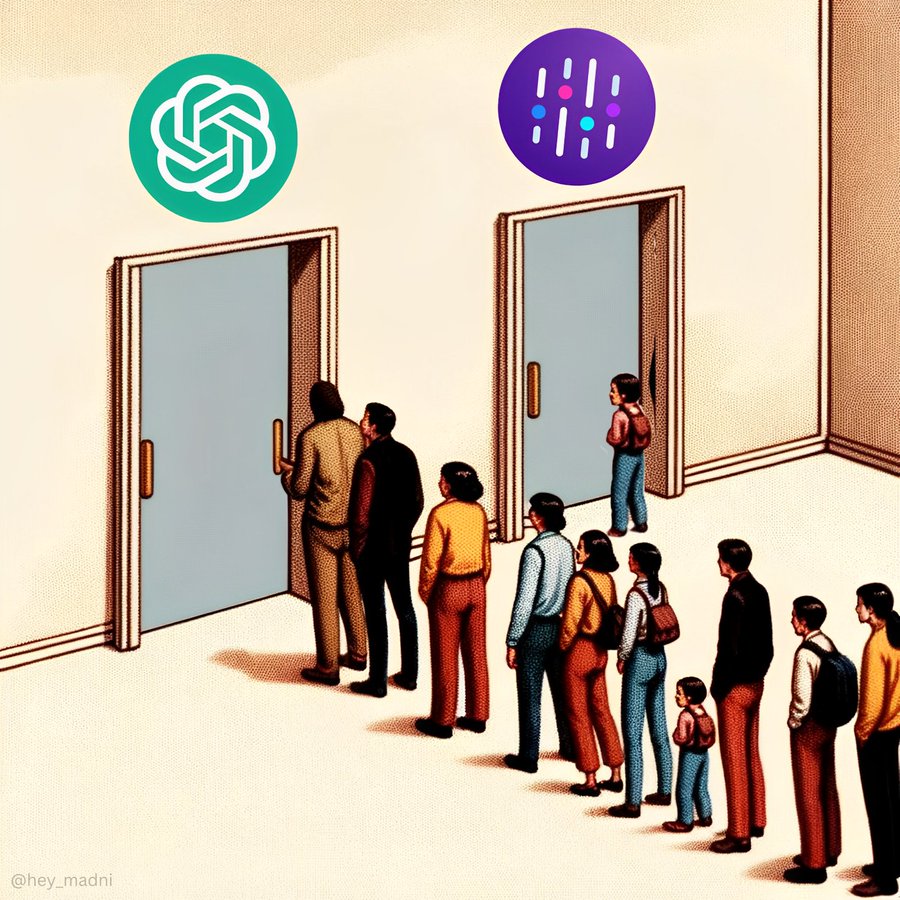
One product. One folder of clips. More than one creative direction.
Instead of rebuilding every UGC ad from scratch, describe different angles to ChatGPT and use the official CapCut plugin to help kick-start each edit.
Try a benefit-led version, a quick product showcase, or a more casual creator-style cut.
Refine each one in CapCut with different captions, music, and transitions from the asset library.
You still control the final creative, but you can spend less time repeating the same editing steps.
Which version would you test first?
#CapCutDidThat #CapCutWeb #ChatGPT #CapCutWorld
One product. One folder of clips. More than one creative direction.
Instead of rebuilding every UGC ad from scratch, describe different angles to ChatGPT and use the official CapCut plugin to help kick-start each edit.
Try a benefit-led version, a quick product showcase, or a more casual creator-style cut.
Refine each one in CapCut with different captions, music, and transitions from the asset library.
You still control the final creative, but you can spend less time repeating the same editing steps.
Which version would you test first?
#CapCutDidThat #CapCutWeb #ChatGPT #CapCutWorld
Interesting take on hiring from a $1.6B founder.
He thinks AI makes technical skills matter more, and the bar moves to what else you bring, like hard work, genuine interest and creativity.
a two-year-old mining company has raised $400M. @a16z, @khoslaventures and the CIA's venture fund are all on the cap table.
@jclozano9897 co-founded @MarianaMinerals with @tbc415 and @baker_tilney, two friends from stanford. it's now worth $1.6B. they buy mines after the market gives up on them, then run them with software and AI.
i asked him how you actually buy a mine, why AI's real bottleneck is metal, and whether he'd hire me for being good at claude code.
nontechnical, episode 3.
00:00 $400M and the CIA's venture fund
02:19 you can just buy a mine
04:41 2 years, $400M, $1.6B
08:58 cold emailing VCs vs. their first check
13:46 when to buy a mine (right after the market gives up)
19:54 every mining truck is a robot without a brain
25:08 everything human-made is grown or mined
26:15 the cheapest AI company wins
28:31 AI's real bottleneck is metal
30:55 america doesn't have enough miners
33:27 space mining and asteroids
43:13 how a $1.6B founder hires
46:17 would he hire me for claude code?
48:43 "slop cannon"
Bring rich emotion to your Seedance 2.5 generations with Chimera.
Chimera lets you:
• Upload your own character
• Write a script with Eleven v4 and direct the delivery with audio tags
• Prompt your Seedance 2.5 video so the motion matches the delivery
Chimera pairs Eleven v4, our most expressive model, with Seedance 2.5 to create realistic video with emotionally rich voices.
@heyDhavall Open-weight models reaching this level of coding and 3D design capability could give developers much more freedom without relying entirely on proprietary AI.
Dreamina has never dropped a deal this big: a full month of Basic for just $0.29. Not a trial. Not a typo. I’m proud to be one of 1,000+ creators officially chosen for it and the $0.29 price only unlocks through an official creator link, so use mine below.
https://t.co/4x90UHx84O
#DreaminaOnly29Cents #Dreamina
Here's how to unlock the $0.29 monthly Basic offer:
1. Click my official creator link
2. Scroll down the offer page and tap the purchase option.
3. Register for Dreamina or log in to your account.
4. Complete payment at the discounted price shown on the official page.
A full month of Basic for $0.29 and plenty of room to test different creative directions.
#DreaminaPartner
Dreamina has never dropped a deal this big: a full month of Basic for just $0.29. Not a trial. Not a typo. I’m proud to be one of 1,000+ creators officially chosen for it and the $0.29 price only unlocks through an official creator link, so use mine below.
https://t.co/4x90UHx84O
#DreaminaOnly29Cents #Dreamina
Try the challenge:
1. Pick a high-quality reference video that inspires you.
2. Upload it to Dreamina Canvas.
3. Use Analyze This Video to study the prompts and shot structure.
4. Rework the idea with your own subject, setting, and visual style.
Learn the technique, then add your own creative twist.
#Seedance