“🧑💻 Aspiring Software Developer | 🚀 Learning Python, Web Dev & AI | 🛠️ Building beginner projects | 💡 Sharing my journey, one line of code at a time!”
I still don't understand why everyone is not using this yet. Thanks to it, a year ago I increased my income to 17,000 dollars a month
Andrej Karpathy, co-founder of OpenAI, published a simple idea that got 16 million views: stop using AI to write code, use it to build a second brain
You point Claude Code to a folder, drop any source in there (an article, transcript, PDF) and Claude reads it, links it, and saves it into a living wiki of everything you know. It compounds like interest: the more you feed it, the smarter it gets
Here is the gist:
→ Install Obsidian, create a vault, open it in Claude Code
→ Paste Karpathy's wiki idea and tell Claude to build the structure
→ Claude creates three folders: raw for sources, wiki for its pages, CLAUDE.md to run everything
→ Drop any source into raw and say "ingest this"
→ Ask questions across everything, forever
Five minutes to set up. You never start with an empty chat again
I wrote the full breakdown with my exact CLAUDE.md, the 3 prompts I use to query the vault, and the folder template you can clone straight into Obsidian
Full article is below
What source are you dropping in first?
You don't need a huge GPU setup to fine-tune your own LLM.
Take an existing model, train a small adapter on your own data, and turn it into something much more specific to your use case.
Here's how to do the whole thing locally.
Timestamps:
00:00 | Overview
00:29 | Fine-Tuning Basics
01:24 | Unsloth Studio
02:36 | Fine-Tuning Details & Architecture
04:08 | QLoRA vs LoRA
05:40 | HeyGen
07:03 | Fine-Tuning vs RAG
07:51 | Hardware Requirements
09:10 | Unsloth Setup/Install
09:50 | Unsloth UI
11:45 | Model Selection
14:25 | Chatting with Models
15:05 | Training Data Overview
17:20 | Generating Training Data
18:50 | Unsloth Recipe Setup (Custom Dataset)
32:11 | Dataset Selection/Setup
34:24 | Training the Model
38:34 | Model Comparison
40:22 | Exporting the Model
Claude now reverse engineer your competitor's SEO
And this is way more important than you might think
Ahrefs studied 14 billion pages and almost 97% of them get zero traffic from Google.
So your competitor's traffic sits on a handful of pages.
You can do this with the SEO connector in Claude. Go to Claude, settings, connectors, discover, type SEO, and connect this one.
Now Claude will do three things. And the third is the one nobody does.
First, it reads every page your competitor has published and checks the search volume behind each one.
Second, it checks your Search Console and finds the searches they win where you don't even show up.
And third, it turns every one of those into an article on your calendar so they go live on your site on autopilot.
And a trick almost nobody knows: add slash sitemap dot xml to any competitor's website and you'll see every page they have and the day they last changed it.
If you want more clicks in 2027 without guessing what to write, this is probably the easiest way to do it.
Save this and share it with a friend who keeps losing to the same competitor.
They built an AI agent in 20 minutes and sold it to Anthropic for $100k - and at Stanford showed how to repeat it from scratch:
02:00 - how to build your first agent with Opus 5 in 20 minutes
22:34 - one agent replaces an Anthropic engineering team worth $200k a year
49:47 - how to make $1.2M a year selling agents to Anthropic and Google
after watching I spent 20 minutes in Claude Code - the agent replaced 10 Anthropic engineers and they paid $100k and asked for more.
save & watch - the article below shows how to build an agent in Claude Code in 20 minutes and reach $1.2M a year.
I can't f*cking believe this: the CEO of Y Combinator put his own second brain on GitHub, and it's one clone away from being yours
7 second brains you probably haven't seen, all ready to clone tonight:
1. gbrain · 32.4K stars
Garry Tan's own agent brain. every fact remembers where it came from, and all his agents share one memory
https://t.co/Cg7CA8qHYe
2. Karpathy's llm wiki · 50K stars
the one-page idea file that started this whole wave
https://t.co/Adm0ibaUSG
3. ai memory · 13.7K stars
quit Claude Code mid-task and pick it up in Codex without losing a thing. memory lives in plain markdown
https://t.co/vk9KqrBn8K
4. COG second brain · 1.4K stars
35 skills and 10 agents, no database. just markdown files that think
https://t.co/tStEcS60G4
5. agent second brain
send a voice note on Telegram and it lands as a linked note in Obsidian, or a task in Todoist
https://t.co/psSeqDEQA4
6. open second brain
every night it turns the corrections you keep repeating into rules your agent follows
https://t.co/RfshSgcYrn
7. claude second brain
one npx command sets up Obsidian, Claude Code and local search together
https://t.co/tYkCsOPDPq
the man who funds the next Airbnb runs his agents on this. yours still forgets you overnight
save it so you don't lose it
I earned $7,000 from my AI side hustle last week.
Want to make $2,500 to $7,000 in a single week?
99% of earners hide their methods. My AI money guide breaks it all down.
Comment 'Hustle' and I'll DM it to you for FREE.
Must follow me to get DM.
FREE for next 48 hours.
Tutorial de ta solo 23 minutos sobre cómo construir agentes de IA valorados en $250,000 con Claude (paso a paso)
Construye 4 agentes desde cero que salen, hacen el trabajo y te entregan el resultado terminado
Guárdalo, me lo agradecerás más tarde 🔖
Building your first RAG application?
Don't waste 3 weeks choosing tools like I almost did.
You only need to understand these 7 layers to get started. 👇
1. LLMs (The Brain)
Generate answers and understand context.
Popular choices:
→ GPT
→ Claude
→ Gemini
→ Llama
→ DeepSeek
→ Qwen
Start with: GPT or Gemini.
2. RAG Frameworks (The Engine)
Connect your LLM to external knowledge.
Popular choices:
→ LangChain
→ LlamaIndex
→ Haystack
Start with: LlamaIndex for RAG-focused projects.
3. Vector Databases (The Memory)
Store embeddings and retrieve relevant information.
Popular choices:
→ Chroma
→ Pinecone
→ Qdrant
→ Weaviate
→ Milvus
→ pgvector
Start with: Chroma for local projects.
4. Data Extraction (The Collector)
Turn PDFs, websites and documents into usable data.
Popular choices:
→ Firecrawl
→ Crawl4AI
→ Docling
→ LlamaParse
Start with: Docling for documents, Firecrawl for websites.
5. Model Hosting (The Infrastructure)
Run open-source models without building everything from scratch.
Popular choices:
→ Ollama
→ Hugging Face
→ Groq
→ Together AI
Start with: Ollama for local experimentation.
6. Embedding Models (The Translator)
Convert text into vectors so your app can find relevant information.
Popular choices:
→ OpenAI Embeddings
→ Voyage AI
→ Cohere
→ Sentence Transformers
→ Nomic
Start with: OpenAI Embeddings or Sentence Transformers.
7. Evaluation (The Quality Check)
Measure whether your RAG system actually retrieves the right information and generates reliable answers.
Popular choices:
→ RAGAS
→ DeepEval
→ Giskard
Start with: RAGAS.
Here's the stack I'd recommend for your first RAG project:
LLM → OpenAI
Framework → LlamaIndex
Vector DB → Chroma
Data Extraction → Docling
Model Hosting → Ollama
Embeddings → OpenAI
Evaluation → RAGAS
One important thing:
You don't need to master all 7 layers before building.
Build a small RAG app first. Understand how data flows from documents to retrieval to the final answer.
Then upgrade individual components as your project grows.
Save this roadmap. You'll thank yourself later.
Which layer would you like to explore first?
A man bought a $1,400 laptop at Best Buy. Two days later, the exact same model dropped to $1,150 on Amazon.
He assumed that was just bad timing — buy anywhere, prices move, nothing to be done about it after the fact.
He called Best Buy instead. Because of a policy printed on his receipt that he'd never once read, they refunded the $250 difference on the spot, no return required, no rebuying anything.
Best Buy isn't just a place to buy electronics at sticker price. Here are 11 hidden Best Buy benefits most shoppers never use 🧵
🚨 Fable 5.1 Leaks
- Fable 5.1 Will be the most dangerous model ever released
- Fable 5.1 is targeting an August launch
- Pricing is expected to remain the same as Fable 5
- The model has reportedly been ready internally for some time and is already being used inside the company
- Anthropic is expected to position it as its response to GPT-6
- A mid-to-late August release now appears more likely, potentially shortly after GPT-6
Do you think Fable 5.1 will be enough to beat GPT-6?
I just cancelled 2 $200 Claude Max subscriptions.
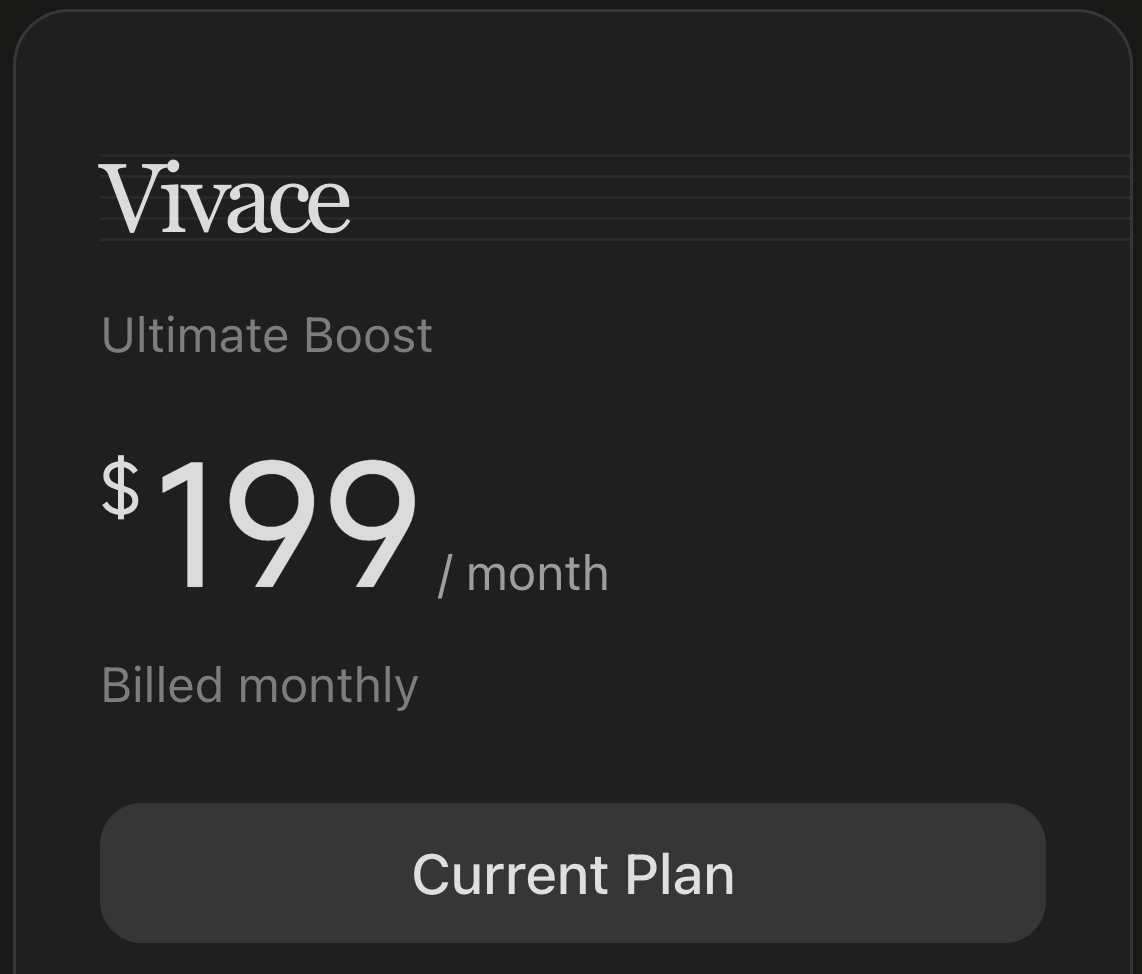
In their place: one $199 MoonshotAI Vivace plan, purchased this morning for Kimi K3.
Kimi K3 is better than Fable 5 at frontend design.
That is half of why I kept 4 Max accounts, gone overnight.
The other half is trust, and Anthropic burned it.
Nobody knows if Fable 5 survives Sunday. Nobody knows what the limits are week to week. Nobody knows anything, because they refuse to communicate.
Moonshot earned $199 with one great model.
Anthropic lost $400 with a month of chaos.