There’s a story from Václav Havel about a greengrocer living under communism.
Each day, he places a sign in his shop window: “Workers of the world, unite.”
He doesn’t believe it.
He barely thinks about it.
He puts it there because everyone else does.
Because refusing would cost him.
The sign tells the system what it wants to hear:
“I am obedient. I am safe. I will not disturb the lie.”
Havel understood that regimes are not always held together by belief. But by millions of small performances of compliance.
The same is true now.
But our signs don’t look like communist slogans in shop windows.
They look like pretending the economy is healthy while families cannot afford homes.
Pretending platforms connect us while they atomise and surveil us.
Pretending politics offers choice.
Pretending institutions will save us, even as they prove time and again that they do not keep their promises.
To stop putting up the sign is to stop lending your obedience to the lie.
But refusal is not enough. We must build.
Parallel economies, education, mutual aid, communication.
Parallel systems of trust, coordination, and exchange.
This is the work of the parallel society.
Not escape. Not despair. Not waiting for permission.
But a refusal to live within the lie, and a commitment to build what comes next.
Stop putting up the sign.
What if the internet defended your freedom by default?
@jarradhope_ introduces Logos: a unified stack for private, uncensorable apps and a movement to revitalise civil society, free from big tech and surveillance.
This is about more than crypto.
Can people create new worlds when the old ones stop serving them?
Logos co-founder @jarradhope_ joins us to explore the history of exit, exile, and access - and how blockchain communities are redefining what it means to opt out.
https://t.co/HsbtQBA0fu
If anyone has connections with @Wikimedia, Michel is asking for help with the P2P Foundation wiki.
This is a public good that has supported countless people.
Now it needs our support.
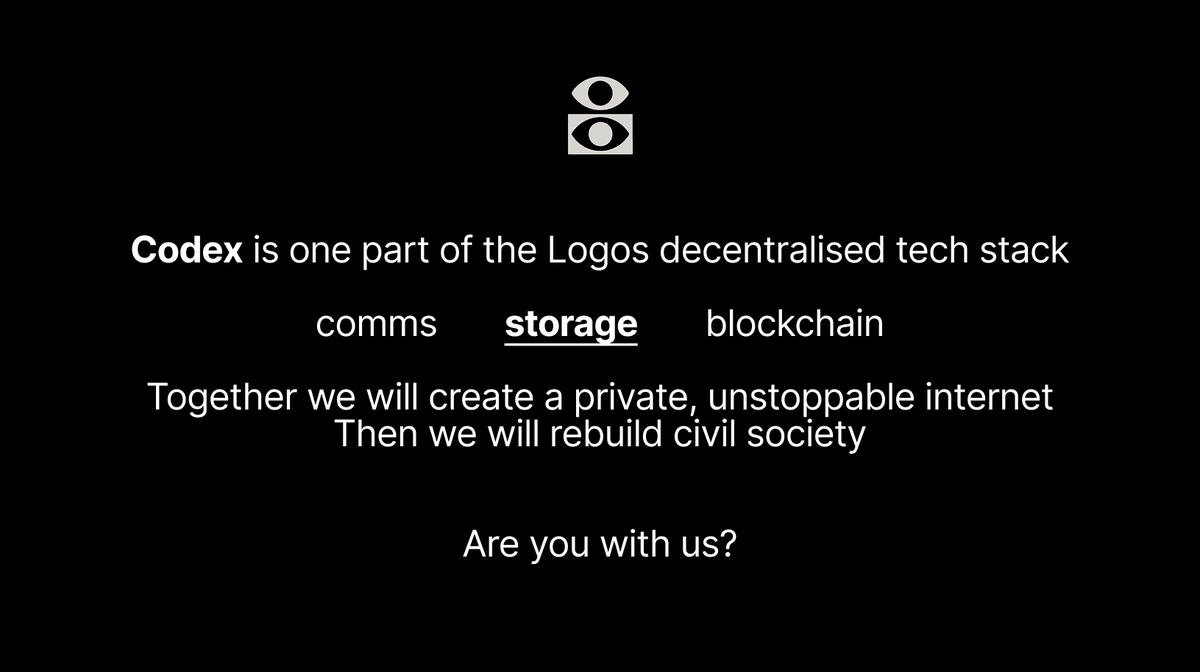
Codex is evolving.
From today, our protocols will be consolidated under Logos.
Over the past months, we have been working to simplify our structure and align our technologies towards a common goal.
The system is no longer working for us, so we are charting a new course by building a decentralised technology stack to revitalise civil society. Join us and build on the Logos stack.
One unified ecosystem. Private-by-default. Built for real life.
Follow @Logos_Network.
the Status logo isn’t new
since 2017 people saw it as the messaging app
today this logo stands for the whole stack we’re shipping:
super-app + hardware wallet + privacy layer on an L2 that’s natively gasless
how did we get there?
👇
Parallel Society • 06-07 March 2026 • Lisbon
Come together to talk freely, connect, and plan for what comes next.
Day 1 to ideate on the future of society.
Day 2 to celebrate the art that's already paving the way.
Are you in? https://t.co/0ciwgSvfng
Yesterday, an AWS outage caused the internet to grind to a halt due to an issue at US-EAST-1, a single data centre relied on by companies worldwide.
Reddit, Snapchat, Signal, and Facebook were all affected. Online banking and money transfer platforms, including Venmo, Lloyds, and Halifax, could not service customers in the US, Europe, and other regions.
Government services were unavailable in many countries, and major telecommunications networks were heavily impacted.
But despite being born from the principles of decentralisation, crypto did not fare any better. The world’s biggest exchanges, including Coinbase, experienced intermittent downtime and disruptions.
This was not a one-off event. Outages at AWS, Azure, and other tech giants regularly bring down large swathes of our internet because they are the companies that host and route traffic through to almost everything online.
Just three companies account for more than 60% of the cloud storage market: AWS, Microsoft Azure, and Google Cloud. No matter how private or secure your protocol or platform is, its control rests with somebody else if it is hosted by a centralised cloud giant.
If one of these companies has an issue or outage, as they are prone to do, you lose your ability to interact online. The risks around privacy and security are even worse when you consider the potential impact of a data leak or exploitation of user data at these entities.
The web was never envisioned to be this centralised, ruled by a few digital barons. The ideal envisioned by its pioneers was to send data between people, distribute the load of hosting, and relay information across a network of actors incentivised not to extract data but to provide secure and reliable network performance.
To put the internet back in the hands of its users, we don’t need to fight the tech giants for control of their data centres; we only need to build better tools that let us speak and share directly with each other – privately, anonymously, and securely.
That is the vision behind Logos.
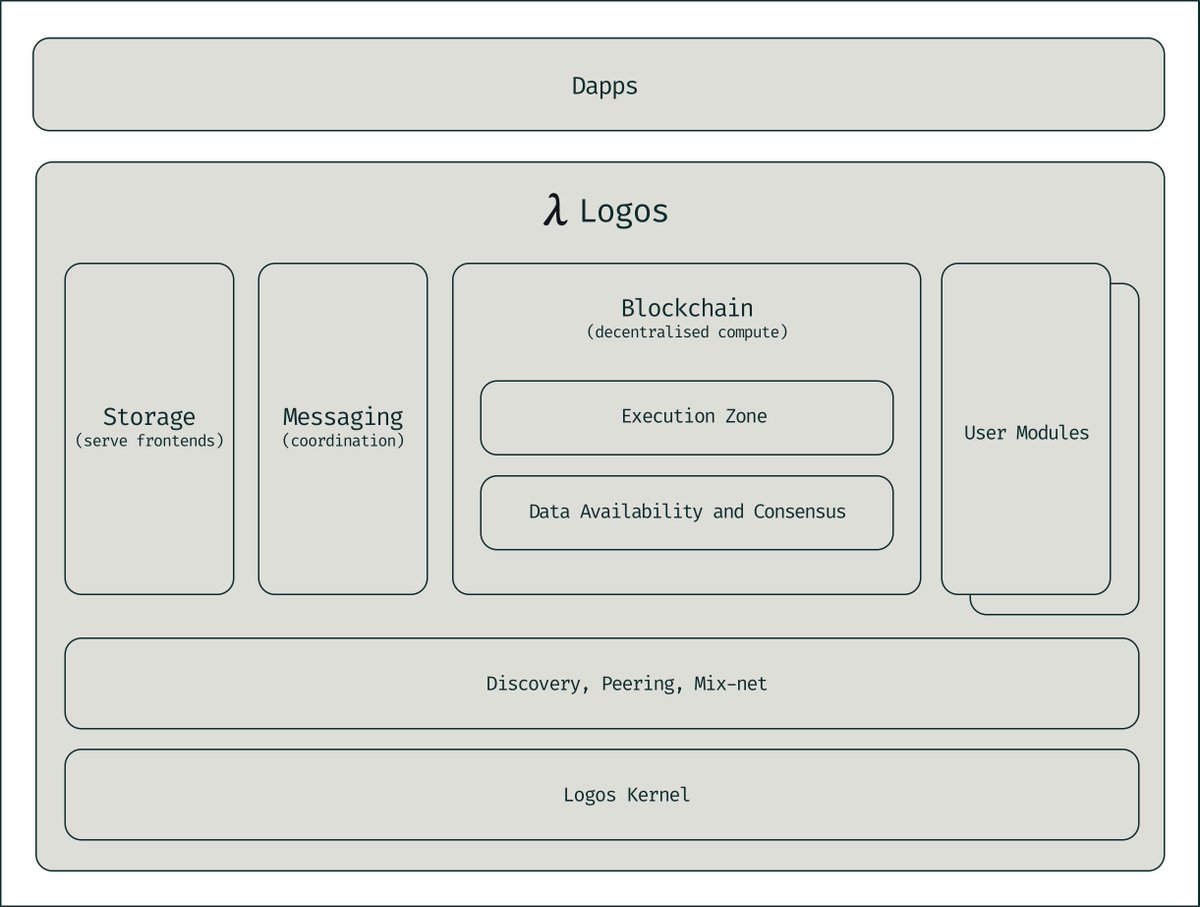
→ A peer-to-peer communications protocol for private, scalable messaging and data transport.
→ A distributed storage network that is reliable, censorship resistant, and built to endure disruption.
→ A privacy-preserving blockchain for decentralised organising and governance.
With these tools, and working together, we can exit the digital feudalism of the tech barons and craft our own self-governed internet and distributed societies, free from centralised control and designed with our interests and privacy at heart.
Help us build a decentralised internet to unlock prosperity for all.
Join Logos.
Shout out to the RealFi Hack winners of the Logos x @torproject track:
⓵ Shielded Micropay - Combines @RAILGUN_Project and payment channels for private billing of services.
⓶ Tohaku - A Tor/@nym-enabled Ethereum wallet protecting users from RPC tracking and metadata leaks.
No, blockchain does not solve this, peer-to-peer networks do (which blockchain is "just" an instance/use case of).
So to walk you through this carefully - you can take a look at @Waku_org and how @ethstatus uses it
Waku is a p2p network allowing anyone to join and publish/receive messages. Each (full) node serves as a relay for others, edge nodes (mobile, browser) use higher level protocols to save on bandwidth and processing.
P2P networks make things more complex because you have to avoid many trust assumptions and the threat models are different, but they definitely make things more resilient in general.
Assuming many Waku nodes run elsewhere than in AWS, big portion of the network would still be available and allow for messages to flow - as it does - I was just talking to people over Status.
Now, Waku has to limit the size of the data (our default is 150kB), but that can be solved by adding another p2p network to the mix - e.g. @Codex_storage (which is also what Status is doing:)
Blockchain is great for "book keeping" and yes, it would (and does) survive the outages like these without a hiccup, but for messaging apps, you need different kinds of P2P networks, but those still work even with major outages like these.
I would love to talk to you, or someone else on Signal about this, if there is interest - we have many smart people working on these protocols and would be happy to help.
Around the world, ordinary people are taking extraordinary risks to stand up against corruption, censorship, and abuses of power.
Last month, the Nepalese government imposed sweeping social media bans. As 26 platforms went dark overnight, the nation saw an 8,000% spike in VPN use. Youths filled the streets, outraged not only by the blackout but by years of entrenched corruption.
Within days, the NGO Hami Nepal created the Youths Against Corruption Discord server, a virtual town square that grew to more than 160,000 members and hosted live debates, votes, and the eventual nomination of an interim leader.
Just a week later, amid escalating demonstrations and dozens of deaths, Prime Minister KP Sharma Oli and his Home Minister resigned, the social media ban was rescinded, and an interim government was installed.
While that courage captured headlines, what made it possible was infrastructure – the digital tools that let citizens coordinate when the lights went out.
VPNs, encrypted messengers, and privacy-preserving networks have become essential to civil resistance. But they are also fragile. Sophisticated governments can blunt or break ordinary VPNs using:
→ IP blocking, cutting off known servers.
→ Deep Packet Inspection, which recognises and throttles VPN traffic.
→ Port filtering, closing predictable entry points.
→ App-store censorship, removing privacy tools altogether.
→ Metadata analysis, revealing who talks to whom even when content is encrypted.
According to Privacy International (@privacyint), more than 75 countries now deploy some form of protest surveillance, from IMSI catchers to spyware. Yet the number of mass demonstrations grows every year.
There is a real and growing demand for better privacy tools.
That’s why we’re supporting the RealFi virtual hackathon alongside @FundingCommons and @torproject. We’re inviting hackers to defend the voices of those standing against corruption, tyranny, and injustice with us.
Join us to build privacy tools people need today: https://t.co/AZ9SNsbRj9
7 days left to build privacy tools for the people.
Take part in our RealFi Hack bounties, w/ @FundingCommons and @TorProject:
→ Logos x Tor: Privacy Infrastructure
→ Resilient Activist Technology
Use @waku_org or @ethnimbus.
Bounties close 16 Oct.
https://t.co/stSGHpO2PJ
Challenge: Integrate @TorProject with web3 to create next-generation privacy tools: wallets / RPCs, paymasters / networks.
Reward: Up to $4,000 and @Keycard_(s)
Sign up to hack for freedom with Logos and @FundingCommons: https://t.co/FPSi0vWFwT
Here's a breakdown ↓
The EU’s “Chat Control” legislative proposal violates fundamental rights…
Rights that are supposedly protected under the EU Charter: privacy, freedom of expression, and the protection of personal data.
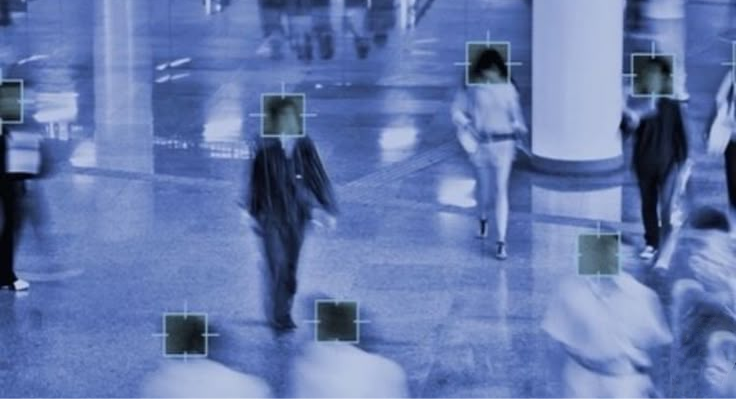
It’s framed as a measure to fight online child abuse. However, in practice, it mandates mass surveillance of private communications, including encrypted chats.
Platforms could be forced to perform client-side scanning, meaning your messages would be inspected before they’re encrypted.
As we’ve seen repeatedly, legislation passed to address one concern is routinely used for purposes beyond its original scope. The USA’s Patriot Act, for example, was passed as a national security measure but resulted in the warrantless wiretapping of millions of US and non-US citizens.
If passed, Chat Control won’t just affect EU citizens either. Global platforms providing services to Europeans will have to comply, meaning surveillance mechanisms will extend far beyond Europe.
And because you can’t build a backdoor that only the “good guys” can use, it represents an enormous security threat, too.
Our digital liberties depend on us taking a stand against such legislative overreach. Together, we can build platforms and tools that enable communication without central chokepoints that efforts like Chat Control target.
We’re working with @FundingCommons and @torproject to encourage the development of tools that uphold our fundamental right to express ourselves, free from surveillance and censorship – core values underlying the development of the Logos technology stack.
Join the RealFi virtual hackathon and hack for freedom: https://t.co/ClfnRTvK4t
Challenge: Design tools that activists need today to organise, communicate, and stay safe in hostile environments.
Reward: Up to $4,000 and @Keycard_(s)
Sign up to hack for freedom with Logos and @FundingCommons: https://t.co/FPSi0vWFwT
Here's a breakdown ↓
The UK Government is introducing mandatory Digital ID, under the guise of stopping illegal working, following public backlash over illegal immigration.
A universal checkpoint to work, rent, or participate in daily life centralises power in exactly the institutions that keep failing. We’ve seen this before: opaque databases, automated suspicion, and the innocent forced to prove their innocence. Windrush was not an anomaly; it was a warning.
With the excuse of convenience and migration control, citizens get permanent dependency on a single identity layer policed by unelected bureaucracies and vendors. The target may be “illegality,” but the collateral is everyone else.
The UK has previously restricted citizens’ movement with Covid passports, and universal Digital ID would make these controls even easier to impose.
There’s a better path. Build identity that is self-sovereign: user-held keys, open standards, selective disclosure, and zero-knowledge proofs.
Let people prove a right to work or age without exposing their full dossier to a central oracle. Make verification local-first and auditable, with multiple competing credential issuers and hard limits on data retention. Keep participation voluntary and revocable. Penalise misuse at the institutional level, not the individual.
If the goal is safer services, start with least-privilege design and minimise data. If the goal is to manage borders, don’t conscript an entire nation into perpetual ID checks.
Logos rejects architectures of default distrust. Free societies are built on freedoms, not permissions.
We will keep building parallel systems that respect privacy by design and dignity by default - so our children inherit credentials they control, rather than credentials that control them.
Logos has joined the virtual RealFi Hack by @FundingCommons alongside @TorProject and @InternetArchive to create tools that solve real problems and advance privacy.
Unlike hackathons where ideas often fizzle out, we’re encouraging the creation of tools with existing use cases and users within our movement.
As we’ll be regularly using these tools, we’ll be supporting their ongoing maintenance and development along with our community’s collaboration. While creative entries are welcome, this makes it easy for devs to work on things they know are useful.
Make an impact in the effort to protect privacy tools and defend civil liberties.
Join here: https://t.co/ClfnRTvK4t