It was fun building @martian_wallet for over 3 years from 0 installs to over 2 million installs it’s been a great journey overall.
Met some amazing people while building martian like @sidj_in (one of the most amazing guy imo), Utkarsh, @shilpi_jc, @ayush_tom and many more.
1/ Pontem is now the new home of @martian_wallet — a top wallet for @Aptos and @SuiNetwork with over 2 million installs.
A key milestone in our mission to build the most integrated Move-based infrastructure🧵
🔗Full announcement:https://t.co/yh0VopxyEq
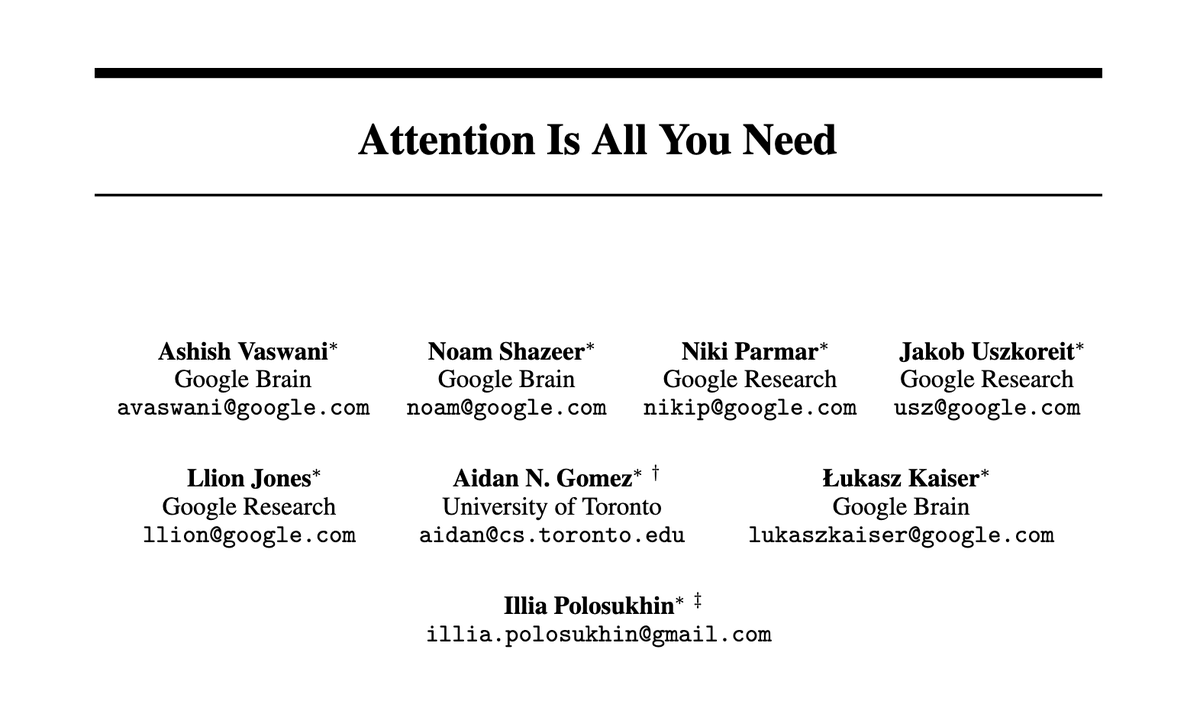
This one paper by BIT Jharkhand graduate, Indian origin lead researcher Ashish Vaswani (@ashVaswani) and co has helped add $10 trillion to the world's market capitalization. That's 150x Jharkhand's GDP and 2.5x India's GDP. Let that sink in.
Subquadratic just launched SubQ with a 12M token context window. That’s ~120 books in a single prompt.
Subquadratic sparse attention instead of O(n²) scaling.
Crazy $29M in seed.
Really game changing? Evaluations will tell.
Modern mobile games lost me when they stopped being games and started feeling like retention machines.
Autoplay
Energy systems
Ads every 2 minutes
Fake “limited-time” events
Battle passes in EVERYTHING
Feels like they’re designed to keep you logged in not actually having fun.
#GameDev #Gamers #GamingCommunity
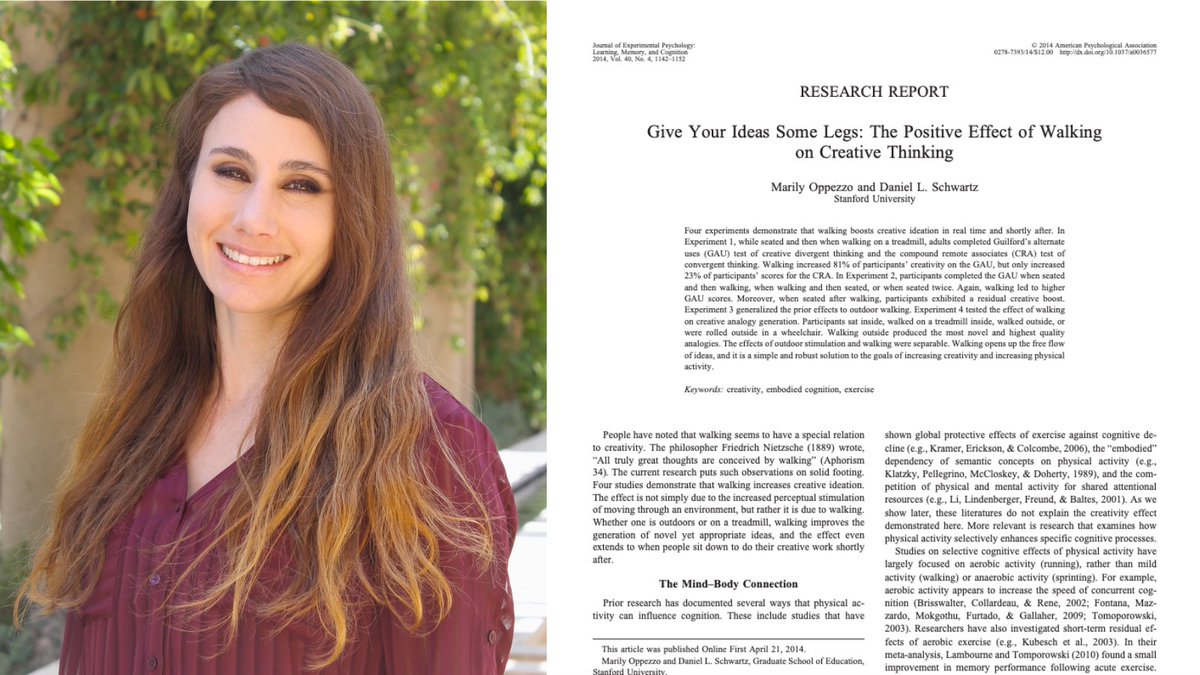
A Stanford psychologist spent 4 years proving that the simple act of walking generates 60% more creative ideas than sitting, and the experiment she designed to kill every alternative explanation is one of the most decisive findings in modern psychology.
Her name is Marily Oppezzo.
She got the idea for the study while walking with her advisor at Stanford to discuss her thesis topic, and the paper she eventually published in the Journal of Experimental Psychology in 2014 is sharp enough that it should have ended the seated meeting on the day it came out.
She ran 4 experiments on 176 people. Same person tested twice. Once sitting, once walking. The creativity tasks were the standard ones psychologists have used for decades to measure how good a brain is at generating novel useful ideas.
The result was almost too clean to publish.
81% of participants in the first experiment produced more creative ideas while walking than while sitting. In the second experiment, 88%. In the third, 100%. Every single person walked into a more creative version of themselves.
On average, people generated 60% more novel useful ideas the moment their legs started moving.
The skeptical question is the obvious one. Maybe it was the fresh air. Maybe it was the scenery passing by. Maybe it was the change of environment doing the work, not the walking itself.
Oppezzo killed every one of those explanations with one experimental decision.
She put people on a treadmill facing a blank wall. No scenery. No fresh air. No environmental change. Just legs moving in place while staring at white drywall. The 60% boost held.
Then she ran the experiment that closed the case completely. She took participants outside in two conditions. Half of them walked through a Stanford courtyard. The other half were pushed through the exact same courtyard in a wheelchair. Same outdoor stimulation. Same scenery passing at the same speed. The only difference was whether the legs were moving.
The walkers produced dramatically more novel high-quality ideas than the wheelchair group. The outdoors did almost nothing on its own. The walking did everything.
This is the part of the study that hit hardest when I read it the first time.
She also tested the opposite kind of thinking. Convergent thinking. The kind where there is one right answer and you have to narrow down to it.
Word puzzles where 3 words share a hidden fourth word that connects them. The seated participants did slightly better on these. Walkers got slightly worse.
Walking is not a general intelligence enhancer. It does one specific thing. It opens up the divergent search inside your brain. The part that generates options. The part that produces unexpected connections. The part that takes a problem and finds five ways into it instead of one.
When you need to converge on the single right answer, sit down. When you need to find the answer in the first place, get up.
The mechanism is now well understood. Walking selectively activates what neuroscientists call the default mode network, the system inside your brain that runs when you are not consciously focused on anything. The DMN is where mind-wandering happens. Where memories cross-reference each other. Where ideas that have been sitting in separate folders inside your head finally bump into each other.
When you sit at a desk and force yourself to concentrate, you suppress the DMN. When you walk at a natural pace, the executive part of your brain gets just busy enough handling the walking that the DMN comes online and starts doing the work that focus was blocking.
The most useful finding in the entire paper is the one almost nobody quotes.
The boost did not turn off the moment people stopped walking. Participants who walked first and then sat back down stayed elevated. Their next round of seated creativity work was still significantly better than people who had been sitting the whole time. The rest lingered for at least several minutes after the legs stopped moving.
You do not need to do creative work while walking. You need to walk before the creative work. The brain holds the state.
The history of this is the part that should haunt anyone who still does meetings in chairs.
Charles Darwin built a gravel loop behind his house in Kent called the Sandwalk and walked it 3 times a day for the rest of his life. The theory of evolution was developed one lap at a time on that path.
Nietzsche walked up to 10 hours a day during the years he wrote his most important books and openly said the work was conceived on his feet.
Beethoven composed for the morning and walked for 5 hours every afternoon with a pencil in his pocket for when something landed.
Kahneman said the best thinking of his Nobel Prize-winning career happened on leisurely walks with Amos Tversky. Steve Jobs refused to take important conversations sitting down. He held them on foot.
Every one of them was using the system Oppezzo would not measure until 2014. They just did not know what to call it.
The question worth sitting with is the one almost nobody asks.
Every meeting you have ever attended sitting around a table was a meeting held at a fraction of the brain power that was actually available to the people in the room. Every brainstorm that got stuck inside a conference room. Every problem you tried to solve at a desk and gave up on. Every idea you could not quite get to.
The intervention is the easiest one in modern science. No supplement. No app. No subscription. No training program. Just a pair of legs and 15 minutes.
The Stanford lab proved it. The philosophers knew it. The neuroscience explains it.
And almost everyone reading this is still trying to think their way out of problems sitting completely still.
What’s a game genre that should be HUGE on mobile by now, but somehow still isn’t? Feels like mobile gaming keeps repeating the same trends instead of exploring new ideas. For me:
1. proper RTS games
2. social/MMO experiences
3. tactical shooters
4. co-op survival games
still feel massively underused on mobile.
What genre do you think mobile gaming is missing right now?
What’s the kind of crypto/web3 game you’d actually grind for hours? 👀
A) AI-powered MOBA
B) Zombie survival royale
C) Multiplayer crypto heist RPG
D) Competitive K-pop battle arena
Honestly feels like web3 gaming still has a lot of untapped potential.
@Immutable@Ronin_Network@BuildOnBeam@playSHRAPNEL@PlayWildCards
#CryptoGaming #GameFi
In our mythology, Lakshmi never stays where there is chaos.
She gravitates toward spaces of order, discipline, and creative energy —
a poetic way of expressing a scientific truth:
prosperity is concentrated, directed energy.
Economies grow when a society learns to channel energy into structure —
trust, institutions, craft, innovation.
They decline when energy scatters and disorder spreads —
when entropy takes over.
Mahalakshmi isn’t just a symbol of wealth;
she is the reminder that
prosperity appears wherever human energy aligns, compounds, and resists entropy.
And she quietly leaves where everything collapses into noise.
Physics, economics, and mythology might speak different languages,
but they describe the same principle:
to create wealth is to keep entropy at bay.
(Random morning musings edited with help of ChatGPT)