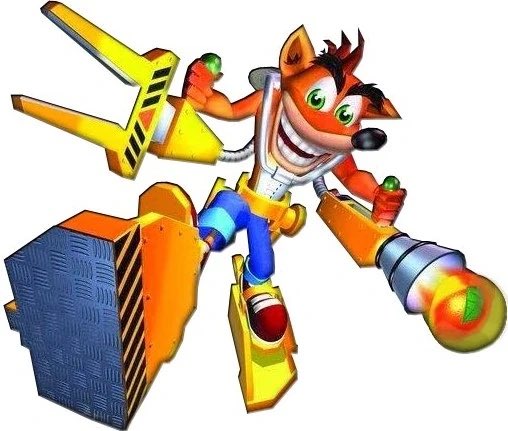
Sony was so suspicious of this game they sent someone to the studio to check the footage wasn't faked. A tiny team had built a PlayStation game too big to fit inside the console, then taught the machine to read it off a spinning disc, piece by piece, as you played.
The PlayStation came with two megabytes of memory. After the basics took their cut, only about one and a quarter megabytes were free for the level you were playing. One photo on your phone is bigger than that. Crash levels held far more than that, so they could never sit in memory all at once.
The fix came from one of the studio's programmers, Andy Gavin. He built a system that grabbed the level off the disc in tiny chunks as Crash ran, always pulling in the next stretch of the world a beat before you reached it. Then he went further and arranged the data on the disc by hand, so each piece sat right where the laser would land at the moment the game needed it. Lean in close and you could hear the disc drive whirring and clicking without a break, feeding the game as you moved.
That nonstop reading is what worried Sony. Every move Crash made meant the drive had to fetch new data, and a disc drive can only be read so many times before it wears out. A Sony exec asked how many reads finishing the game would take. It was more than the drive was built to survive. He went quiet, told the team to keep that to themselves, and helped get the game approved anyway.
Even with all that, the game barely fit, right up to the final days before the deadline. The team kept rewriting the same lines of code in slightly different ways, shaving off a few bytes here, a few there, until the first game fit with about four bytes left over. Four bytes is not even enough to spell the word Crash.
Warped, the 1998 game on screen, was the third and most ambitious version of all this. A jet ski level, a biplane, a motorcycle, a tiger ride along the Great Wall of China, all running on the same little machine that could barely hold one ordinary level. It sold around 7 million copies. The three original games together passed 21 million and turned Crash into one of the best-selling Western game series ever in Japan, a market Western games almost never cracked.
A studio that had to trick a console into running its game built one of the best-selling series the original PlayStation ever had.
so much has already been said about campaign this year, but one thing i can’t get past is the writing.
it made no sense to fight through memories that David didn’t shouldn’t have, and relied on nostalgia for moments that most players have no connection to. really disappointed.
glad they’re doing away with back to back releases in the same sub-series, but it can’t be understated how much this game will continue to suffer due to the poor reception of the campaign.
campaign sets the tone for the entire experience, and really deserved more attention.
@tdawgsmitty Sledgehammer only getting 16 months to make MWIII a full premium release was also a major fuck up from leadership. glad back to back releases are gone.
@M3RKMUS1C the whole franchise needs a new vision of where to go next. i would love to see something original, maybe a new subseries if it’s respective studio is given sufficient time to cook. glad to see back to back releases in the go by the wayside.
@RobShaw_BC@Dave_Eby probably a good call. we need to be creative in our approach to communications on these issues. most canadians seem to have a surface level understanding of the administration we’re dealing with. we need to be united in that approach.
@Inkslasher this is a symptom of yearly releases and having to force feigned excitement that the new iteration is always better than the last. COD is a service that resets its game feel from scratch every 12 months that i doubt players even know what they want from the franchise anymore.